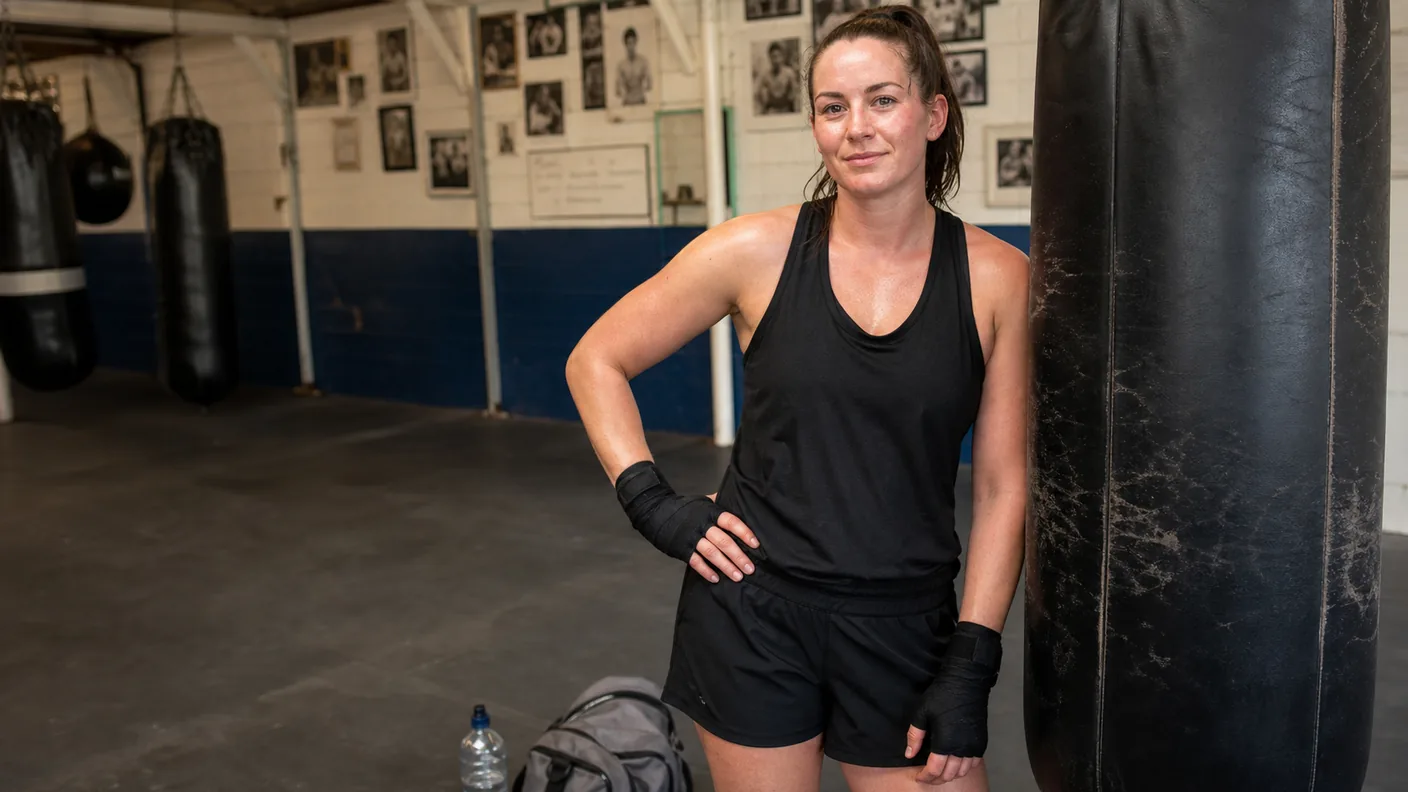
Yes, you can box on your period. For many people, it is an ordinary training day. For others, cramps, heavy bleeding, fatigue, headaches or low mood make a hard session the last thing they need. Both are normal.
The useful question is not whether a period bans you from boxing. It is whether the session in front of you matches how you feel today. A good coach can adjust rounds, pace, partner work and expectations. You do not need to explain your medical history to the room to make a sensible call.
The NHS includes gentle exercise such as walking, swimming, cycling and yoga among the things that can help with period pain (NHS period pain guidance). Boxing is more demanding than a walk, of course, but that does not make it off limits. It means you choose the version of training that fits your symptoms.
Start with an honest check-in
Before class, ask a few plain questions. Are your cramps manageable? Have you eaten and had water? Do you feel normally tired, or unusually weak and light-headed? Does the idea of moving sound helpful, or does every part of you want to lie down?
There is no medal for ignoring a bad day. Nor is there a prize for staying home automatically because you have your period. The sensible answer can be a normal session, a lighter session, or a rest day.
At Honour and Glory's Adult Recreational boxing classes, training is coached and no sparring is required. That gives you room to work on technique, bag rounds, pads or footwork without pretending every session has to be a personal best.
When a normal boxing session is fine
If your symptoms are mild and you feel broadly like yourself, train normally. Warm up properly, keep water close and tell the coach privately if there is anything they should know about your pace.
Some people find that getting warm, moving their hips and shoulders, and focusing on combinations helps them feel better. Others notice no difference at all. Neither response needs a big theory attached to it.
The research does not support rigid rules such as "you will always be weaker on day one". A systematic review and meta-analysis found a possible but trivial average reduction in exercise performance during the early follicular phase, alongside large variation between studies and individuals. Its practical conclusion was to use a personal approach rather than a universal cycle-based programme (the review is here).
That is a useful principle in a boxing gym. Your training log is more useful than an internet timetable. If you repeatedly feel sharp on the first two days of your period, there is no reason to hold yourself back. If you repeatedly feel flat, plan around that without guilt.
How to adjust the session without making a fuss
You do not have to choose between an all-out circuit and doing nothing. Small adjustments can keep the session useful.
Try one or more of these:
- Take the first few rounds at a conversational pace.
- Choose technical shadow boxing or controlled bag work over maximal conditioning.
- Use longer rests between rounds.
- Ask for a lighter pad-work rhythm instead of a hard finisher.
- Skip if it makes your cramps worse, but keep moving through footwork or mobility if that feels good.
- Leave early if your symptoms change. One shorter session does not undo your progress.
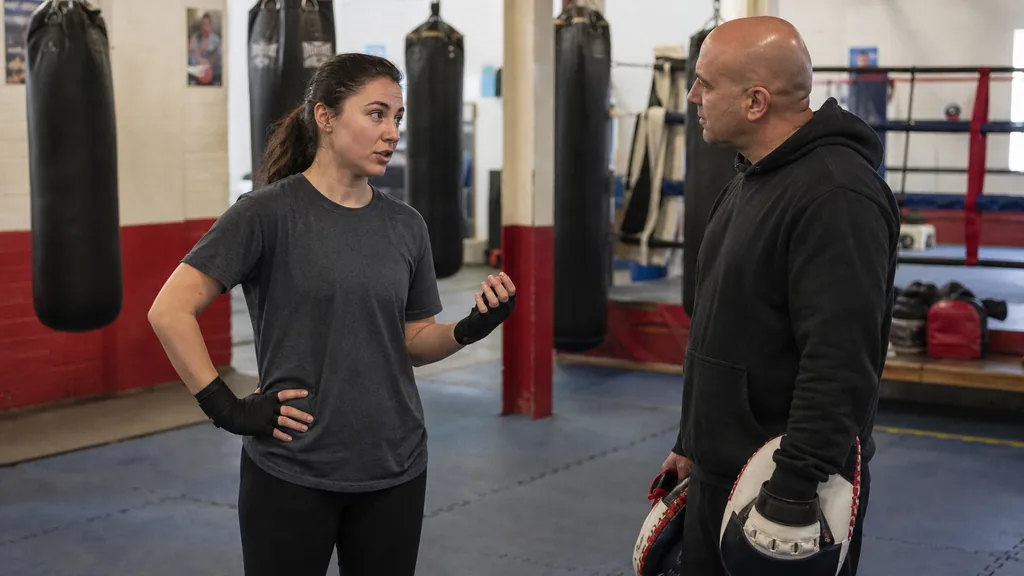
A coach does not need every detail to help. "I am not feeling one hundred per cent today. Can I keep the intensity steady?" is enough. Good coaching is partly about reading effort, not just calling numbers on a round clock.
If you are new to boxing, this is one reason a coached class is better than trying to flatten yourself with a random workout. You learn what hard work feels like, what ordinary fatigue feels like, and when to turn the dial down.
Cramps, pain relief and practical kit
Period pain can range from irritating to genuinely disruptive. The NHS advises speaking to a GP if period pain is severe or stops you doing normal activities, rather than assuming you must simply put up with it (NHS advice on when to get help). Boxing cannot diagnose the cause of pain or fix it by force of will.
For an ordinary training day, keep the practical side simple. Wear kit you feel comfortable moving in, bring water, and keep whatever period products you use in your gym bag. If heat usually helps before you leave home, use it. If you take pain relief, follow the advice on the packet or from your clinician, rather than treating a boxing session as a reason to take more.
The same applies to food. Do not arrive having skipped meals all day and expect a hard class to feel pleasant. The NHS recommends regular meals and healthy snacks to support energy through the day (NHS guidance on tiredness). A banana, toast, yoghurt or a proper meal earlier in the evening can be a more useful intervention than an expensive pre-workout drink.
When to take a rest day or seek advice
Rest if your pain is severe, you feel faint, you are unusually short of breath, or you simply cannot move with control. Those are not character tests. They are reasons to stop.
Heavy periods that regularly interfere with work, school, sport or daily life are worth discussing with a GP. NHS guidance notes that very heavy bleeding, severe pain affecting everyday life, bleeding between periods, or sudden changes in your normal pattern should be checked (NHS menstrual health guidance).
If a coach asks why you are sitting out, a short answer is fine. You do not owe anyone a detailed explanation. Your job is to train safely and come back consistently, not to make your symptoms public.
For broader beginner reassurance, read our guide to starting boxing when you have never exercised and our practical advice on how often to train boxing. If you are coming from Greenwich, Blackheath or Kidbrooke, our local boxing club guide explains what a first session looks like.
The coach answer
Boxing on your period is usually possible, but it is never compulsory. Train as normal when you feel able. Scale it when that makes sense. Rest when your body is asking for rest. Seek medical advice when symptoms are severe, new or regularly disruptive.
That is not lowering the standard. It is how adults train for years rather than burning through a few dramatic weeks.
H&G Team
Writer at Honour & Glory Boxing Club, a community boxing gym in Kidbrooke, South East London.
KEEP READING
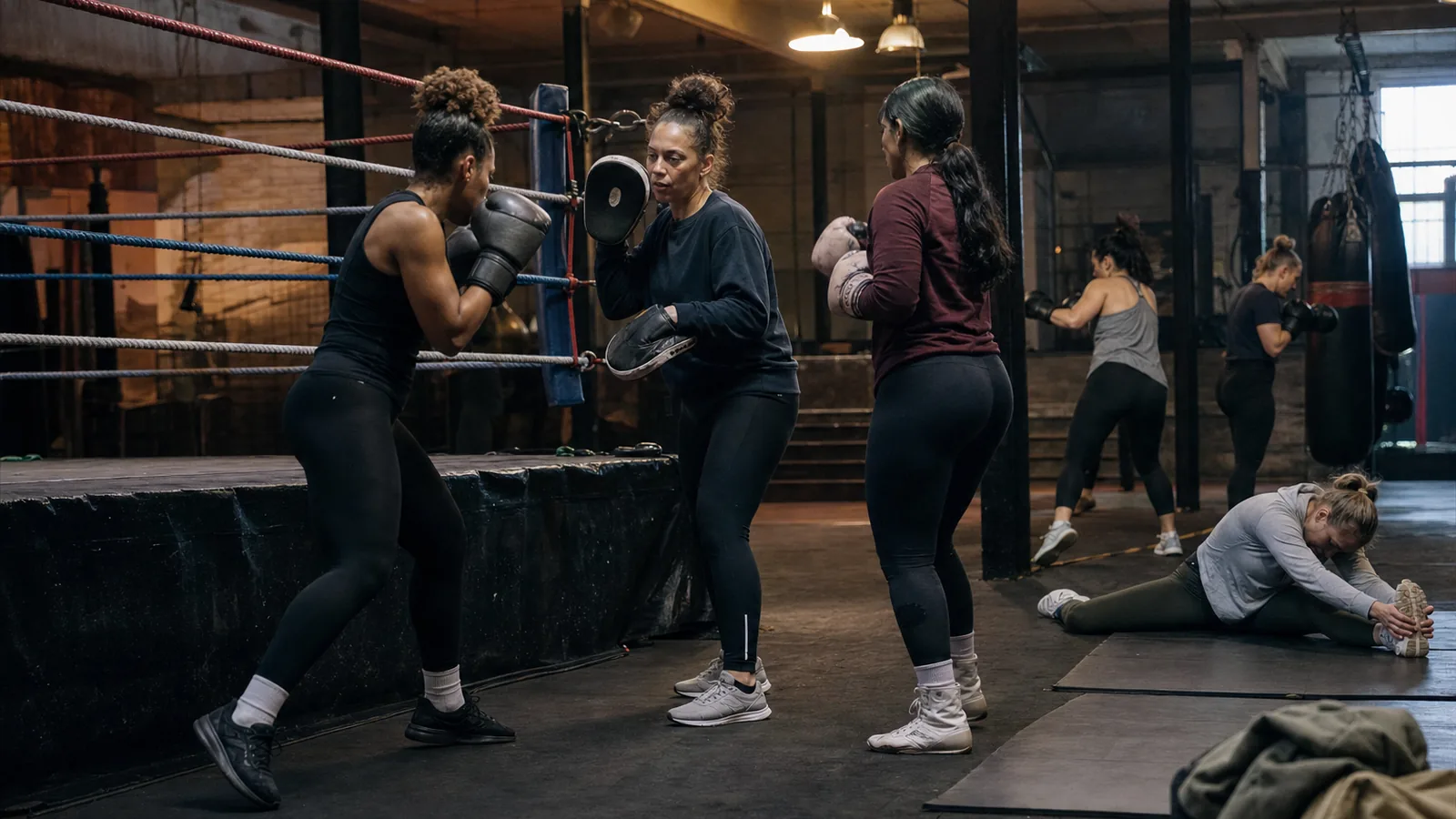
Boxing For Stress Women Specific Research
A women-specific look at boxing for stress, confidence and routine, with clear limits around medical claims.
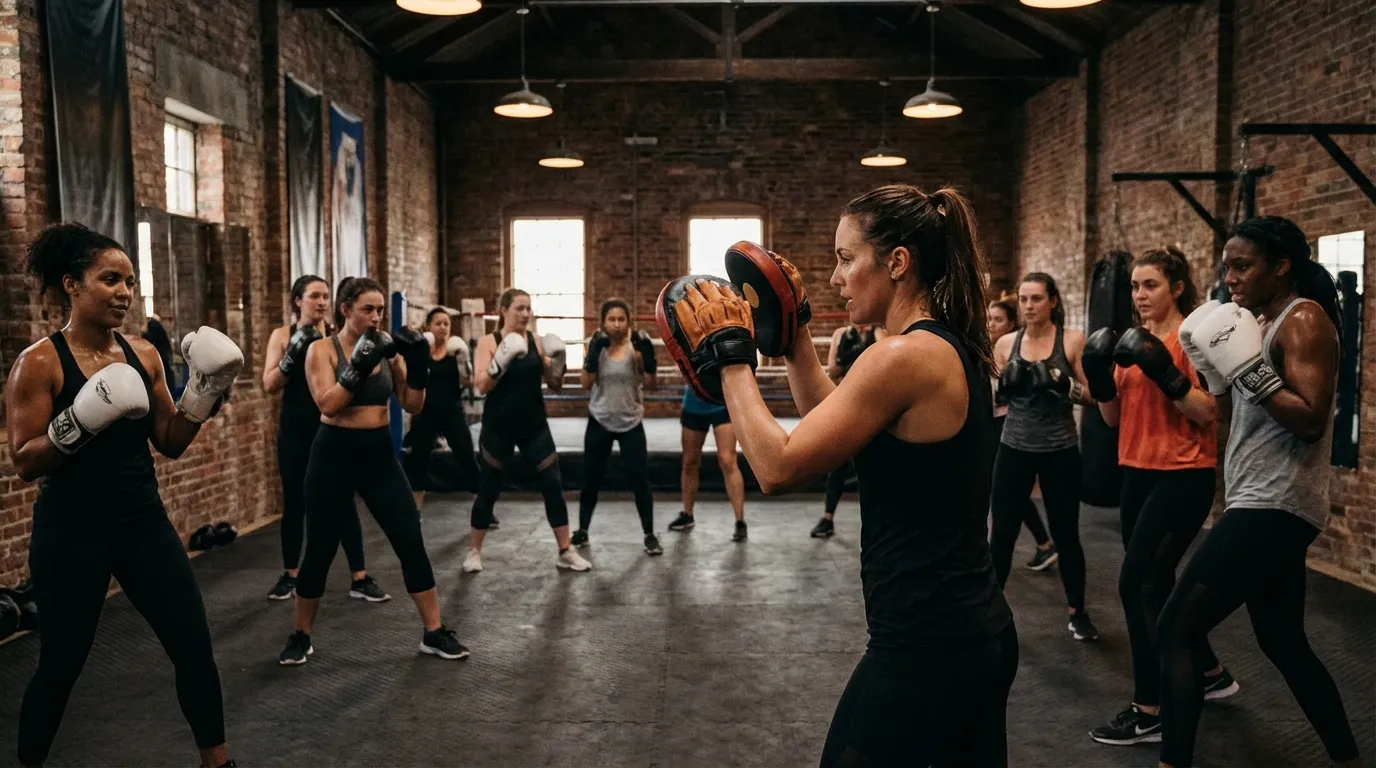
Women's Boxing Classes - What to Expect
Thinking about women's boxing classes but not sure what happens? Here is exactly what to expect from your first session to your tenth.
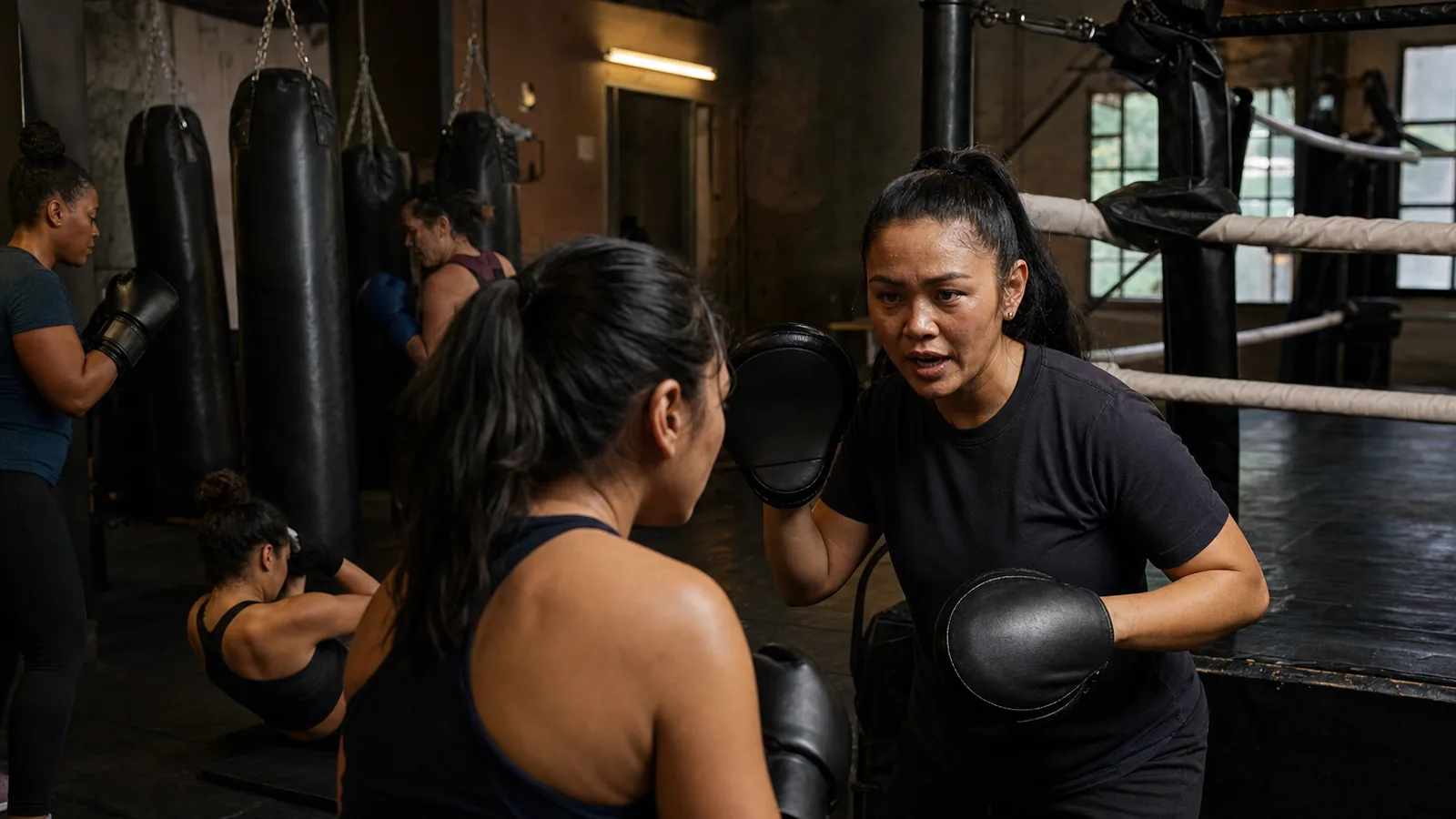
Boxing for Women in Kidbrooke: What to Expect
Honour and Glory Boxing Club offers womens boxing classes in Kidbrooke SE3 - structured sessions for all fitness levels with ABA/Alliance-credentialed coaches.
Was this page helpful?
It takes one tap, and it genuinely helps.
Choose your next step
Turn this article into the right action
Some readers are ready to book. Some need the class route first. Pick the route that matches what you actually want.