Boxing vs Taekwondo for Kids: What Parents Should Know

Taekwondo is one of the most widely practised martial arts in the UK, with a significant presence in schools and leisure centres. Boxing has different distribution - more community clubs, less school integration. Both offer children real benefits. They deliver those benefits differently.
What Taekwondo Offers
Taekwondo is an Olympic sport and the pathway from beginner to international competition is well-defined. The sport is predominantly kicking - high, fast kicks to the head and body, executed with power and precision (source).
The flexibility demands of taekwondo are significant. Children who train seriously develop exceptional lower body flexibility and kicking range. For general athleticism, this is valuable.
The belt system is structured and the grading process regular. Children receive consistent external validation of their progress, which is motivating for many.
The Olympic presence means taekwondo has significant institutional support, school links, and club infrastructure across the UK (source).
What Boxing Offers
Boxing develops upper body strength, coordination, and cardiovascular fitness in ways that taekwondo does not. The two activities are physically quite different - boxing is primarily upper body, short range, and clinically about the punch; taekwondo is primarily lower body, medium-to-long range, and built around the kick.
Boxing also develops a specific kind of pressure management. The moments of close range contact in boxing, even in training - the pad work, the bag sessions, eventually the controlled sparring - develop a different kind of physical composure than the long-range sport of taekwondo.
The coaching relationship in boxing tends to be more individualised because the technical development is necessarily one-on-one to a greater degree. A boxing coach working pads with a child is giving specific individual feedback in real time.

What the Research Shows
A 2019 study in the Journal of Strength and Conditioning Research found that boxing training produced greater improvements in cardiovascular fitness, upper body strength, and coordination compared to taekwondo training in adolescents over a twelve-week period. Taekwondo produced greater flexibility improvements.
A 2021 paper in Frontiers in Psychology examined self-confidence in children aged 8-14 across multiple martial arts disciplines. Both boxing and taekwondo produced significant improvements in self-reported confidence, with no statistically significant difference between the two sports. The mechanism was the same: progressive skill mastery and supported challenge.
Both sports reduced anxiety scores in children over the study periods. The researchers noted that the mechanism appeared to be physical challenge combined with social support - the specific sport was less important than the quality of the environment.
Both Count Towards What Children Actually Need
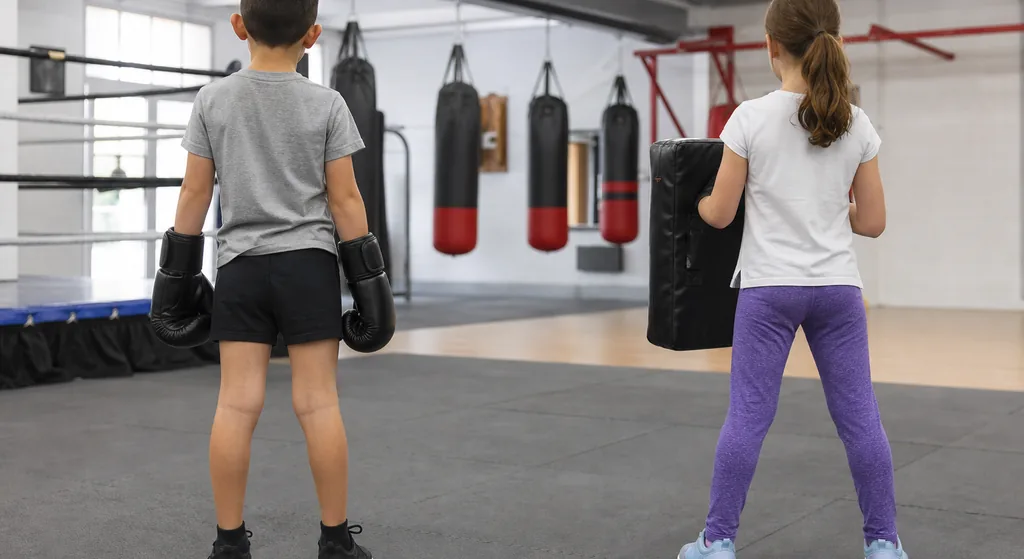
It is worth stepping back from the boxing-against-taekwondo question for a moment. The NHS recommends that children and young people aged 5 to 18 get an average of at least 60 minutes of moderate or vigorous activity a day across the week, and that the activity is varied enough to develop movement skills, muscles and bones (NHS physical activity guidelines for children and young people).
Both boxing and taekwondo clear that bar comfortably. A proper junior session in either sport is an hour of varied, often vigorous work that loads the muscles and bones in the way the guidance asks for. Two sessions a week gets a child a long way towards the weekly target on its own, and it does so through something most children find more engaging than a treadmill.
The benefit is not only physical. Sport England's research found that more physically literate children are happier, more resilient and more trusting of others (Sport England research on children and young people). The point worth holding onto is that a child who keeps turning up to a sport they enjoy is getting the confidence and the resilience regardless of whether the gloves go on or the feet go up. The sport that sticks is the one that delivers.
The Weekly Commitment
Parents often underestimate how different the two sports feel week to week, and this matters more than most realise when choosing.
Taekwondo clubs tend to run on a fixed class timetable with set grading dates. The rhythm is structured around belt assessments, and there is usually a grading fee at each level plus the cost of the dobok and any sparring kit. For families who like a clear calendar and visible milestones, that structure is a genuine advantage.
Boxing clubs run differently. The progression is not tied to grading dates, so the weekly commitment is more about consistent attendance than working towards the next assessment. Kit is simpler at the start, usually hand wraps and gloves, with a gum shield only once any partner work begins. For families who want lower upfront cost and a flexible start, that suits them better.
Neither model is superior. A child who responds to fixed targets and ceremony will get more out of the taekwondo structure. A child who finds artificial levels off-putting and just wants to get on with the work will settle faster in a boxing gym. Be honest about which describes your child before you commit to a term.
The Competition Question
Taekwondo competition at junior levels involves full technique demonstration and points-based sparring. Contact is significant even at junior levels - the sport is genuinely physically demanding in competition.
Junior boxing competition runs through the club's amateur affiliation body, such as the Amateur Boxing Alliance or England Boxing. Bouts are judged on clean punching and run under age, weight, equipment and medical rules. It is a genuine test, but one with extensive safety protocols.
For children who are interested in competing, both sports offer clear pathways. The question is which type of competition the child finds more naturally appealing - which is really a question of which physical skills they prefer developing.
The Honest Recommendation
Do not choose based on the sport. Speak to a coach in each discipline near you. Ask how junior sessions are coached and supervised, then let your child try a class and discuss their experience afterwards.
The best martial arts for your child is whichever one they like enough to keep coming back to consistently.
For boxing in Kidbrooke and south-east London, Honour and Glory's Junior Recreational class is where most children begin. It covers ages 7 to 16, with Junior Competitive available from age 10 where suitable.
Parents and carers cannot stay to watch sessions. Please speak to the coach before the class if your child needs help settling in.
Claim a free trial and let your child make the judgement themselves.
The Junior Recreational class is where most members begin.
H&G Team
Writer at Honour & Glory Boxing Club, a community boxing gym in Kidbrooke, South East London.
KEEP READING
Boxing vs Karate for Children: An Honest Comparison
Parents choosing between boxing and karate for their child need honest information, not marketing from either side. Here is a genuine comparison based on what each delivers.

Boxing vs Judo for Children: Choosing the Right Martial Art
Judo and boxing develop different physical qualities and character traits. Here is an honest guide to what each delivers and which might suit your child better.

Boxing vs Football for Building Confidence in Children
Football builds certain kinds of confidence. Boxing builds different kinds. Understanding which your child needs most can help you make the right choice.
Was this page helpful?
It takes one tap, and it genuinely helps.
Choose your next step
Turn this article into the right action
Some readers are ready to book. Some need the class route first. Pick the route that matches what you actually want.