Boxing vs Judo for Children: Choosing the Right Martial Art

Research on martial arts for children's development compared several combat sports and found boxing and judo produce similar social and emotional benefits through different mechanisms. England Boxing's youth participation growth outpaces the British Judo Association's equivalent figures.
Judo and boxing are more different from each other than any other pair of common martial arts. One involves throwing people to the floor and holding them there; the other involves striking them with your fists. They share discipline, physical challenge, and the character development that comes from a structured combat sport. Everything else is different.
What Judo Develops
Judo is a grappling art. The central skills are throws, takedowns, and groundwork - pins, chokes, and joint locks (arm locks only in junior competition). There are no strikes.
The physicality of judo is excellent for developing core strength, balance, spatial awareness, and the ability to use the whole body as a connected unit. Children who train judo seriously develop extraordinary body control.
The club culture in British judo is generally excellent. Judo clubs have strong traditions of inclusion, mutual respect, and the concept of "mutual benefit" - you cannot practise judo throws without a willing partner, so the ethos of looking after your training partners is built into the practice.
The belt system is clear, the national competition pathway through British Judo is well-structured, and judo is an Olympic sport with the institutional support that brings (source).
What Boxing Develops
Boxing develops striking and upper body coordination in ways that judo does not. The cardiovascular conditioning in boxing training tends to be more intense than in judo, which involves more short bursts of maximum effort with rest periods.
The skill of reading an opponent's intentions, creating openings, and timing - present in both sports - manifests differently. In boxing it is about footwork angles and punch timing. In judo it is about grip battles and balance disruption.
Both sports develop composure under physical pressure. The experience of being grabbed, thrown, or pinned in judo, and the experience of being hit or facing a partner throwing punches in boxing, both teach the same fundamental skill: staying calm and functional when your body's threat response is activated.
Fall Safety - A Unique Judo Benefit
One thing judo teaches that boxing does not is breakfall technique - how to fall safely. Children who train judo learn to land from height without injury, which is a practical life skill with applications far beyond the sport.
For children who are generally clumsy or accident-prone, this is a real consideration. The ability to fall well reduces injury in everyday life, not just in sport.
The Social Dynamic
Judo is practised in pairs. Every drill, every technique, every session involves working closely with training partners. This creates specific social dynamics - you have to communicate, cooperate, and trust your partners.
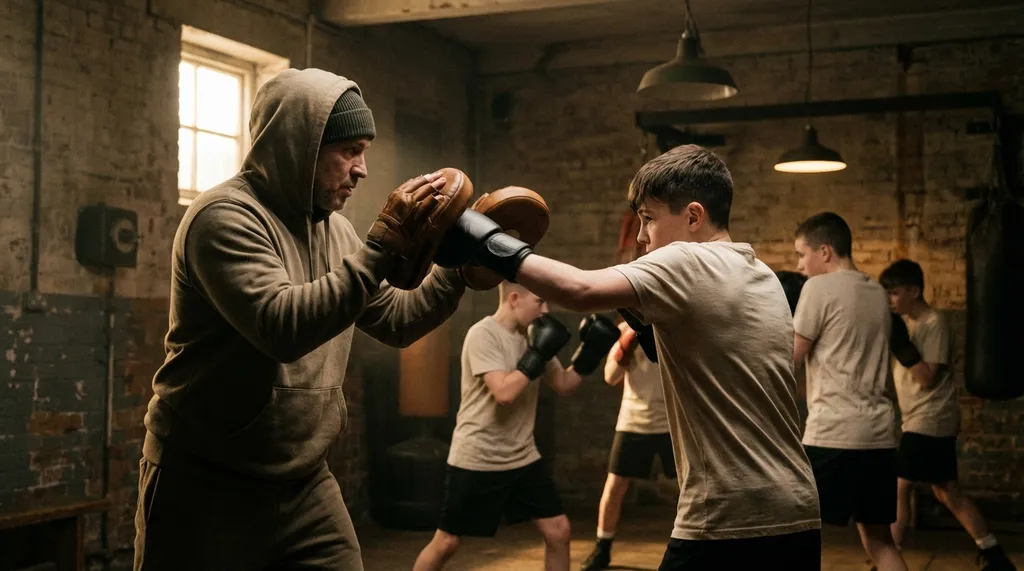
Boxing training involves more individual work - bag work, shadow boxing, skipping - with the partner interaction concentrated in pad work and sparring. The social bond is strong but the mechanism is different.
For children who struggle with pair-based cooperation - who need more independence or who find close physical cooperation with peers difficult - boxing's greater proportion of individual work can be preferable.
Age Appropriateness
Judo can start as early as 5-6 for many clubs. The throws at that level are simplified and the ground rules are protective of young joints.
Boxing has clear age minimums - competition is not available until children are older, and the training for younger children focuses entirely on non-contact skill development. At Honour and Glory, the Younger junior session takes children from age 7 through to our Junior classes for ages 10-16.
Both sports are appropriate from a young age when the teaching is qualified and age-appropriate.
Which to Choose
A child who is physically tactile, who likes close contact, who is interested in grappling and wrestling, and who responds well to cooperative pair work will likely enjoy judo.
A child who wants striking skills, who prefers more individual training components, who responds well to a boxing gym's particular culture, or who is interested in the cardio and conditioning aspects of the sport will likely enjoy boxing.
The reliable advice: try both. Most clubs offer trial sessions. A child who really enjoys what they are doing will improve faster than one who is attending because their parent made the decision.

H&G Team
Writer at Honour & Glory Boxing Club, a community boxing gym in Kidbrooke, South East London.
KEEP READING
Boxing vs Karate for Children: An Honest Comparison
Parents choosing between boxing and karate for their child need honest information, not marketing from either side. Here is a genuine comparison based on what each delivers.

Boxing vs Taekwondo for Kids: What Parents Should Know
Taekwondo and boxing both build discipline and fitness. Here is what the research and real experience shows about how they differ in what they deliver for children.

Boxing Club vs School Sport: Why They Develop Different
School PE and boxing clubs develop different qualities in children. Understanding the difference helps parents make better choices about their child's wider development.
Was this page helpful?
It takes one tap, and it genuinely helps.
Choose your next step
Turn this article into the right action
Some readers are ready to book. Some need the class route first. Pick the route that matches what you actually want.