Boxing vs Karate for Children: An Honest Comparison
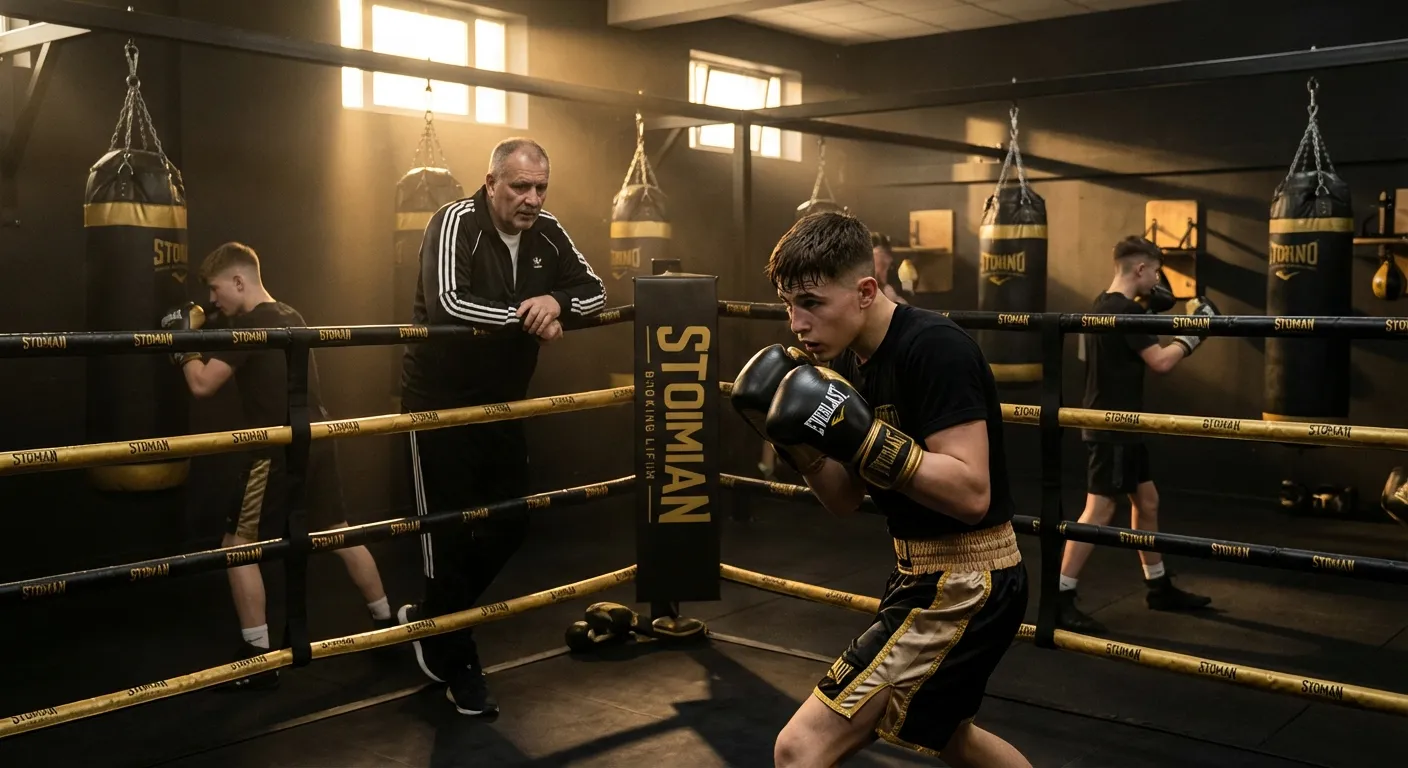
Research on martial arts and child development found both boxing and karate effective for developing discipline and self-regulation. For H&G specifically, the relevant club framework is the Amateur Boxing Alliance's safeguarding guidance, alongside wider NSPCC guidance for parents choosing any children's sport.
This question comes up constantly when parents are choosing between martial arts for their children. The honest answer is that both sports have real strengths, the difference between a good and bad gym in either discipline matters more than the sport itself, and the child's personality should inform the decision.
Here is the actual comparison.
What Karate Develops
Karate, particularly traditional styles like Shotokan and Goju-Ryu, places significant emphasis on kata - formal sequences of movements practised in isolation. This builds body awareness, controlled movement, and memory for sequences.
The belt progression system is more visible in karate than in boxing. Children advance through coloured belts, which provides clear external markers of progress. For children who are motivated by visible achievement markers, this can be powerful.
The philosophy of many karate schools also explicitly addresses character development - respect, discipline, courtesy - as formal curriculum rather than as byproduct. The "dojo etiquette" traditions, the bowing, the formal relationships between students and sensei, are part of the teaching (source).
Competition in karate involves both kata (pattern) and kumite (sparring) categories. Kumite at junior levels uses light or no contact with heavy point-scoring emphasis, which looks nothing like full-contact karate and provides a significantly different physical challenge from boxing sparring.
What Boxing Develops
Boxing does not have kata equivalents. The skill development is functional from the start - you are learning how to throw punches that actually work, how to move your feet to create angles, how to defend against incoming strikes.
The feedback in boxing is immediate and practical. If your jab technique is wrong, the coach can show you on the pads why it is not working. If your guard is too low, the experience of a coach tapping around it makes the error visceral rather than abstract.
The physicality is higher from the beginning. Boxing conditioning is among the most thorough in any sport for its time investment - cardiovascular, strength, coordination, and agility are all developed simultaneously.
There is no formal belt system. Progress is visible through technique improvement and, for those who choose competition, through competitive results. For some children this is less motivating than external progression markers. For others, the lack of artificial levels feels more honest.
The Sparring Question
Parents often ask about sparring as if it is the primary difference between boxing and karate. It is a difference, but not in the way people assume.
Junior karate kumite competition involves controlled point scoring. It looks dramatic but contact levels at junior competition are limited.
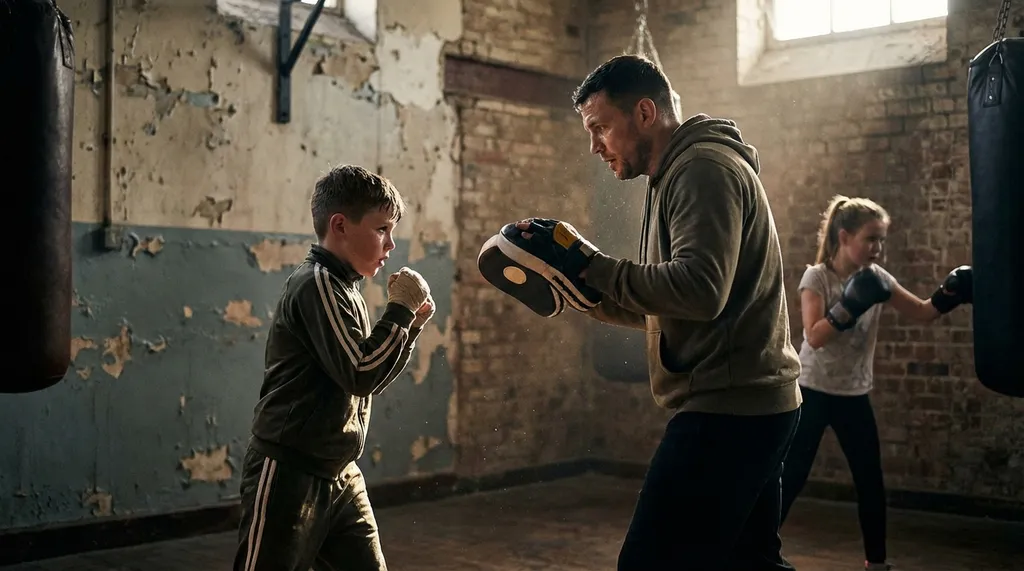
Junior boxing training does not involve sparring in the early stages. Children at Honour and Glory - and at any well-run boxing club - spend months or years developing technique on bags and pads before any controlled partner work begins. Even when it begins, it is at minimal intensity under coach supervision.
The "boxing is more dangerous" assumption does not hold up when the training is properly run. A karate class with loose supervision and children hitting each other freely is considerably more dangerous than a structured boxing programme.
Contact and Safety
Both sports have contact. Karate kumite involves strikes that land on a partner. Boxing, even in bag and pad work, involves significant physical contact with equipment and occasionally with a partner.
The question is not "which is contact-free" but "which manages contact appropriately for the child's age and stage."
Well-run clubs in either discipline have age-appropriate safety protocols. This is the relevant factor - not the sport, but how the specific club runs its programme.
The Social Environment
Karate dojo culture and boxing gym culture are different, and this matters for which environment a child thrives in.
Traditional karate dojo culture is more formal - the rituals, the hierarchy, the explicit codes of conduct. Children who find structure and formality helpful respond well to this. The social environment is orderly.
Boxing gyms tend to be less formally structured but develop a different kind of social cohesion. Working closely with a coach, holding pads for training partners, the shared experience of hard sessions - these create bonds that are less formal but often very strong.
Who Should Choose What
Boxing suits children who are physically energetic, who respond well to immediate practical feedback, who are not motivated by external progression markers, and who want genuine physical conditioning.
Karate suits children who are motivated by formal structure and visible progression, who enjoy the philosophical and traditional aspects of martial arts, and who may respond better to the karate dojo's more formal social environment.
The quality of the gym and the quality of the coaching is the primary factor. A great karate coach teaching in a good environment will develop a child better than a mediocre boxing gym.
At Honour and Glory, the coaches work with children from age 10 upwards in the Junior classes. Come to a trial session and see how your child responds to the environment before committing.

H&G Team
Writer at Honour & Glory Boxing Club, a community boxing gym in Kidbrooke, South East London.
KEEP READING
Boxing vs Judo for Children: Choosing the Right Martial Art
Judo and boxing develop different physical qualities and character traits. Here is an honest guide to what each delivers and which might suit your child better.
Boxing vs Taekwondo for Kids: What Parents Should Know
Taekwondo and boxing both build discipline and fitness. Here is what the research and real experience shows about how they differ in what they deliver for children.

Boxing vs Football for Building Confidence in Children
Football builds certain kinds of confidence. Boxing builds different kinds. Understanding which your child needs most can help you make the right choice.
Was this page helpful?
It takes one tap, and it genuinely helps.
Choose your next step
Turn this article into the right action
Some readers are ready to book. Some need the class route first. Pick the route that matches what you actually want.