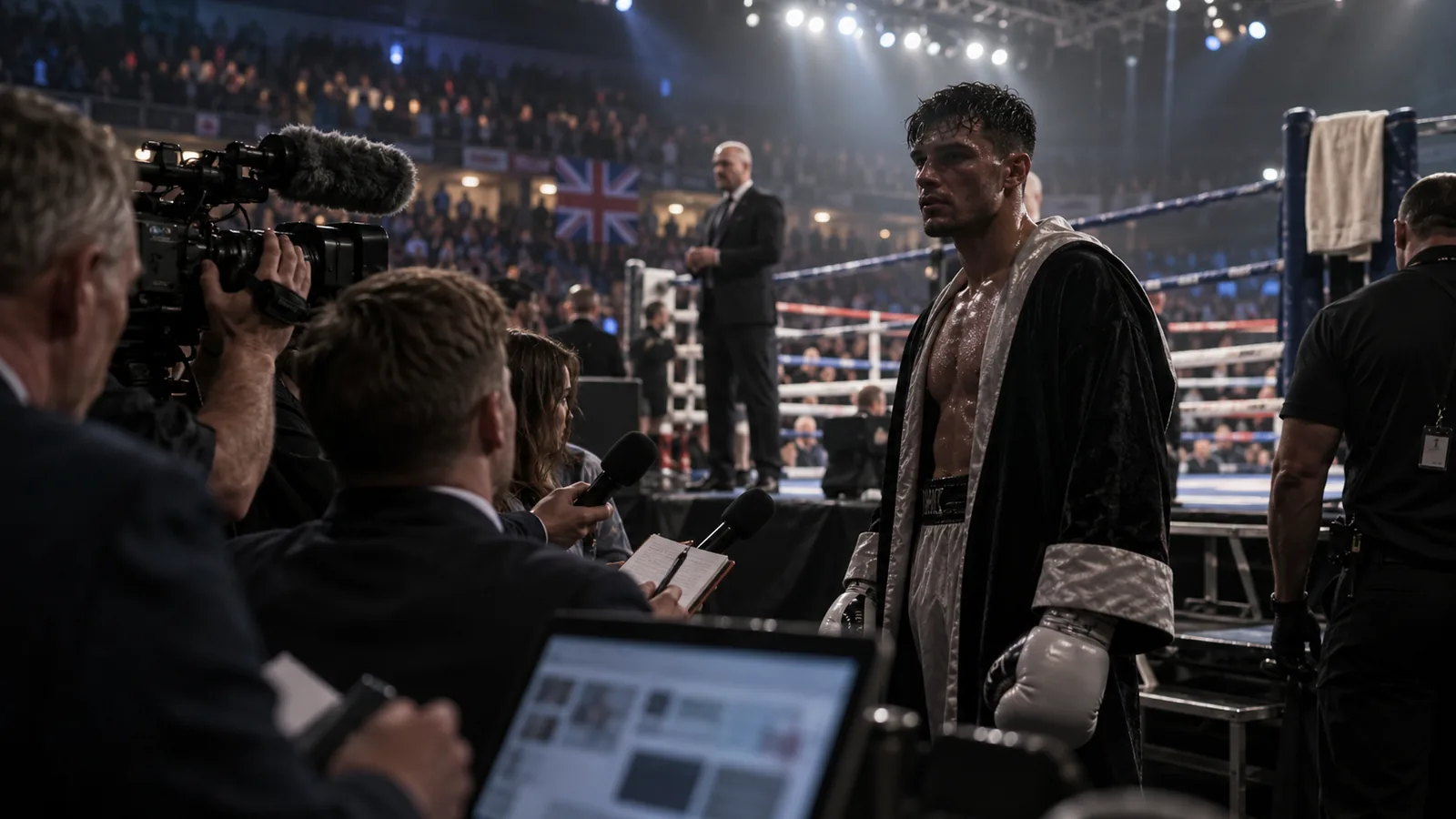
The Ring and DAZN: Boxing Needs to Keep Its Eyes Open
The Ring is not just another boxing website with a rankings page.
For more than a century, its belts, lists and name have carried a particular weight. Fighters want the title. Promoters put it on posters. Broadcasters mention it as proof that a bout matters. Plenty of fans will argue over its rankings, but they still pay attention when The Ring calls someone champion.
That is why the report that Turki Alalshikh is selling control of The Ring to DAZN deserves more than a quick reaction.
Box.Live reports that DAZN has agreed to acquire a controlling interest in the magazine and its championship belts, citing Total Boxing. The transaction has not been publicly confirmed, and DAZN has declined to comment on market speculation. BoxingScene’s report and a Yahoo Sports version of the story have added weight to the claim.
For now, the important word is “reported”.
But if the deal is completed, it would put boxing’s best-known magazine under the control of one of its most powerful broadcasters. That is not automatically a scandal. It is, however, a conflict that deserves proper scrutiny.
The problem is not DAZN owning a boxing publication
A broadcaster owning a media brand is not unusual. The issue is what The Ring represents.
DAZN has a direct commercial interest in the fights it shows, the promoters it works with, the fighters it features and the subscriptions it sells. The Ring is supposed to offer something different: independent judgment about who deserves to be ranked, who deserves a title shot and which fights genuinely matter.
Those roles can sit in the same business. They just cannot be allowed to blur.
When The Ring ranks a fighter highly, it can help make that fighter more valuable. When it sanctions a title fight, it gives the event an extra layer of prestige. When it runs a glowing feature on a DAZN headliner, it can create momentum before the broadcaster asks viewers to pay for the card.
None of that proves editorial interference. But it does explain why readers should ask harder questions than “will the magazine still look good?”
The real questions are straightforward:
- Who appoints the editor?
- Who chooses the rankings panel?
- Can writers criticise DAZN, its broadcast teams or its key promotional partners without fear of losing access?
- Can The Ring rank a non-DAZN fighter above a more marketable DAZN fighter?
- Can it refuse to recognise a fight that DAZN desperately wants treated as a major event?
- Will its belt policy be published, clear and applied consistently?
If the answer to those questions is vague, then the historic value of The Ring belt starts to weaken.

From Alalshikh’s ownership to DAZN’s reported control
Turki Alalshikh bought The Ring from Oscar De La Hoya in late 2024 for a reported $10 million. At the time, he promised that the magazine would be fully independent, restore print and rebuild its standing in the sport.
Box.Live’s report notes that The Ring expanded beyond journalism during his ownership. It became connected to branded events, championship belts, rankings and promotional activity. Several shows carrying The Ring name were broadcast on DAZN.
That is already a lot of power gathered around one famous brand.
Boxing News 24 makes the central point well: a broadcaster would have an obvious interest in promoting fights involving Ring champions. That does not mean a bad decision has been made. It means the safeguards must be stronger, not weaker.
The reported sale would change the owner, but it would not remove the basic concern. It would change the shape of it.
Under Alalshikh, the fear was that a major boxing backer could influence the sport’s most recognisable media title. Under DAZN, the concern would be that a broadcaster with rights deals and promotional relationships could own an outlet that helps define sporting legitimacy.
Neither arrangement is ideal if independence is treated as a slogan rather than a structure.
Boxingnews.com’s report takes a sharp view of Alalshikh’s period in charge, arguing that the promised editorial revival did not properly arrive. Whether readers agree with every word of that assessment is beside the point. The underlying challenge is real. A magazine cannot regain authority simply by having famous owners, a polished website or a bigger social-media reach.
It earns authority by being willing to disappoint powerful people.
Boxing media is already too close to the action
This is not a problem created by DAZN alone.
Boxing journalism has always existed close to promoters, managers, broadcasters and sanctioning bodies. Access matters. Interviews matter. Press credentials matter. If a writer is frozen out of a major promotion, their job becomes harder. If an outlet relies on clips, advertising or commercial partnerships, its independence can be tested quickly.
The sport is small enough that everyone eventually needs something from someone else.
That is why fans should not put every outlet into two neat boxes labelled “independent” and “biased”. It is better to read with some discipline.
A promoter announcing a fight is not reporting on the fight. A broadcaster’s preview is selling its broadcast as well as explaining the match-up. A sanctioning body’s ranking is a business decision as much as a sporting one. A fighter’s interview is usually part of a negotiation, a public campaign or a promotion.
That does not make any of it useless. It just tells you how to read it.
If DAZN takes control of The Ring, readers should treat Ring coverage of DAZN-linked events with the same sensible caution they should already apply to a promoter’s social-media account or a broadcaster’s press release. Read it. Use it. Do not let it be the only thing you read.
The Yardbarker report and Yahoo Sports video report are useful reminders that this remains a developing story, not a completed public announcement with full terms available for inspection.

The rankings matter more than the headlines
The Ring can survive a change of owner. Its rankings cannot survive a loss of trust.
That is because rankings are where the magazine moves from commentary into influence. A well-written interview can annoy a promoter for a day. A disputed ranking can shape a fighter’s path, a title opportunity and a pay cheque.
A Ring belt is valuable because it has traditionally been presented as separate from the alphabet bodies and their endless versions of championship status. Fans may disagree about individual calls, but the belt works only if they believe the decision was based on boxing rather than a television schedule.
DAZN has every right to invest in boxing. It has helped put on major fights, given fighters platforms and brought a great deal of content to supporters around the world. The broadcaster is not the enemy.
But DAZN should not expect people to ignore the tension between selling fights and judging their importance.
The best response would be public and practical. Keep the rankings panel independently appointed. Publish conflicts of interest. Give editors a written guarantee that criticism of DAZN, The Ring’s owners and commercial partners will not affect their work. Explain how title fights are approved. Make the complaints process visible.
Do that, and DAZN would have a chance to prove sceptics wrong.
Do not do it, and every controversial ranking will look like a commercial decision, even when it is not.
How fans should read the coverage
The answer is not to become cynical about every boxing story. Cynicism is lazy too.
Instead, compare sources. Read the report, then read the opposing view. Check whether the article names a source, distinguishes fact from claim and makes clear when a deal is unconfirmed. Notice whether an outlet can criticise the people who give it access.
If five outlets repeat the same anonymous claim, that is not five separate confirmations. It may be one report travelling around the sport at speed.
Most importantly, keep the central question in view: who benefits if you believe this story, ranking or fight is bigger than it really is?
That habit applies to the biggest title fight and the smallest local show. At Honour and Glory’s boxing classes, we teach people that good boxing is about seeing clearly under pressure. The same principle works outside the ropes. Do not follow the noise. Watch the feet, the distance and the real intent.
The reported DAZN deal is not proof that The Ring has lost its independence. It is a test of whether that independence has been properly built in the first place.
For boxing’s most historic magazine, that test matters.
H&G Team
Writer at Honour & Glory Boxing Club, a community boxing gym in Kidbrooke, South East London.
KEEP READING
Turki Boxing Summit: Peace Talks Or Power Shift?
A promoter/business angle on whether the latest Saudi-backed ‘peace summit’ talk is about solving boxing’s fragmentation or concentrating matchmaking power in fewer hands.

Andy Cruz Leaves Matchroom: What the Split Could Mean
A focused look at what a reported promotional departure could mean for Cruz’s route to major lightweight fights, without treating early discussion as a completed deal.
Boxing for Office Workers in South East London
Sitting at a desk all day and feeling it? Boxing is the antidote. Here is why south east London office workers are trading the gym for the ring.
Was this page helpful?
It takes one tap, and it genuinely helps.
Choose your next step
Turn this article into the right action
Some readers are ready to book. Some need the class route first. Pick the route that matches what you actually want.