Teremoana’s two-round stoppage and the value of patient pressure
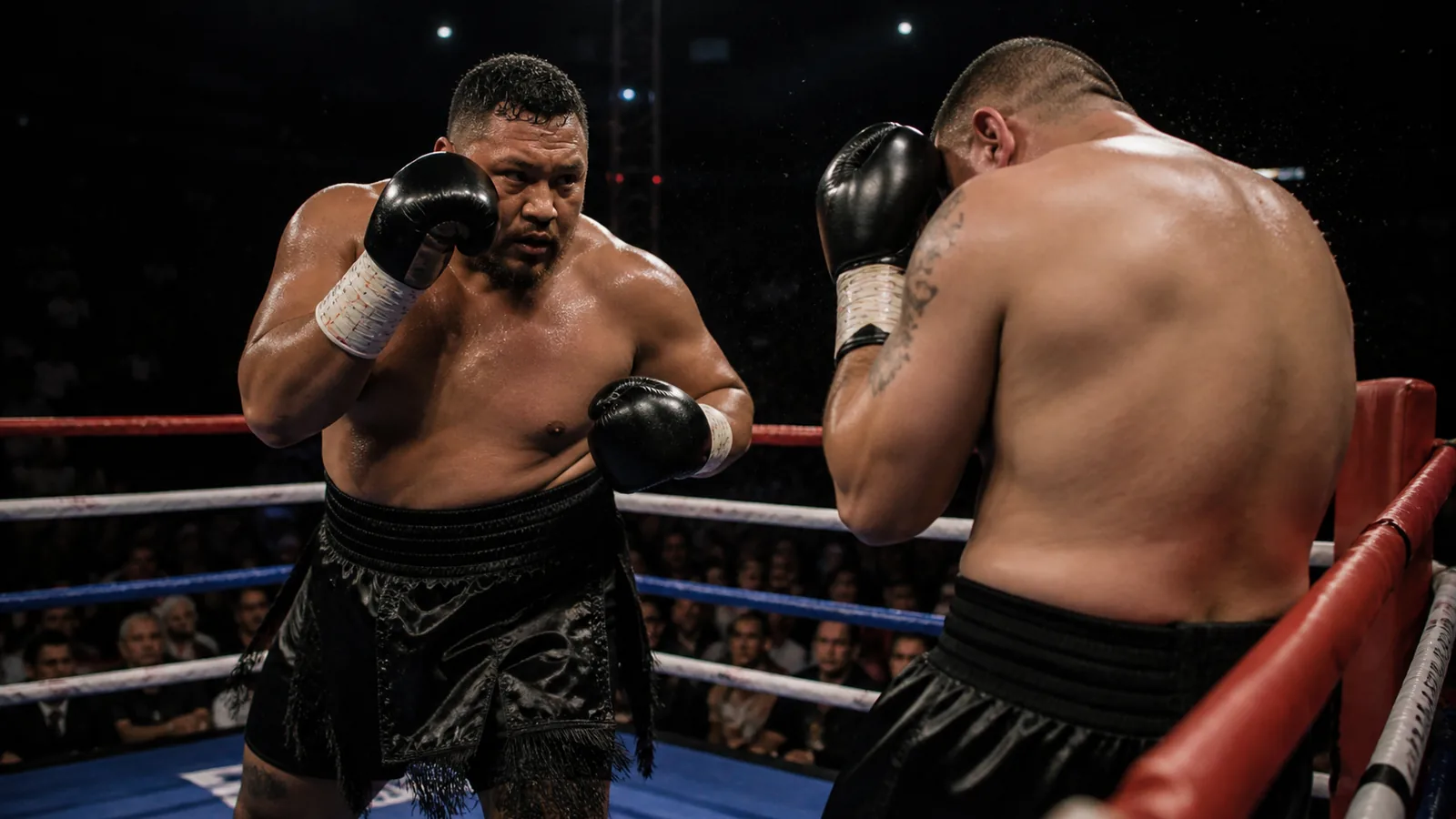
Pressure is not chasing
The first thing to understand is that pressure is not about throwing more punches than the other boxer.
Pressure is about reducing choices.
A boxer under good pressure begins to run out of comfortable decisions. They cannot hold centre ring. Their jab becomes a way to survive rather than a weapon. They start circling to the same side. They throw after they have already moved, rather than setting their feet and punching with authority. Eventually they either exchange when they do not want to, clinch when they do not want to, or sit on the ropes and wait.
That was the shape of the Savage fight.
Teremoana did not need to launch himself from too far away. He did not need to throw six-punch bursts to prove he wanted the stoppage. He stepped into range in stages and made Savage give ground. The key distinction is important: Savage was moving because he was being displaced, not because Teremoana was blindly following him.
BoxingScene’s report described Savage backing up during the first round and offered a revealing detail from the second. Savage held after taking a right hand, then was dropped by another right shortly afterwards. That is the result of a fighter losing both position and confidence at once.
A heavyweight who is made to retreat has to do more than move backwards. He has to carry his weight, keep his guard organised, judge the ropes, watch the lead hand, avoid the right, and still find a way to punch back. That is hard work before a clean shot even lands.
The value of a quiet first round
There is a temptation to dismiss a two-round win as a simple mismatch. Teremoana clearly had the stronger performance, and the level of opposition will need to rise quickly if his development is to mean much. Promoter Eddie Hearn said as much after the bout, arguing that the next opponents must provide a sterner test, according to BoxingScene.
But a quick stoppage can still show good habits.
The opening round mattered because Teremoana did not make it a desperate hunt. Savage was mobile enough to survive early trouble, and had the power on paper to punish a reckless entrance. Teremoana kept taking the space in front of him, looked for the long right hand, and gave Savage no chance to establish his own rhythm.
That is patient pressure.
It does not mean being passive. It means knowing that a fighter does not have to land the final punch immediately. Every measured step forward can take away an escape route. Every jab or feint can ask a question. Every time the opponent circles without gaining ground, the ring gets smaller.
By the second round, Teremoana had learned what Savage did when the distance closed. He had seen that Savage was not taking centre ring back. He had seen that the American was more likely to retreat and hold than plant his feet for a sustained exchange. Then he acted.
The Boxing247 report put it plainly: Savage carried legitimate knockout power, but Teremoana never allowed him to establish it. That is the real achievement of the performance. A big puncher is most dangerous when he is comfortable enough to set traps and let his hands go. Teremoana denied Savage that comfort.
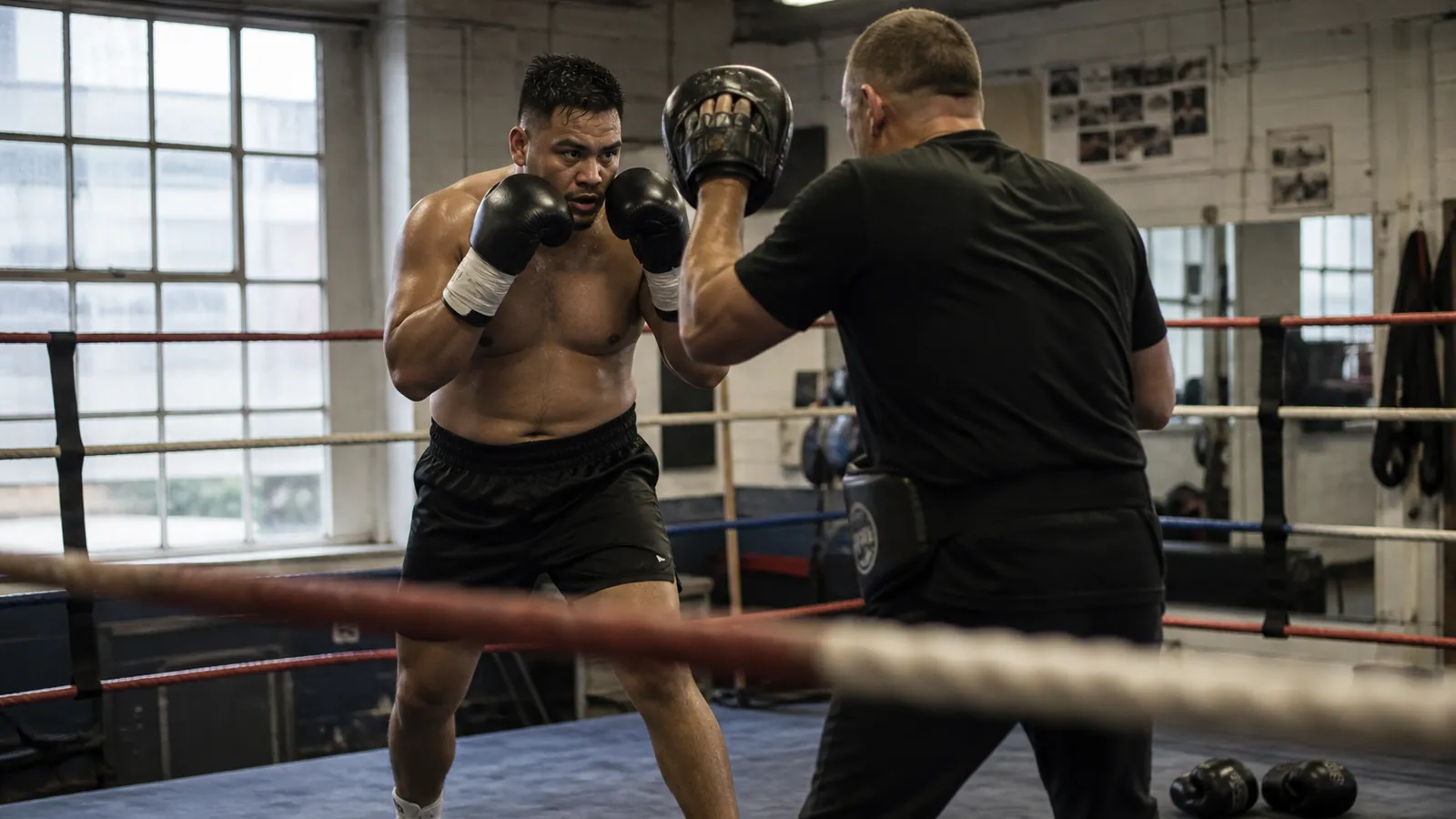
Why rushing makes a heavyweight predictable
Heavyweights do not get many free mistakes.
At lighter weights, a fighter can sometimes rush in, miss, and recover with speed and volume. At heavyweight, one poor entry can decide the night. The slower feet, greater mass and heavier punches make balance a serious issue.
When a pressure fighter reaches too far with the lead foot, their head arrives ahead of their defence. When they throw the right hand from outside range, they often fall square. When they swing wildly after hurting an opponent, they create clear countering lanes.
The opponent may be hurt. He can still punch.
This is why controlled pressure needs a few non-negotiables:
Feet first, hands second
The feet take the ground. The hands make the opponent respect it.
A boxer should not leap in every time the opponent moves. Close the gap with small steps, keep the stance beneath you, and be ready to punch or defend from the position you arrive in. If the feet are wrong, the combination is usually wrong before it begins.
Cut off, do not follow
If an opponent circles left, do not just trail behind them. Take a step that meets the route. This is how the ring starts shrinking.
A fighter who is followed can keep moving. A fighter who is cut off has to make a decision under pressure.
Make the opponent reset
The best pressure fighters do not need to throw continuously. Sometimes the threat of the jab, the lead hand, or the right hand is enough to force a reset. That break costs the opponent momentum and lets the aggressor stay composed.
Teremoana’s performance was not a masterclass over twelve rounds. It did not need to be. But it showed a heavyweight who was willing to let pressure develop rather than forcing the ending from the first exchange.
The right hand only works when the work is done
The knockout punch gets the replay. The work before it makes the punch possible.
Teremoana’s right hand was dangerous because Savage had already been asked to move, cover up and retreat. By the time the second-round shot landed, Savage was not meeting him in the centre with a settled stance and a clear counter ready. He was reacting.
That distinction matters for anyone learning boxing.
You do not create a clean right hand simply by throwing it harder. You create it by making your opponent worry about something else first. A jab can lift the guard. A feint can freeze the feet. A step forward can put the ropes behind them. A patient attack gives the rear hand a target. A rushed attack gives it fresh air.
Teremoana said afterwards that people could see he was “a bit more patient”. The comment was modest but accurate. Matchroom’s event page had billed the contest as the latest step for an unbeaten heavyweight with 11 knockouts from 11 wins. He left it with 12 from 12, but more importantly with a performance that suggested he understands he cannot rely on physical force alone forever.
The next opponents have to be better. They have to jab back, move with more purpose, make him work after the third round, and test whether he can keep the same discipline when a knockout does not arrive quickly.
That is the proper next question. It is not a criticism of what he did to Savage. It is the standard a serious heavyweight prospect must meet.
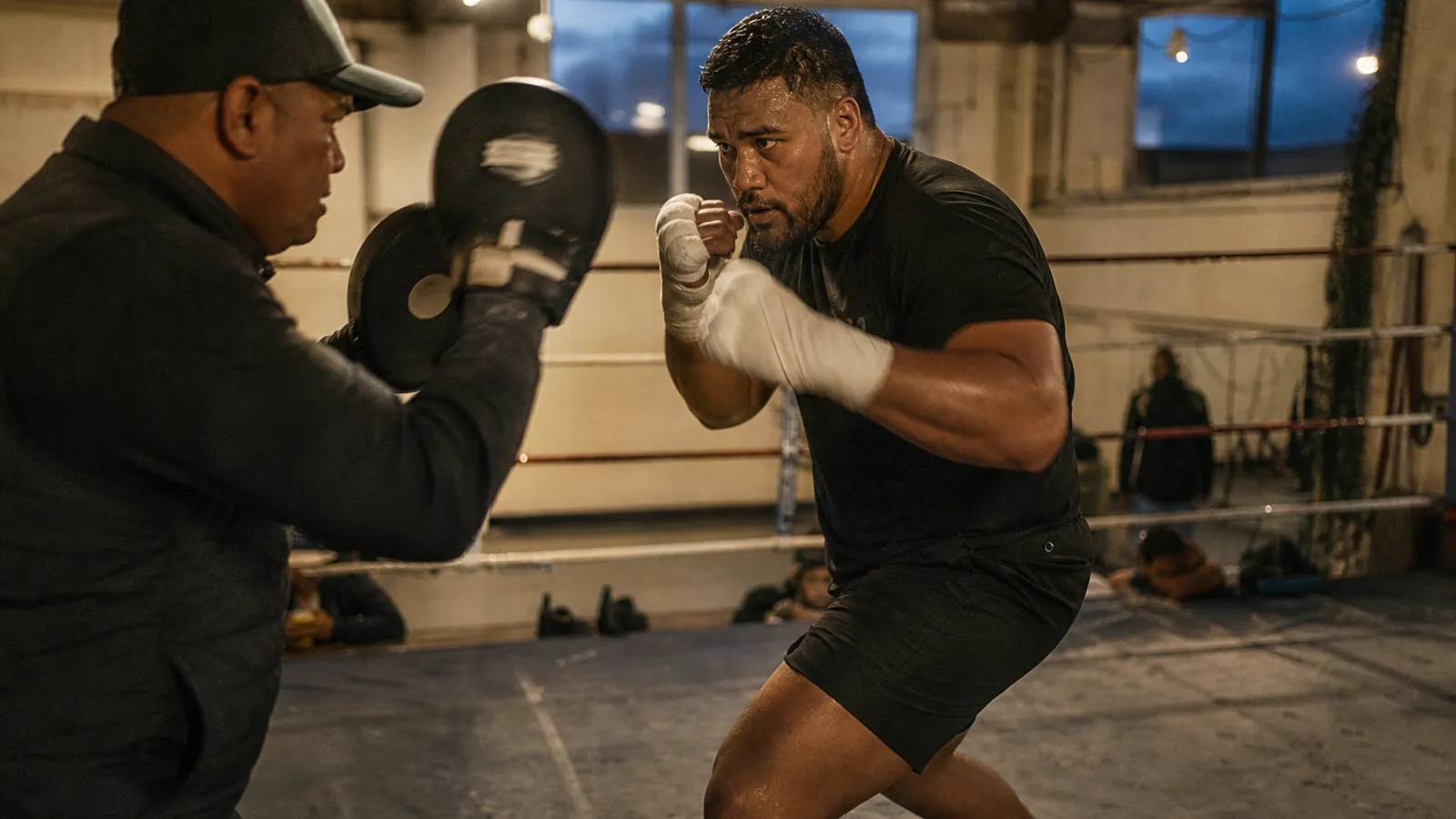
What beginners can take from it
Nobody at a beginner session in Kidbrooke needs to copy a 6ft 6in heavyweight’s knockout sequences. That is not the point.
The useful lesson is the one coaches repeat until it starts to sound boring: do not rush your work.
At Honour & Glory’s boxing classes, we build the basics before trying to make anyone look spectacular. Good stance, controlled footwork, a purposeful jab, a guard that returns after every punch, and the ability to breathe while thinking are what make pressure safe and effective.
A new boxer often believes that being aggressive means moving faster and throwing more. Usually it means the opposite. It means being calm enough to take the right step, throw the simple shot, and stay balanced when the other person moves.
Teremoana’s win was over in two rounds. The pressure that produced it started long before the knockout.
H&G Team
Writer at Honour & Glory Boxing Club, a community boxing gym in Kidbrooke, South East London.
KEEP READING
Marco Romero’s one-round finish: why early pressure works
Use Romero’s quick stoppage of Kahlil Mitchell to explain how controlled first-round pressure creates openings without reckless rushing.
Itauma Stops Franklin: A Heavyweight Shift
Moses Itauma became the first fighter to stop Jermaine Franklin. What that fifth-round knockout tells us about British heavyweight boxing.
Boxing and Blood Pressure: What to Check Before Training
Boxing is vigorous exercise. If you have high blood pressure or take medication, ask a qualified professional what training level is safe.
Was this page helpful?
It takes one tap, and it genuinely helps.
Choose your next step
Turn this article into the right action
Some readers are ready to book. Some need the class route first. Pick the route that matches what you actually want.