Marco Romero’s one-round finish: why early pressure works
Marco Romero’s One-Round Finish: Why Early Pressure Works
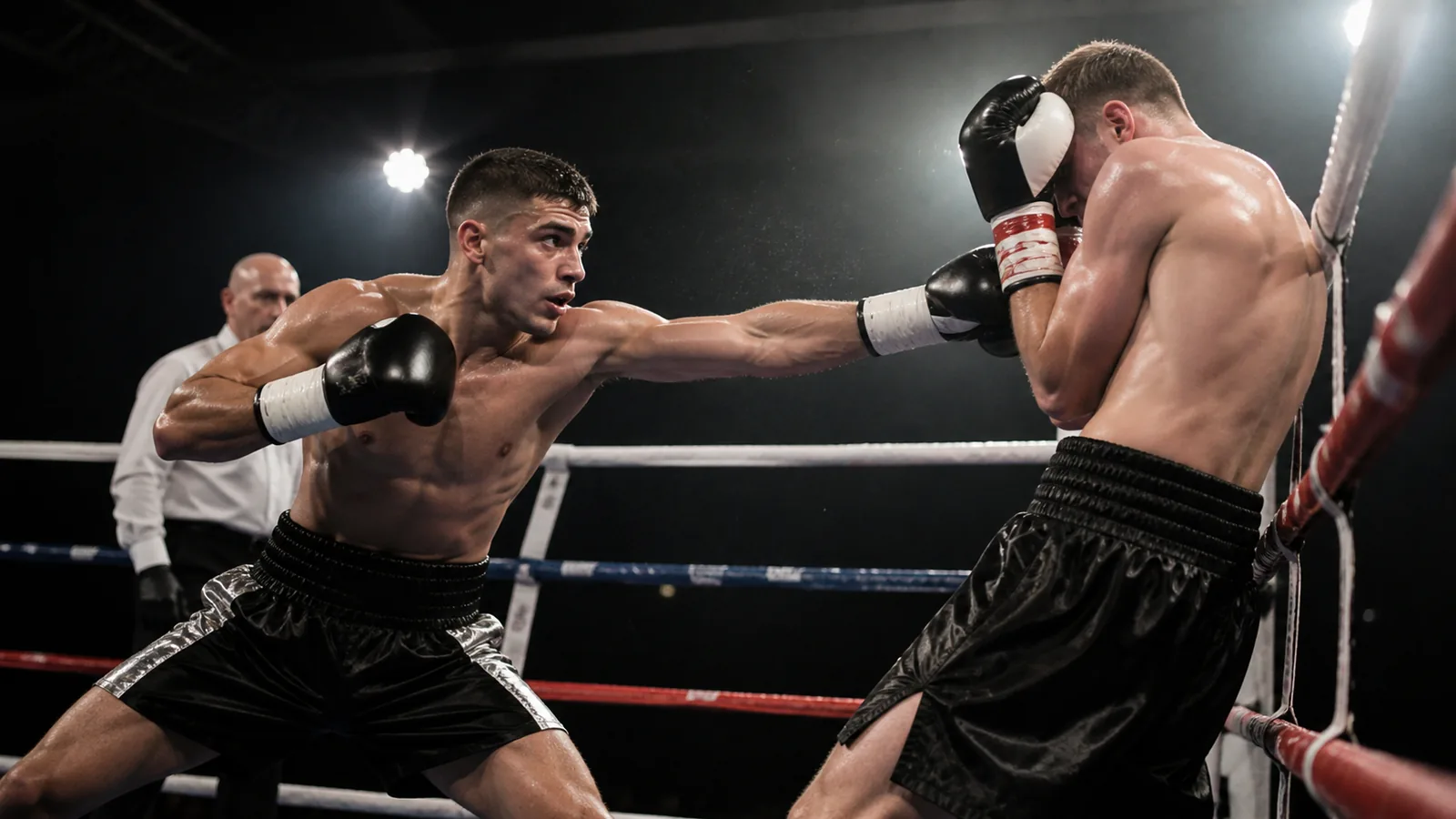
A first-round stoppage can look like a rush from the outside. Marco Romero’s finish of Kahlil Mitchell was not that. It was a young fighter taking the centre, making the other man react, then staying composed enough to punish every bad position.
Romero stopped Mitchell at 2:33 of the opening round in Las Vegas, improving to 15-0 with 13 knockouts. The scheduled eight-round middleweight contest ended quickly, but it offers a useful lesson for any boxer: early pressure works when it is built on balance, distance and good decisions. It fails when it becomes a sprint with your chin in the air.
The footage of Romero’s first-round finish is worth watching more than once. Watch it first for the right hand that changes the fight. Watch it again for what happens immediately afterwards. Romero does not throw himself at Mitchell looking for a highlight. He closes ground patiently, keeps his feet underneath him and gives Mitchell less and less room to reset.
That is pressure. It is not simply throwing more punches.
The fight changed with one clean right hand
Mitchell entered with a 6-1 record and four stoppages, while Romero was the undefeated 14-0 prospect with 12 knockouts. The PBC preview had them level at 164lb, with the taller Mitchell boxing southpaw against Romero’s orthodox stance.
The physical details mattered, but the opening minute mattered more.
Romero landed a hard right hand early and Mitchell was immediately forced into defensive work. That single shot did not finish the fight. It changed the terms of it. Mitchell was no longer using his jab to set the pace. He was trying to get away, then trying to survive in spaces that became smaller with every Romero step.
Boxing News 24’s report correctly noted that Romero did not waste movement or fire wildly. He got Mitchell near the ropes, kept landing cleanly and made the referee’s decision increasingly straightforward.
The stoppage was officially recorded at 2:33 of round one, a result also listed by FIGHTMAG and Big Fight Weekend. But the useful part for young boxers is not the time on the clock. It is Romero’s conduct once he had Mitchell hurt.
He did not confuse urgency with panic.
Pressure starts with the feet, not the fists
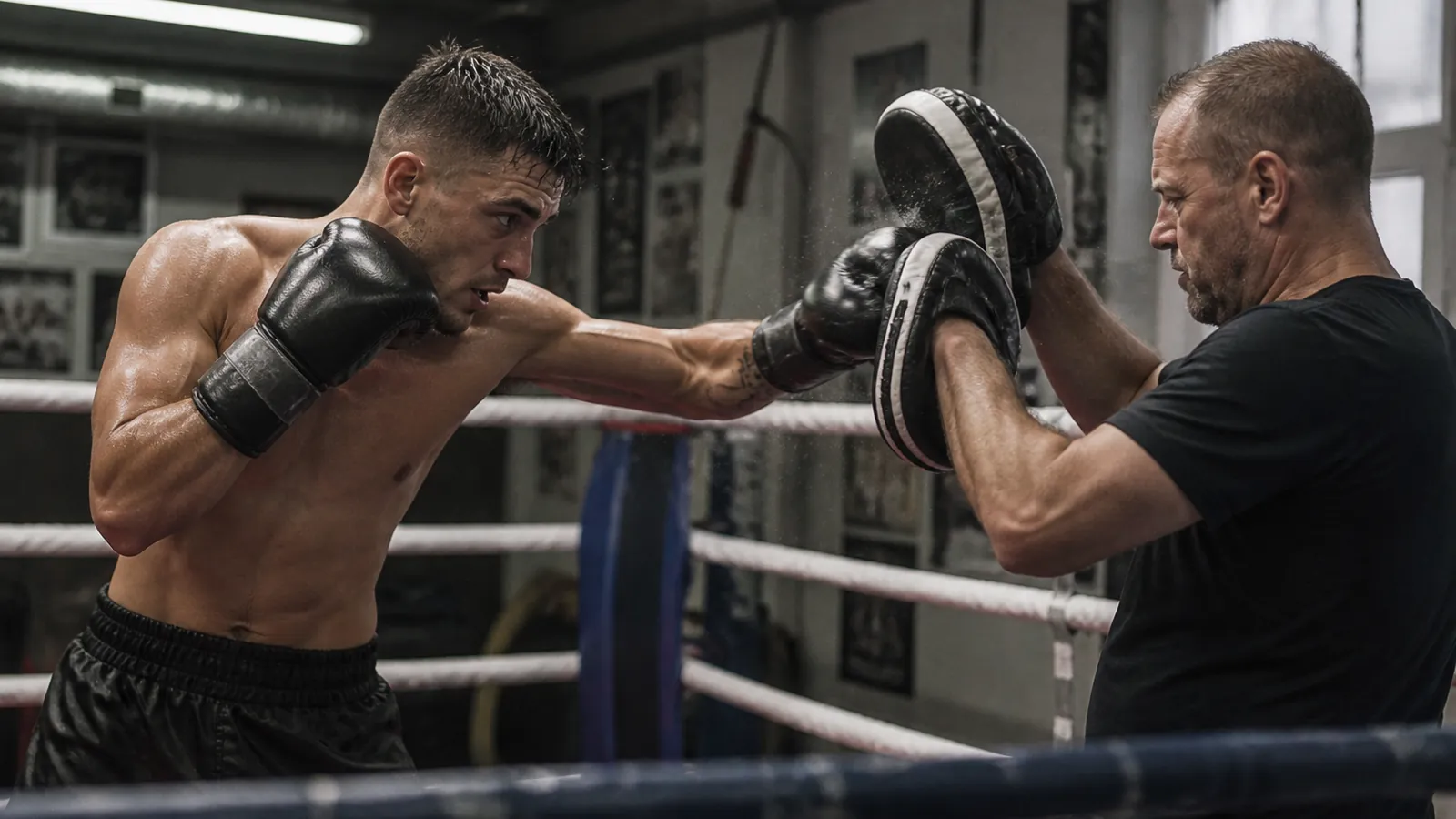
A common mistake in the gym is to hear “put pressure on him” and interpret it as “run forward and throw.” That is how a fighter walks onto a counter right hand, smothers their own punches or tires themselves out before the opponent has had to solve anything.
Romero’s version was much better.
After landing the right hand, he advanced in stages. His feet remained far enough apart to punch with force and move again. His chin stayed down. His hands were in a position to defend as well as attack. The commentary on the video repeatedly picked out that balance, describing him as stalking rather than charging.
This distinction is everything.
A rushing boxer takes away their own options. Their feet cross, their weight falls over the front knee and every punch becomes a desperate attempt to finish the job. A controlled pressure fighter keeps options. They can jab, feint, step out, change level, throw to the body or let the opponent make the next mistake.
Romero did exactly that. He moved Mitchell towards the corner, but he did not crash into him. He created enough room to turn his shoulders over on the shots.
For a boxer learning this in Kidbrooke, think of the goal as taking away the other person’s preferred distance. You do not need to land six punches every time you step forward. You need to make them feel that backing up is costly and standing still is worse.
The body attack made the head shots easier
Romero’s right hand got the immediate reaction, but his body work helped make the pressure sustainable. Young punchers often hunt the head because that is where the finish looks dramatic. Smart fighters understand that a guarded head is often an invitation to work downstairs.
In the video, Romero mixes head and body punches rather than loading up on one target. That forces Mitchell to make a choice. Keep the elbows tight and leave the head exposed, or lift the guard and leave the ribs and solar plexus available.
A body attack does not have to produce a body-shot knockdown to be effective. It can freeze the feet, narrow the opponent’s vision and make a high guard static. Once that happens, the head becomes easier to find.
The best early pressure is not a fixed combination. It is a sequence of questions:
- Can you handle my jab and front-foot feints?
- Can you move without crossing your feet?
- Can you defend the body while keeping your head safe?
- Can you get off the ropes without throwing something meaningful back?
Mitchell could not answer enough of those questions quickly enough. Romero made him pay.
Why first-round pressure creates openings
The first round is often when a boxer has the most information to gather. How fast is the other fighter? Do they slip away from the jab? Are they comfortable being backed up? Do they fire back when crowded?
That is why a disciplined fast start can be so valuable. It gives your opponent a problem before they have built confidence or rhythm.
Romero used the first minute to establish that Mitchell could not casually move backwards. Once Mitchell was hurt, the pressure made him more predictable. He moved towards the ropes, covered up and waited for gaps that did not appear. Romero could then work from a stronger position.
There is a wider lesson in the main event from the same Las Vegas card. Teofimo Lopez’s win over Rolando Romero was not a one-round demolition, but it was another example of forward work having a purpose. Lopez pressed, went to the body and made Romero give up rounds through inactivity. Big Fight Weekend’s report described Romero as allowing Lopez to come forward and establish himself as the aggressor.
Different fights, different stakes, same principle: pressure is valuable when it makes the opponent defend instead of choose.
Do not rush the finish
The dangerous moment in a stoppage sequence is often just after the first big shot lands. Adrenaline tells a fighter to throw everything. Good coaching tells them to look.
Romero’s composure after hurting Mitchell was the most impressive part of the performance. He maintained a sensible stance, attacked in short bursts and used small adjustments to keep Mitchell trapped. He did not throw himself so far forward that Mitchell could tie up, pivot away or fire back with a desperate counter.
A good rule for beginners and developing boxers is this: once you hurt someone, slow your eyes down.
That does not mean becoming passive. It means seeing the openings properly. If the opponent is covering high, go downstairs. If they are shelled up against the ropes, take half a step back so your shots have room. If they lunge out, be ready with the straight punch or hook. If the finish is not there, do not donate a counter-punch just because you want it to be.
At Honour & Glory, boxers learn that pressure is a skill, not a personality trait. You do not need to be naturally aggressive to take ground well. You need stance, conditioning, awareness and the confidence to make good decisions under pressure.
A useful drill for controlled pressure
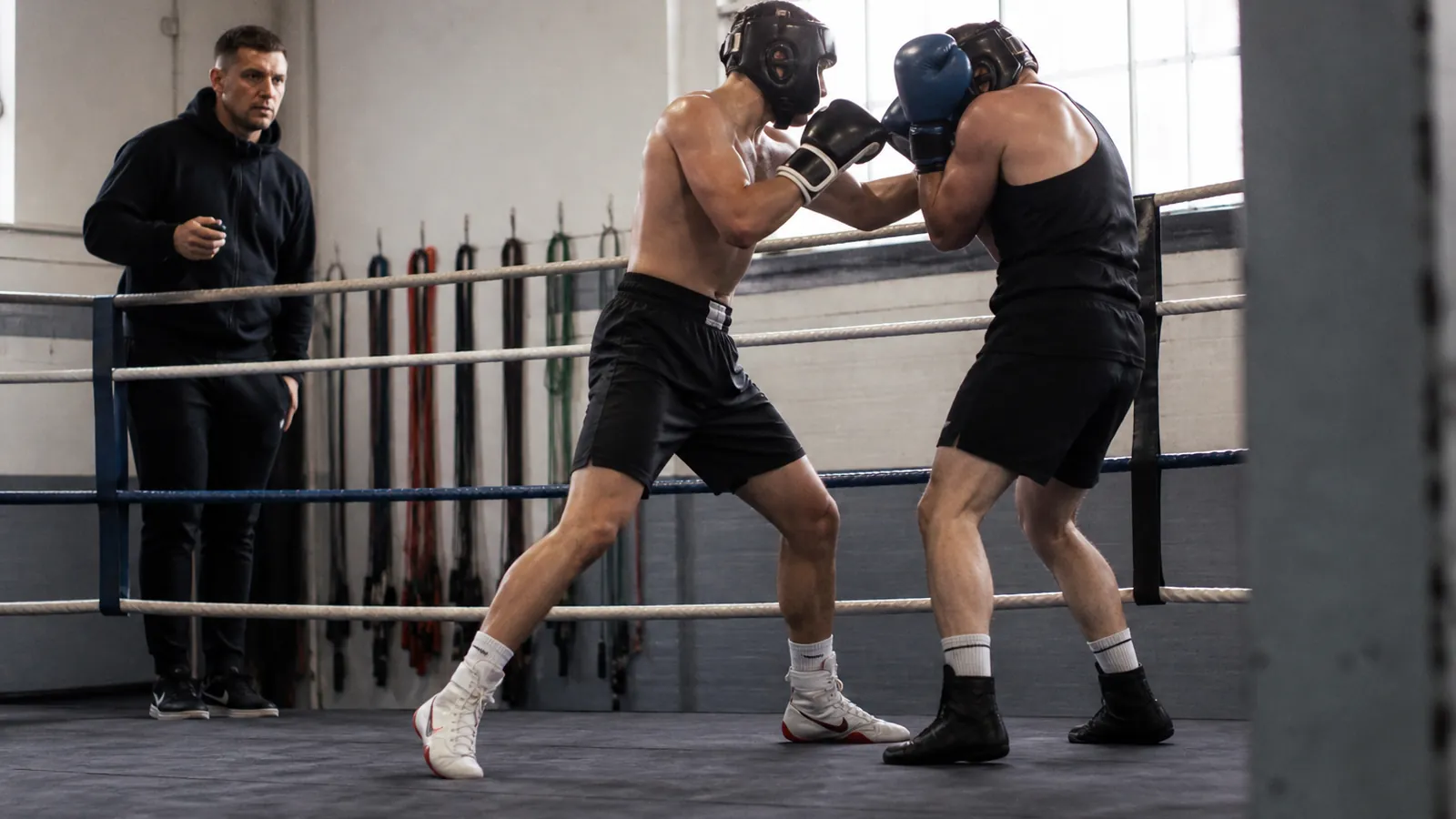
The simplest way to practise this is controlled ring-cutting rather than open sparring brawls.
One boxer works as the pressure fighter. The other uses the ring and is allowed to jab, move and counter, but not run or hold. The pressure fighter’s job is not to score a knockout. Their job is to take the centre, move their feet into range, cut off the exit and finish each exchange balanced enough to defend.
Set a clear target:
- No crossing feet.
- No lunging after missed punches.
- Finish combinations with the guard in place.
- Use the jab or feint before stepping into range.
- Work head and body rather than loading up on one punch.
- If the opponent escapes, reset and begin again.
That is the habit behind a performance like Romero’s. The knockout is the visible outcome. The real work is the calm control beforehand.
Romero’s win over Mitchell does not prove he is ready for every leading middleweight, and the level of opposition will rise as his career develops. But as an exhibition of how a prospect should handle an opponent once momentum turns, it was sharp and instructive.
Early pressure is not reckless rushing. It is taking space with purpose, putting the other boxer under decisions they do not want to make, and staying balanced enough to capitalise when the opening comes.
If you want to learn how to box with that sort of control, book a trial class at Honour & Glory Boxing Club in Kidbrooke. Classes are available for people aged 7+ and focus on the fundamentals that make pressure effective: stance, movement, defence, body punching and composure.
H&G Team
Writer at Honour & Glory Boxing Club, a community boxing gym in Kidbrooke, South East London.
KEEP READING
Teremoana’s two-round stoppage and the value of patient pressure
Use Teremoana Teremoana’s fresh second-round win over DeAndre Savage to examine how a heavyweight can apply pressure without rushing into predictable exchanges.
Boxing and Blood Pressure: What to Check Before Training
Boxing is vigorous exercise. If you have high blood pressure or take medication, ask a qualified professional what training level is safe.
Itauma Stops Franklin: A Heavyweight Shift
Moses Itauma became the first fighter to stop Jermaine Franklin. What that fifth-round knockout tells us about British heavyweight boxing.
Was this page helpful?
It takes one tap, and it genuinely helps.
Choose your next step
Turn this article into the right action
Some readers are ready to book. Some need the class route first. Pick the route that matches what you actually want.