Naoya Inoue debate: why dominance still attracts criticism
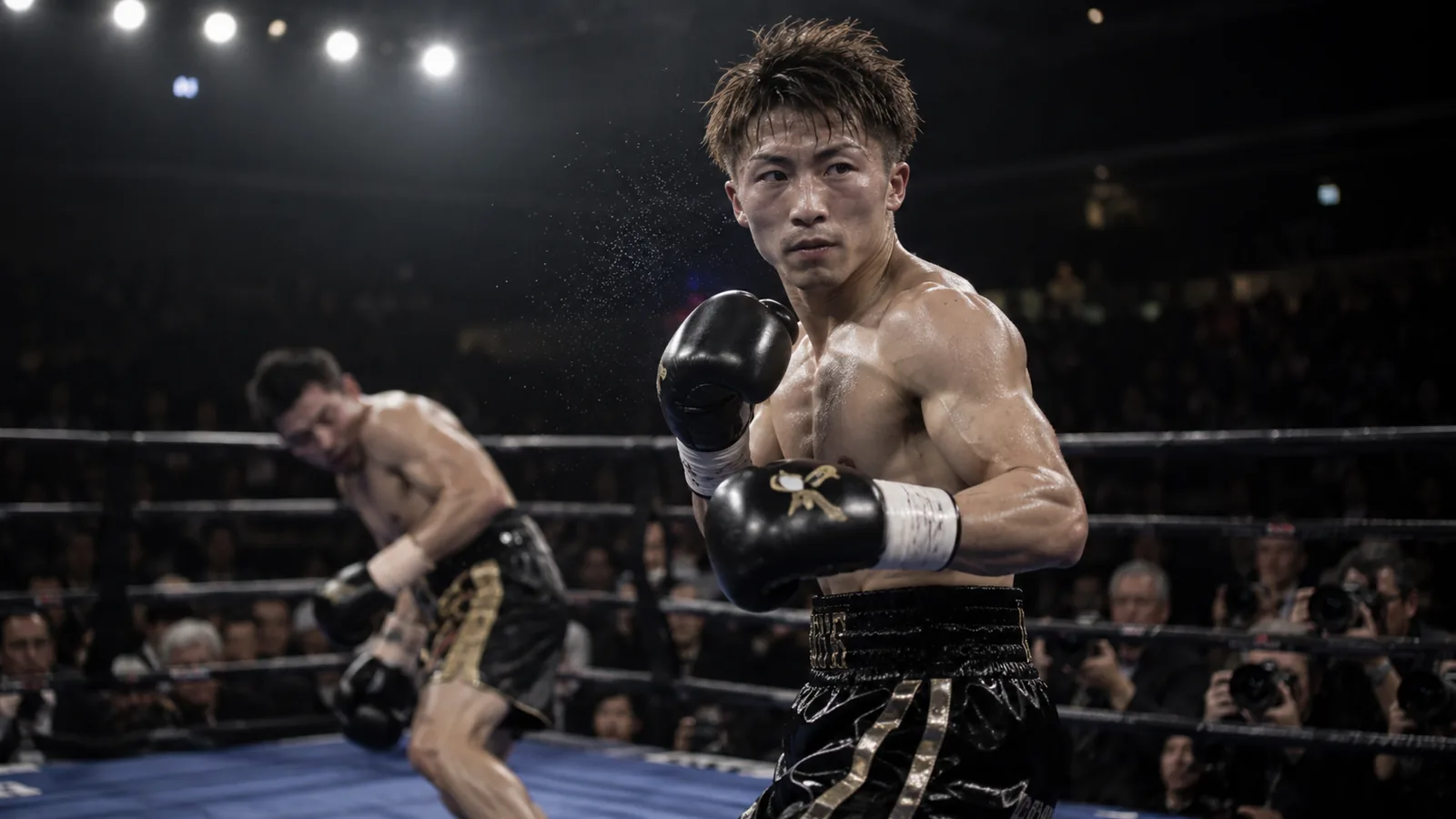
Naoya Inoue and the Strange Punishment of Making Boxing Look Easy
Naoya Inoue has reached the stage of greatness where a clear win can be treated as a disappointment.
That sounds absurd until you watch how boxing talks about its best fighters. Inoue is undefeated at 33-0 with 27 knockouts, a four-weight world champion and a two-time undisputed champion. His record is tracked by both BoxRec and Box.Live. He has beaten elite opponents across divisions, from Nonito Donaire and Emmanuel Rodriguez at bantamweight to Stephen Fulton, Marlon Tapales, Murodjon Akhmadaliev and Junto Nakatani at super-bantamweight.
Yet the better he gets, the more some people seem determined to find a reason it was not quite enough.
He wins early, and the opponent was never any good. He wins every round, and he was supposedly too cautious. He gets caught, and it becomes proof that he is fragile. He chooses a measured approach against a dangerous fighter, and suddenly the performance lacks drama.
That is not serious analysis. It is the tax paid by fighters who make very difficult work look routine.
The problem with dominance
Boxing supporters say they want mastery. Often, they mean they want chaos.
A competitive fight gives viewers tension, argument and obvious turning points. It tells an easy story: one fighter struggled, adapted, survived, then prevailed. A dominant performance can be harder to appreciate because the decisive work happens before it becomes visible. Distance is won with feet. Exchanges are won with feints. Power shots are set up by patterns established rounds earlier.
Inoue does not merely punch hard. Plenty of fighters punch hard. He makes opponents unsure of when to throw, where to stand, and how long they can remain in range. That uncertainty makes opponents look static. It can also make observers underestimate the person causing the problem.
The knockout is then treated as the whole story. It rarely is.
Against Paul Butler in 2022, Inoue became undisputed bantamweight champion with an eleventh-round stoppage. Butler did not suddenly become passive for no reason. Inoue had spent the fight taking away exits, controlling the centre and applying pressure without giving Butler the reckless opening he wanted.
The same applies to Inoue’s win over Stephen Fulton in his first fight at super-bantamweight. Fulton was an unbeaten, highly regarded champion with size, reach, movement and an awkward rhythm. Inoue dismantled him inside eight rounds. Rather than elevating the achievement, some response reduced Fulton to a fraud overnight.
That is one of boxing’s least useful habits. A fighter can be very good and still be made to look ordinary by somebody better.
The criticism after Junto Nakatani
The debate has sharpened after Inoue’s unanimous-decision win over Junto Nakatani in Tokyo in May. Nakatani was not a disposable challenger. He was a fellow elite Japanese champion, a southpaw with physical advantages, serious punch power and an unbeaten record.
Inoue won clearly, but he did not produce the instant destruction some viewers had come to expect. That was enough for some people to call the display underwhelming.
It was not.
As 3Kings Boxing argued in its report on the reaction, the performance was a controlled response to a genuinely dangerous opponent. Inoue chose accuracy and position over a reckless shoot-out. When Nakatani had spells of momentum, Inoue adjusted, regained control and closed strongly.
That is what elite boxing is meant to look like.
There is a difference between wanting to see a fighter tested and pretending that a disciplined response to a test is somehow evidence against him. Nakatani’s height, reach and southpaw stance posed real tactical questions. Inoue did not have to make the fight a war to prove he was the better boxer. He had to solve it, and he did.
The result also matters in the broader context. Inoue had already beaten Murodjon Akhmadaliev and David Picasso by decision in successive title defences. Some viewers interpreted the lack of stoppages as decline. A more honest reading is that championship-level opposition, aware of Inoue’s danger, came prepared to survive as well as win.
A knockout ratio is not a contract. It is a record of what happened against particular opponents on particular nights.
There are valid questions to ask
None of this means Inoue should be insulated from criticism. Great fighters are not religious figures. They should be analysed properly.
The substantive question is whether his style will translate as he moves up in weight. That is a fair question.
At super-bantamweight, Inoue has carried his speed, timing and power brilliantly. Featherweight is a different physical problem. Fighters are naturally larger. They can take a shot better, fight from further away and make the ring feel smaller through strength rather than speed. Inoue is not huge even at 122lbs, so the issue is not whether he is brave enough to move up. It is whether his best weapons will have the same authority when the men in front of him are sturdier and longer.
That is a real boxing conversation.
His own comments show that he understands it. Inoue told Boxing News that potential featherweight contests with Rafael Espinoza and Brandon Figueroa would be difficult to predict because of their unusual styles and sense of distance. That is not a fighter ducking a challenge. It is a world-class fighter describing the actual tactical difficulty.
Espinoza is exceptionally tall for the weight. Figueroa creates problems through output, awkward angles and pressure. Those are not names to throw around casually. They are the sort of opponents who can test whether Inoue’s foot positioning and counter-punching remain enough when the physical equation changes.
A possible fight with Jesse “Bam” Rodriguez is also compelling precisely because it is not obvious. Rodriguez is a superb technician, sharp southpaw and one of the few fighters whose timing could force Inoue to think differently. But the idea that Rodriguez would simply outclass Inoue is as lazy as the claim that Inoue would steamroll him without difficulty.
A serious prediction starts with the question: who can impose their distance? Not: who has the louder online supporters?
Why the standard keeps moving
Inoue has a problem shared by the very best fighters: once people decide he is special, they stop judging him against other excellent fighters and start judging him against an imaginary perfect version of himself.
If he wins a difficult fight on points, he is no longer “The Monster”. If he gets hit, he is suddenly vulnerable. If an opponent wins a round, the opponent has supposedly exposed him.
This is particularly common in smaller weight classes, where viewers sometimes fail to appreciate the technical work because they arrive expecting violence. Inoue provides violence when it is there to be taken. But he is not merely a puncher with quick hands. He is a patient, calculating boxer who sets traps with his jab, brings opponents onto shots and attacks the body with the same intent he attacks the head.
That precision is why he has sustained elite form across four divisions.
The wider media record gives the proper scale of his career. The Independent’s coverage of Inoue traces a run that includes the Donaire rivalry, becoming undisputed at bantamweight, moving up to dismantle Fulton, and continued super-bantamweight title defences. It is a body of work, not a highlight reel.
The current criticism is also proof that expectations have become distorted. A fighter who is expected to win every minute of every round against every capable opponent has already established an extraordinary standard.
Appreciation is not blind loyalty
Boxing needs scepticism. Promoters oversell. Records can be padded. Belts can be collected without facing the most dangerous available opponent. There is nothing wrong with asking who Inoue should fight next, whether a featherweight move is timely, or how he handles a larger southpaw who can work at range.
But there is a difference between scrutiny and reflexive dismissal.
Inoue has done more than enough to be judged as one of his era’s defining fighters. He has unified divisions, travelled through weight classes, taken difficult fights and produced the sort of finishes that make people sit forward in their chairs. The fact that he can now win a tactical twelve-rounder against another elite fighter and be criticised for not being spectacular enough says more about the audience than it does about him.
At a boxing gym, this is easier to understand. Anyone who has spent time learning distance knows how difficult it is to land cleanly on somebody who understands the ring. Anyone who has sparred knows how much thought sits behind looking calm under pressure. The best people make it appear simple because they have done the hard work for years.
That is not a reason to dismiss them. It is the reason to watch closely.
For young boxers and adults learning the sport in Kidbrooke, the lesson is useful. Do not confuse drama with quality. A wild exchange can be exciting. A fighter who sees it coming, steps half a pace away, counters cleanly and leaves untouched has done something harder.
That is what Inoue keeps doing.
H&G Team
Writer at Honour & Glory Boxing Club, a community boxing gym in Kidbrooke, South East London.
KEEP READING
We Did the Maths: Naoya Inoue Is the Greatest Boxer of All Time
The H&G All-Time Index puts Naoya Inoue above Crawford, Armstrong, Louis, Robinson, Mayweather and Ali. Here is why the numbers point to him, and how to test the weights yourself.
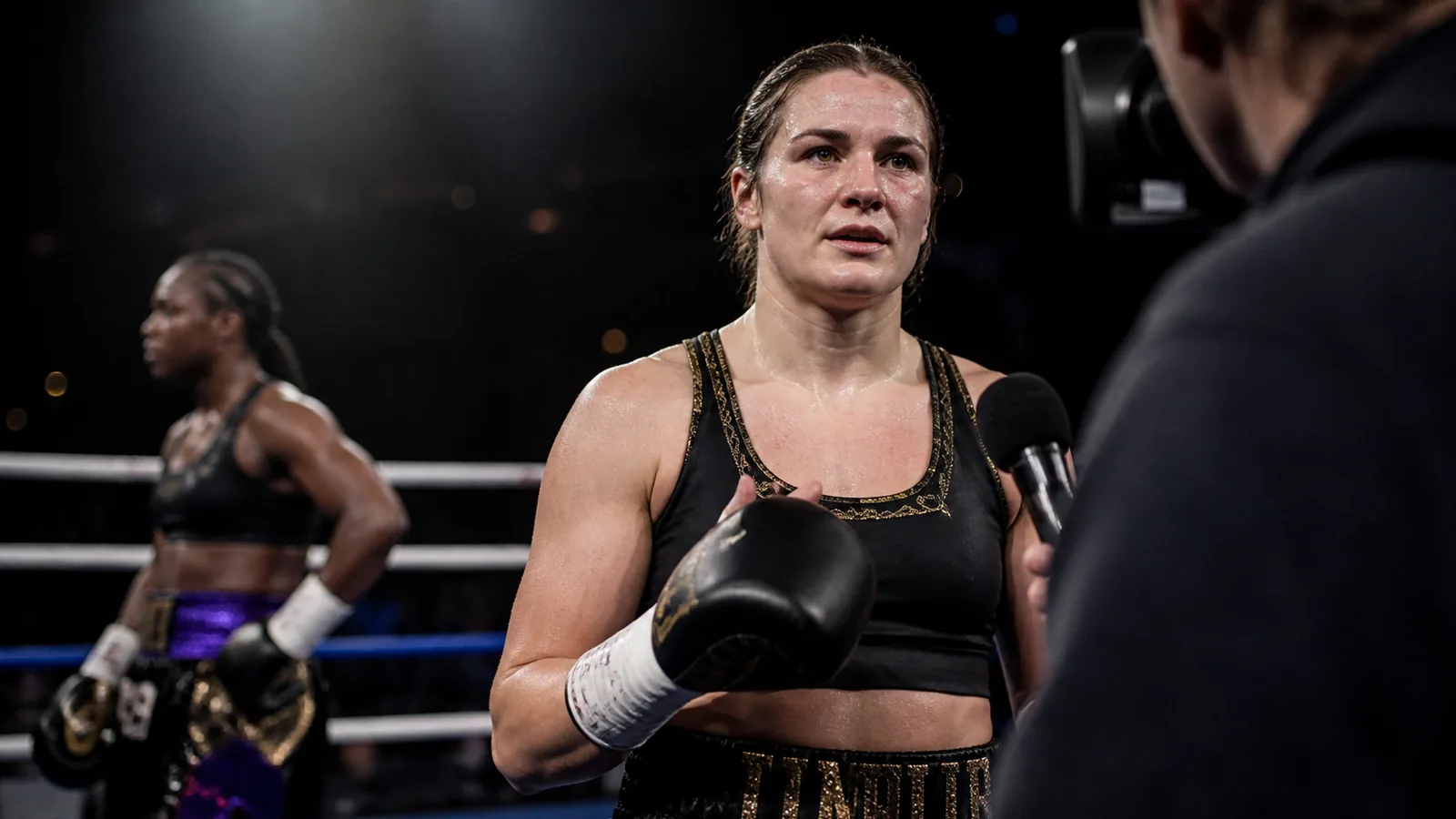
Katie Taylor answers Claressa Shields pound-for-pound debate
Taylor’s response gives the women’s pound-for-pound argument a timely, fighter-led hook rather than another abstract ranking debate.
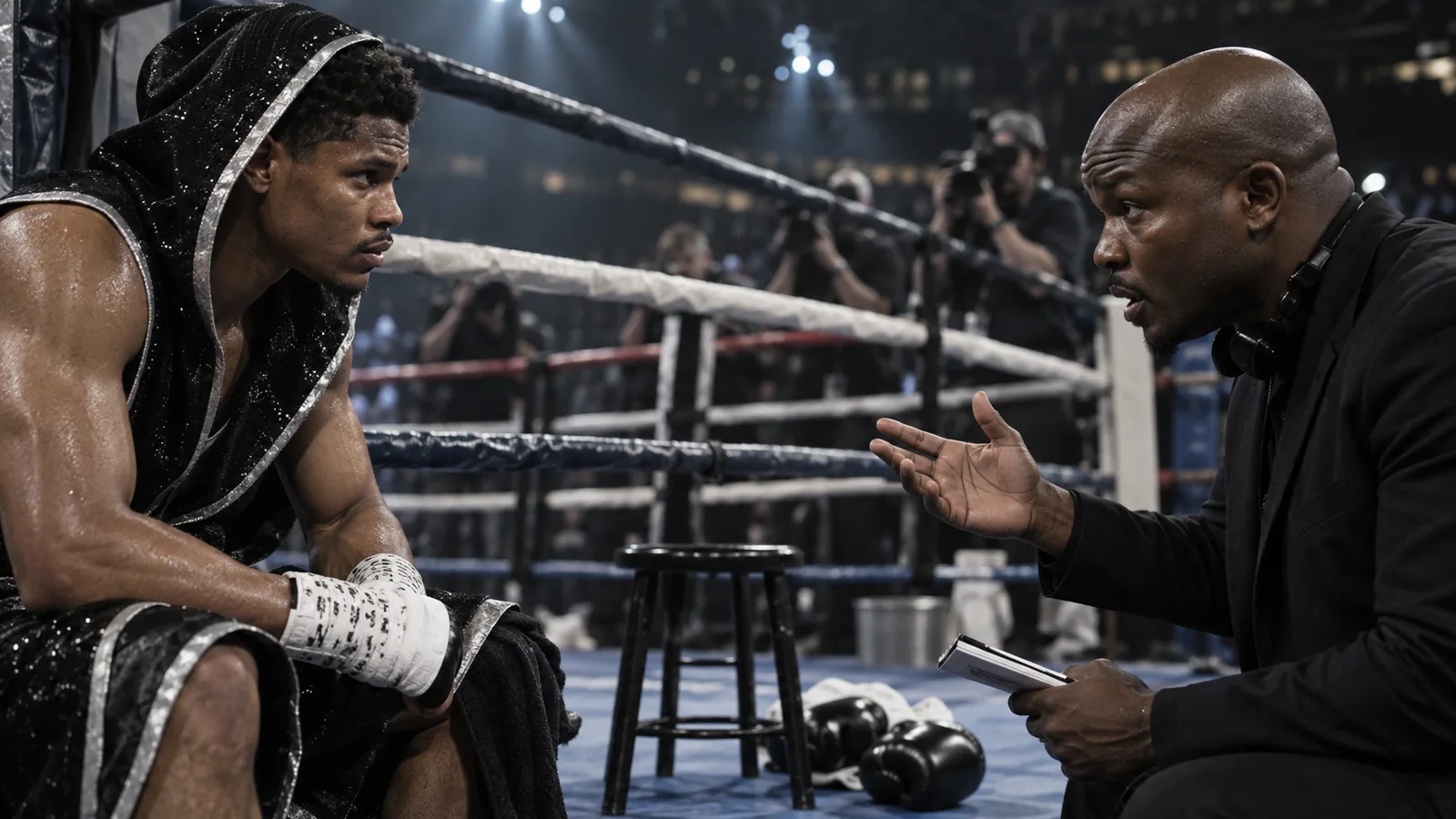
Shakur Stevenson and Tim Bradley: when criticism turns personal
Use the latest public exchange to examine the line between sharp former-fighter analysis and a feud that distracts from the technical argument around Stevenson.
Was this page helpful?
It takes one tap, and it genuinely helps.
Choose your next step
Turn this article into the right action
Some readers are ready to book. Some need the class route first. Pick the route that matches what you actually want.