We Did the Maths: Naoya Inoue Is the Greatest Boxer of All Time

The take is not shy: Naoya Inoue is the number one boxer in the H&G All-Time Index.
That means he sits above Terence Crawford, Henry Armstrong, Joe Louis, Sugar Ray Robinson, Floyd Mayweather Jr and Muhammad Ali.
Plenty of people will disagree with that. Good. Boxing is better when the argument is alive.
But this is not a vibes list. We did the maths. The current H&G All-Time Index v2.0.0 is built from fight-derived rating signals, opponent strength, title evidence, class control, dominance over contemporaries and sustained top-level career work. Under that frame, Inoue comes out first.
If you hate the weights, that is fine too. Use the GOATometer and move the dials yourself.
What the number says
Inoue is ranked number one with an H&G All-Time Index of 99.94. Crawford is second on 98.35. Armstrong is third on 98.09. Louis and Canelo Alvarez sit just over 97. Robinson is 96.59. Mayweather, Ali and Oleksandr Usyk are all in the 95s.
That is not a random ordering. It is the result of a six-part career score:
- Sustained head-to-head rating: 26%
- Quality of opponents beaten: 21%
- Sustained top-level career: 14%
- Major title-control signal: 14%
- Dominance over contemporaries: 13%
- Major title evidence: 12%
Those weights are not magic. They are a judgement call. But they are published, fixed for the release and applied across the board. The same frame that rates Ali, Robinson, Mayweather, Pacquiao, Duran, Pep and Armstrong also rates Inoue.
Why Inoue wins this version
Inoue does not win because he is famous now. He wins because his case is strong across several different kinds of greatness at once.
His public H&G profile has him at 33-0-0, active from 2012 to 2026, with a peak-form Elo of 2,235.08 (Elo is a points system where beating stronger opponents earns more). His rating curve climbs from the early 1900s in 2012 to the mid-2200s by 2026. That matters because the Index is not only asking who had one brilliant night. It is asking who reached a high level and kept adding proof.
The model sees Inoue as strong above field in rating profile. It also sees strong title evidence, strong title-control evidence and strong top-level longevity. His opponent-quality signal is above field, with signature wins listed against Junto Nakatani, Nonito Donaire, Luis Nery, Stephen Fulton and Jamie McDonnell.
That mix is the point.
A fighter can have a terrifying peak and a thin title record. A fighter can have a famous name and a messier set of results. A fighter can have a long career but less separation from rivals. The Inoue case is not only one thing. It is rating level, title control, repeat elite work and a clean unbeaten record pulling in the same direction.
The comparison that makes people angry
The hard part is not saying Inoue is great. Everyone serious knows he is great.
The hard part is saying he belongs above the sacred names.
Robinson has the historical aura. Ali has the cultural force and the heavyweight resume. Mayweather has the perfect record and the highest peak-form Elo among that top group. Armstrong has the three-division legend and absurd old-era output. Crawford has the modern unbeaten multi-weight case. Usyk has cruiserweight and heavyweight title control.
None of those cases disappear.
The H&G answer is narrower: under this scoring frame, Inoue has the best full-career blend in the current release. He does not need to beat every old legend in a fantasy fight. He does not need to be more culturally important than Ali. He does not need to be more filmed, more mythologised or more quoted than Robinson.
He needs the strongest all-time career signal in the data we are using.
That is what he has.
What the model likes most
The biggest positive driver is his sustained head-to-head rating. That part of the score asks whether the fight results say he reached a high level and whether that level held up.
His title record also helps heavily. So does the title-control signal. In plain English: he was not just winning fights. He was taking control of weight classes and staying near the top long enough for the system to reward more than a short hot run.
His longevity score is also strong. That may sound strange for a fighter who is still active, but the Index is not crediting him for imaginary future wins. It is crediting the completed run in front of it. From 2012 to 2026, he has built enough repeated high-level evidence to sit in the inner circle.

There is one awkward line: dominance over contemporaries is below field in the public driver table.
That does not mean Inoue was not dominant. It means that after the shared rating profile is already counted, this specific residual dimension is not where his case gains ground. That is an important distinction. The Index is not built to let one kind of dominance count twice.
So the honest version is this: Inoue wins without every dial loving him equally. He wins because enough major dials love him a lot.
Why the GOATometer matters
All-time boxing arguments usually hide the weights.
One fan says Ali because heavyweight greatness and historical meaning matter most. Another says Robinson because old boxing people have repeated his name for seventy years. Another says Mayweather because 50-0 and elite defensive control are hard to argue with. Another says Pacquiao because the weight climb is absurd. Another says Armstrong because three simultaneous championships still sounds fake.
Those are not only disagreements about fighters. They are disagreements about weighting.
That is why the GOATometer exists.
It starts from the official H&G weights. Then you can change them. Want opponent quality to matter more? Move that dial. Want title control to matter less? Move that dial. Want dominance over contemporaries to decide more of the board? Move that dial and see who rises.
The useful part is not that everyone ends up agreeing with us. They will not.
The useful part is that the argument becomes visible. You are no longer saying, "my guy feels greater than your guy". You are saying which parts of greatness you value and then seeing what that does to the list.
The fair objections
There are fair objections to any all-time ranking.
Old records are messy. Modern fighters have more film. Heavyweights carry a different public weight. Lower-weight greatness can be under-sold outside hardcore boxing circles. Active fighters can still change their own case. Some all-time arguments care about influence, courage, fame and meaning more than record strength.
Those objections matter.
That is why the methodology page says the Index is not a fantasy-fight predictor and not a claim that the computer has settled boxing history forever. It is a versioned rating. It uses a published frame and a fixed release. The versions page explains what changed in the current release.
So no, this is not sacred scripture.
It is a serious scoring frame saying something provocative: when you put all the current evidence through the same six dimensions, Inoue is first.
The bottom line
If your personal list still has Robinson, Ali, Mayweather, Armstrong, Pacquiao, Duran, Louis or Usyk at number one, that is a defensible boxing opinion.
But if you want the H&G answer, it is Inoue.
Not because he is the newest star. Not because recency bias won. Not because we wanted a headline.
Because the current maths puts him there.
Start with the main all-time list. Read the Naoya Inoue profile. Then open the GOATometer and try to knock him off the top.
That is the fun of it.
H&G Team
Writer at Honour & Glory Boxing Club, a community boxing gym in Kidbrooke, South East London.
KEEP READING
Naoya Inoue debate: why dominance still attracts criticism
Explore why elite fighters can be dismissed or judged more harshly precisely because they make difficult work look routine; separate substantive stylistic questions from reflexive backlash.
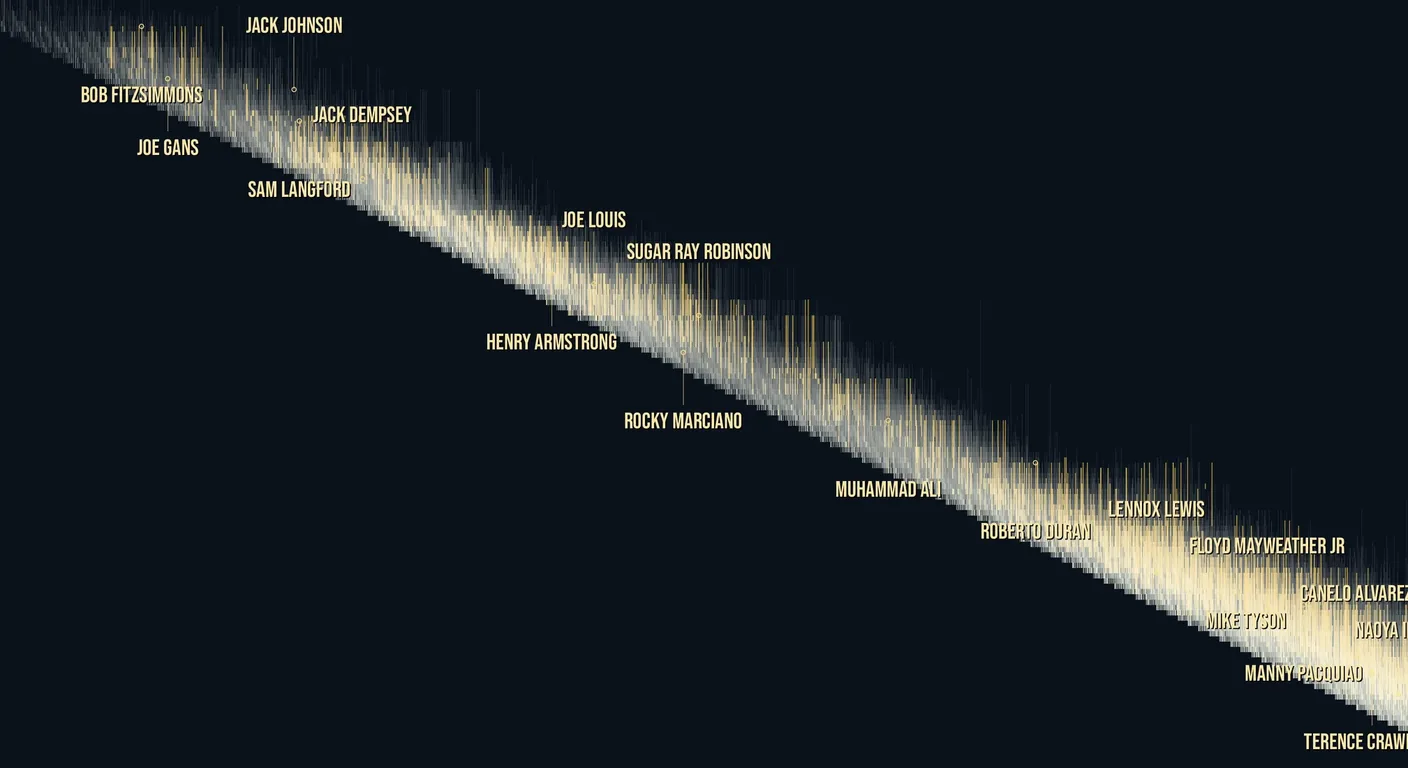
What the H&G All-Time Index Means by Greatness
Greatness has a precise meaning on our all-time boxing list: the strength of the career a fighter actually put on the record. Here is the definition in plain English, and what it deliberately leaves out.
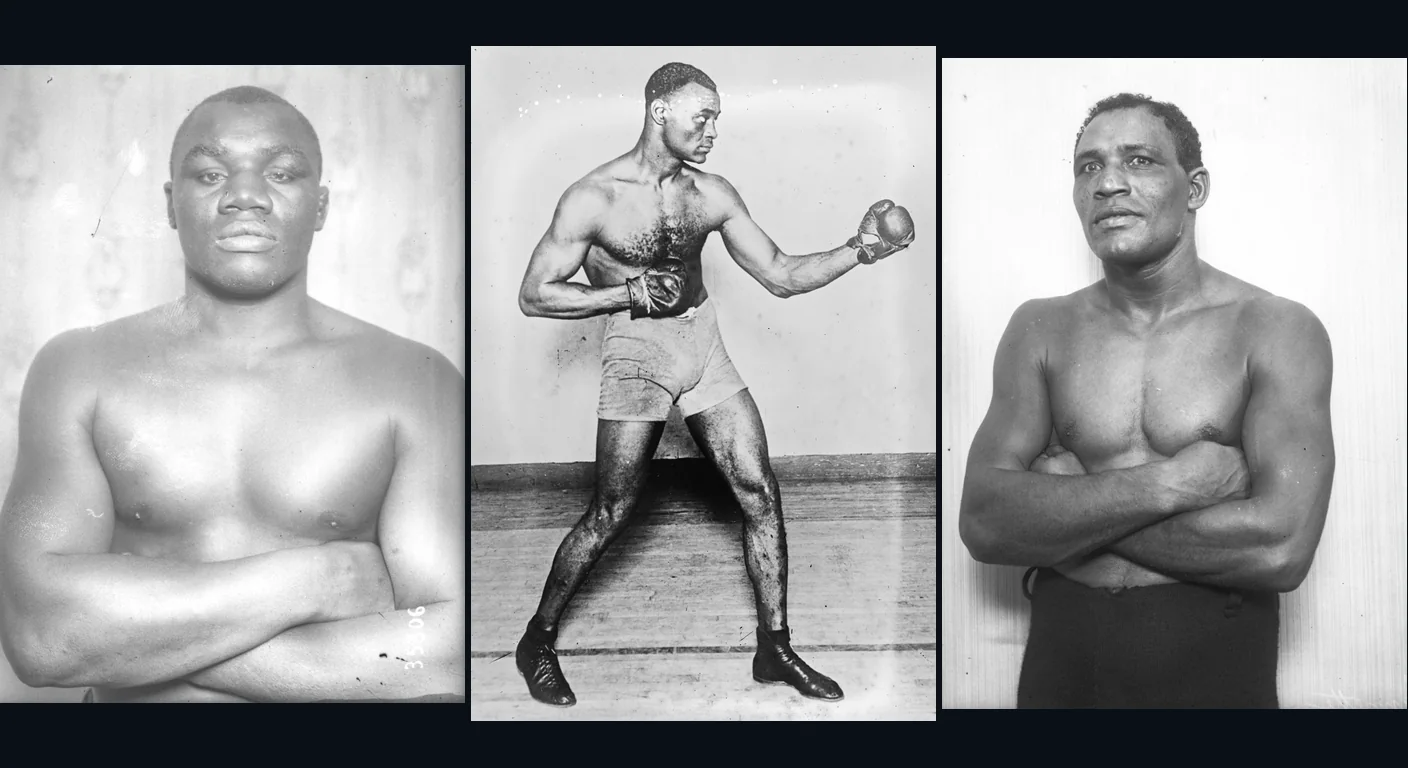
The Colour Line: The Champions Boxing Turned Away
For half a century the best Black boxers were barred from world title shots. This is what the colour line was, who it stopped, and how those men stand in our all-time rankings.
Was this page helpful?
It takes one tap, and it genuinely helps.
Choose your next step
Turn this article into the right action
Some readers are ready to book. Some need the class route first. Pick the route that matches what you actually want.