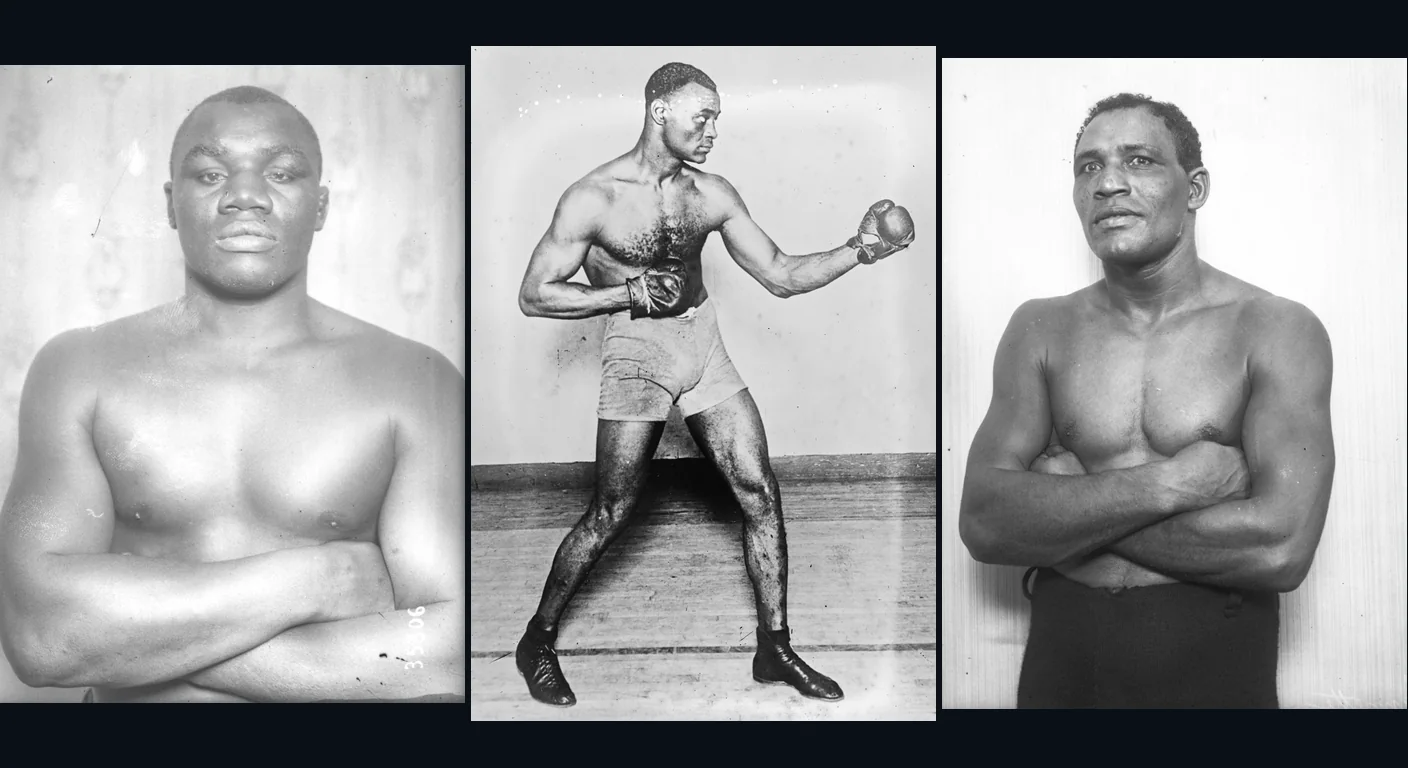
Sam Langford may be the best boxer you have never heard of. He fought top men from lightweight to heavyweight for nearly a quarter of a century, and The Canadian Encyclopedia describes him as "widely considered the greatest heavyweight to never win a title".
He never won one because he was never allowed to fight for one.
This article is about the colour line: what it was, who it stopped, and what an honest ranking system should do about the hole it tore in the record books. Our all-time top 1,000 ranks several of these men, and no question in the whole index demands more care than what a ranking owes them.
What the colour line was
From the 1880s to the late 1930s, the biggest prize in sport ran a colour line. Heavyweight champions, and the promoters and commissions around them, refused to defend the title against Black contenders. In America it was rarely a written rule. It was a refusal, enforced one fight at a time, and it worked.
The line was harshest at the top. Black men did win world titles in the lighter divisions in those years: Joe Gans, the "Old Master", held the world lightweight title in the 1900s and sits at number 42 on our board today. But the heavyweight crown, the prize that made a man the most famous athlete alive, stayed shut, and individual champions drew the same line in other divisions fight by fight.
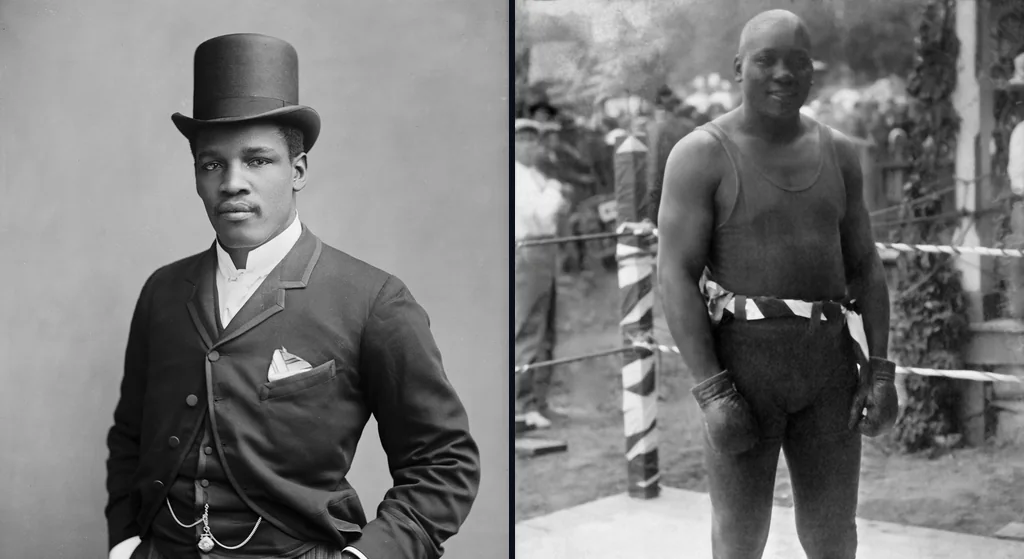
It started at the very beginning. John L. Sullivan, the first gloved heavyweight champion, refused to defend his title against a Black challenger. The finest contender of his era was Peter Jackson, an Australian-based heavyweight who fought James J. Corbett to a sixty-one-round draw in 1891. The Australian Dictionary of Biography records that Sullivan refused to face him, that Corbett avoided him after taking the crown in 1892, and that Jackson was one of the finest boxers never to fight for a world championship.
The line broke once. In 1908 Jack Johnson chased the champion Tommy Burns to Australia and took the heavyweight title, becoming the first Black world heavyweight champion. The reaction tells you everything about the era. White America openly searched for a "great white hope" to beat him, as NPR's account of his 2018 posthumous pardon puts it, and when Johnson beat the unbeaten former champion Jim Jeffries in 1910, the Library of Congress records that the result set off race riots in cities across the United States. Johnson's whole story, including the baseless conviction used to bring him down, is told in Ken Burns's documentary Unforgivable Blackness.
Here is the bitter twist: Johnson's reign did not end the exclusion. The great Black contenders of his own era still did not get title shots, and Sam Langford's profile records that Johnson refused him a rematch after their 1906 meeting. The reason was the same machine that built the line in the first place. The money and the headlines were in white challengers, and a Black champion who risked his title against Langford for small change risked everything for almost nothing. The line was bigger than any one champion, including the Black one. When the title passed back to white champions in 1915, the door shut completely, and it stayed shut for over twenty years.
Britain cannot tell this story as if it belonged to someone else. Here the bar was written down. An unofficial bar from 1911 hardened into a formal rule between the wars: contestants for a British title had to be born of white parents. As the sport historians at Playing Pasts record, the rule denied the Welsh champion Cuthbert Taylor a shot at a British title in his own country, and it fell only in 1948, when Dick Turpin became the first Black boxer crowned British champion.
The men it stopped
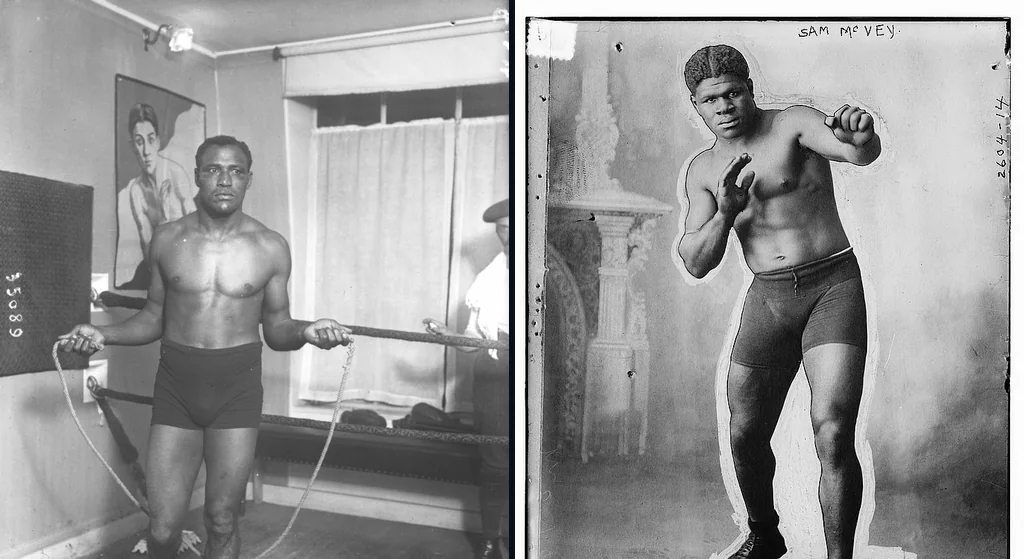
Shut out of the real championship, Black fighters were left with a segregated one: the World Colored Heavyweight Championship. The names on that title tell you what the world title was missing. Langford held it five times. Sam McVea and Joe Jennette traded it. Harry Wills held it three times; American Heritage dates his first reign to a 1919 victory over Langford. These men fought each other again and again, Wills and Langford alone meeting twenty-three times by that account, because the champions would not fight them at all.
Wills is the clearest case of the lot. He was the leading heavyweight contender of the early 1920s, and the New York commission openly pressed for him to meet Jack Dempsey. The fight never happened. Dempsey admitted in his own autobiography that Wills was cheated out of his chance, and that the colour line was the reason; the American Heritage account above quotes him directly, and the full story is told in the Journal of Sport History.
The line ran right to the end of the era. George Godfrey was avoided through the late 1920s and 1930s. Larry Gains was the last man to hold the segregated heavyweight title, and the whole sorry institution only died when Joe Louis won the world championship in 1937. Even after that, exclusion lingered in softer forms: Lloyd Marshall, one of the great avoided contenders of the 1940s, beat future world champions including Ezzard Charles and Joey Maxim and never once fought for a title.
The human cost was not abstract. Langford lost the sight in his left eye during a 1917 fight and kept boxing for years because he needed the money. In 1944 a reporter found him completely blind and living in poverty in Harlem; the article moved readers to fund a trust that paid for eye surgery and a small monthly income. All of that is in The Canadian Encyclopedia's account of his life.
What this does to an all-time ranking
Our index is built on the documented record: results, opponents, titles, longevity. That is its strength, and on this subject it is also its weakness, because the record inherits whatever the era did to it. The colour line damaged these men's records twice over. It removed the title fights, so there are no world title wins to credit. And it thinned the documentation, because the biggest, best recorded nights of an era are the ones these men were locked out of.
So the index does four things, and we want them on the record in plain English.
First, these fighters are ranked on results alone: whom they actually fought, how they fared, and how far they stood above their era.
Second, the segregated titles earn no title credit. The World Colored championships were real contests between great fighters, and they carried real pride for the men who held them and for the Black public who followed them. But they existed because the world title was closed, not because the sport had recognised these men. Counting them as world titles would write the era's segregation into the books as if it had been fair recognition, and we will not do that.
Third, striking the segregated title from the books does not strike out the men who held it. When these excluded fighters met each other, beating a genuinely elite man, a Langford or a Wills or a McVea, still registers as beating an elite opponent, because that is exactly what they were.
Fourth, we say the cost out loud. Our methodology states it in one line: these fighters are rated on results alone, and this understates their standing, because the same system that excluded them also under-recorded them.
Where they stand
Our research identifies sixteen men as genuine top-tier contenders who were denied a recognised title shot on the colour line. Five are on the published board today: Harry Wills at number 120, Sam Langford at 146, Joe Jennette at 173, Lloyd Marshall at 424 and Sam McVea at 808. Each profile carries a recognition note headed "Ranked on the record, not the colour line", which tells the history in full. The others, Peter Jackson and Kid Norfolk among them, sit below the top 1,000 cut, ranked the same way on thinner surviving records.
We call these men champions in the headline because that is what they were to everyone who saw them fight. The index's narrower job is to say what the paper record can prove, so read those placements as floors, not verdicts. To be plain about how low a floor can sit: writers who weighted what eyewitnesses and opponents said have placed Langford among the greatest fighters who ever lived. Our documents cannot see what those eyes saw. That gap is the price of a documented-record method, and we would rather show the price than hide it.
Why no number can repair it
There were three options, and we want to be open about why we chose the one we chose.
We could have counted the segregated titles as world titles. That flatters the numbers while quietly recording the era's exclusion as if it had been recognition. We could have added points to make up for what was stolen. But any number would be a guess. Ten places? Fifty? Picked by whom? A guess dressed up as data is just another way of getting these men wrong, and an index that invents results to repair one injustice has given itself permission to invent results anywhere.
Or we could rank the record and tell the truth about it, in words, where it cannot be mistaken for arithmetic. That is what we do, and it is the same rule that runs through the whole project: the index measures the documented career, nothing more, and admits plainly where the documents fall short.
The photographs in this piece are period press photos of these men, preserved by the Library of Congress and the Bibliotheque nationale de France. They were taken at the height of careers the sport refused to reward. The least an all-time ranking can do is name what happened, show the record, and refuse to dress the injustice up as a number.
The colour line was the sport closing its doors to the wrong people. The only answer a club can give is to keep its own doors open to everyone. Our adult recreational classes run three evenings a week, and your first session is free.
H&G Team
Writer at Honour & Glory Boxing Club, a community boxing gym in Kidbrooke, South East London.
KEEP READING
What the H&G All-Time Index Means by Greatness
Greatness has a precise meaning on our all-time boxing list: the strength of the career a fighter actually put on the record. Here is the definition in plain English, and what it deliberately leaves out.
The Greatest Boxing Knockouts in History
The greatest knockouts in boxing history were not lucky punches. Each one was the result of specific technical and tactical conditions. Here is what made them happen.
The Greatest Upsets in British Boxing History
British boxing has produced some of the most dramatic upsets in the sport's history. Each one tells a story about preparation, complacency, and what happens when everyone is wrong.
Was this page helpful?
It takes one tap, and it genuinely helps.
Choose your next step
Turn this article into the right action
Some readers are ready to book. Some need the class route first. Pick the route that matches what you actually want.