Lomachenko's November return: what a comeback must prove
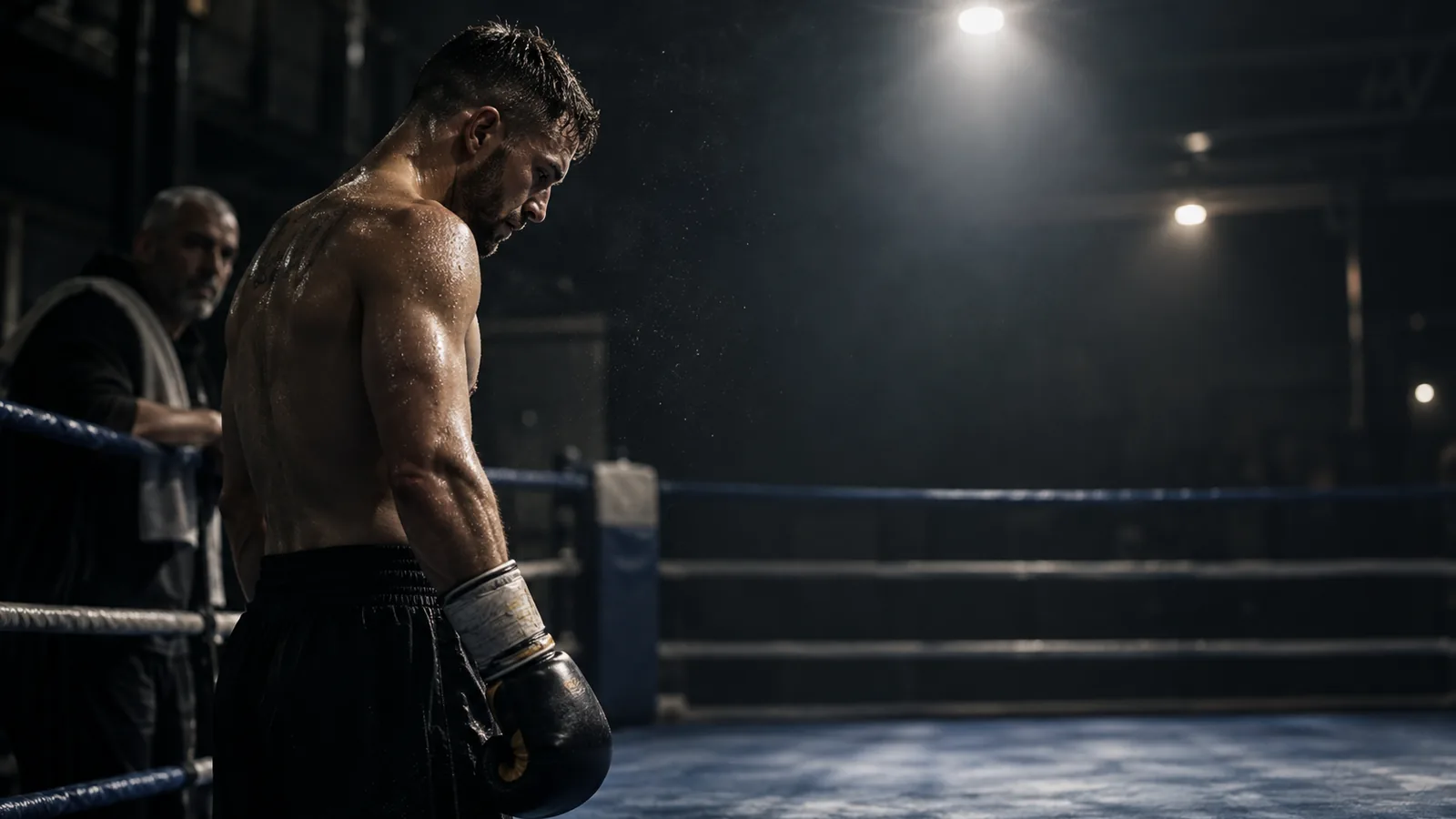
Lomachenko’s November Return: what a comeback must prove
Vasiliy Lomachenko does not need another reminder of his own ability. The record is there. The two Olympic gold medals are there. The three-weight world titles are there. So are the rounds where he made excellent professionals look as though they had arrived at the wrong gym.
What he needs, if the reported November return happens, is proof that the particular version of Lomachenko which made all that possible is still present.
That is a different question.
Reports have linked the former lightweight champion with a return later in 2026, with Boxing 24/7 framing November as a test of his legs. Boxing Insider has also reported a retirement reversal and a fall return, while Sports Illustrated covered the reported U-turn.
That is enough to make it a serious story. It is not enough to call a November fight final.
Boxing coverage too often turns a date attached to an upload into a signed bout. A fighter can be targeting a month. A manager can be discussing opponents. A promoter can be testing the market. None of that confirms a contract, a venue, a weight, broadcasters, purses, medicals and the usual pieces of late-stage boxing chaos. Until a fight is formally announced by the people making it, November is a target, not a fixture.
Still, the competitive questions are real now. And they are better questions than simply asking whether Lomachenko can win another fight.
The legs are the whole argument
Lomachenko’s style was never merely quick hands and clever angles. It was built on continuous decision-making through his feet.
He did not just step left. He made an opponent turn, drew the lead hand, stepped into the space that opened, then fired while the other boxer was still trying to find his stance. His best work made the ring feel too small for the man in front of him. The feet created the punches.
That is why a long lay-off changes the conversation more for Lomachenko than it would for a static pressure fighter. His game demands sharp reactions, balance on exits, repeated pivots and the confidence to take half-steps into danger because he trusts he will be gone before the counter arrives.
At his best, that confidence was extraordinary. Watch the way he broke down Jorge Linares before the knockdown, or how he found angles against Nicholas Walters and Guillermo Rigondeaux. It was not dancing for the sake of it. Every movement had a purpose: take away the jab, crowd the shoulder, leave the opponent square, score clean and exit.
But age and inactivity do not need to turn a fighter into a shadow of himself to matter. They only need to make him a fraction slower at the moment where he used to be safely clear. At lightweight, that fraction can be the difference between slipping a right hand and being caught on the end of it.
That is the test a November return must answer. Can he still make elite timing look late?

George Kambosos showed the value of a controlled return
Lomachenko’s last fight was not an accident or a soft touch. He stopped George Kambosos Jr in May 2024 to win the IBF lightweight title, a bout Sky Sports previewed as a world-title opportunity in Perth. The contest was also widely covered as a major lightweight event, including by GOAL’s fight guide.
The performance mattered because Kambosos is awkward enough to make a boxer work. He is tough, competitive, physically committed and willing to throw in bursts. Lomachenko did not simply outclass him from range. He took his time, found the body, took away Kambosos’s exits and finished him when the openings became obvious.
That was the performance of a fighter who still understood his own pace.
But a strong night in 2024 cannot settle a question in late 2026. It can only set the standard. A comeback opponent should be judged against that performance, not against the easiest available route back to a pay-per-view name.
Lomachenko has earned the right to choose carefully. He has also set a high enough standard that a cautious opponent will not tell us much.
A “challenging” opponent is only meaningful if the match-up asks questions
There have been reports that Lomachenko has identified a new target for a difficult comeback fight, with Boxing News discussing his stated target. Another Boxing News report has suggested a return timeline and weight-class direction.
The names can change quickly. The principle should not.
A legitimate comeback opponent for Lomachenko should be able to do three things.
First, he should be fit enough to keep a high pace. Lomachenko needs an opponent who can force him to show whether the feet still work in the later rounds, rather than someone who gives away the initiative after four.
Second, he should have enough reach or physical presence to make Lomachenko solve a problem. The Ukrainian has always been brilliant at closing distance, but closing distance gets harder when the reactions are not quite as sharp. A tall, active fighter with a proper jab can expose whether the old entries remain available.
Third, he should be dangerous enough to make Lomachenko respect the exchanges. The point is not to demand an impossible fight straight away. It is to avoid a return where one fighter is there mainly to lose tidily.
That is why the opponent matters more than the headline month. A November return against a live, ambitious contender would give us useful information. A November return against a recognisable but faded name might sell, but it would not answer the central question.
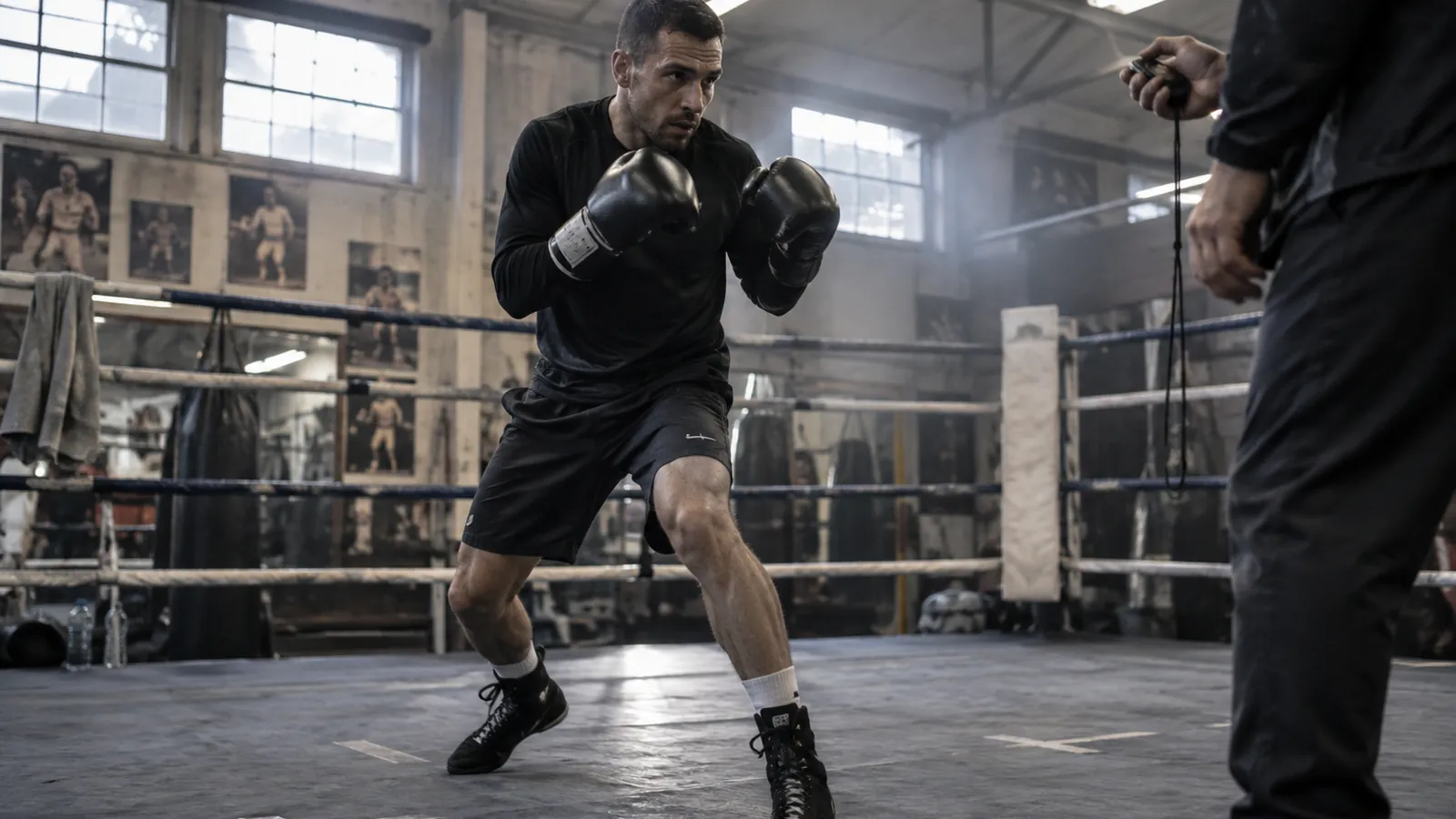
Lightweight remains a hard place to return
Lomachenko’s career record and profile at Box.Live capture the unusual shape of his professional run: relatively few fights, elite opposition early, world titles across three divisions, and losses that have been debated more fiercely than most champions’ wins.
He was never a fighter who took the traditional long route. He challenged for a world title in his second professional contest. He fought Gary Russell Jr in his third. He moved quickly because he had an amateur pedigree unlike almost anyone else of his generation.
The cost of that ambition is that there are no easy nights attached to his reputation. At lightweight in particular, he would be returning to a division full of men who are younger, bigger and comfortable fighting at a punishing tempo.
A comeback cannot be assessed purely through the result. A points win can be impressive if he controls distance, picks up the pace and remains responsible defensively. A stoppage can flatter him if the opponent has no resistance or ambition. Equally, a defeat would not automatically mean the return was a mistake if the performance shows the old intelligence and competitiveness against a top-level fighter.
Boxing is not kind to context, but good analysis has to be.
The real proof is not nostalgia
There will be understandable sentiment around any Lomachenko return. He is one of the rare modern fighters whose technique made people watch closely rather than just wait for highlights. Young boxers should study him, but they should study the fundamentals underneath the flair: stance, balance, feints, exits and the discipline to reset.
At Honour & Glory, that is why we coach footwork as more than moving around the ring. Good feet give you defence, range, angles and a way to punch without falling over your front knee. Those foundations are useful whether you are a competitive boxer or joining one of our boxing classes in Kidbrooke to learn properly from the beginning.
Lomachenko’s comeback, if it becomes official, should not be treated as a tribute act. He does not need that. Nor should it be dismissed because he has been away.
It should be judged honestly.
Can he hold the centre without standing still? Can he turn a younger opponent late in the fight? Can he enter range without taking the clean counters that his feet once avoided? Can he make an opponent miss, then make him pay before the opponent has recovered his stance?
If the answer is yes, the return becomes more than a curiosity. It becomes a real addition to the lightweight picture.
If the answer is no, Lomachenko’s place in boxing history will still be secure. But the ring is not a museum, and November, if it is truly the month, must prove something more valuable than the fact that a great fighter can still get through the ropes.
H&G Team
Writer at Honour & Glory Boxing Club, a community boxing gym in Kidbrooke, South East London.
KEEP READING
2026 Boxing Schedule: Why Fight Dates Keep Moving
Use the BBC, Sky Sports and ESPN schedule pages to explain to casual UK fans why modern fight calendars change so often: broadcast deals, injuries, undercards, sanctioning bodies and venue availability.
June 6 Boxing Pile-Up: Why UK Fans Have Choices
A practical fan-focused look at the unusually busy UK boxing night, with Bournemouth and Sheffield cards competing for attention and what that says about the depth of domestic boxing.
Frazer Clarke’s quick return: why turnaround matters
Use Clarke’s surprise weekend bout against Lamah Griggs to explain what a quick return can achieve for a heavyweight: ring time, confidence, timing and risk management, without treating an interview as proof of a completed result.
Was this page helpful?
It takes one tap, and it genuinely helps.
Choose your next step
Turn this article into the right action
Some readers are ready to book. Some need the class route first. Pick the route that matches what you actually want.