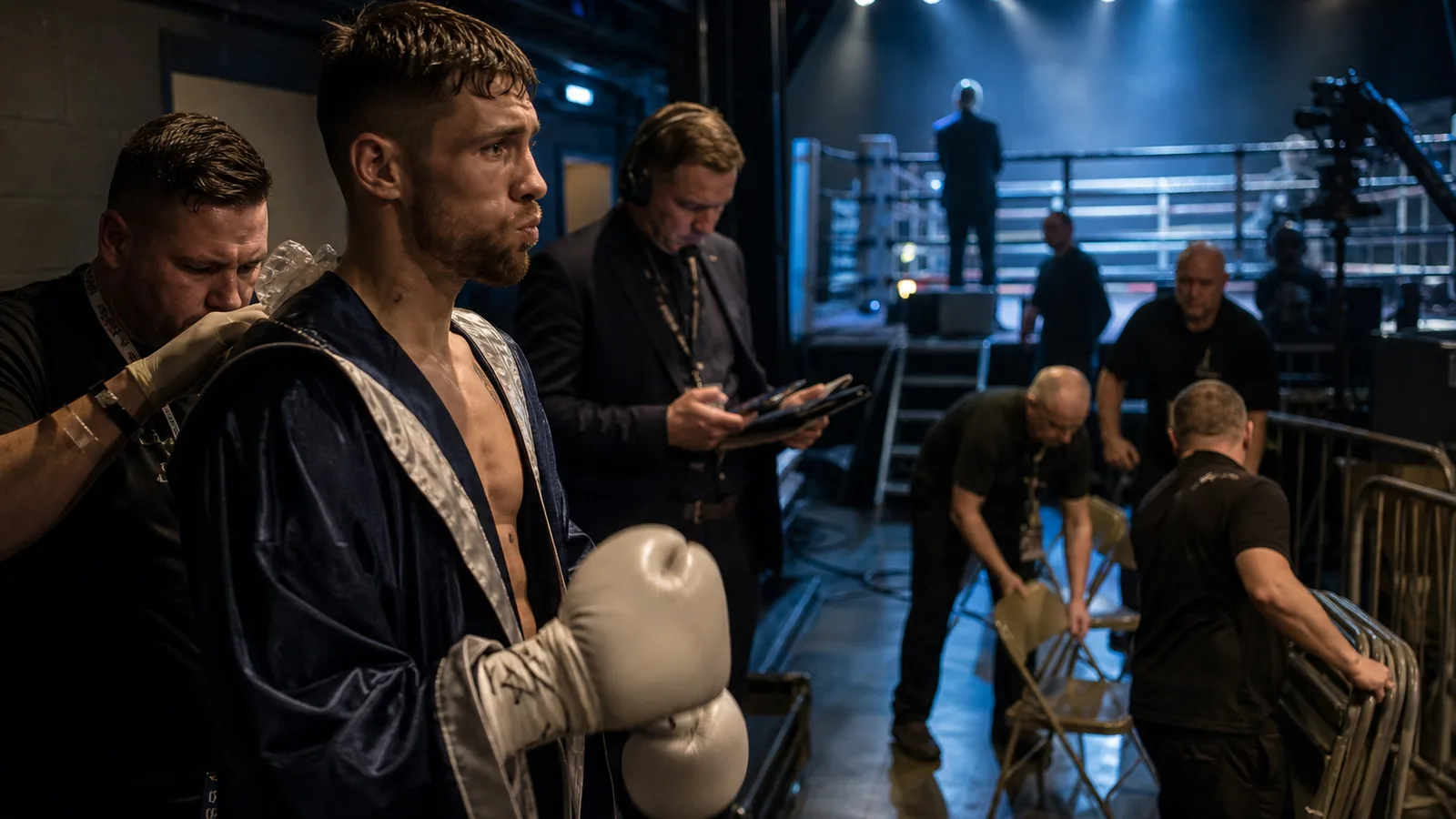
2026 Boxing Schedule: Why Fight Dates Keep Moving
If you follow boxing closely, you learn one rule quickly: do not treat a fight date as real until the first bell rings.
That sounds cynical, but it is not unfair. Modern boxing is not one league with one fixture list. It is a messy mix of promoters, broadcasters, sanctioning bodies, venues, managers, medical checks, undercard contracts, visa paperwork and, sometimes, plain bad luck. A bout can be announced with a poster, a press conference and a ticket link, then shift by two months because one fighter gets hurt in sparring or a television slot opens somewhere else.
For casual UK fans, especially those who dip in for the biggest nights, that can make the sport feel chaotic. One week a heavyweight is fighting in January. The next week the same card is suddenly in March. Another fight is listed by one outlet but missing from another. A title bout has a date, then a new opponent, then a different venue.
The 2026 schedules from major outlets such as Sky Sports, BBC Sport and ESPN are useful because they show the reality of boxing in plain sight. They are not just calendars. They are running evidence that boxing dates are provisional by nature. Sky’s rolling list of major bouts, including the Boxing 2026 fight schedule and latest results, gives UK fans the big names and broadcast context. BBC Sport’s boxing schedule pages carry the usual warning that dates and fixtures can change. ESPN’s archive of postponed fights and fighter reactions shows what those changes feel like at ground level.
So why does it happen so often?
Boxing does not have one calendar
Football fans are used to fixtures being set months ahead. Boxing does not work like that. There is no Premier League fixture computer for the sport. There are promoters building shows, networks buying dates, sanctioning bodies ordering title fights and fighters trying to peak on the right night.
That is why independent calendars can differ. Sky may highlight a UK broadcast card. BBC Sport may list an event in a broader schedule. ESPN may focus on American fights or global names. Sites like Box.Live’s upcoming fight schedule add another layer, often tracking broadcasters, ringwalk estimates, undercards and venue details.
None of these are useless because they change. They are useful because they change. A boxing schedule is a live document. If you are a fan, that is how you should read it.
The problem is not that outlets are careless. The problem is that boxing itself is built around moving parts.

Broadcast deals often decide the real date
The biggest modern fights are not only sporting events. They are broadcast products.
A fight needs a date that works for the promoter, the broadcaster, the venue, the main event fighters, the undercard, the international audience and, increasingly, the pay-per-view market. A Saturday night in Manchester might suit UK fans. A Saudi Arabia card might be timed for a global audience. An American broadcaster might want a different slot to avoid clashing with another major sport.
That is why a fight can be “agreed” before it is truly fixed. The fighters may want it. The promoter may want it. The sanctioning body may approve it. But if the broadcaster does not have the right window, the event may move.
Sky’s schedule is a good example of how fans now consume boxing: not just by date and opponent, but by platform. A fight’s position on a broadcast schedule can be as important as the arena booking. The Sky Sports 2026 boxing schedule exists partly because fans want to know who is fighting, but also where they can watch it.
That is the first uncomfortable truth. The best sporting date is not always the best television date.
Injuries are not excuses when the job is this hard
Fans can be brutal when a fight gets postponed. Some assume a fighter is ducking. Sometimes boxing earns that suspicion. But injuries are also very real.
A training camp is not a light fitness programme. Fighters spar, cut weight, run, lift, drill, wrestle for position, take shots and push tired bodies through weeks of stress. Heavyweights may be moving with 18 stone of force. Smaller fighters may be forcing their bodies down to a limit while still trying to train twice a day.
Sky’s report on Moses Itauma vs Jermaine Franklin being postponed after Itauma suffered an injury in camp is a clean recent example. The bout was moved from January 24 to March 28, with the same Manchester venue retained. That is not a minor diary tweak. It affects the fighters, the undercard, the broadcaster, the venue staff, the fans who booked trains and hotels, and every boxer lower down the bill who was trying to time their own camp.
From the outside, a postponement looks like one headline. Inside the gym, it is weeks of work being stretched, paused or restarted.
At Honour & Glory in Kidbrooke, we see the small version of that truth every week. Even at club level, timing matters. You do not want to be flat on the day. You do not want to peak too early. You do not want to carry an injury because your pride is louder than your body. For young boxers and adults training properly, that is one of the first lessons: being ready is not just about being brave. It is about being fit, healthy and prepared at the right time.
If you want to train in a proper boxing environment in SE London, our classes for ages 7+ are listed at /classes.

Undercards can make or break a show
Casual fans tend to think the main event is the event. Promoters know better.
A strong undercard sells tickets, fills broadcast time and protects the show if the headline fight has trouble. It also complicates everything. Each undercard fighter has an opponent, medicals, contracts, travel, weight-making plan and trainer schedule. If one major undercard bout falls apart, the value of the whole show can drop.
This is why fight calendars often include more than the headline. Box.Live, for example, lists undercard fights and broadcast information alongside main events on its upcoming fights schedule. That detail matters. A Saturday night card is not one fight. It is a chain of fights. One weak link can force a reshuffle.
Promoters also use undercards strategically. A rising prospect might be placed under a world champion to gain exposure. A local ticket seller might be used to boost the live gate. A title eliminator might be added to give the broadcast more value. If the main event changes, the undercard may need to be rebuilt around a different audience, different running order or different television pitch.
That is why a date can move even when the headline fighters are healthy. Boxing cards are packages, not single fixtures.
Sanctioning bodies add pressure and confusion
This is where boxing loses casual fans, and sometimes deserves to.
There are four major world title bodies: WBC, WBA, IBF and WBO. Each has rankings, mandatory challengers, eliminators, exceptions and deadlines. A champion may want one fight, a promoter may want another, and a sanctioning body may order something else entirely.
The Itauma situation reported by Sky shows how quickly this can become crowded. Alongside the Franklin postponement, Itauma was also connected to sanctioning body routes involving Murat Gassiev and Lawrence Okolie. That does not mean every ordered fight happens next. It means the fighter’s calendar is being pulled by more than one force.
For fans, this can feel absurd. A boxer is “next” for one belt, “ordered” for another eliminator, “linked” with a bigger name, and still booked for a separate fight. All of those things can be true at the same time, at least briefly.
That is why schedule pages should be read with caution. A bout being listed does not mean the politics around it are settled. It means, at that moment, the fight is on the board.
Venue availability is a bigger issue than fans realise
A major arena is not sitting empty waiting for boxing. The O2, AO Arena, Co-op Live, Wembley Arena, Bournemouth International Centre and other venues host concerts, darts, comedy, MMA, basketball, exhibitions and corporate events. A promoter may have one good Saturday available, then nothing similar for weeks.
That is why postponements can jump further than expected. If a fighter gets injured, the replacement date is not simply “next Saturday”. The promoter needs a venue, broadcast slot, commission approval, hotel availability, production crew, security, ticketing, medical staff and opponents who can still make the new date.
In the Itauma example, keeping Manchester’s Co-op Live Arena for the rescheduled March date mattered. Losing the venue would have meant rebuilding even more of the event.
This is also why UK fans sometimes see strange timing. A bout might land on a crowded sporting weekend or clash with another fight because the venue and broadcaster could both make that date work. It may not be ideal. It may simply be the best available option.
Global boxing means global complications
A UK fan might check a fight schedule and think only about Saturday night viewing. The sport is international now in a more intense way.
A card may involve a British fighter, an American opponent, a Saudi backer, a Mexican undercard boxer, a Japanese title fight on the same weekend and a broadcaster trying to serve several markets. That means visas, travel, medical checks, time zones, language around contracts and different commission rules.
The Sporting News’ 2026 boxing schedule and independent calendars such as Box.Live show how spread out the sport is. On any given weekend, there can be fights in the UK, United States, Japan, Mexico, Canada and beyond.
That variety is great for boxing fans. It also makes the calendar fragile.
Postponements hit fighters harder than fans see
Fans lose money on trains, hotels and tickets. That is real. But fighters lower down the bill can be hurt badly by cancellations.
ESPN’s piece on boxers reacting to fight cancellations and sharing future plans captured the human cost during the Covid shutdown. Fighters spoke about long camps, sold tickets, missed paydays and the mental crash of having a fight pulled at the last minute. Michael Conlan’s line, “I want to get paid; I need to get paid,” cut through because it was honest.
That applies beyond pandemic conditions. Many boxers are not wealthy headline acts. They pay for camp, sparring, nutrition, travel and time away from other work. If a bout moves, the cost does not disappear. It often grows.
BoxingScene’s piece on how cancelled fights have a considerable impact on boxing makes the same basic point: cancellations ripple through careers, finances and momentum. A fighter who loses a date may lose ranking position, form, income and visibility.
That is why serious boxing people do not treat postponements as gossip. They treat them as damage.
Why different schedule pages can disagree
BBC, Sky, ESPN, Sporting News, Box.Live and other outlets are not always working from the same update cycle or editorial focus.
Sky may prioritise fights it is covering or UK-interest cards. BBC Sport may run a broad schedule and results service. ESPN may centre American broadcast relevance or major international fights. Box.Live may move quickly on listings, broadcasters and undercards. The translated Sky Sports schedule page is another reminder that fight information gets republished, reformatted and read across different markets.
If one calendar updates before another, fans can think there is a contradiction. Sometimes there is. More often, one page has caught the latest change and another has not.
The smart move is to check the promoter, broadcaster and venue close to fight week. If all three match, you can be more confident. If one is silent, be cautious.
The fan’s rule: follow the fight, but respect the chaos
Here is the stance: boxing needs to get better at communicating changes. Fans should not have to act like private investigators to find out whether a bout is still happening. Promoters should update ticket holders quickly. Broadcasters should make schedule changes clear. Sanctioning bodies should stop adding alphabet soup confusion where ordinary fans are trying to follow one sport.
But fans also need to understand what they are watching. Boxing is not a tidy league. It is closer to live event production mixed with individual prizefighting. The best fights are difficult to make because the sport has so many competing interests.
That does not excuse every delay. Some postponements are bad luck. Some are poor planning. Some are politics. Some are commercial manoeuvring dressed up as timing. The trick is learning the difference.
For casual UK fans watching the 2026 calendar, use the major schedule pages as guides, not stone tablets. Check Sky Sports’ boxing schedule, BBC Sport’s listings, ESPN’s boxing coverage and independent trackers like Box.Live. Look for updates when a fighter gets injured, a broadcaster changes plans, a mandatory is ordered or a venue date becomes unavailable.
And if the fight moves again? Welcome to boxing. The calendar is part of the contest.
H&G Team
Writer at Honour & Glory Boxing Club, a community boxing gym in Kidbrooke, South East London.
KEEP READING
June 6 Boxing Pile-Up: Why UK Fans Have Choices
A practical fan-focused look at the unusually busy UK boxing night, with Bournemouth and Sheffield cards competing for attention and what that says about the depth of domestic boxing.

Lomachenko's November return: what a comeback must prove
Assess the competitive questions around a reported November return without treating an upload date as proof that a bout is already finalised.

Charlo And Fulton Added To Spence-Tszyu Sydney Card
A focused look at a fresh undercard announcement: why Jermall Charlo vs Koen Mazoudier and Stephen Fulton vs Liam Wilson make the Sydney card more than just a main-event story.
Was this page helpful?
It takes one tap, and it genuinely helps.
Choose your next step
Turn this article into the right action
Some readers are ready to book. Some need the class route first. Pick the route that matches what you actually want.