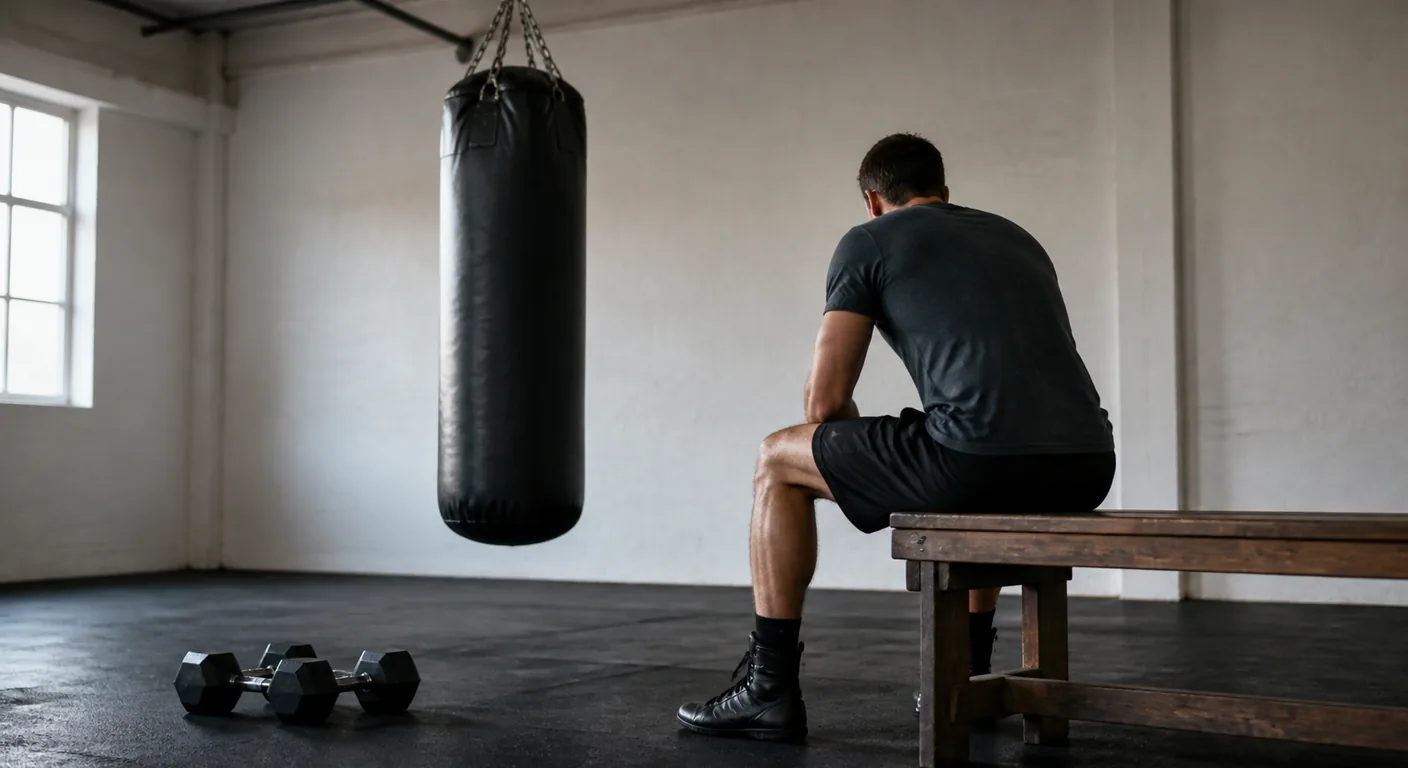
If you are fitting boxing and weights into the same day, do the session that matters most while you are fresh.
For most people learning to box, that means boxing first. You need a clear head for stance, distance, balance, pad calls and keeping your hands where they belong. A heavy leg session before class can turn basic footwork into hard work. A hard upper-body session can make the guard feel expensive before the first round has started.
That does not mean lifting before boxing is always wrong. It is the right order when strength is your main goal and the boxing session is deliberately easy. The mistake is treating two demanding sessions as though they are separate. Your shoulders, legs, grip and attention know exactly what you did earlier.
The useful answer is not a rigid rule. It is a way to choose the order without wasting either session.
Start with the session you most want to improve
Training order should reflect your priority for the next few months, not the answer that sounds toughest.
If your main aim is to become a better boxer, put boxing first. Technical work needs concentration. A clean jab, a controlled step and a calm reaction to a pad call are all easier when your legs are not shaking from squats and your shoulders are not full from pressing.
If your main aim is strength, lift first on the days when the boxing work is low demand. That could mean twenty minutes of easy shadowboxing, relaxed bag rounds or a coach-led technique class where you have agreed to keep the pace sensible. Do not lift first, then decide that a hard pad session or sparring is a good way to see how tired you can become.
A systematic review and meta-analysis of concurrent strength and endurance training found that combining the two does not automatically prevent strength or muscle gains, including when sessions happen on the same day. That is useful reassurance. It is not permission to ignore fatigue. Long-term adaptation and the quality of tonight's footwork are different questions.
For recreational boxers, technique usually deserves the fresher slot. You can make up a missed dumbbell set more easily than you can undo ten rounds of reaching, dropping your guard and learning to punch while your shoulders are fried.
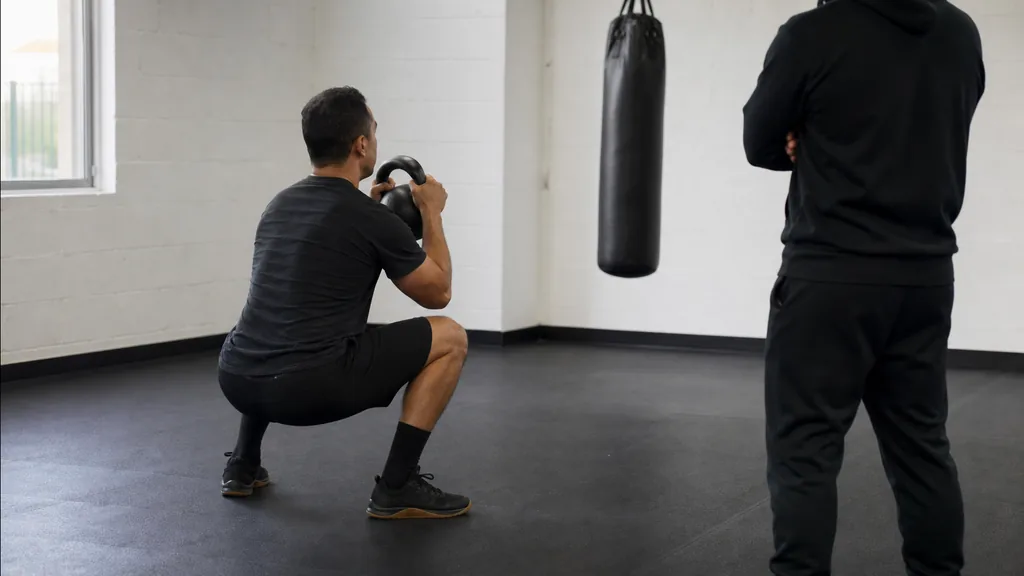
Why hard weights can spoil a boxing session
Weights do not make someone bad at boxing. Poor timing does.
Heavy lower-body work can leave the legs slow to react and less reliable when you need to step, stop and change direction. A hard set of squats or deadlifts can also make the lower back and hips stiff enough that you start forcing rotation with the arms. That is how a cross becomes a shove and a hook becomes a swing.
Upper-body lifting has its own cost. A heavy press, pull-up session or high-repetition circuit can make it harder to keep the shoulders relaxed and the hands returning to guard. Bag work becomes noisy because the arms are trying to survive rather than practise. Pad work becomes a memory game you are playing with tired shoulders.
This matters most when the boxing session contains new work. A beginner learning a one-two with a step does not need extra fatigue. Neither does someone preparing for controlled sparring, working defensive reactions or trying to solve a technical problem such as dropping the rear hand.
The research on training sequence is less dramatic than gym folklore suggests. A review of strength and endurance training order notes that the practical choice depends on the performance outcome you care about and the training constraints around it. In ordinary gym language: if you need to be sharp for boxing, do not spend the sharp part of your day lifting first.
There is also an honesty test. If a weights session means you skip the warm-up, rush the wraps, arrive late or cannot listen properly in class, it is not fitting neatly around boxing. It is competing with it.
When lifting before boxing can work
There are situations where weights first is completely sensible.
Your boxing is light and technical
If the boxing block is twenty to thirty minutes of slow shadowboxing, easy movement and a few carefully controlled bag rounds, it can sit after strength work. Keep the job narrow. Do not turn it into a surprise conditioning session because somebody else in the gym is moving fast.
You have several hours between sessions
If work and family life allow it, separate the sessions. Lift in the morning, eat, drink, get on with the day, then box in the evening. A gap does not erase fatigue, but it gives you a better chance to arrive with some energy and attention left.
You are in a strength-focused block
There are weeks when getting stronger is the main job. Perhaps you are rebuilding after a long period away from the gym, or you are following a strength programme alongside one or two boxing sessions. In that case, protect the lift and keep the boxing work technical, short and coach-led.
The key is to tell the coach what you have done. "I squatted hard this morning, so I need to keep the rounds tidy" is useful information. It lets the session stay productive instead of becoming a contest between your plan and your pride.
When boxing should definitely come first
Put boxing first when you are doing anything that needs timing, reactions or honest concentration.
That includes:
- your first few boxing classes
- pad work with new combinations
- footwork or defensive drills
- partner drills where distance matters
- controlled sparring or any session with contact
- a class where you have already felt tired or clumsy lately
- boxing close to a competition or hard assessment
The same applies if you are returning after a break. Your fitness may be fine enough to lift, but boxing rhythm takes more patience to recover. Our guide to returning to boxing after a break explains why the early sessions should rebuild control before they chase pace.
If you want strength work that transfers well, keep it separate from the technical lesson whenever possible. Our strength training guide for boxers covers useful movements and sensible weekly volume without pretending every boxer needs a bodybuilder's programme.
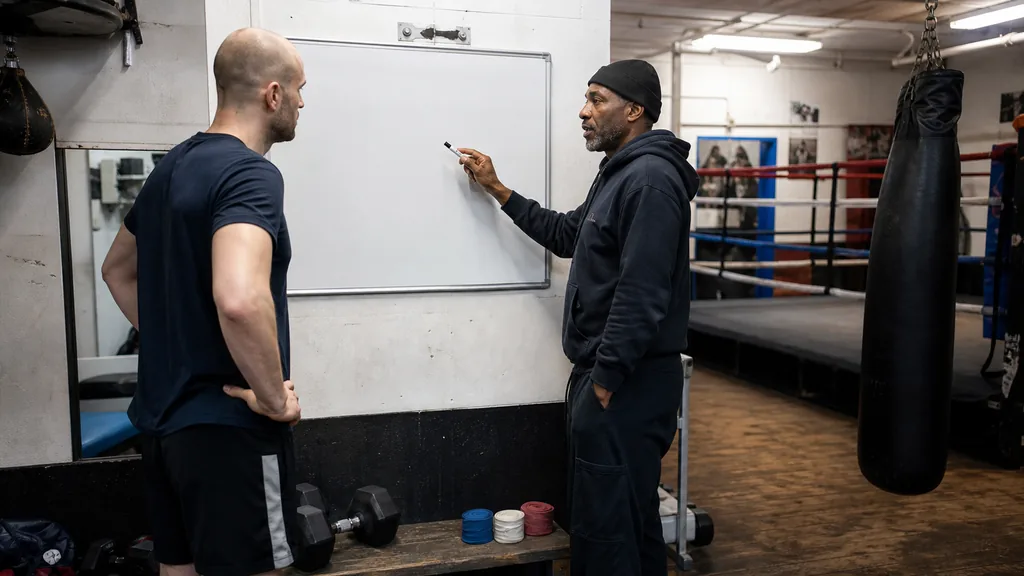
Do not stack every hard session in one day
The real problem is rarely one barbell session. It is a whole week with no easy place to stand.
Boxing class on Monday, heavy legs on Tuesday, hard bags on Wednesday, upper-body lifting on Thursday, then sparring on Friday can look disciplined on paper. In reality, the shoulders may never settle and the legs may never feel fresh. The result is often flat sessions, niggling pain and the strange idea that more effort will solve an exhaustion problem.
The NHS advises adults to include both aerobic activity and muscle-strengthening work through the week (NHS physical activity guidance). Boxing and weights can help cover those bases. They do not need to become a daily punishment.
A better starting pattern for an adult recreational boxer is usually two boxing sessions and two strength sessions each week. Keep at least one day genuinely easy or fully off. If you add a third boxing session, make the strength work shorter or reduce the load. The exact days matter less than being able to repeat the week without dragging yourself through it.
A simple version could look like this:
- Monday: boxing class
- Tuesday: full-body strength session
- Wednesday: rest, walking or gentle mobility
- Thursday: boxing class
- Friday: shorter strength session
- Saturday: coached class, optional easy conditioning or complete rest
- Sunday: rest
That is not a universal programme. It is a sensible place to start because the hard leg work is not sitting immediately before your most technical boxing session. If your job, sleep or family life is making recovery difficult, remove the optional session first. Consistency beats a heroic week followed by ten days of nothing.
How hard should the second session be?
If you must train twice in one day, make one session the main event and the other a supporting session.
After boxing, weights should be brief and controlled. Pick two or three movements, use solid form, then leave. A sensible example is a squat pattern, a pulling movement and a trunk exercise. There is no prize for adding a twenty-minute finisher after you have already done hard rounds.
After weights, boxing should have one technical theme. You might shadowbox with a level gaze, practise short steps on the bag, or work a simple jab-cross without loading up. The moment your stance widens, your hands begin wandering or you stop hearing the coach, the useful part of the session is over.
Pay attention to the next day as well. Normal fatigue is expected. Sharp pain, joint pain that changes how you move, unusual weakness, poor sleep, or a shoulder that is still aching when you lift your guard are not badges of commitment. Reduce the load and speak to a coach or an appropriate clinician if something does not settle.
The answer for most H&G members
If you are training recreationally, box first on boxing days and put serious weights on another day where you can. That keeps your technique honest and gives your body a clearer chance to recover.
If life only allows one combined day, decide what matters most before you start. Box first when skill is the priority. Lift first only when the weights are the priority and the boxing session is intentionally light. Do not attempt two hard sessions because the calendar says you have a free evening.
For adults near Kidbrooke, the Recreational Adults boxing classes give you the technical base that should lead the plan. Bring the coach the real version of your week, not the version you think sounds impressive.
H&G Team
Writer at Honour & Glory Boxing Club, a community boxing gym in Kidbrooke, South East London.
KEEP READING

Boxing Recovery Tips After Training
Recovery tips for boxers after training. Learn what to eat, how to stretch, when to rest, and how to bounce back faster between sessions.
Does Boxing Help You Sleep
A cautious guide to boxing, sleep and recovery, separating exercise routine benefits from medical advice.
Stretching Routine for Boxers
A complete stretching routine for boxers. Dynamic warm-up stretches before training and static cool-down stretches for faster recovery.
Was this page helpful?
It takes one tap, and it genuinely helps.
Choose your next step
Turn this article into the right action
Some readers are ready to book. Some need the class route first. Pick the route that matches what you actually want.