Liam Davies vs Nathaniel Collins: Birmingham title fight lessons
Liam Davies vs Nathaniel Collins: three lessons from Birmingham’s title fight
A good orthodox-versus-southpaw fight does not need a wild finish to be worth studying. It needs clear problems, clear answers and two fighters prepared to make each other uncomfortable.
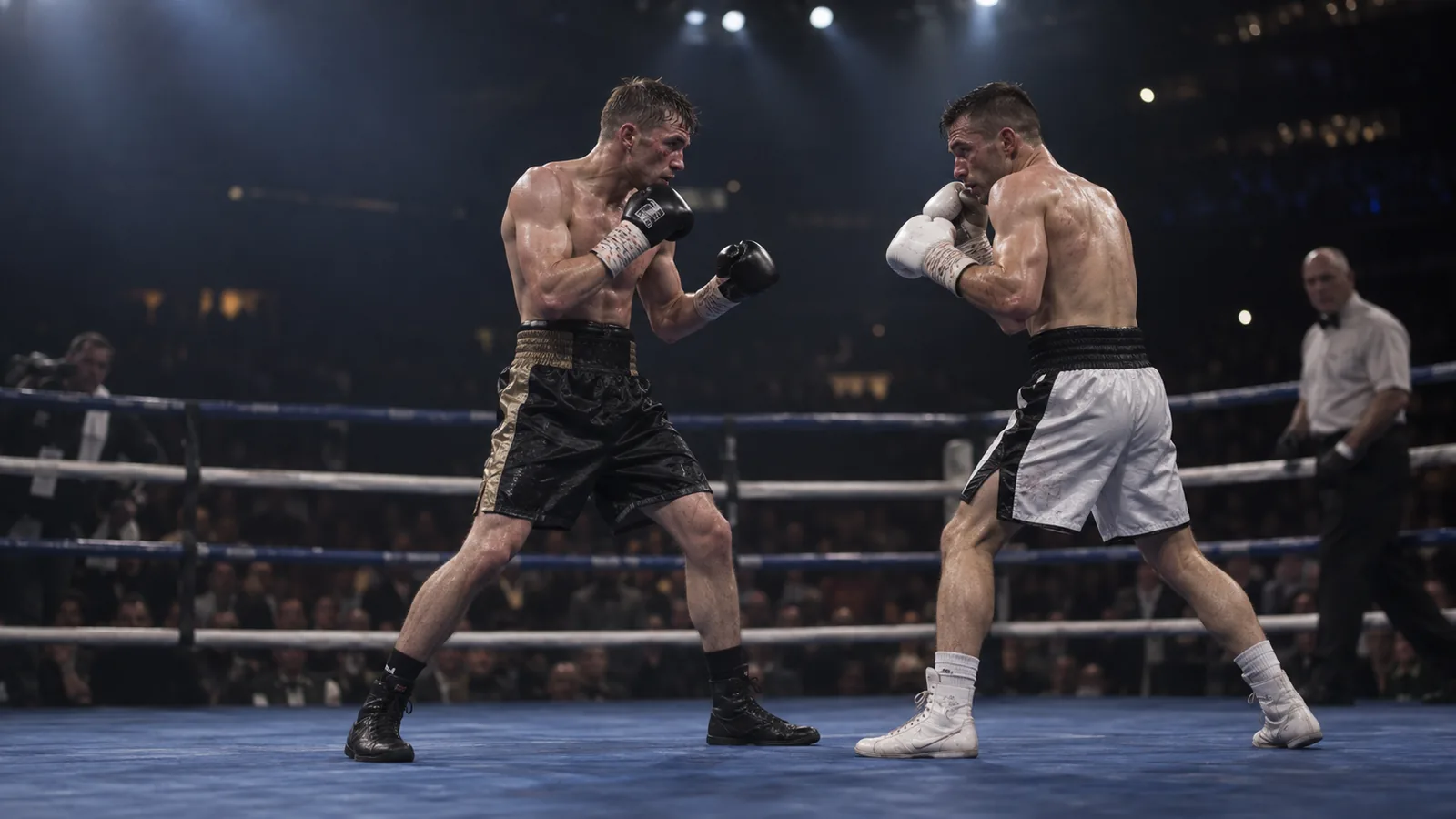
Liam Davies against Nathaniel Collins in Birmingham had all of that. Davies, the taller orthodox champion, retained his European and WBO Intercontinental featherweight titles when Collins’ corner retired their man after seven rounds, following a difficult night with a damaged right eye. Davies had dropped Collins in the opening round and controlled too much of the fight with his jab, straight punches and disciplined use of distance, as Fightmag’s results report and BoxingScene’s recap make clear.
The finish matters, but the lesson is in what came before it. Collins was not blown away by a freak shot. Davies made the ring increasingly small for Collins while keeping the actual punching range on his own terms. That is a much more useful thing for boxers to notice.
Davies won the range battle before he won the fight
The pre-fight case was obvious. Davies had height, reach and an orthodox stance. Collins was the more compact southpaw, dangerous when he could close distance, get his lead right hand working and fire the left down the middle. Split Decision’s preview put the height difference at four inches and correctly identified Davies’ longer jab as the central issue.
That is exactly what the highlights show.
Davies did not merely throw a jab because taller fighters are supposed to jab. He used it to keep Collins making decisions from the wrong distance. Collins had to judge whether to step in, slip, parry or wait. Each extra decision gave Davies another moment to see him coming and set his own feet.
The first-round knockdown was a sharp reminder of what happens when a shorter fighter enters in a straight line against a tall, balanced opponent. Collins was not reckless in the cartoon sense. He was simply entering a range Davies had already claimed. Davies met him with a clean one-two, and the contest changed immediately.
This is why a jab should not be treated as a polite opening punch. A proper jab tells the other boxer where the fight will happen. Davies’ was quick enough to score, but more importantly it was busy enough to interrupt Collins’ approach. The southpaw could not simply walk into his preferred range and start combinations.
For anyone sparring a shorter, aggressive opponent, the lesson is simple: do not retreat until they are comfortable. Stand your ground when you have the range, touch them with the jab, and make them cross the gap under pressure. Davies was not backing up to avoid danger. He was holding the line and making Collins solve it.
Lead-foot position matters, but it is not magic
Orthodox versus southpaw is often reduced to one instruction: get your lead foot outside theirs.
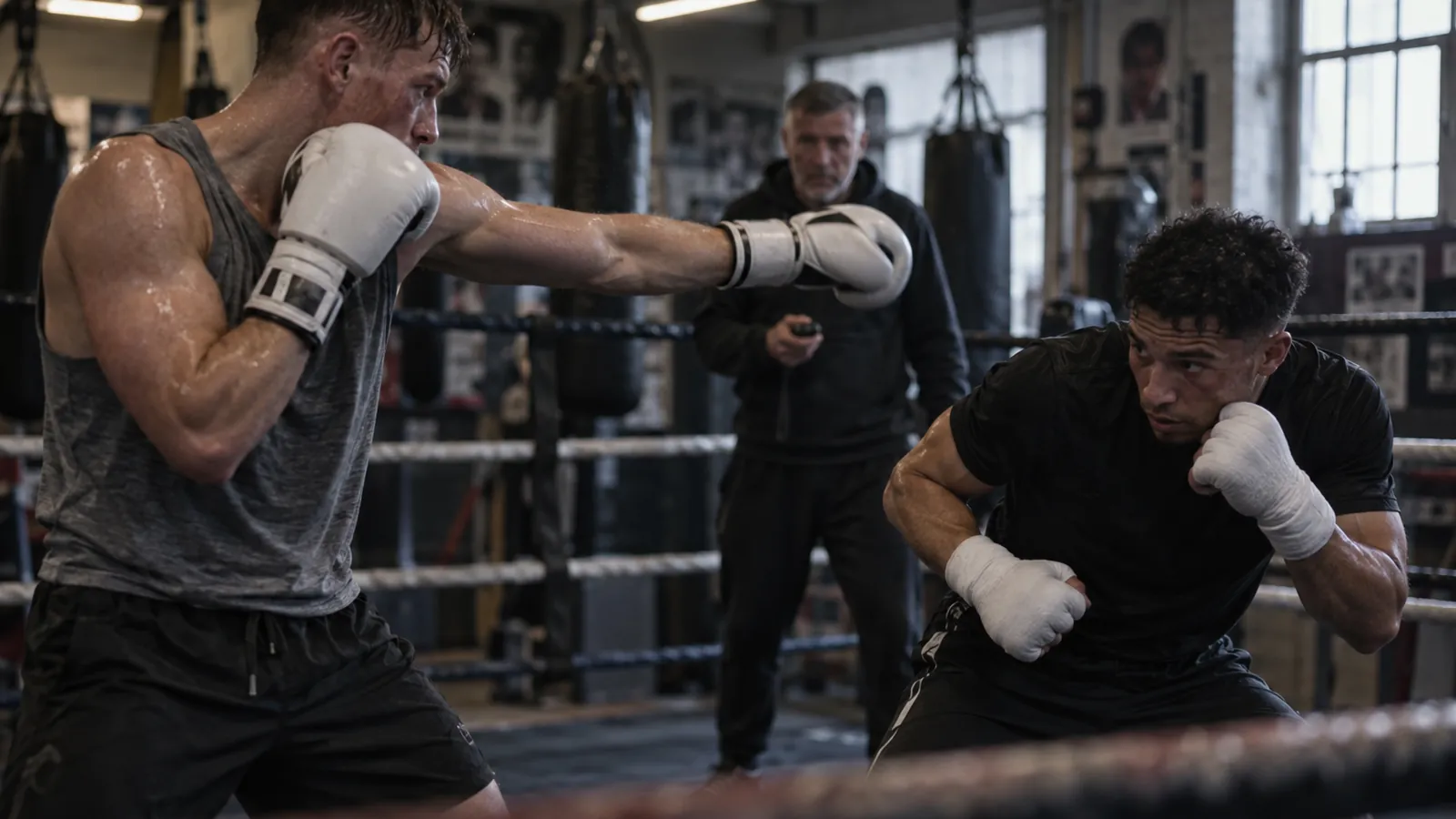
There is truth in it. With Davies orthodox and Collins southpaw, each man wanted the outside lane for the rear hand. Davies wanted a clear route for his right hand. Collins wanted the angle for his left. The outside lead-foot position can help close off the opponent’s rear hand, open your own straight shot and change the line of the jab.
But it is not a magic square on the canvas. A boxer can win the outside-foot battle and still get hit because their head is in the middle, their feet are too close together or they are too eager to punch.
Davies’ better work was not about dramatically stepping on Collins’ lead foot. It was about staying composed as the stances created awkward angles. He kept his posture tall, used the lead hand to measure and disrupted Collins’ entries with small adjustments rather than huge lunges.
That mattered because Collins was not an unknown quantity. The pair had shared plenty of sparring rounds, with Davies referring to the contest as “round 37” in the build-up. Collins spoke openly about that familiarity with Boxing News, saying that both men had felt each other’s power and pressure in the gym. Familiarity makes basic patterns less effective. You cannot rely on a surprise jab if the other man has seen it repeatedly.
The answer is to make the familiar look slightly different. Davies varied the rhythm, used feints, stepped back after scoring and made Collins reset before he could build a sequence. That is good southpaw work from the orthodox side. Not chasing feet, but controlling the angle where the next exchange begins.
For a southpaw, the counter-lesson is just as important. Do not obsess over getting the outside foot if you have not earned the entry. Touch the opponent’s jab, feint the lead hand, step your head off line and arrive behind something. If you march straight in to win a foot position, you are still walking onto the right hand.
Collins showed courage. Davies showed composure.
Collins deserves credit for staying in the fight. He was knocked down early, hurt around the right eye and still produced moments of resistance. He landed his left hand at points, had spells of better work in the middle rounds and did not look for an easy exit.
But bravery is not the same as control.
The cut and swelling changed the task badly for Collins. Once vision is compromised, the shots that were previously hard to see become harder still, especially against a taller boxer who is using long straight punches. The doctor examined Collins during the fight, but he was allowed to continue. Yahoo Sports’ live report records that his corner stopped the contest before round eight rather than allowing the damage to continue.
Davies deserves praise here because he did not get greedy.
A less mature fighter sees a wounded opponent and starts throwing every punch available. The shoulders rise, the feet stop working and the clean winner gives away easy counters. Davies applied pressure without falling into that trap. He kept punching long, returned to the jab and made Collins work for every opening.
That is composure in boxing. It is not being passive. It is knowing the difference between forcing a finish and presenting an opponent with a lifeline.
The build-up had presented this as a close domestic meeting. Both men were 30, both were experienced and Collins was coming in determined to put the Lorente setback behind him. The Ring’s fight preview framed it as one of Britain’s more compelling match-ups, while the pre-fight press coverage highlighted Davies’ championship-round experience and Collins’ intent to rediscover his best form.
In the end, Davies’ calm was the separating quality. The fight was competitive in patches. The control was not.
Three drills to take from the fight
1. Jab, step back, jab again
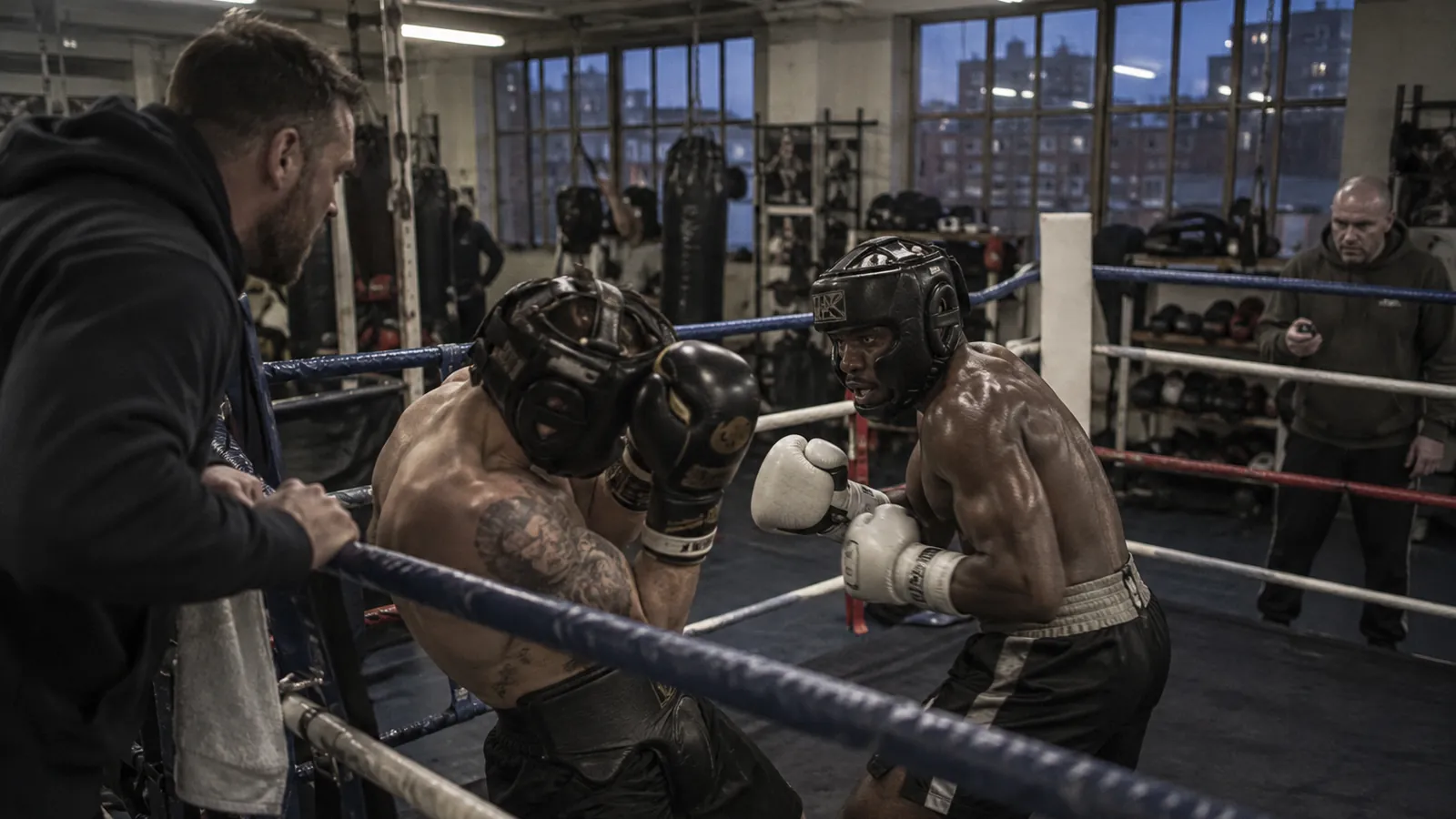
With a partner at light contact, throw a jab and take a small step back as they try to enter. Do not run. Stay in stance. As they reset, jab again.
The aim is to learn that range is not created by retreating across the ring. It is created by making a small movement at the right moment, then being ready to punch again.
2. Orthodox versus southpaw lane drill
Work one minute each in open stance. Neither boxer throws power shots. The orthodox boxer uses the jab and small steps to find an outside lane. The southpaw uses feints, lead-hand touches and head movement to enter safely.
The rule is simple: no one may throw a rear hand unless their feet are under them and their head is off the centre line. This stops the drill turning into a race to stamp on someone’s shoe.
3. Finish the exchange balanced
Use a jab-cross, then take one controlled exit step. Your partner returns a light jab as you leave. If you are square, reaching or crossing your feet, the jab should find you.
Davies’ work against Collins was effective because he repeatedly finished in a position to defend again. That is the standard. A combination is only good if you can live safely after throwing it.
The verdict
Davies did not beat Collins because orthodox fighters are automatically better than southpaws, or because tall fighters always win at range. He won because he used the advantages he had with more discipline.
He established his jab early. He made Collins enter through danger. He understood the lead-foot battle without becoming obsessed with it. And when the fight started to turn in his favour, he stayed patient enough to keep it turning.
For boxers in Kidbrooke, that is the value of studying a fight like this. The lesson is not to copy Liam Davies’ exact stance or expect every opponent to fold under a one-two. It is to understand that clean footwork, a useful jab and a calm head can make even a close stylistic contest look increasingly one-sided.
At Honour & Glory, we teach those details in coached, controlled sessions for beginners and experienced boxers alike. If you want to work on range, angles and composure properly, book a free trial session and learn the difference between throwing punches and actually boxing.
H&G Team
Writer at Honour & Glory Boxing Club, a community boxing gym in Kidbrooke, South East London.
KEEP READING
Lewis Crocker vs Liam Paro: pressure fight lessons
Boxing lessons from Lewis Crocker vs Liam Paro on pressure, clinches, tempo, and smarter round management.
Gonzalez vs Perez: flyweight title fight lessons
Use fresh DAZN highlights to break down what beginners can learn from a fast flyweight title fight: tempo, positioning, punch selection and staying composed under pressure.
Troy Williamson vs Callum Simpson: why British titles matter
Use the Leeds fight to explain the value of a properly matched domestic title bout: British and Commonwealth belts still make a fighter prove they can handle pressure, travel and a live home crowd before chasing world-level opportunities.
Was this page helpful?
It takes one tap, and it genuinely helps.
Choose your next step
Turn this article into the right action
Some readers are ready to book. Some need the class route first. Pick the route that matches what you actually want.