Lewis Crocker vs Liam Paro: pressure fight lessons
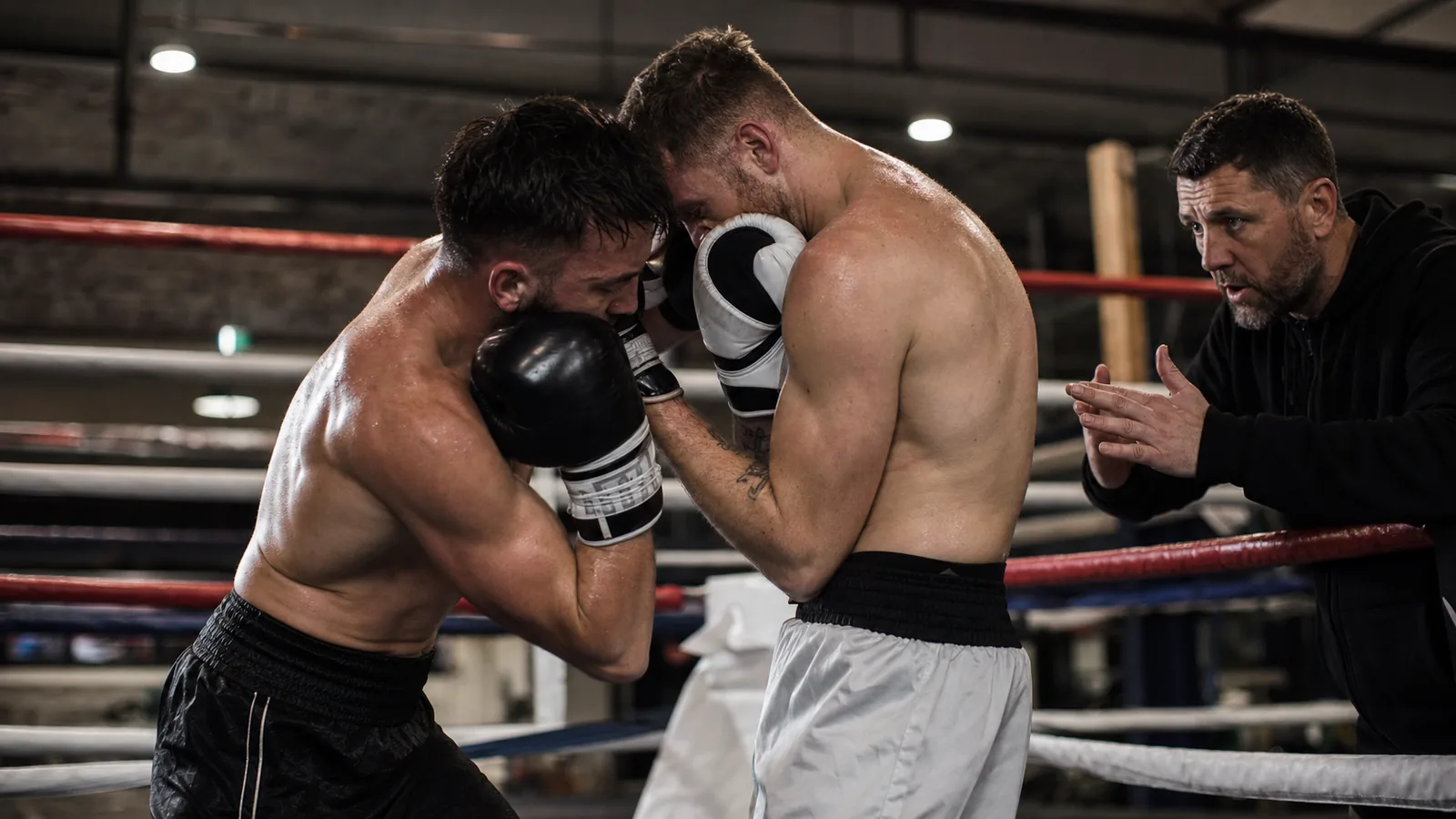
Lewis Crocker vs Liam Paro: pressure fight lessons from the DAZN highlights
Liam Paro did not win the IBF welterweight title by making Lewis Crocker disappear. He won it by surviving the rough parts, banking enough clean boxing, and refusing to let the fight become one long Crocker charge.
That is the useful lesson in the fresh DAZN highlights. Not every pressure fight is decided by who looks more dangerous in the final minute. Some are decided by who controls enough of the tempo before the final storm arrives.
Paro beat Crocker by unanimous decision in Brisbane, with all three judges scoring it 115-113. ESPN reported that Paro became IBF welterweight world champion after a bloody 12-round fight, while BBC Sport’s live coverage called it a “superb clash of styles” and noted the same 115-113 cards across the board.
That score tells you the fight was close. The highlights tell you why.
Paro understood tempo better
Crocker is the heavier-looking fighter in many exchanges. When he lands clean, the shots look spiteful. His right hand carries real authority, and when he steps in with intent he has the presence of a man trying to make the opponent uncomfortable rather than merely outscore him.
But pressure is not the same as winning the rhythm.
Paro’s best work came when he stopped Crocker from choosing when the fight happened. He used small changes of pace, jabbed enough to interrupt the entry, and did not always answer power with power. That last part matters. A lot of fighters get hit hard and immediately try to prove they are not hurt. Paro often did the better professional thing: reset, touch, hold his ground for a second, then change the picture.
Before the fight, DAZN’s own preview framed it as a must-win sort of contest, and the result showed why. Crocker entered as the defending champion, in his first defence, fighting outside Europe for the first time. The Irish News preview had the basics right: IBF welterweight title, Pat Rafter Arena in Brisbane, DAZN broadcast, Crocker travelling into Paro’s country.
That kind of setting can tempt a fighter into trying to make every moment emphatic. Crocker had spells where that almost worked. Paro had more spells where he made the round feel like boxing rather than a test of force.
For club boxers, the lesson is simple: tempo is a weapon. If you only have one speed, a calm opponent can read you. If every attack is a full march, you become easier to smother, turn, or clinch. The boxer who can go touch, step, pause, jab, then burst is harder to time than the boxer who just walks forward with good intentions.
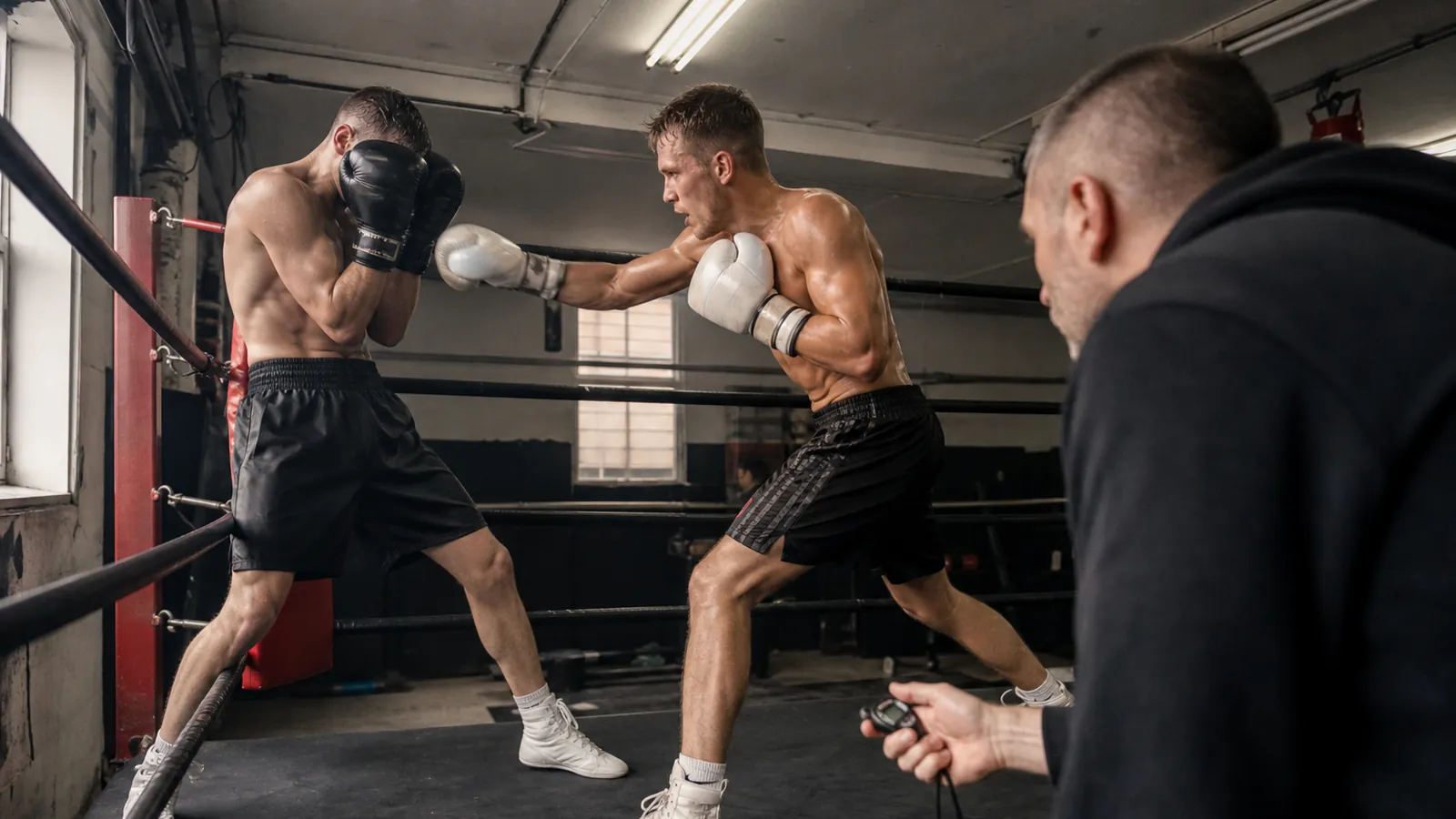
Clinches are not pretty, but they win seconds
Crocker said afterwards that “a bit more could have been done about the holding”, a line reported by both ESPN and BBC Sport. He was not imagining the pattern. Paro used clinches and close-range tie-ups at important moments.
Here is the important point: there is legal clinching, messy clinching, and excessive holding. Fighters and coaches can argue forever about where this one sat. What matters for learning is why the clinch appeared when it did.
Paro did not want every Crocker entry to become a clean inside exchange. When Crocker closed distance with power, Paro often looked to reduce the second and third punch. That is clever. Many beginners defend the first shot and then admire their work. The problem is that pressure fighters are rarely trying to land only one. They want the follow-up, the shoulder contact, the body shot, the head position, the panic.
The clinch breaks that chain.
In the gym, we do not teach young boxers to grab because they are tired or scared. We teach them to understand distance. If you are too far away, box. If you are at mid-range, punch and defend. If you are chest-to-chest and the opponent is stronger in the exchange, you must know how to tie up safely, keep your head position sensible, wait for the break, and restart without switching off.
That is an adult lesson, but it matters for everyone training properly, including younger boxers aged 7+ learning their first habits. Panic clinching gets messy. Educated clinching buys time, stops damage, and forces the opponent to rebuild the attack.
Crocker’s late pressure was real
None of this means Crocker failed as a pressure fighter. He did plenty right.
The BBC round-by-round coverage noted that Crocker grew stronger late, especially in the championship rounds, with round 12 bringing a heavy surge as he piled on pressure and forced Paro through a difficult finish. The highlights show that threat clearly. Crocker was still dangerous when Paro was marked up, tired, and trying to protect the lead.
This is where the fight becomes valuable for boxers at Honour and Glory in Kidbrooke. Pressure does not always win every early exchange. Sometimes pressure is an investment. You make the opponent work. You hit arms. You force exits. You keep turning up. By round 10, 11 and 12, those earlier efforts can start to show.
Crocker’s mistake, if we can call it that from the outside, was not that he pressured. It was that Paro had already taken enough of the cleaner boxing argument. A late charge can rescue a fight, but it cannot always rewrite it.
That is why coaches care so much about round management. A boxer cannot throw away three quiet rounds and then expect one dramatic round to solve the scoring. Pressure has to be organised early enough to matter.
If you are the pressure fighter, you must ask three questions.
Am I cutting the ring, or just following?
Am I making the opponent reset, or letting him reset for free?
Am I scoring while applying pressure, or only looking threatening?
Crocker often looked threatening. Paro often made his work count before the danger became overwhelming.
High-level pressure is not just aggression
The wider discussion around the bout, including BoxRec forum discussion and the r/Boxing post-fight thread, points to the same thing: people saw a close fight with competing interpretations. Some will remember Paro’s cleaner spells. Others will remember Crocker’s damage and late pressure.
That is boxing. Clean scoring and visible damage do not always tell the same story.
For practical training, though, this fight gives us three strong lessons.
1. Win the entry before you throw
Crocker was dangerous when he got close on his terms. Paro was safer when he made Crocker start from slightly too far away, slightly off rhythm, or slightly crowded. At club level, this is huge. Do not just march in behind bravery. Use a jab, feint, step, head movement, or angle to earn the entry.
2. Do not let clinches frustrate you into rushing
If someone ties you up, you cannot sulk. You need a plan for the break. Step out alert. Take centre again. Touch the guard. Make the referee’s break work for you. Crocker had reason to be irritated, but irritation is not a tactic.
3. Pressure must score
Coaches love effort, but judges score punches and control. If you are coming forward, you still need clean work. A body jab, a right hand to the chest, a hook around the guard, a short uppercut inside. Pressure without scoring becomes theatre.
What H&G boxers should take into the gym
At Honour and Glory, we talk a lot about making boxing useful, not mystical. This fight is perfect for that. You do not need to be a world-level welterweight to learn from it.
If you are newer, watch how Paro resets after contact. That is a habit you can build on the bags and in technical sparring. Punch, defend, step, breathe, look again.
If you are more aggressive by nature, watch Crocker’s late work but also ask whether he could have made the middle rounds rougher without becoming predictable. The best pressure fighters do not chase a fight. They build one.
If you are nervous in close range, study the clinches. Not to copy holding, but to understand that inside boxing is a skill area. Balance, head position, underhooks, short punches, and safe exits all matter.
Our adult recreational boxing classes are built around that kind of learning: proper fundamentals, pressure with shape, and sparring habits that suit real people, from adults starting fresh to young boxers aged 7+. If you are local to Kidbrooke, the gym is at 122 Broad Walk and you can start without needing to be fit first.
If this fight made you want to train with more purpose, the related guide on why boxing is good for stress relief explains why structured rounds can help people switch off without drifting into autopilot fitness.
Paro left Brisbane with the belt. Crocker left with his first defeat, but not with his reputation ruined. For anyone learning the sport, the better takeaway is this: pressure is not only who walks forward. It is who controls the terms when the other boxer tries to make life uncomfortable.
H&G Team
Writer at Honour & Glory Boxing Club, a community boxing gym in Kidbrooke, South East London.
KEEP READING
The Greatest Rivalries in British Boxing History
British boxing has produced rivalries that defined eras and divided the country. Here are the ones that mattered most, and why they went beyond the ring.
Zayas vs Ennis: press conference lessons
What Zayas vs Ennis fight week teaches boxers about pressure, body language and staying disciplined before a big night.
Gonzalez vs Perez: flyweight title fight lessons
Use fresh DAZN highlights to break down what beginners can learn from a fast flyweight title fight: tempo, positioning, punch selection and staying composed under pressure.
Was this page helpful?
It takes one tap, and it genuinely helps.
Choose your next step
Turn this article into the right action
Some readers are ready to book. Some need the class route first. Pick the route that matches what you actually want.