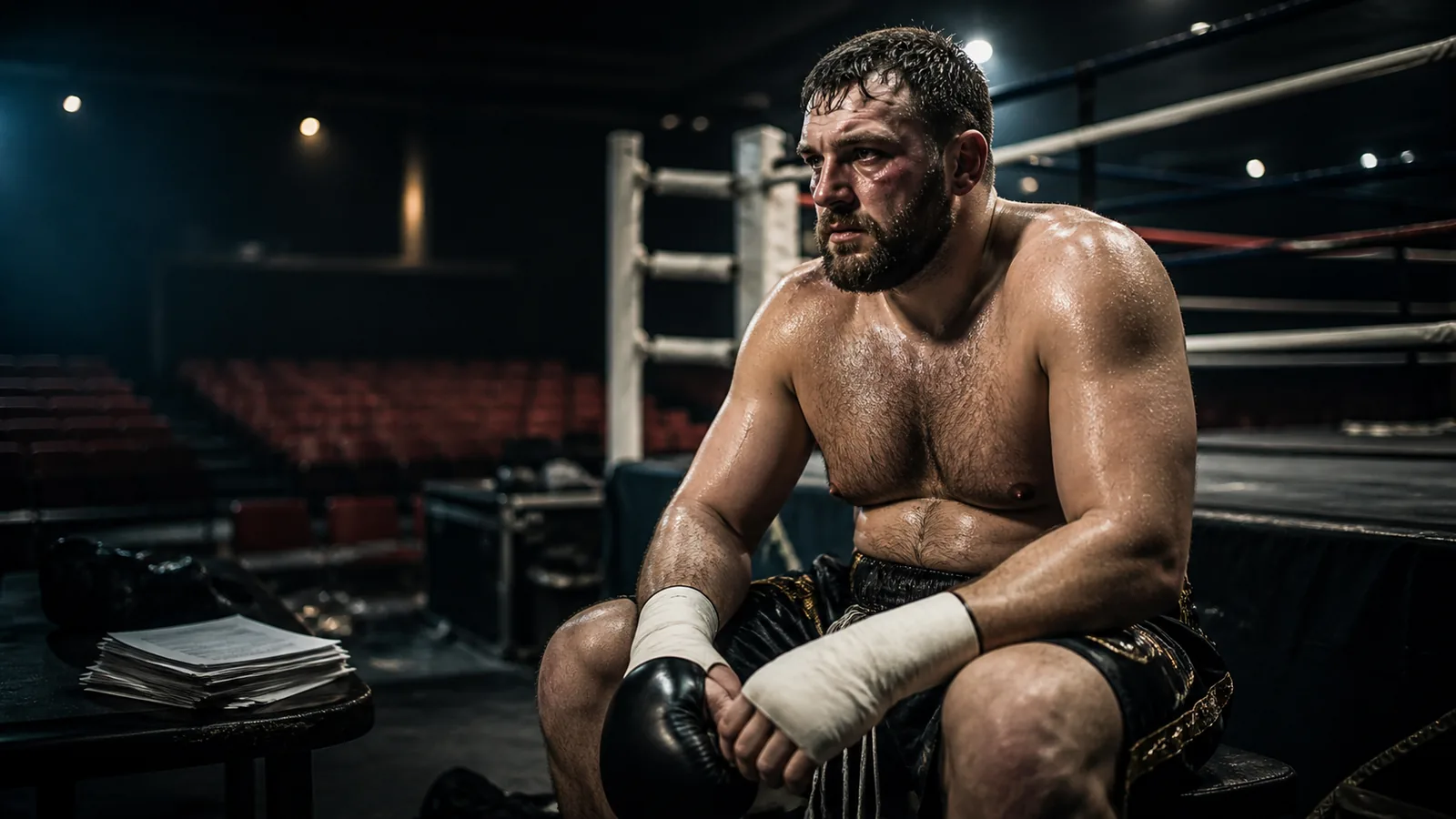
Russia changed the terms of the conversation
Before the July fight, there was a reasonable, if uneasy, case for Joyce having one more serious go. He had spent more than a year out after the Filip Hrgovic defeat and said he had been training throughout. The original BBC Sport preview set out the gamble clearly: an unbeaten 30-year-old Suslenkov, a WBA Continental title, an away assignment, and a chance to prove that the slide had stopped.
Other previews struck a similar note. Eventmasters’ report recorded Joyce’s belief that Moscow would see a big performance. It was not a soft touch, but it was a credible route back into relevance if he won.
He did not. BBC Sport’s report from the fight described a lethargic Joyce, short of power and offering little defence before the stoppage. Bad Left Hook’s blunt assessment put the scale of the problem in one line: five defeats in six, with three stoppage losses. Yardbarker’s fight report traced that decline back through the two Zhilei Zhang defeats, the loss to Derek Chisora and then Hrgovic.
The point is not to kick a fighter when he is down. Joyce has been an excellent professional, a 2016 Olympic silver medallist and the man who stopped Joseph Parker to win the WBO interim title in 2022. His career record) tells the story of a late starter who did not take easy routes. But heavyweight boxing is not sentimental. A style based on marching forward, setting a hard jab and taking shots in order to give them back has very little margin once the resistance starts to go.
Promoter-free is not the same as liberated
Joyce has since said that he is promoter-free and wants to return. According to Boxing News 24’s report, he is open to speaking with Dana White’s Zuffa Boxing as well as other possible partners. That is a conversation, not an offer or a signed route back.
It is tempting to treat being unattached as a clean break from bad decisions. It is not. A good promoter is not merely a logo on a press release. At the right time, a promoter provides dates, broadcasters, opponents, ticket infrastructure and leverage in negotiation. The fighter still needs good advice, but the machine can make a difficult fight make commercial sense.
At the wrong time, that same machine can pull a boxer towards the biggest available name because the event is easier to sell. For a fighter who needs proof that he can still defend himself over competitive rounds, that is a dangerous incentive.
Joyce’s freedom could create better options if it lets his team reject the obvious money fight. It could let him take a proper medical review, work through a full camp, get his weight and mobility right, and choose an opponent whose style gives an honest answer without turning the next bout into a public punishment. That is the upside.
The downside is equally plain. Without a promoter, every decision carries more pressure. There is no long-term stable to protect a comeback plan and no guaranteed place on a major card. A single appearance can become an audition for whoever is willing to put it on. After Russia, a careless opponent choice could turn a difficult late-career chapter into the final image people remember.
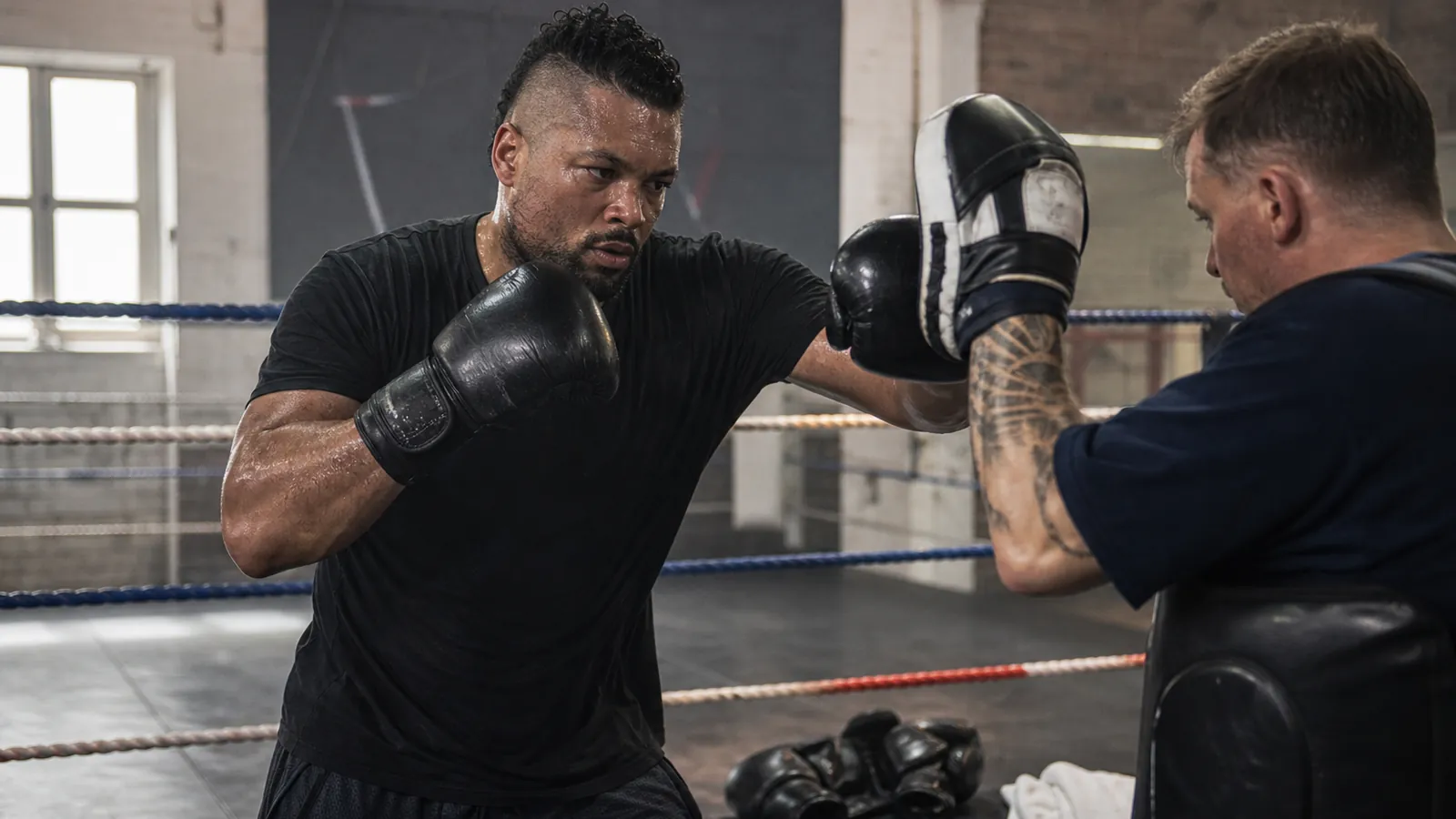
The memory issue cannot be brushed aside
The reporting around Joyce’s return also carries a much more serious concern. He told talkSPORT, as relayed by Boxing News 24, that he went back to his hotel asking what had happened, believed he had been winning and thought a heavy shot may have affected his sight.
That is not material for a heroic comeback trailer. It is a reason to slow down. A fighter who cannot clearly account for the end of an 11-round stoppage needs the appropriate independent medical assessment and an honest discussion with the people around him before any promoter, broadcaster or fan starts naming opponents.
This is where career control has to mean more than choosing the highest bid. Joyce needs to be able to hear advice that does not flatter him. If the assessments say he should not continue, being promoter-free gives him the space to stop without serving anyone else’s schedule. If he is cleared and chooses to box again, the next move needs to be made on evidence, not nostalgia.
What a sensible next move looks like
Several potential fights are already being discussed. Yardbarker suggested Fabio Wardley, Derek Chisora, Johnny Fisher or Frazer Clarke. They are recognisable British names and each would draw attention.
They are also exactly the sort of fights Joyce should not rush into.
Wardley and Fisher bring younger, ambitious pressure. Clarke is a serious operator who knows Joyce well from the amateur circuit. A Chisora rematch has a narrative, but the first fight took place before Joyce’s durability became the central question. These are not gentle tests, and no heavyweight punch is gentle once a fighter is hurt.
A better next step, if the medical and training evidence supports one, is a properly staged UK bout against an experienced opponent who can make Joyce box. It should be long enough to test footwork, defence, pace and recovery, rather than being marketed as a one-round demolition job. It may not be the biggest payday. It is the only type of fight that can answer the question that actually matters.
Can Joe Joyce still take a shot, think clearly and use his jab without relying on the old armour?
If the answer is yes, a promoter-free Joyce will have earned better choices. If the answer is no, then no new promotional arrangement changes the hard truth. The right form of control is knowing when a career needs protecting from the next opportunity.
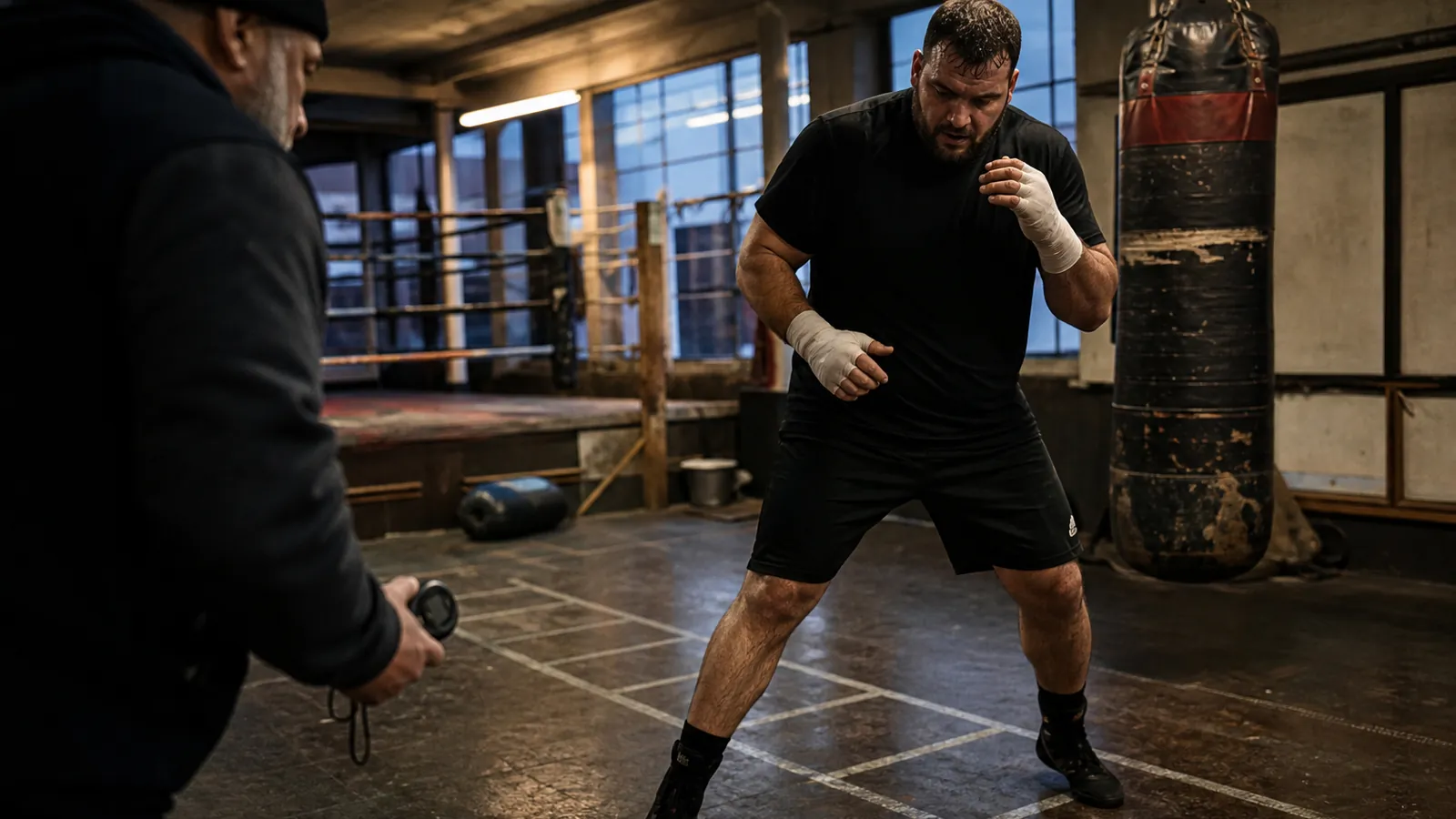
The lesson for anyone who boxes
Joyce’s peak was built on qualities every good gym respects: consistency, pressure, conditioning and the willingness to take responsibility in hard rounds. His current position shows the other side of the sport. Courage is not simply accepting every challenge. It is making the disciplined decision when the stakes are highest.
For anyone training at Honour & Glory’s Kidbrooke boxing classes, that lesson is useful well beyond professional heavyweight boxing. Good boxing is not about proving that you can absorb damage. It is about learning to defend, reset, listen to your coach and make sensible choices when the fight becomes uncomfortable.
Joyce has earned the right to decide his own future. But after Moscow, the most impressive decision he can make is not the loudest one. It is the right one.
H&G Team
Writer at Honour & Glory Boxing Club, a community boxing gym in Kidbrooke, South East London.
KEEP READING
Joe Joyce’s Comeback Loss: When Should a Boxer Call Time?
Use the renewed retirement debate around Joyce to explore the difference between a difficult loss, declining durability and responsible career decision-making.
Joyce vs Gassiev: what changes after Yoka’s injury?
Use the reported opponent switch to explain how late withdrawals change preparation, rhythm and tactical priorities for heavyweights.
Johnny Fisher vs Michael Pirotton: the heavyweight return test
Fisher’s return at Zuffa Boxing 11 is more than a routine comeback: assess the pressure on a young British heavyweight to show composure, defence and rebuilding progress.
Was this page helpful?
It takes one tap, and it genuinely helps.
Choose your next step
Turn this article into the right action
Some readers are ready to book. Some need the class route first. Pick the route that matches what you actually want.