Joe Joyce’s Comeback Loss: When Should a Boxer Call Time?
Joe Joyce’s Comeback Loss: When Should a Boxer Call Time?
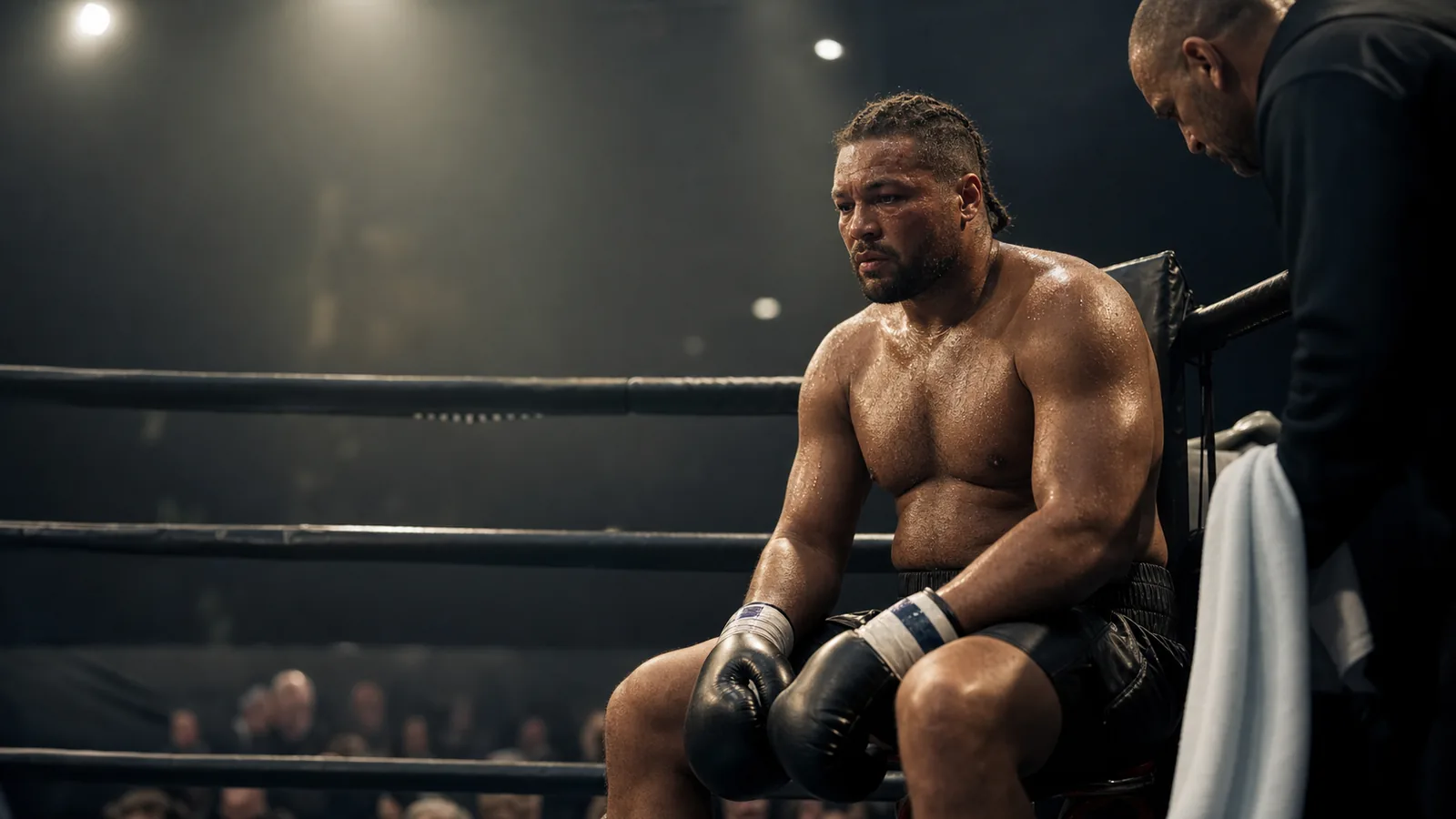
Joe Joyce’s defeat by Artem Suslenkov was not difficult to interpret because of the result. Heavyweights lose. Good fighters lose badly sometimes. It was difficult because of what the 11th round seemed to show.
Joyce backed away, offered little defence and appeared to signal that he could not continue before the referee stopped the contest in Moscow. The BBC’s report described a boxer who looked lethargic and short of power against an unbeaten opponent 10 years his junior. Sky Sports reported that Suslenkov had hurt Joyce badly earlier, then finally forced the stoppage in the penultimate round.
This was not a single bad night in isolation. At 40, Joyce is now 16-5, with five defeats in his last six fights. His record, listed by Box.Live, also shows three stoppage losses. That run invites a question nobody around a fighter enjoys asking: is this a difficult loss to recover from, or evidence that the risks have overtaken the rewards?
This Is Not About Telling Fighters To Quit After One Defeat
Boxing has always been too quick to write people off. A loss can expose a weakness, but it can also provide the information a boxer needs to improve.
Daniel Dubois was stopped by Joyce in 2020 after sustained punishment to the eye. Many treated it as a final verdict. It was not. Dubois adjusted, rebuilt and became a world champion. Anthony Joshua’s loss to Andy Ruiz Jr did not end his career either. It forced a serious rethink around preparation, distance and discipline.
A defeat is not automatically decline.
Neither is getting older. Plenty of fighters have performed brilliantly in their late thirties and beyond. Bernard Hopkins, George Foreman and more recently Oleksandr Usyk all showed that age on its own is a lazy way to judge an athlete. The right question is whether the skills, reactions, conditioning, recovery and judgement are still there when pressure arrives.
But repeated losses have to be read differently from one bad performance. They create a pattern. That pattern matters most when a fighter is taking more punishment than before, struggling to recover between exchanges, or no longer able to carry out the style that made him successful.
That is where Joyce’s situation feels troubling.
Joyce’s Great Strength Has Become The Concern
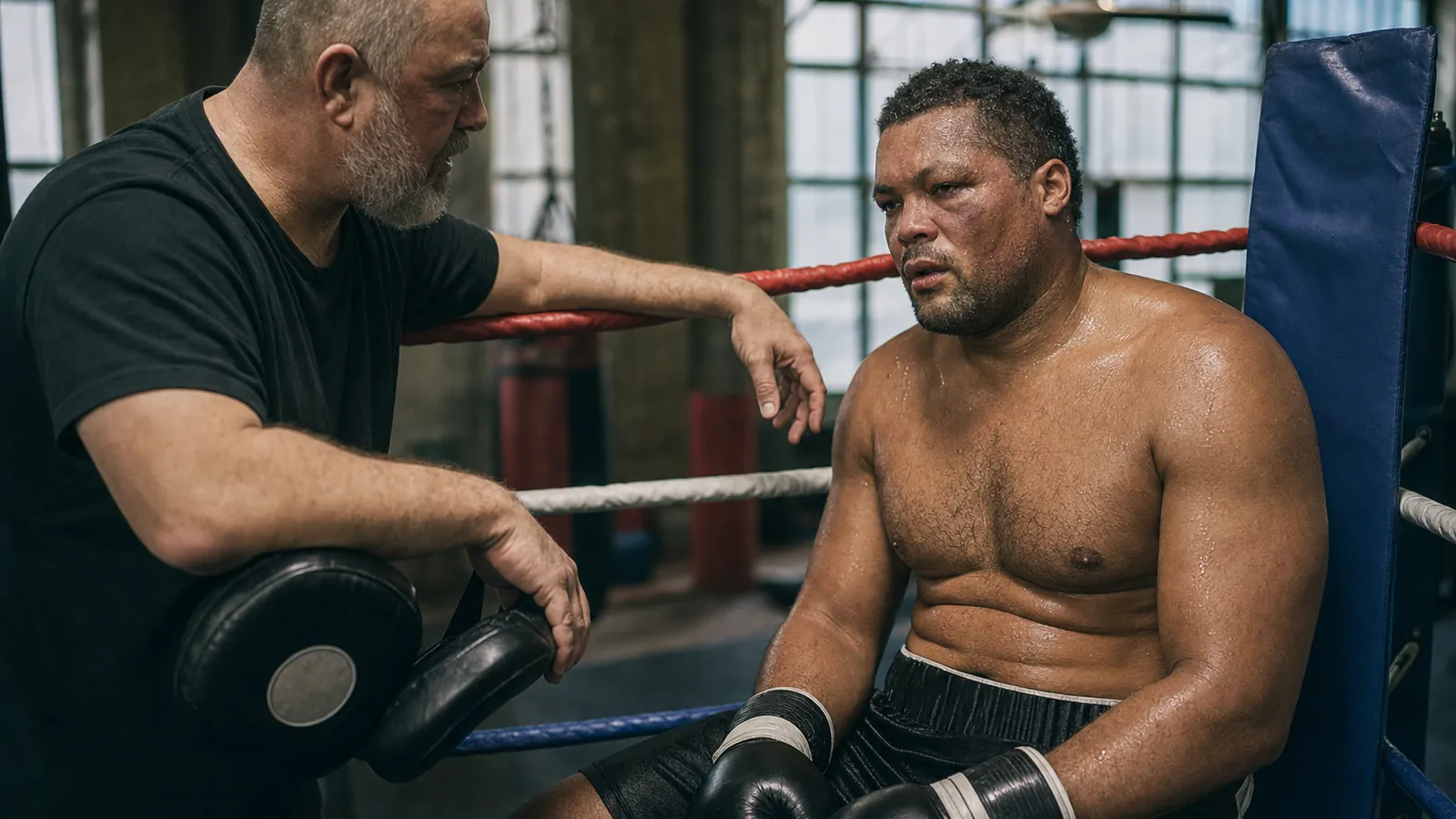
At his best, Joyce was one of the most distinctive heavyweights in Britain. He was not quick in the usual sense. He was not slippery. He did not rely on one spectacular punch.
He marched forward behind a persistent jab, took shots that would have discouraged most heavyweights, and gradually made opponents work at a pace they could not sustain. His win over Joseph Parker for the WBO interim title in 2022 remains one of the best British heavyweight performances of the past decade. Parker is skilled, durable and dangerous. Joyce wore him down and stopped him in the 11th round.
That was the “Juggernaut” at full force.
The concern is that Joyce’s style depended heavily on his ability to absorb punishment without changing shape or confidence. A boxer can lose speed and still make tactical adjustments. A boxer whose entire approach is built around walking through shots has less room for error once the durability goes.
The two defeats to Zhilei Zhang in 2023 were the first major warning. Joyce’s right eye swelled badly in the first fight, leading to a sixth-round stoppage. Zhang then knocked him out in three rounds in the rematch. After that came decision losses to Derek Chisora and Filip Hrgovic, before the Suslenkov stoppage.
The Independent’s assessment put the uncomfortable sequence plainly: Joyce has been hurt, dropped or stopped in three of his last six bouts. That does not diagnose a boxer from the outside. It does mean the people closest to him need to take the evidence seriously.
Courage is not the issue. Joyce has never lacked courage.
The Suslenkov Fight Changed The Tone
There is a difference between losing a competitive fight and looking unable to protect yourself.
Suslenkov was unbeaten at 15-0, younger, quicker and clearly ambitious. That makes him a legitimate danger, not an opponent selected for a gentle return. Yet Joyce had reportedly spent 12 months preparing for the comeback. A long camp should give a boxer the best possible chance to show what remains.
Instead, Suslenkov controlled the tempo. According to British Boxing News, Joyce looked slow and short on power from the early rounds. The final sequence was especially hard to watch because there was no dramatic one-punch finish. It was a veteran heavyweight appearing to reach his limit in front of everyone.
That is why the retirement discussion has become sharper. Nobody should mock a fighter for deciding he cannot continue. Stopping is not shameful. A corner, referee or boxer making the right call is part of responsible boxing.
The issue is what happens next.
A Responsible Decision Is More Than A Public Retirement Statement
Boxers do not retire in a vacuum. A fighter has a team, income, identity, family, supporters and a lifetime of habits built around the next camp. Being told to walk away is easy for people who never had to give up the thing they love most.
That is why the decision cannot be reduced to social media comments or pundits shouting after a defeat. It needs a proper process.
First, the boxer needs time away from the noise. No immediate announcement, no quick comeback date, no easy opponent booked to prove critics wrong. Pride is a poor matchmaker.
Second, there should be candid conversations with the trainer, manager, medical professionals and the people who will still be there when the cameras have gone. The question is not simply, “Can he win another fight?” It is, “What does another fight ask of him, and what is it for?”
A sensible review should look at recent performances, damage taken, recovery, sparring standards and whether the technical changes required are realistic. A late-career boxer may need to become more defensive, more selective and more mobile. If that adjustment is beyond what the body can now deliver, bravery will not solve it.
Johnny Nelson raised precisely that longer-term concern before the Suslenkov contest, saying he feared Joyce could regret fighting too long. You can read the comments in this report from Boxing News 24. It is a serious point, although no outsider has the right to declare another man finished.
The people around Joyce do have a duty to be honest with him.
There Is No Shame In Calling Time
Boxing often celebrates the wrong kind of stubbornness. We admire a fighter who keeps coming forward, then act surprised when that same fighter finds it hard to stop. The sport needs to value judgement as highly as grit.
Joyce has already built a proper career. He won Olympic silver at Rio 2016. He beat Daniel Dubois, Carlos Takam, Joseph Parker and other credible heavyweights. He became a genuine world-level contender and, for a period, one of the division’s most awkward problems.
That cannot be erased by a difficult final chapter.
If Joyce chooses to retire, it should not be framed as failure. It should be recognised as a professional taking responsibility for his future. If he chooses to continue, the standard must be high: a clear reason for doing it, a careful assessment of the risks, and a team prepared to say no if the evidence gets worse.
The BBC’s account of the loss noted that promoter Frank Warren had already urged Joyce to have a “real serious think about the future” after the Hrgovic defeat. After Suslenkov, that thought needs to become a serious conversation.
The Lesson For Every Boxer
At Honour & Glory’s boxing classes in Kidbrooke, we teach the parts of boxing that last: stance, defence, balance, composure and respect for the person opposite you. Those lessons matter whether someone is seven or 40, competing or training for fitness.
Boxing is not only about refusing to give in. It is also about knowing when to listen, when to adjust and when protecting your future is the strongest decision available.
Joe Joyce has given British boxing some brilliant nights. The next decision should be made with the same honesty that made him such a respected fighter in the first place.
H&G Team
Writer at Honour & Glory Boxing Club, a community boxing gym in Kidbrooke, South East London.
KEEP READING
Terence Crawford vs Boots Ennis: why retirement talk matters
Assess Hearn’s claim of a possible Crawford retirement reversal against the practical question: does it create a credible route to Ennis, or only another speculative super-fight headline?
Fury vs Makhmudov: London Comeback
Tyson Fury returned to the ring at Tottenham Hotspur Stadium in April 2026 - who Makhmudov is, what was at stake, and why UK boxing fans cared.
Joshua vs Prenga: why a comeback opponent still matters
DAZN’s official preview puts Anthony Joshua’s return at the centre of the week; the useful club-blog angle is how a supposedly manageable opponent can test timing, composure and decision-making after time away.
Was this page helpful?
It takes one tap, and it genuinely helps.
Choose your next step
Turn this article into the right action
Some readers are ready to book. Some need the class route first. Pick the route that matches what you actually want.