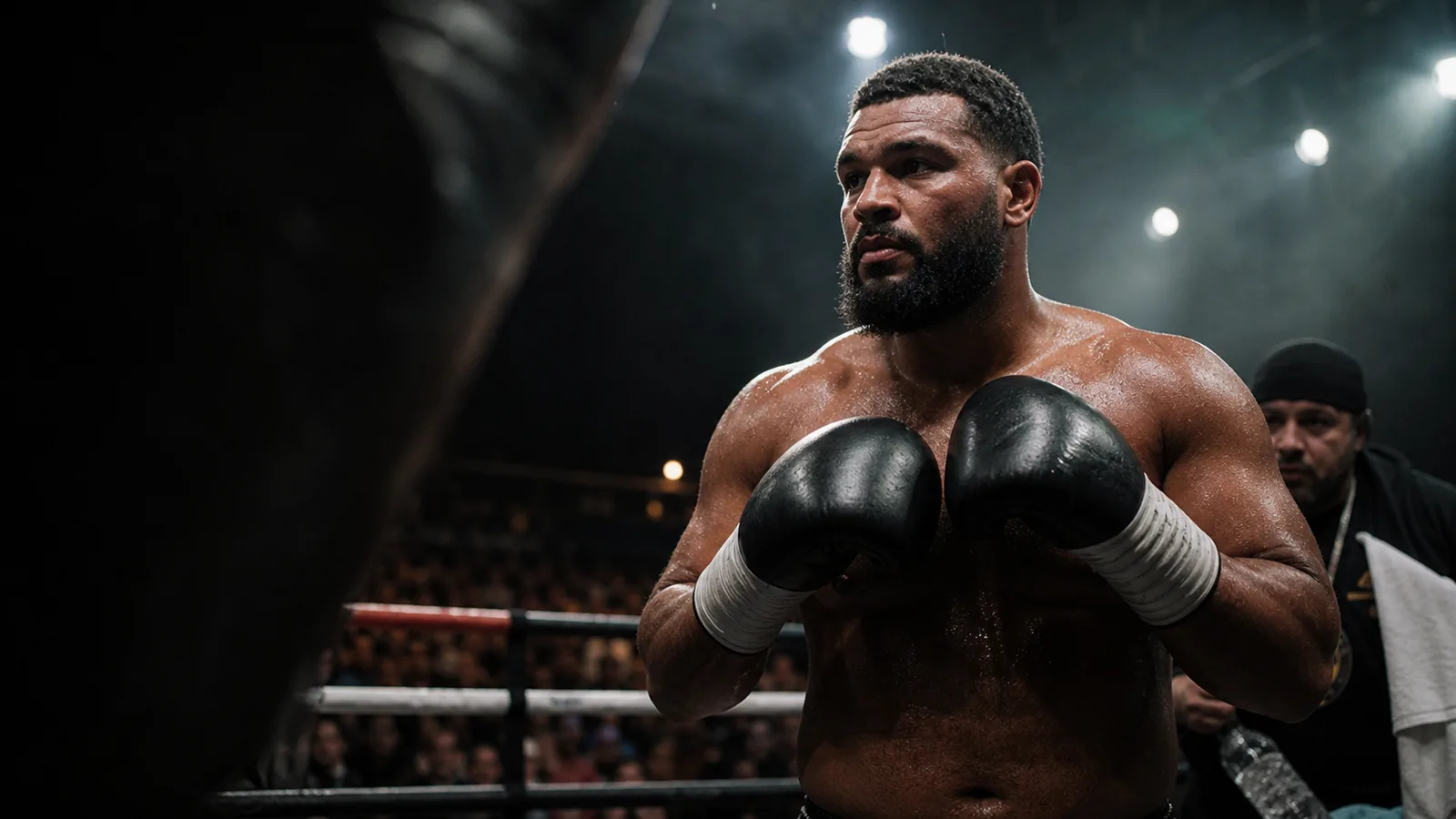
Frazer Clarke’s quick return: why turnaround matters for a heavyweight
A heavyweight’s next fight can matter as much as the last one, especially when the last one leaves questions hanging in the air.
That is why the late notice around Frazer Clarke and Lamah Griggs is interesting. Reports have Clarke appearing on the Troy Williamson v Callum Simpson II bill in Leeds, with the DAZN announcement and a fight listing discussion pointing to a bout with Griggs.
The important word is “appearing”. A scheduled fight is not a completed result. Until the bell has gone, the rounds have been boxed and a credible result is available, there is no win, loss or performance to claim. That sounds obvious, but boxing has a bad habit of treating a poster, an interview or a training clip as if it settles the matter.
What can be said now is that a quick return makes sporting sense for Clarke. Not because a heavyweight needs to be hurried into danger, and not because every fighter should chase activity for its own sake. It matters because, at 35 and after a demanding recent run, ring time is not a luxury for him. It is part of the job.
The real value of getting back in
Heavyweights are often allowed to drift between fights. Big men command bigger purses, television dates are limited, and a serious contest can require a long camp. There is a logic to that. A heavyweight cannot casually absorb punishment in the way a young prospect at lightweight might be asked to learn on the road.
But inactivity has a price. Timing does not live on the pads. Nor does it live entirely in sparring.
On fight night, the distance changes. The gloves are smaller. The opponent is trying to win rather than help prepare you. The referee is moving around you, the crowd is making noise, and every clean shot has consequences. A boxer who has not felt those conditions for months can be technically sharp in the gym yet fractionally late in the ring.
At heavyweight, a fraction is enough.
Clarke has shown he belongs in serious domestic fights. His BoxRec profile records the path from his professional debut in 2022, while Box.Live’s record and recent-fight page reflects both the quality of his opposition and the uneven rhythm of the last two years. He drew a hard British-title fight with Fabio Wardley, was stopped in their rematch, returned with a first-round stoppage of Ebenezer Tetteh, then lost close and difficult fights to Jeamie TKV and Justis Huni.
That is not the profile of a man who needs fantasy matchmaking. It is the profile of a fighter who needs clarity.
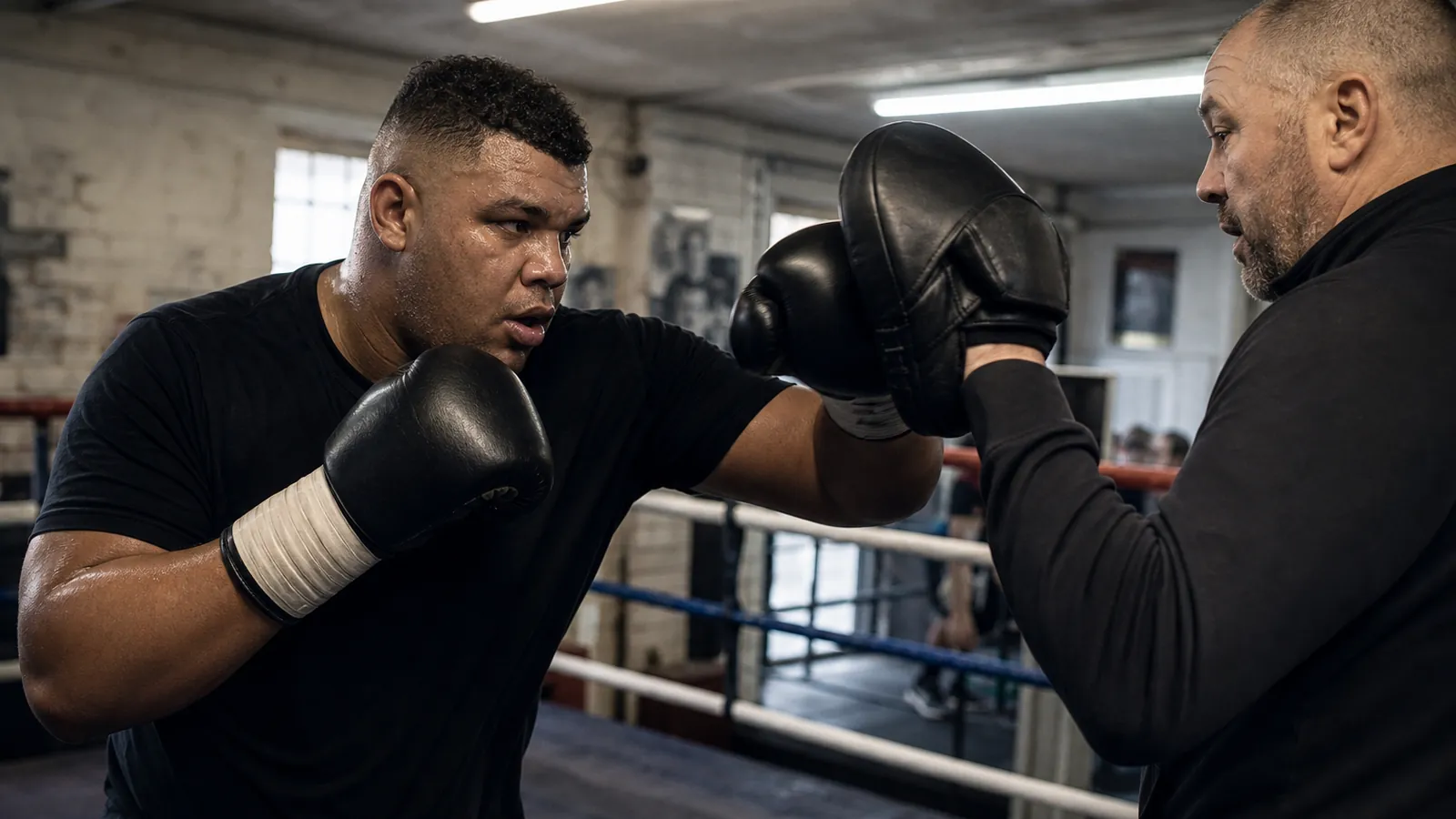
Ring time is not a soft option
There is sometimes a patronising way of talking about a comeback bout, as though an established boxer is taking an easy evening. It is rarely that simple. The opponent still has two gloves, pride, a record of his own and a chance to change his career with one right hand.
A well-chosen return is not about pretending the risk has vanished. It is about controlling the type of risk.
For Clarke, a contest with fewer immediate title implications can offer practical benefits. He can work his way into range without having to force a 12-round championship fight from the opening bell. He can test the jab against a man trying to take it away. He can practise setting his feet before he throws his right hand. He can spend rounds getting familiar with defending after punching, rather than admiring his work.
Those habits sound basic because they are basic. They are also the habits that disappear first when a heavyweight feels pressure to prove everything at once.
The BBC’s report on Clarke’s British-title defeat to Jeamie TKV described a fight in which Clarke started strongly but faded as TKV found repeated left hands. That does not reduce a 12-round contest to one simple flaw. It does underline why a useful turnaround can be more valuable than six months of talk about a perfect next move.
You cannot rebuild pace, judgement and discipline through press conferences.
Confidence means evidence, not slogans
Boxing confidence is regularly misunderstood. It is not standing in front of a camera and saying you are ready. Every professional says that. It is not even simply believing you can win.
Real confidence comes from evidence accumulated under pressure.
A boxer lands his jab after being hit. He stays composed when the opponent rushes him. He returns to the corner after a difficult round and follows the next instruction. He feels his lungs working late, hears the bell, and knows he has solved a problem without panicking.
That is confidence a fighter can carry into the next camp.
Clarke’s own words after the Wardley stoppage showed the mentality behind that. Speaking before his 2025 return, he told Sky Sports that once he could eat properly again and his face had healed, he wanted to spar. He also spoke about being cleared following scans and about working in Joseph Parker’s camp.
Those remarks are revealing because they show a fighter who wants to be in the work. They are not, however, proof of what will happen in a later fight. An interview can explain a mindset. It cannot award a result, confirm a performance or tell us whether a particular turnaround has succeeded.
The distinction matters. Boxing reporting needs more of it.
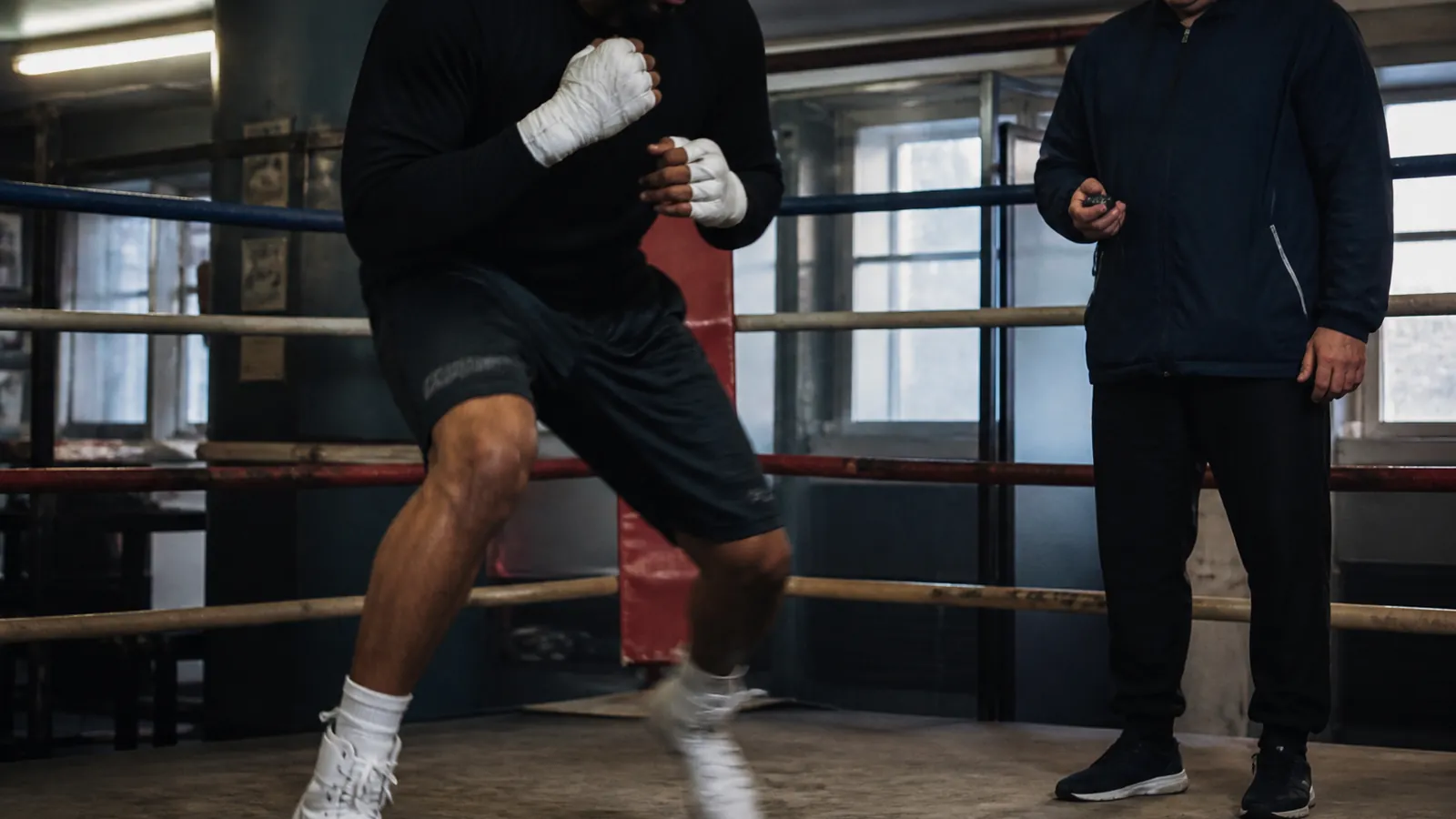
Timing is a heavyweight’s insurance policy
At the top level, Clarke is not going to turn into a different fighter overnight. He is a large, physical orthodox heavyweight who has always relied on a strong base, a purposeful jab and the confidence to let his hands go. The aim of an active spell is not reinvention.
It is refinement.
The best version of Clarke does not waste time reaching with punches. He is set before he fires. His jab creates a decision for the opponent, then his feet put him close enough to make that decision uncomfortable. When that rhythm is there, he can impose his size without becoming square or predictable.
A lower-pressure fight can restore the feel of that sequence. Jab. Step. Draw a response. Punch with balance. Exit safely. Repeat.
The danger is trying to make the return bout a statement. A boxer who goes looking for a spectacular ending can walk onto the exact counter he was meant to avoid. For a heavyweight with championship ambitions, the sensible target is not social-media clips. It is controlled rounds, clean habits and a body that comes through the night well.
The Williamson v Simpson II event listing gives the proposed contest a substantial stage. That is useful. It also creates a trap. An undercard slot can make a fighter feel he has to steal the show. Clarke should resist that urge if he gets into the ring with Griggs.
Winning the right way would be the statement.
Activity has to serve the bigger plan
There is a hard limit to the “stay busy” argument. A heavyweight who has taken difficult fights cannot just be thrown straight back in because the calendar has a gap. Medical clearance, recovery, sparring quality and the specific opponent all matter more than a neat date on a promoter’s schedule.
Good risk management asks straightforward questions.
Has the fighter recovered fully? Is the opponent capable of providing honest resistance without turning the bout into a reckless gamble? Does the contest give the corner something useful to assess? Will the result, whatever it is, point towards a sensible next step?
If the answers are yes, the quick return is not a retreat from ambition. It is how ambition gets a foundation.
That lesson applies well beyond televised heavyweights. At a boxing gym, people often want to jump from learning a combination to sparring hard, or from one good round to the belief that they are ready for anything. The better approach is to build evidence. Get the basics right under manageable pressure, then increase the demand. That is how you stay in the sport long enough to improve.
For anyone in Kidbrooke who wants to learn that process properly, from first sessions through to more technical boxing, Honour & Glory’s classes start from age seven.
Clarke does not need a dramatic story written for him before the fight has happened. He needs ring time, a clear head and the chance to make good decisions under the lights. If the Griggs bout goes ahead, that is what the turnaround can offer.
In heavyweight boxing, getting back in the ring is not automatically brave or foolish. It depends on the reason, the preparation and the control around it. For Frazer Clarke, a quick but sensible return could be exactly what the next chapter requires.
H&G Team
Writer at Honour & Glory Boxing Club, a community boxing gym in Kidbrooke, South East London.
KEEP READING
Usyk vacates heavyweight belts: the vacant-title routes
The defining heavyweight governance story: what surrendering the WBC, WBA and IBF belts changes, why it does not equal retirement, and how mandatory and vacant-title routes now shape the division.
2026 Boxing Schedule: Why Fight Dates Keep Moving
Use the BBC, Sky Sports and ESPN schedule pages to explain to casual UK fans why modern fight calendars change so often: broadcast deals, injuries, undercards, sanctioning bodies and venue availability.
How Subs Work at H&G
A quick guide to session payments - pay-as-you-go, no contracts, simple.
Was this page helpful?
It takes one tap, and it genuinely helps.
Choose your next step
Turn this article into the right action
Some readers are ready to book. Some need the class route first. Pick the route that matches what you actually want.