Claressa Shields’ next two-fight plan: Price or Cameron?
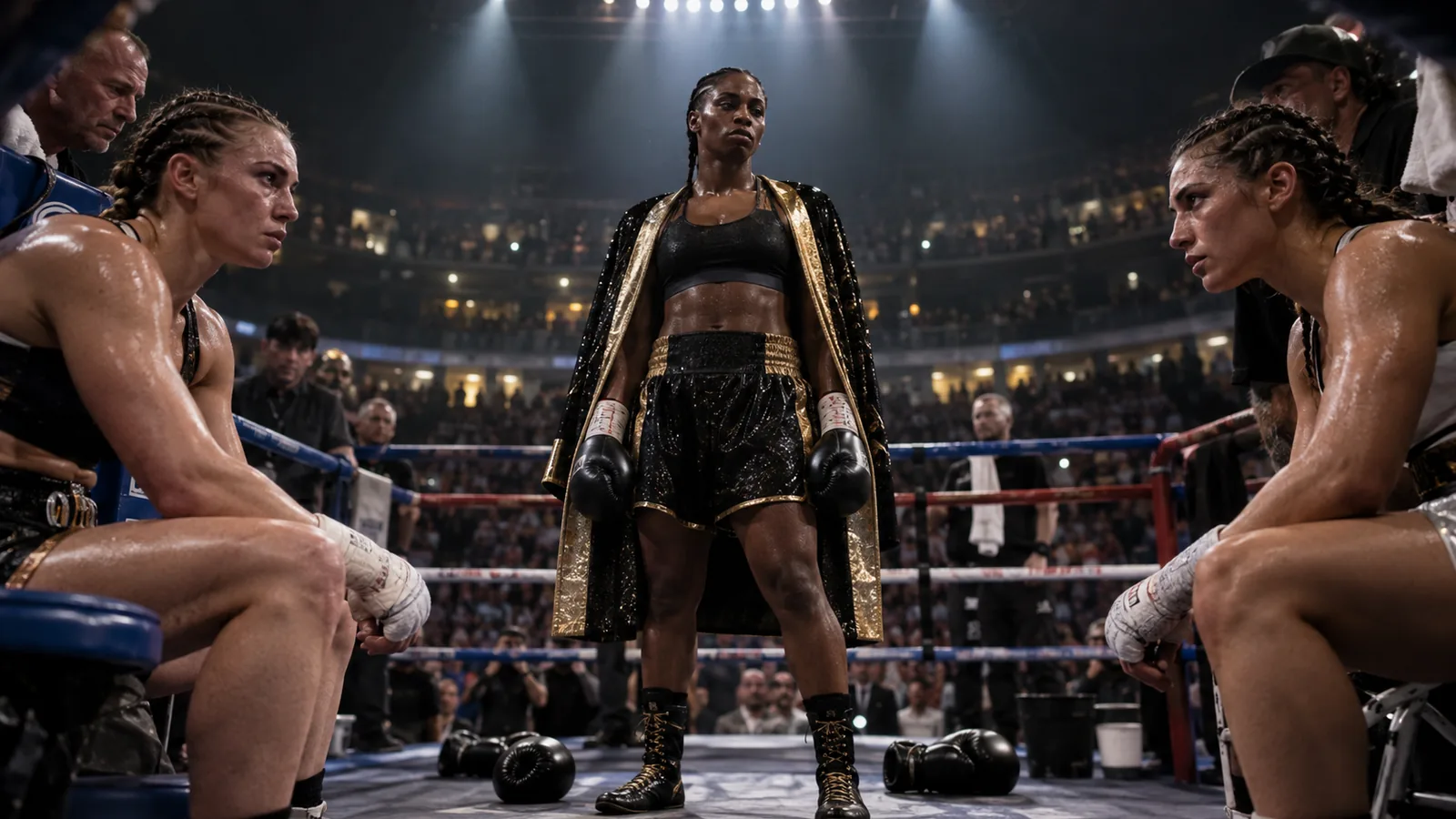
Claressa Shields should fight Lauren Price first, then Chantelle Cameron
Claressa Shields has earned the right to choose her next challenge. The problem is that both obvious choices come with a catch.
Lauren Price is the bigger legacy fight. Chantelle Cameron may be the more straightforward fight to make. One asks whether Shields can beat another Olympic gold medallist with the style and discipline to trouble her. The other asks whether she can meet Britain’s most relentless elite pressure fighter at a weight that respects both women.
The best answer is not Price or Cameron. It is Price first, Cameron second, with the weights handled properly.
Shields has no bout formally scheduled at present, according to DAZN’s next-fight guide. That leaves room for smart matchmaking rather than another routine defence. After stopping Kaye Scott in six rounds to regain the WBA and WBC middleweight titles, Shields has two serious routes in front of her. Sky Sports reported ongoing talks with Price, while the same outlet later reported that negotiations with Cameron were “advanced” after Cameron beat Mikaela Mayer.
That is a very good problem for women’s boxing to have. It should not be wasted.
Why Price is the bigger sporting event
Price against Shields is the fight with the cleanest sporting story.
They are both Olympic gold medallists. Both are calm, highly educated boxers. Both have built their reputations on making good opponents look as though they have been given the wrong set of instructions. There is little need for manufactured bad blood. The contest sells itself as a question of level.
Price is a unified welterweight champion, while Shields has re-established herself at middleweight. The BBC reported that the camps were discussing a middleweight contest, noting that Price competed at that weight as an amateur. That matters. This is not simply a smaller fighter being asked to climb because a famous name is available. Price won Olympic gold in the 75kg class. She has previous experience of dealing with bigger, stronger opponents.
Still, professional boxing is not amateur boxing with longer ring walks. Price has made her professional name at welterweight, while Shields has just shown how comfortable and dangerous she remains at 160lb. There is a meaningful gap between those divisions, and nobody should pretend otherwise.
That is why the terms matter as much as the poster.
If Price chooses Shields, it should be at a genuine middleweight limit, with no last-minute nonsense around the scales and no attempt to sell a dangerous jump as a minor detail. Price is entitled to take the risk because the reward is enormous: a win over Shields would change the entire pound-for-pound argument overnight. But a major fight is only a great fight when both boxers have a fair chance to perform.
On pure style, Price has the best chance of anyone currently being discussed. She can hold centre ring without standing still, throw a sharp southpaw jab and make quick defensive reads before an exchange becomes a scrap. Shields is more proven across more weights, more accustomed to elite professional title fights and probably stronger at the weight. But Price is not a visitor from a lower league. She is a serious boxer with the composure to make Shields think.
Shields’ stoppage of Scott showed the other side of the equation. In the fight highlights, Shields was willing to work close, take exchanges to the body and sit down on her shots when Scott tried to make it physical. The pre-fight coverage carried by Yahoo Sports framed the Scott contest as Shields returning to middleweight for titles she had never lost in the ring. The result made her next move more interesting, not less.
Price is the opponent who can test whether Shields remains the clear standard at 160lb against a boxer with elite feet, timing and ambition.
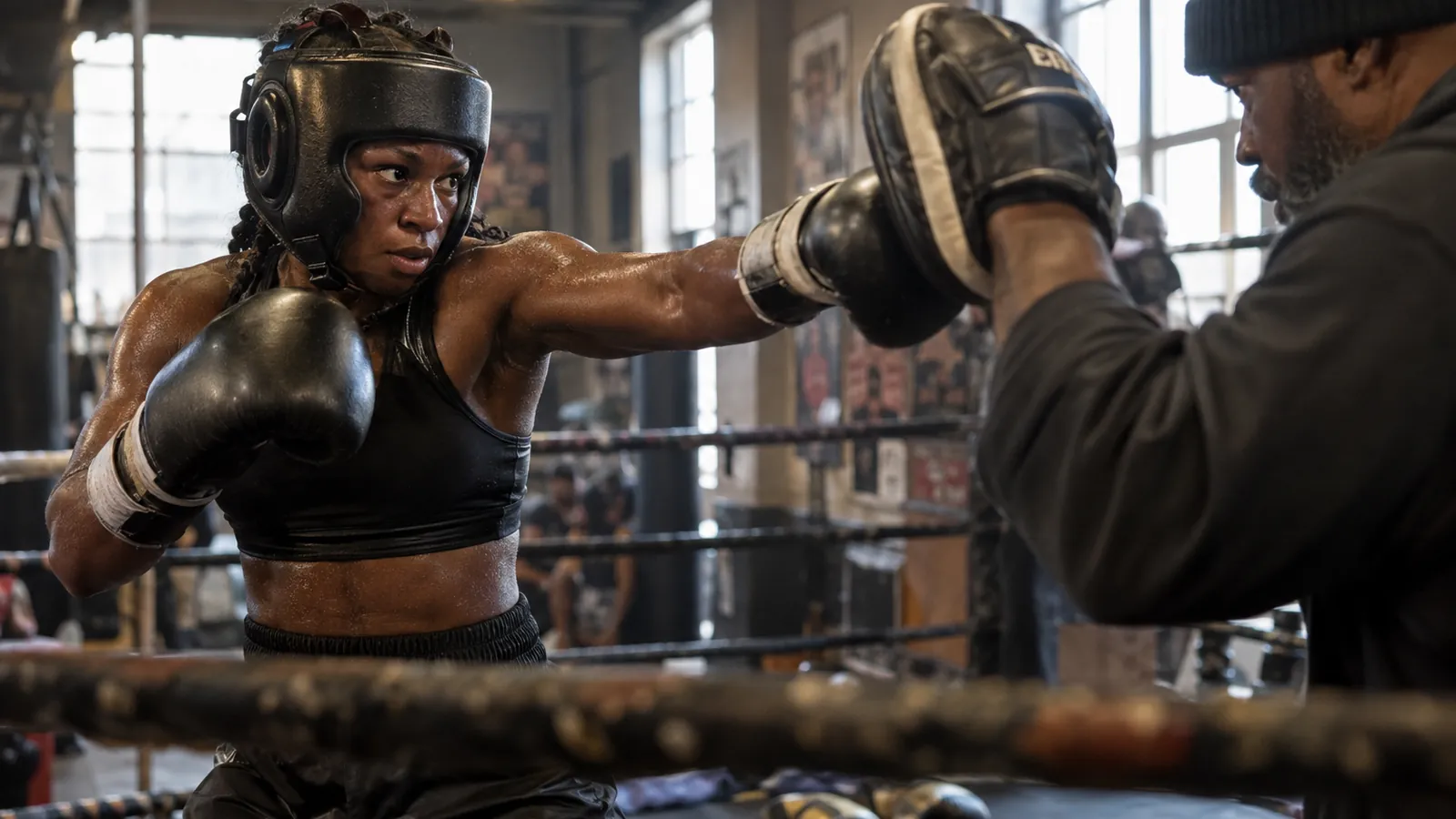
Cameron is the more realistic negotiation, but the weight is everything
Cameron has made no secret of wanting the fight. After beating Mayer by unanimous decision, she told Sky Sports that discussions with Shields were moving quickly. That was not idle call-out language. Shields’ promoter Dmitriy Salita confirmed Cameron was under serious consideration.
Then Cameron gave the clearest update yet. In her interview with Metro, she said the talks were positive but admitted that the weight was the sticking point. Cameron has never fought above 150lb. She said she would not go to heavyweight, while Shields is not expected to come down to 150lb.
That is the whole negotiation in one sentence.
Cameron is now a three-belt super-welterweight champion after beating Mayer. She has already been undisputed at light-welterweight, beaten Katie Taylor and rebuilt herself after the Taylor rematch defeat. She is not chasing Shields because she needs a name. She is chasing her because this is what an elite fighter does when the dangerous opportunity appears.
But calling it a super-fight does not remove the need for sensible conditions.
Cameron should not be expected to jump to full middleweight simply because Shields is the bigger name. Equally, Shields should not be expected to boil herself down to a weight where she is weaker, flat and less able to perform. The credible solution is a negotiated catchweight only if both teams and their medical staff believe it can be made safely, or a fight at super-welterweight if Shields can genuinely prepare for it.
The fairest version is Shields meeting Cameron closer to 154lb than 160lb. Cameron holds major titles there. It is her division. If Shields wants the fight after Price, she should be willing to prove that the move is about competition rather than asking another champion to cross a physical gap on her terms.
The tactical contrast makes Cameron compelling
Price versus Shields would be a chess match with sharp pieces. Cameron versus Shields would be much rougher.
Cameron is at her best when she makes an opponent work in uncomfortable places. She can box at range, but she does not mind trading for position, leaning into the contest and asking whether the other boxer can keep making clean decisions after repeated physical exchanges. Her win over Mayer was close on the cards, 97-93, 97-93 and 96-94, but it was decisive in intent. Cameron did not wait to be invited into the fight.
Shields has the better résumé and more routes to victory. She can box, counter, change pace and score heavily to body and head. Yet Cameron’s pressure would ask a different question from Price’s movement. Could Shields keep her shape over ten rounds if Cameron turns every clean reset into a hard piece of work?
That is why Cameron is not a consolation prize if the Price fight happens first. She is the natural second chapter.
The sensible two-fight plan
Make Price next, at middleweight, for the WBA and WBC titles if Price and her team are satisfied that the weight is right.
Then make Cameron second, at super-welterweight or a properly agreed catchweight that does not turn the fight into a test of who can compromise most on the scales.
Price is the more meaningful immediate legacy fight because it pits two Olympic champions with the technical ability to create a genuine rivalry. Cameron is the fairer divisional fight if Shields is willing to travel back towards 154lb, where Cameron has earned the right to be treated as champion rather than challenger.
That sequence also gives women’s boxing something it needs more of: elite fighters meeting in fights that make sense on paper and in the ring.
For young boxers watching at Honour & Glory’s classes in Kidbrooke, this is the useful part. Great fighters do not only collect belts. They choose difficult questions. Shields has two in front of her. Price asks whether she can beat the next great technician. Cameron asks whether she can win a hard, physical fight on fair terms.
The right plan is to answer both.
H&G Team
Writer at Honour & Glory Boxing Club, a community boxing gym in Kidbrooke, South East London.
KEEP READING
Claressa Shields' activity plan and the opponent problem
Assess the tension between Shields' stated ambition to box frequently and the small pool of credible elite opponents available to her, without treating a commentator's verdict as fact.
Claressa Shields and the $500,000 purse debate
Use the reported purse dispute to explain why boxing pay figures need context: guarantees, commissions, opponents, costs and promotion rather than headline outrage.

Chris Cyborg calling out Claressa Shields: the crossover risk
Examine what a Cyborg call-out would mean for Shields’ sporting legacy, matchmaking risk and women’s boxing, without presenting an unmade fight as agreed.
Was this page helpful?
It takes one tap, and it genuinely helps.
Choose your next step
Turn this article into the right action
Some readers are ready to book. Some need the class route first. Pick the route that matches what you actually want.