Claressa Shields' activity plan and the opponent problem
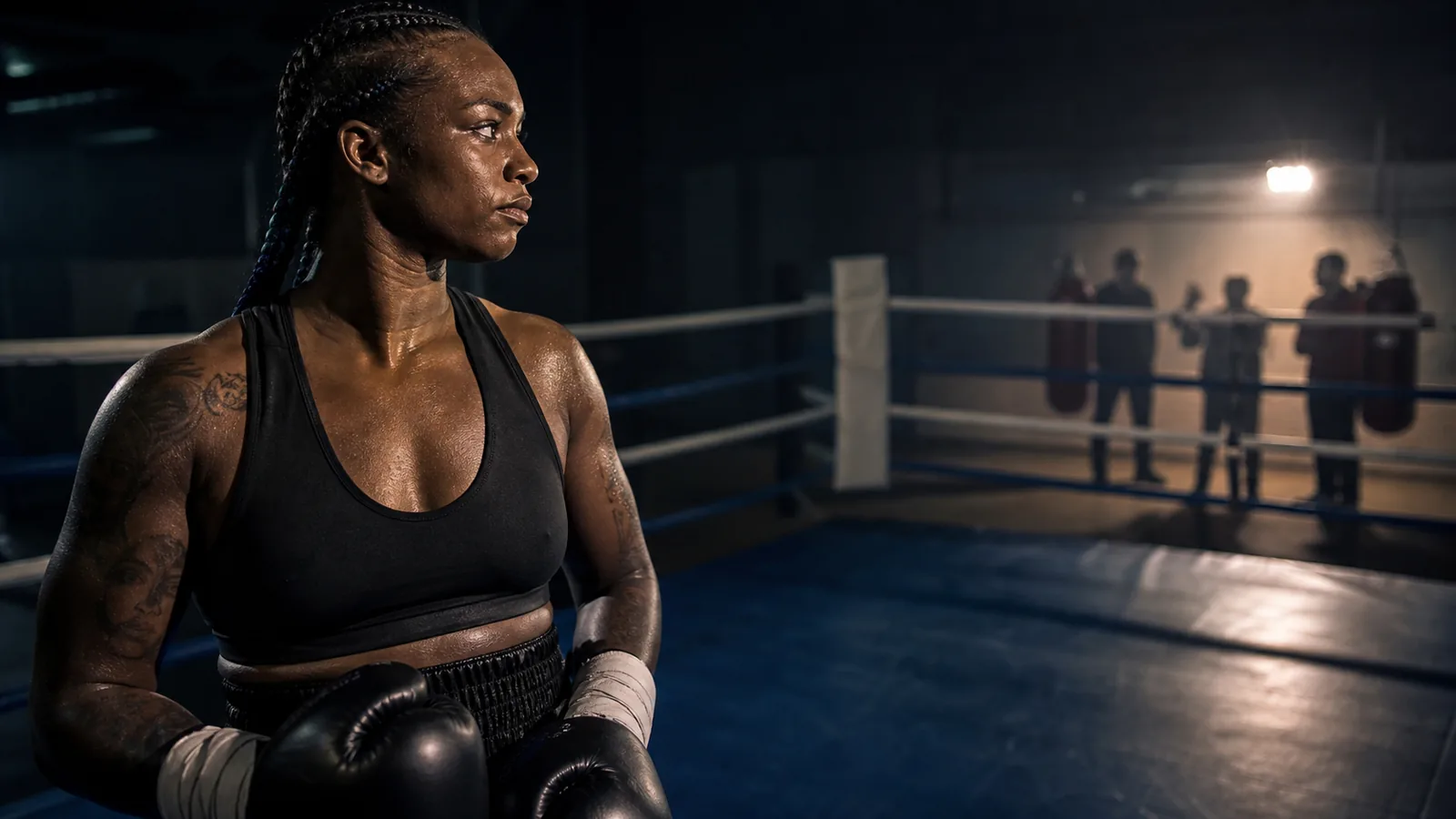
Claressa Shields Wants To Stay Busy. Boxing Has An Opponent Problem.
Claressa Shields is not talking like a fighter preparing to coast through the final chapter of a great career. She is talking like someone who wants more camps, more fights and more names on the record before she is done.
That ambition deserves respect. Too many excellent fighters lose years to promotional stalemates, injury gaps or a title system that offers little beyond paperwork. Shields has repeatedly chosen movement instead. She has won world titles from super-middleweight through to heavyweight, become undisputed in multiple divisions, and kept looking for the next meaningful challenge.
The problem is not whether Shields is willing to fight. The problem is whether professional women’s boxing can provide enough credible elite opponents at weights that make sporting sense.
The video above makes a forceful argument about Shields’ plans. It is worth watching, particularly because it raises a fair question about the gap between stated activity and available opposition. But a commentator’s verdict is not evidence by itself. The more useful question is simpler: if Shields wants to box frequently on the way to a 30-fight unbeaten record, who are the fights that genuinely add to her legacy?
Shields Has Given Herself A Busy Target
Shields has been clear that she does not intend to spend long periods waiting around.
Before her August fight with Kaye Scott, she told FightPost that she wanted to return in December or January if the right opponent was available. She also said she plans to have a baby next year, which makes the desire to keep her career moving more understandable. There is a real timetable here, not just the usual “I will fight anybody” line at a press conference.
Her longer view is equally bold. In that interview, Shields spoke about fighting until around 38. She described herself as a once-in-a-lifetime athlete and said there were still years available to make the best fights.
The record supports the idea that this is a fighter who has not been scared of moving around. ESPN’s profile of Shields tracks wins over Christina Hammer, Hanna Gabriels, Marie-Eve Dicaire, Savannah Marshall and Franchon Crews-Dezurn, across several weight classes. Her BoxRec record and Box.Live profile also show how unusual her professional route has been: few easy years spent defending one title in one settled division.
Her most recent result was another statement. Box.Live records that Shields stopped Kaye Scott in the sixth round on 15 August, moving to 19-0. The win brought the WBC and WBA middleweight belts back to Shields after she had dropped from heavyweight to meet the Australian champion.
That is activity with purpose. Scott was not a random stay-busy opponent. She held recognised titles at 160lb, and the bout gave Shields a route back towards another undisputed run.
Kaye Scott Showed Both Sides Of The Argument
The Scott fight is useful because it proves two things at once.
First, Shields deserves credit for taking a titleholder rather than padding a record. The BBC’s announcement correctly framed Scott as the WBC and WBA middleweight champion, while noting that Shields was returning to 160lb from heavyweight. The Detroit Free Press report also made clear that Shields was moving down specifically to challenge for Scott’s belts.
Second, a belt does not automatically create a close contest.
Scott was a decorated amateur, a legitimate champion and an opponent Shields treated respectfully. But she was also 42, had only seven professional bouts when the fight was announced, and had not built a long run against elite professional middleweights. Bad Left Hook’s preview argued that Scott was among the better available options, while also pointing out the thinness of the field.
Both descriptions can be true. Scott was a meaningful title opponent. She was not necessarily the kind of established, prime-for-prime rival who makes an elite fighter’s next fight feel uncertain.
That distinction matters. Shields should not be criticised merely because she is better than most of the women around her. Great fighters are often better than their divisions. But neither should every championship opponent be treated as proof that the competition question has been solved.
The Best Fights Are Visible. The Route To Them Is Not.
Lauren Price is the obvious name from a British point of view.
Price is a fellow Olympic gold medallist, a superb technician and a genuine world-level attraction. The size question would need resolving, because Price has done her best work at welterweight while Shields has operated much higher. Still, it is a fight with a clear story: two decorated champions, two very different professional routes, and a contest that could matter in both the United States and Britain.
The BBC reported that Price had agreed a two-fight arrangement to face Shields, potentially starting in America before a second bout in Wales. That is serious intent, but boxing plans are not contracts until the dates, weights and purses are agreed.
FightNews’ interview preview also flagged Shields’ interest in facing the winner of Mikaela Mayer versus Chantelle Cameron. That is a sensible pool to explore, although it brings the same practical issue. Mayer and Cameron have built major careers at lighter weights. A big name is not automatically a fair weight jump.
Mayer is a compelling possibility because she is a serious professional fighter with a strong amateur background, technical ability and the profile to make a big event. But if she must travel too far north in weight, the fight needs honest framing. It would be a cross-weight superfight, not proof that Shields has suddenly found a natural middleweight rival.
Then there are names such as Katie Taylor, Alycia Baumgardner and Shadasia Green, all listed among potential opponents on Box.Live. Each has some appeal. Each also comes with complications of weight, promotional relationships, timing or competitive logic.
That is the opponent problem in full. There are names. There are not yet eleven obvious, prime, elite and naturally sized opponents.
Activity Cannot Replace Jeopardy
This is where Shields and her team need to be hard on themselves.
An active champion is good for boxing. A champion fighting three times a year is far better than a champion fighting once and then disappearing for 14 months. It gives the public a reason to follow a career rather than merely catch isolated events.
But activity is not the same thing as legacy.
If Shields reaches 30-0, the number will be impressive. It will be more impressive if the route includes Price, Mayer, a second major middleweight unification, and opponents who force Shields to solve a new problem in the ring. A fighter of her standard does not need danger for publicity. She needs danger because it tells us something new about her.
The answer is not to demand reckless matchmaking or impossible weight jumps. Nor is it to repeat a pundit’s accusation as if it settles the matter. The answer is to judge each fight plainly.
Is the opponent a proven title-level boxer? Is she near her best? Is the weight fair? Has the fight been made because it is meaningful, or because it is available? Does it advance women’s boxing beyond another one-sided championship night?
Those are the questions that should follow Shields through the next stage of her career.
The H&G View
Shields should stay active. Boxing needs elite fighters who are prepared to fight often, travel, take on champions and make plans in public.
But the ambition has to be matched by selection.
The Kaye Scott win was a valid title fight and a successful return to middleweight. It was not the end of the debate. A Lauren Price fight would be enormous if the weight and timing are right. A Mayer or Cameron fight could be excellent if it is built fairly. More middleweight unifications would have real value if the division develops opponents with enough professional depth.
Shields has already earned the right to be spoken about among the greatest women to box. Her next challenge is not proving that she is special. It is making sure that a busy schedule gives us the fights that explain exactly how special she is.
If watching Shields makes you want to understand the craft behind the big nights, from footwork and distance to composure under pressure, book a trial at Honour & Glory Boxing Club in Kidbrooke.
H&G Team
Writer at Honour & Glory Boxing Club, a community boxing gym in Kidbrooke, South East London.
KEEP READING
Claressa Shields and the $500,000 purse debate
Use the reported purse dispute to explain why boxing pay figures need context: guarantees, commissions, opponents, costs and promotion rather than headline outrage.
Chris Cyborg calling out Claressa Shields: the crossover risk
Examine what a Cyborg call-out would mean for Shields’ sporting legacy, matchmaking risk and women’s boxing, without presenting an unmade fight as agreed.
Women's Boxing Classes - What to Expect
Thinking about women's boxing classes but not sure what happens? Here is exactly what to expect from your first session to your tenth.
Was this page helpful?
It takes one tap, and it genuinely helps.
Choose your next step
Turn this article into the right action
Some readers are ready to book. Some need the class route first. Pick the route that matches what you actually want.