Anthony Joshua’s Prenga comeback: surviving knockdowns
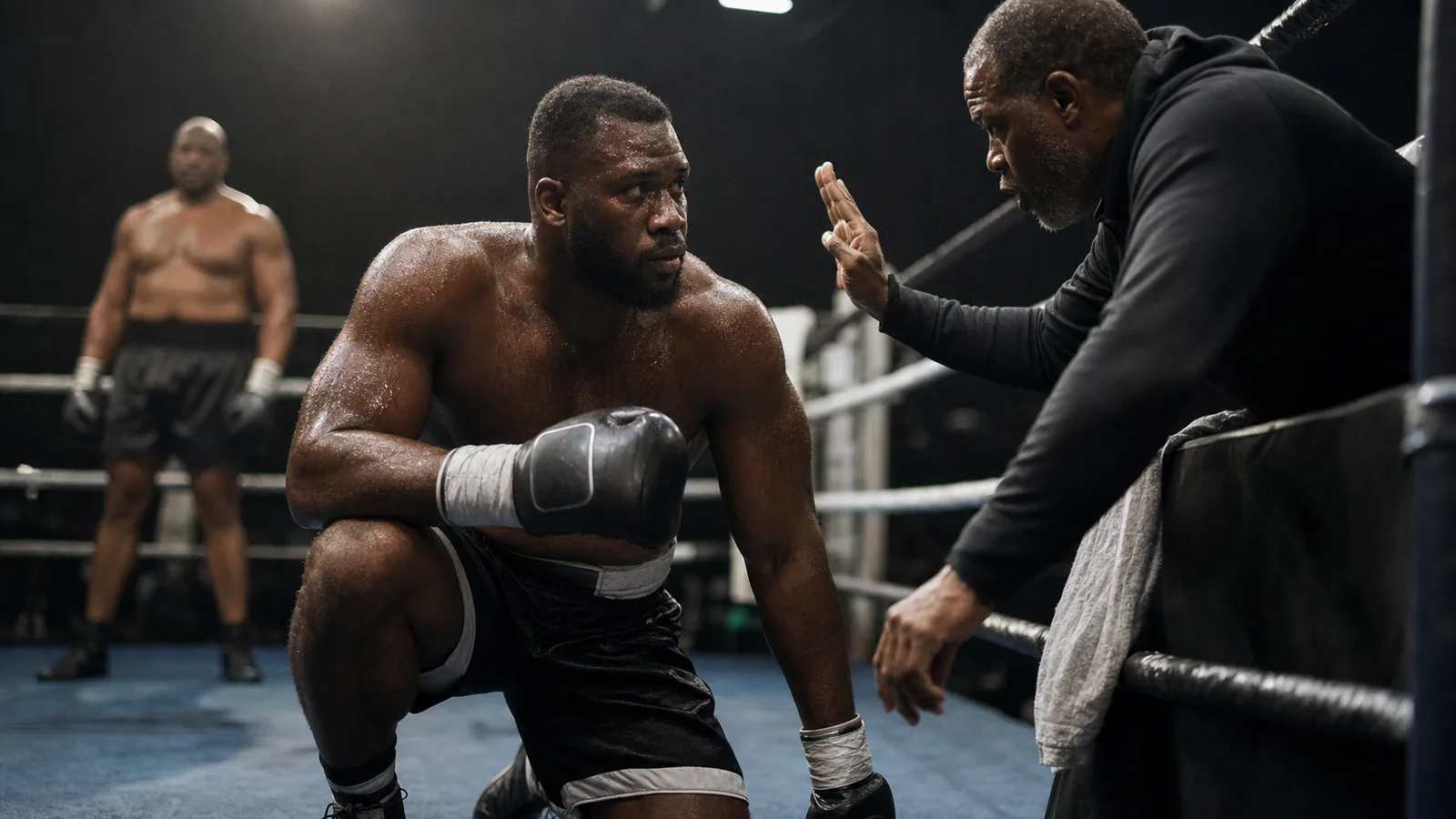
Surviving danger is a skill
A knockdown does not automatically mean a fighter has failed. Boxing is not played on a spreadsheet. Good fighters get caught. Great fighters can be caught and still make the next correct decision.
But when you are hurt, the job changes immediately.
You are not trying to win the exchange. You are trying to stop the other boxer turning one success into five. That means buying seconds, finding your feet, keeping your eyes on the opponent and making your defence ugly if it has to be ugly.
Joshua did enough of that to hear the bell.
He got up. He did not panic into a wild counter. He did not spend the rest of the round launching one huge shot in an attempt to prove he was fine. Even after the second knockdown, he rose and made it through the remaining seconds.
That is survival.
At club level, this is where many boxers make the wrong choice. They take a clean punch, feel embarrassed, then rush straight back in with their chin up and their feet square. They try to settle the argument immediately. Usually, they create the next problem themselves.
There is no shame in taking a moment to recover. The shame is in ignoring what has just happened.
A boxer who has been shaken needs a simple checklist:
- Get the guard back before throwing back
- Keep the feet under the hips, rather than crossing or reaching
- Watch the opponent’s chest and shoulders for the next shot
- Use the clinch if it is there
- Move with purpose, rather than running in straight lines
- Make the next exchange small
The aim is not to look brave. The aim is to stay in the fight.
But Joshua’s first round exposed a real defensive issue
There is no point dressing it up. Joshua was caught too cleanly and too early.
The Guardian’s account of the fight described Prenga’s opening right uppercut as landing within 20 seconds, before Joshua was put down again with his legs still unsteady. The report also noted that Joshua was lighter than he had been for years and working with members of Oleksandr Usyk’s team, but no new training environment can make a heavyweight immune to a punch he does not see properly.
The uppercut is especially dangerous when a fighter comes in too square, leans forward over the front foot, or brings the lead hand back carelessly after a jab. It does not need a huge wind-up. It needs an opponent to come through the centre with his head available.
That is why defensive recovery cannot be separated from defensive responsibility.
Joshua deserves credit for getting up. He does not get a pass for being put there twice by an opponent he was expected to beat. Both things can be true.
For young and developing boxers, this is the bit worth studying. Do not just watch the knockout. Watch the moments before the knockdowns. Look at range, posture and where Joshua’s head is as Prenga finds the uppercut lane.
A good coach will not say, “Just keep your hands up.” That is too vague to help anyone. The better instruction is: do not walk into punching range with your head ahead of your feet and your eyes fixed on your own attack.
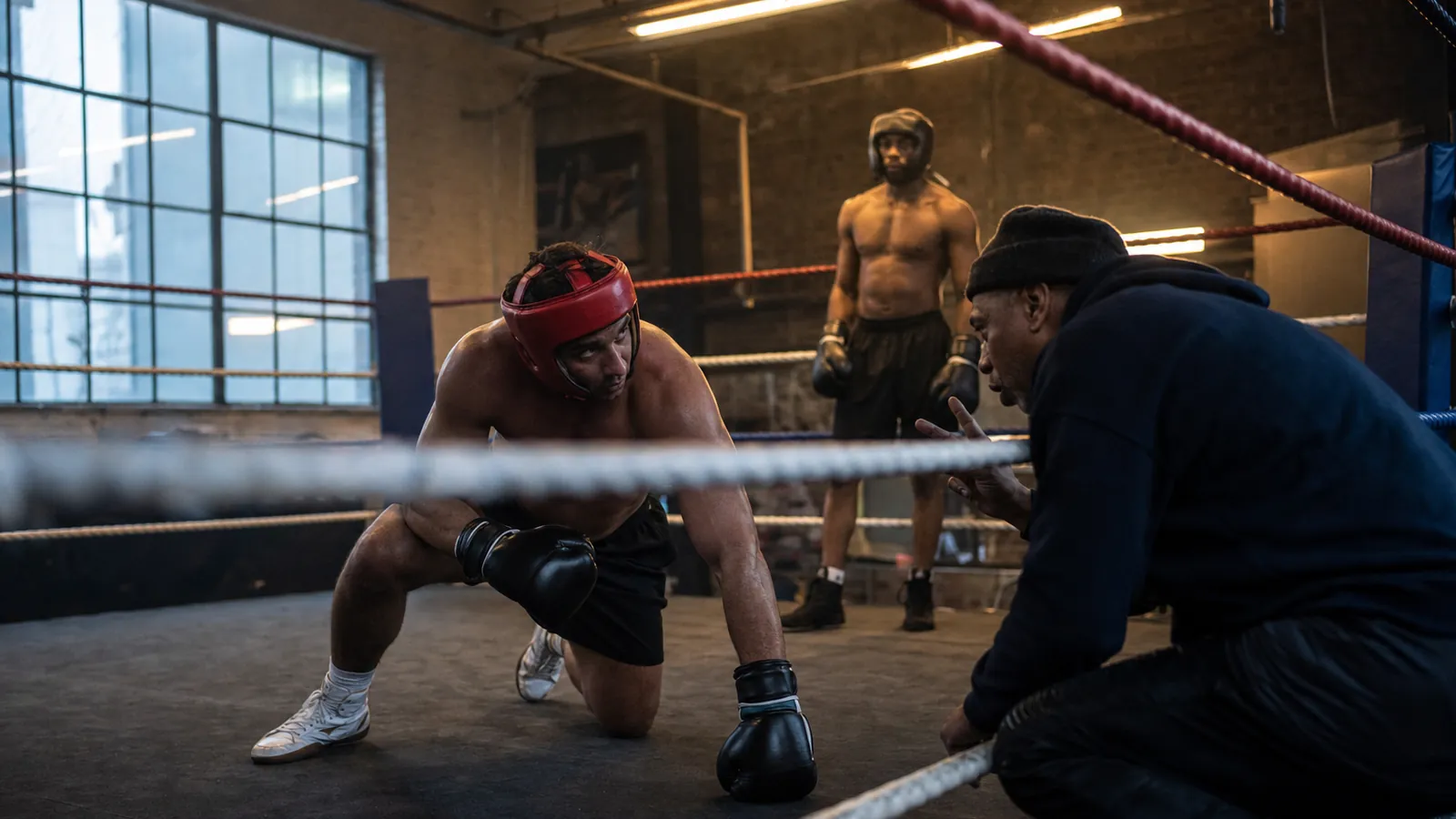
The second round was not a miracle. It was a change in the question.
Prenga had Joshua hurt. He had two knockdowns in the bank. In that situation, the aggressive fighter has to make a difficult decision.
Do you keep pressing, accepting some risk to finish the job? Or do you step off, try to box safely and allow the hurt fighter to recover?
Prenga stepped off.
The BBC report noted that he began boxing on the back foot in the second round, effectively letting Joshua off the hook. The Guardian saw much the same thing, describing Prenga as tentative and already retreating before Joshua’s decisive punches landed.
That is the real tactical turning point.
Prenga had been asking Joshua a physical question in round one: can you cope with pressure, uppercuts and a fighter willing to take risks?
In round two, he stopped asking it.
Joshua then did what experienced heavyweights are supposed to do. He found the jab, made Prenga react, and used the right hand with conviction. The finishing sequence was not just a powerful punch from nowhere. It came after Joshua had regained enough composure to make Prenga’s retreat predictable.
The BBC’s fight report described Joshua drawing Prenga on with the jab before landing the crushing right hand. That is the key detail. Joshua did not merely swing himself back into the contest. He re-established a tool, created a reaction and then punished it.
That is solving.
A reset needs a weapon
When a boxer is hurt, “stay calm” is not enough. Calm has to be attached to a practical action.
For Joshua, the jab became the reset. It gave him distance. It put a line between him and Prenga. It made Prenga think before stepping in. And once Prenga began moving backwards, it gave Joshua something to build the right hand from.
Every boxer needs a version of that.
For some, it is a stiff jab and a step out. For others, it is a clinch followed by a pivot. For a shorter boxer, it might be a tight guard, a slip outside and a body shot that slows the chase. The exact answer depends on the boxer. What does not change is the principle: after danger, find the reliable action you can perform even when your legs feel uncertain.
That is why a go-to combination matters. It is not just something you use when you feel brilliant on the pads. It is something you can return to when a round has become messy and your confidence has been knocked sideways.
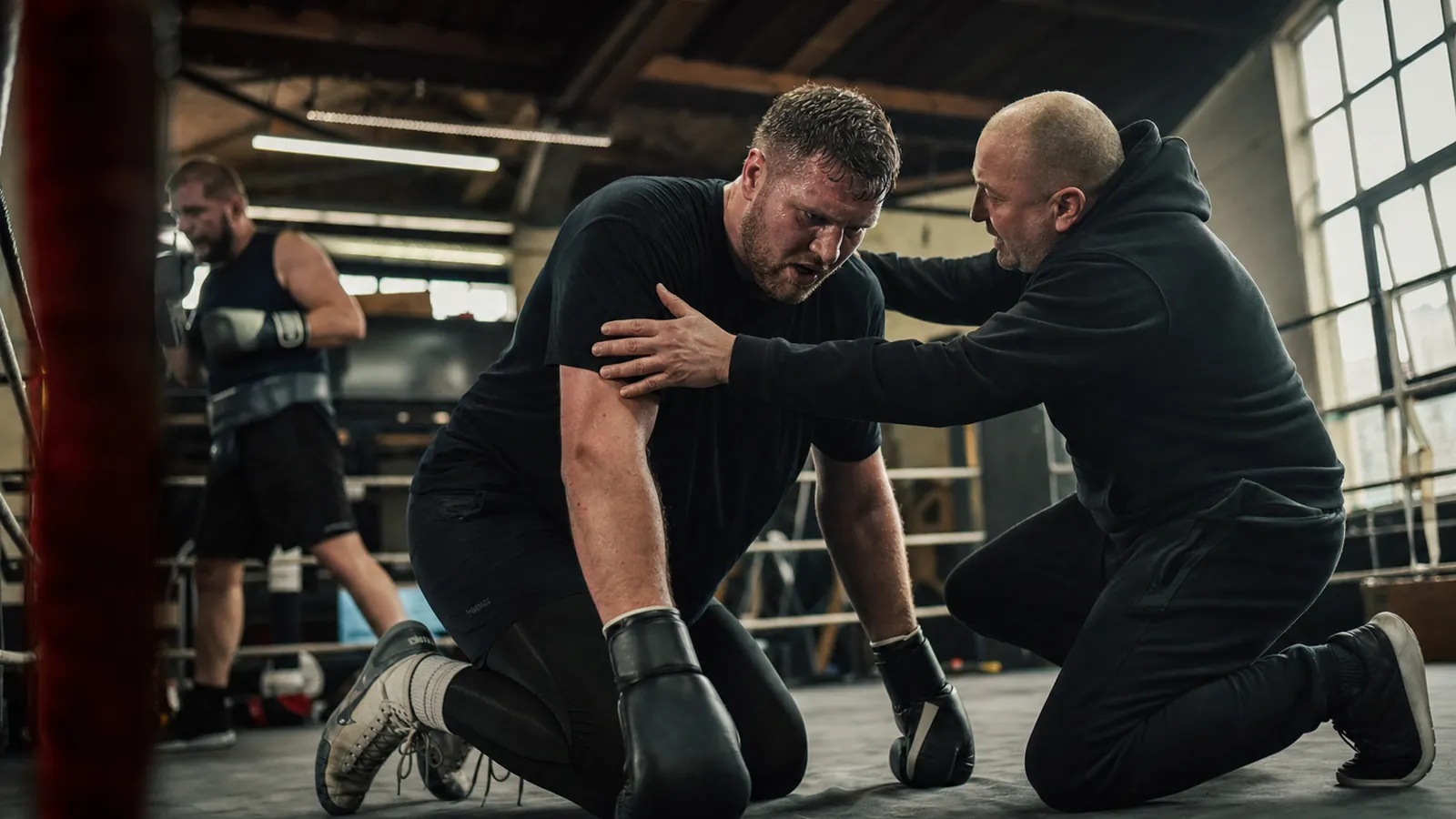
Composure is active, not passive
Joshua’s comeback will be sold as spirit. Fair enough. It was an emotional return after the loss of close friends Sina Ghami and Latif Ayodele, and Joshua spoke movingly after the fight about what the win meant to him. Al Jazeera’s report captured that context and his words after the stoppage.
But spirit alone does not land a clean right hand on a retreating heavyweight.
Composure is not standing still with a blank face. It is making sensible decisions while your body is screaming at you to do something reckless. Joshua’s second round showed that. He did not need to win back every second of the first round. He needed to recover his shape, reclaim the jab and make Prenga pay for hesitating.
The lesson for anybody training at Honour & Glory is simple: you do not prove toughness by ignoring danger. You prove it by recognising danger, surviving it properly and returning with a plan.
That is what makes boxing difficult. It is not enough to be brave. You have to be organised while being brave.
If you want to learn that in a coached environment, from first sessions through to more technical work, book a free trial class at Honour & Glory in Kidbrooke. We train boxers from age 7 upwards, with the aim of building calm, capable habits long before the pressure arrives.
H&G Team
Writer at Honour & Glory Boxing Club, a community boxing gym in Kidbrooke, South East London.
KEEP READING
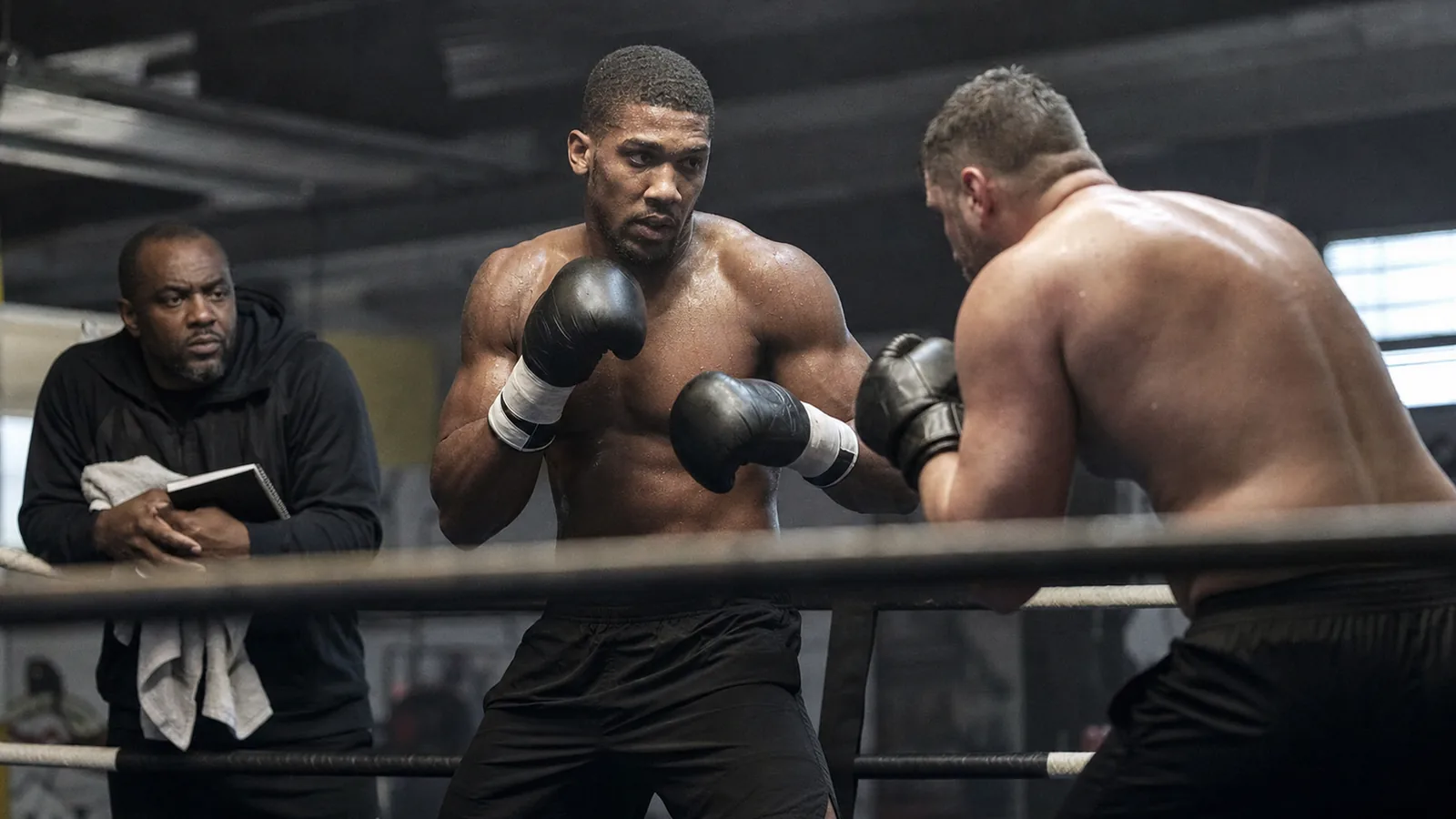
Joshua vs Prenga: why a comeback opponent still matters
DAZN’s official preview puts Anthony Joshua’s return at the centre of the week; the useful club-blog angle is how a supposedly manageable opponent can test timing, composure and decision-making after time away.
Anthony Joshua's Boxing Journey
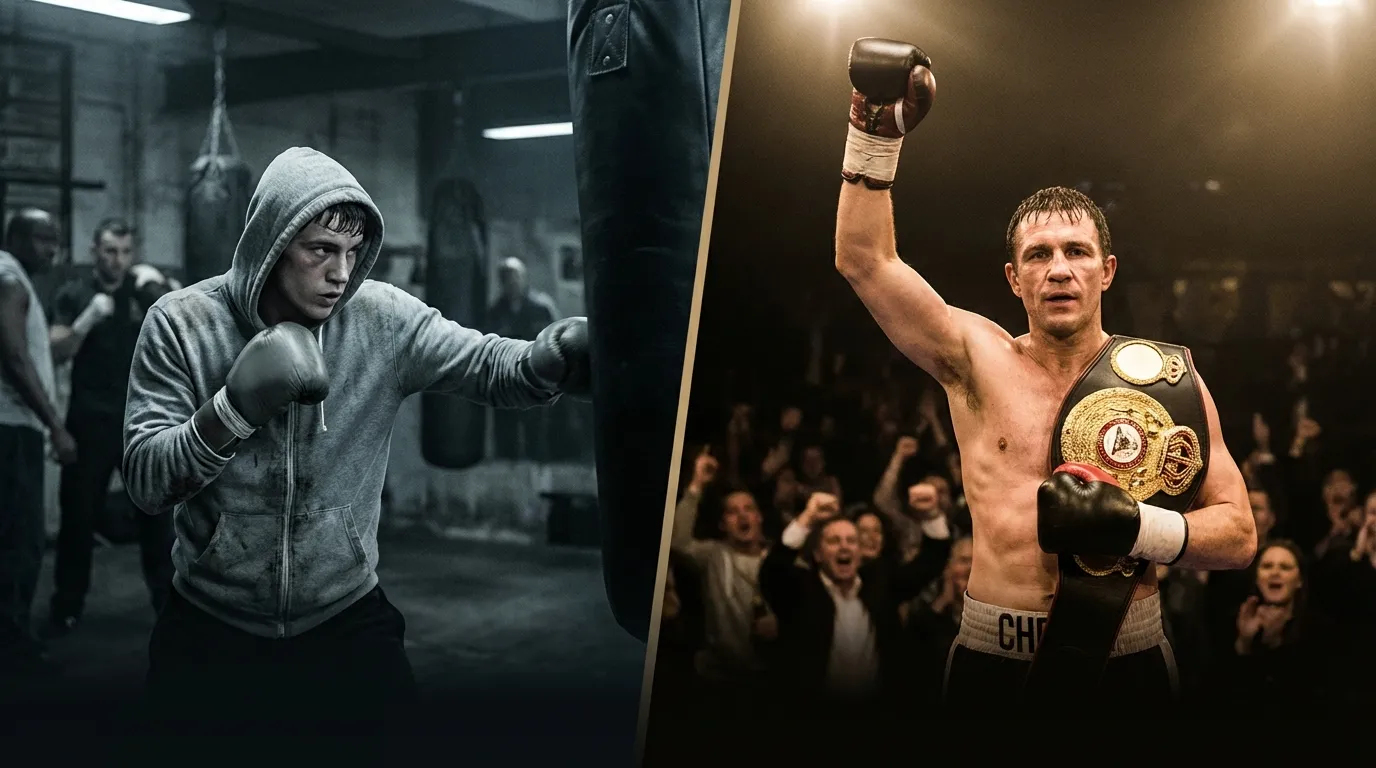
Anthony Joshua started boxing at 18 with no experience. Within five years he was Olympic champion. Here is the full story of how AJ went from complete beginner to heavyweight king.
Fury vs Joshua 2026: Why British Boxing Still Needs It
Use the reported Q4 2026 mega-fight as a wider piece on why Fury vs Joshua still matters: national attention, casual fans returning, heavyweight legacy, and what young boxers can learn from two very different careers.
Was this page helpful?
It takes one tap, and it genuinely helps.
Choose your next step
Turn this article into the right action
Some readers are ready to book. Some need the class route first. Pick the route that matches what you actually want.