Women's Boxing and Self-Confidence: What Research Shows
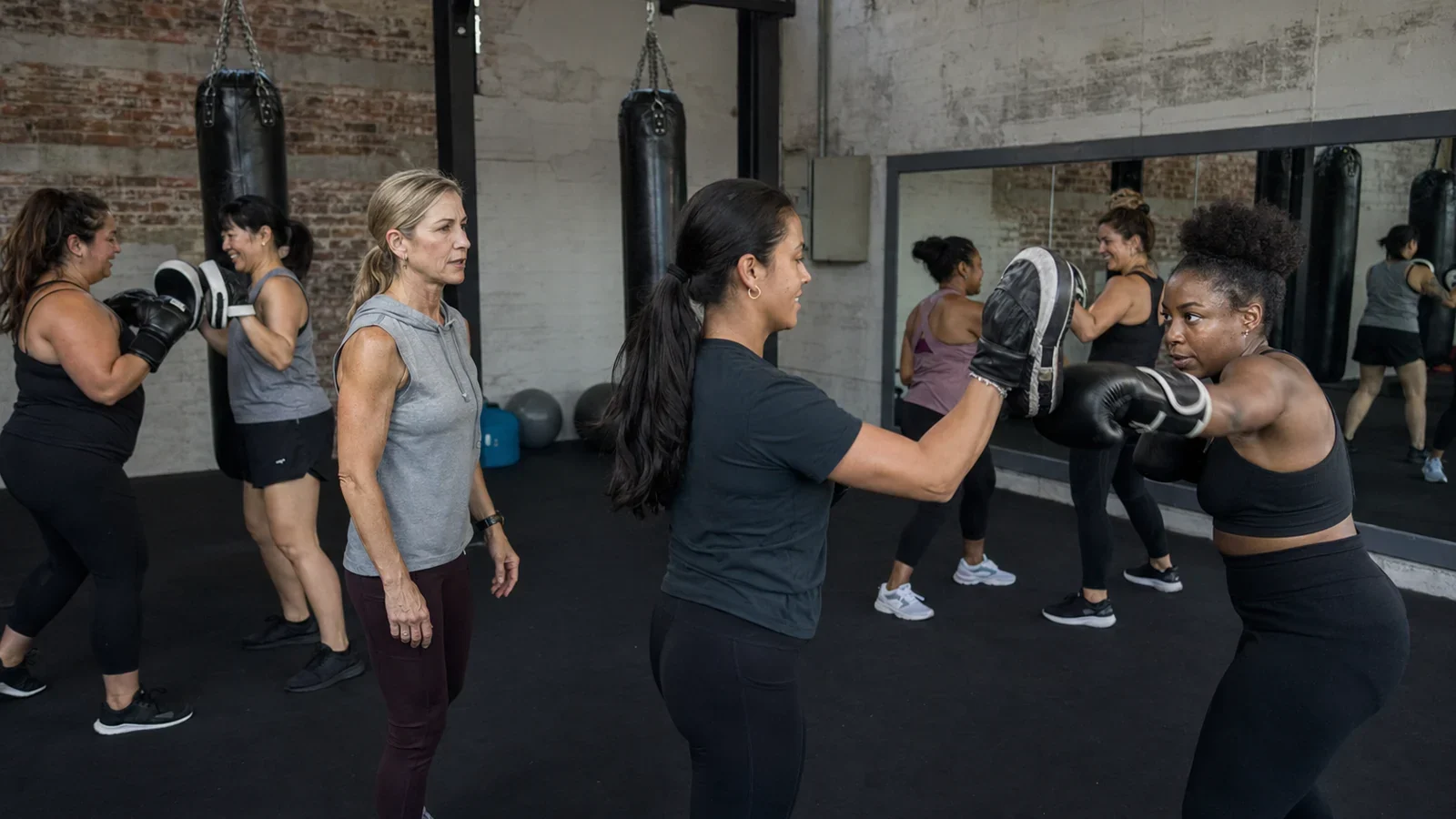
Research on women's boxing and self-efficacy found combat sports training produces greater confidence improvements in women than non-contact exercise forms. England Boxing's women's boxing development programme tracks self-reported confidence improvements as a key participation outcome.
"Boxing builds confidence" is said so often in boxing marketing that it has become noise. Here is what the research actually shows, in specific enough terms to be useful.
The Two Types of Confidence
Psychologists distinguish between global self-esteem (general sense of self-worth) and self-efficacy (belief in your ability to succeed in specific domains).
Research on exercise and confidence shows that exercise generally improves global self-esteem modestly. The effect is larger for people with initially lower self-esteem and smaller for those who already have high self-esteem.
For self-efficacy, the research shows something more interesting: skill-based sports produce larger, more domain-specific self-efficacy improvements that transfer to other areas. The confidence you build from learning to box is different from the confidence you build from completing a 5k run, because boxing involves the development of a complex skill (source).
What the Boxing-Specific Research Shows
A 2016 study in the Journal of Sport and Exercise Psychology examined self-efficacy in women who participated in boxing training over twelve weeks. The results showed significant improvements in three areas:

Physical self-efficacy - belief in physical capability - increased predictably and substantially.
Social self-efficacy - belief in ability to manage social situations - increased less but significantly. The researchers attributed this to the experience of managing the mildly confrontational social situation of training with partners.
General self-efficacy - belief in the ability to accomplish goals and overcome obstacles - increased by a smaller but statistically significant amount.
The general self-efficacy finding is the most interesting. It suggests that the confidence built in boxing training generalises beyond the specific domain of boxing.
A 2021 meta-analysis examining fifteen studies on martial arts and self-esteem in women confirmed the finding: combat sports produced larger self-esteem improvements than non-contact aerobic exercise over the same period.
The Mechanism
The researchers proposed a specific mechanism for why boxing builds transferable confidence more effectively than other exercise.
Boxing training involves regular, graduated experiences of confronting something intimidating and succeeding. The first session is frightening. The second is less frightening. By the twentieth session, the ability to manage intimidating situations has been practised and internalised.
This generalises. A woman who has learned that she can walk into a boxing gym for the first time, learn to throw punches, and keep coming back - this woman has direct evidence that she can manage new, uncomfortable situations. The evidence is in her own history, not in someone else's reassurance.
This is why the confidence from boxing feels different from the confidence produced by positive feedback or motivational talk. It is earned, evidence-based, and grounded in actual experience.
Physical Self-Efficacy and Its Downstream Effects
The physical self-efficacy improvement deserves specific attention for women.
Women are generally socialised to be less comfortable in their physical bodies, less confident in their physical capabilities, and more oriented toward their bodies as objects of appearance rather than instruments of action.
Boxing training produces direct evidence of physical capability. A woman who can throw combinations on a bag, who can go eight rounds on the pads, who is measurably stronger and fitter than she was six months ago - this woman has concrete evidence of her physical capability that appearance-focused exercise cannot provide.
This physical self-efficacy affects how women carry themselves, how they move through public space, and how they respond to situations that feel physically threatening. It is not just confidence in the gym. It is confidence in the world.
What to Realistically Expect
Confidence does not emerge in session one. It builds over weeks and months through accumulated evidence.
The timeline: most women report noticing something different in how they feel about themselves at around eight to twelve weeks of consistent training. Not dramatic transformation - something shifts.
At six months, the shift is more pronounced and more consistently reported. The women who trained at our Women's Boxing class for six months or more describe a really different relationship with their own capability.
The trial is the starting point. Book yours here.
H&G Team
Writer at Honour & Glory Boxing Club, a community boxing gym in Kidbrooke, South East London.
KEEP READING

Boxing After Trauma: Safety, Choice and Support
Some women find boxing confidence-building, but it is not trauma treatment. Choose the pace, contact level and environment carefully.
Boxing and Body Image: What Women Say Changes After Six Months
Body image is one of the most significant things that changes when women start boxing consistently. The change is not primarily about appearance. Here is what actually shifts.
Boxing for Women Who Have Never Exercised: Where to Start
Starting boxing with no exercise history is not an obstacle. It is actually a common starting point. Here is exactly what to expect and how to approach the first sessions.
Was this page helpful?
It takes one tap, and it genuinely helps.
Choose your next step
Turn this article into the right action
Some readers are ready to book. Some need the class route first. Pick the route that matches what you actually want.