Who should fight for Willy Hutchinson's WBC title next?
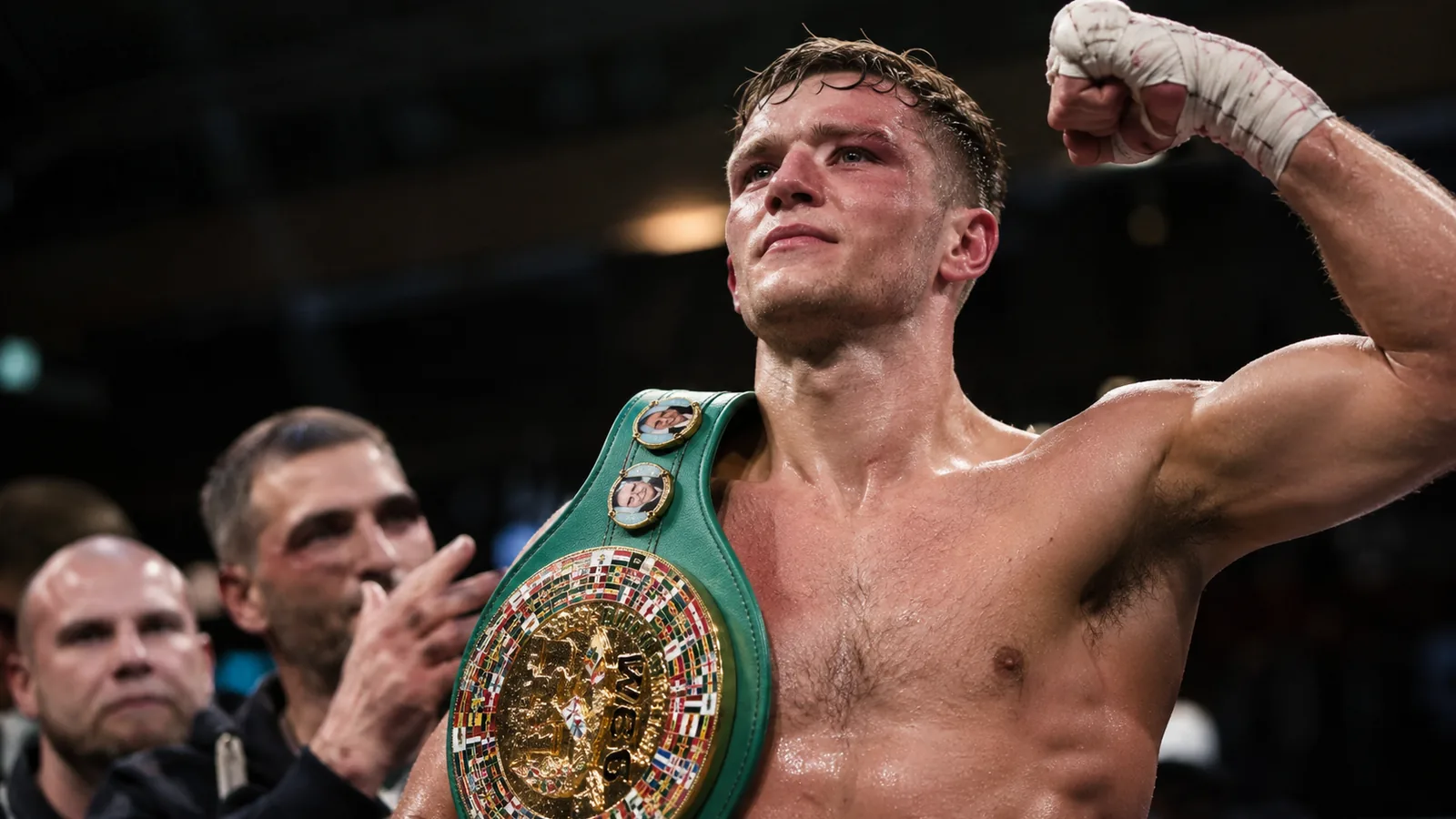
What Hutchinson has earned
Hutchinson’s win over Buatsi was more than a revenge result. As the BBC’s report on Buatsi-Hutchinson II made clear, it took him from a talented and at times inconsistent contender to a recognised world champion.
That distinction changes everything.
Before becoming champion, a boxer is largely trying to persuade the people above him to take a fight. Once he has a belt, everyone wants a route to him. Promoters see an event. Broadcasters see a headline. Other fighters see the quickest path to world-title status. The sanctioning bodies see a champion who must satisfy their rules.
Hutchinson, 28, has always been a fighter with ability, belief and some rough edges. His career record and fight history show a boxer who has recovered from setbacks rather than hidden from them. The Buatsi victory gave that story real substance.
It also created a problem champions usually enjoy having: too many possible opponents, and not enough dates in the calendar.

The WBC’s mandatory question
The WBC has stated that Hutchinson has two mandatory obligations ahead of him, although the identity and order of those challengers remain unresolved. The WBC’s Acapulco convention decisions are important here because conventions are where the broad direction is set, but the eventual details often depend on eliminators, petitions, medical clearance, contracts and rulings made after the meeting.
That is why rankings matter, but do not tell the whole story. The WBC light-heavyweight ratings give a useful snapshot of who is positioned to challenge, yet being highly rated is not the same as receiving an immediate mandatory order.
A mandatory challenger is normally created through one of several routes:
- A final eliminator ordered by the sanctioning body.
- An interim champion or other designated champion.
- A ruling at the WBC convention.
- A special decision after a champion vacates, is injured or changes weight.
- A negotiated arrangement involving highly ranked fighters.
That last point matters. Boxing fans rightly get frustrated when rankings seem to bend around promoters, but there is a practical reality: the WBC needs contenders to fight each other before it can identify a mandatory challenger with a convincing claim.
Reports from Acapulco suggested a possible four-man route involving Beterbiev, Imam Khataev, Ben Whittaker and Radivoje Kalajdzic. Boxing247 reported that Beterbiev and Whittaker were the top two ranked names under discussion, while a direct Beterbiev-Whittaker mandatory fight was not accepted as proposed.
That is the difference between a contender being talked about and a contender actually being due his shot.
Why Beterbiev should be first
Beterbiev is the sporting choice because he is the proven elite fighter in the group. He has held all four major light-heavyweight belts, carries serious punching power and has performed at the level where every opponent is dangerous and every round has consequences.
Hutchinson has earned respect, but a win over Buatsi does not automatically make him the division’s clear number one. A fight with Beterbiev would answer the question far more honestly than any ranking debate could.
It would also be a proper test of Hutchinson’s strengths. He is mobile, awkward, brave and capable of throwing sharp combinations when he settles. Against Beterbiev, he would need to keep his feet organised, avoid spending too long on the ropes and make his jab count early. He could not afford the lapses in concentration that can be survivable against a good domestic rival but disastrous against an all-time-level pressure fighter.
For a champion, that is the point.
The argument against Beterbiev is commercial rather than sporting. He is a harder fight and, if he wins, the Canelo Alvarez payday disappears with the belt. That is precisely why Team Hutchinson may prefer to wait for the WBC to formalise its order rather than volunteer for him.
Nobody should pretend that instinct is cowardice. A fighter’s career can turn on one purse. Hutchinson is not a wealthy, protected superstar who can ignore the money. But if the question is who should be next, Beterbiev is the correct answer.

Where Ben Whittaker fits
Whittaker is still an excellent fight, just not automatically the right immediate one.
Matchroom has reportedly asked for Whittaker to receive the first title opportunity, with an interim bout planned before any challenge. Boxing News 24 reported that Whittaker was among the names being considered for an eliminator route, rather than already confirmed as mandatory.
There is no shame in that. Whittaker needs a route that proves he deserves the shot, and a meaningful eliminator would help build the contest rather than diminish it. He has obvious talent, an Olympic pedigree and the charisma to make a Hutchinson fight a major British occasion. But title opportunities should not be distributed solely because a bout is easy to advertise.
Hutchinson versus Whittaker is probably the best all-British light-heavyweight fight available. It could be enormous in London, Birmingham or Manchester. It should happen if Whittaker earns the position, or if the WBC permits Hutchinson a voluntary defence before its mandatory deadline.
The danger is presenting it as a mandatory before the governing body has actually made it one.
The Canelo factor
Then there is Canelo, the opponent who alters the economics of every discussion.
Eddy Reynoso has floated Hutchinson as a possible opponent for early 2027, a prospect that would bring a level of attention and financial reward far beyond a domestic title defence. Reports of the potential Canelo bout explain why Hutchinson’s team will want to keep options open.
It is also why the WBC’s deadlines matter so much.
Canelo is a great prize, but he should not be allowed to freeze a division. If he wants the WBC light-heavyweight belt, he should make a proper offer, sign for the fight and agree terms within a defined period. A verbal possibility is not a title defence. Champions have lost valuable months waiting for super-fights that never materialised.
If Canelo signs, Hutchinson would be right to take it. This is prizefighting, and a champion has limited years to make life-changing money. Canelo also presents a credible sporting challenge, not a novelty appearance. His win over Dmitry Bivol is not the comparison anybody should make, because Bivol won that contest, but the proposed tactical blueprint discussion is fair: disciplined movement, a busy jab and refusal to be pinned down are essential against Alvarez.
Still, Canelo must be a signed fight, not an excuse to avoid one.
A champion’s first decision
Hutchinson should take Beterbiev next if the WBC names him as the first mandatory. That is the cleanest sporting outcome and the fight that would give Hutchinson’s reign immediate authority.
If no mandatory is due until later in 2027, he should pursue Canelo only when contracts are in place. If that deal cannot be completed promptly, Whittaker is the sensible British voluntary defence, provided the WBC approves it and Whittaker has done the work required to earn his place.
That is how a new champion should think: respect the mandatory system, take the biggest genuine opportunity, and do not confuse promotional noise with an official obligation.
For young boxers watching at our Kidbrooke classes, Hutchinson’s situation is a useful lesson. Winning a title is the moment everybody sees. The difficult decisions begin afterwards.
H&G Team
Writer at Honour & Glory Boxing Club, a community boxing gym in Kidbrooke, South East London.
KEEP READING
Usyk vacates three heavyweight belts: what changes next
A focused explainer on how Oleksandr Usyk giving up the WBC, WBA and IBF titles changes the heavyweight queue, why governing-body routes now matter, and why vacant belts create opportunities without proving who is the best heavyweight.
Mandatory challengers after Usyk: who gets the belts?
How mandatory challengers, vacant belts and sanctioning-body rankings shape the heavyweight title routes after Usyk's vacancy.
Usyk vacates heavyweight belts: the mandatory routes now open
A practical guide to what happens when a unified champion vacates WBC, WBA and IBF titles: mandatory challengers, sanctioning-body rankings and why separate vacant-title fights can reshape heavyweight quickly.
Was this page helpful?
It takes one tap, and it genuinely helps.
Choose your next step
Turn this article into the right action
Some readers are ready to book. Some need the class route first. Pick the route that matches what you actually want.