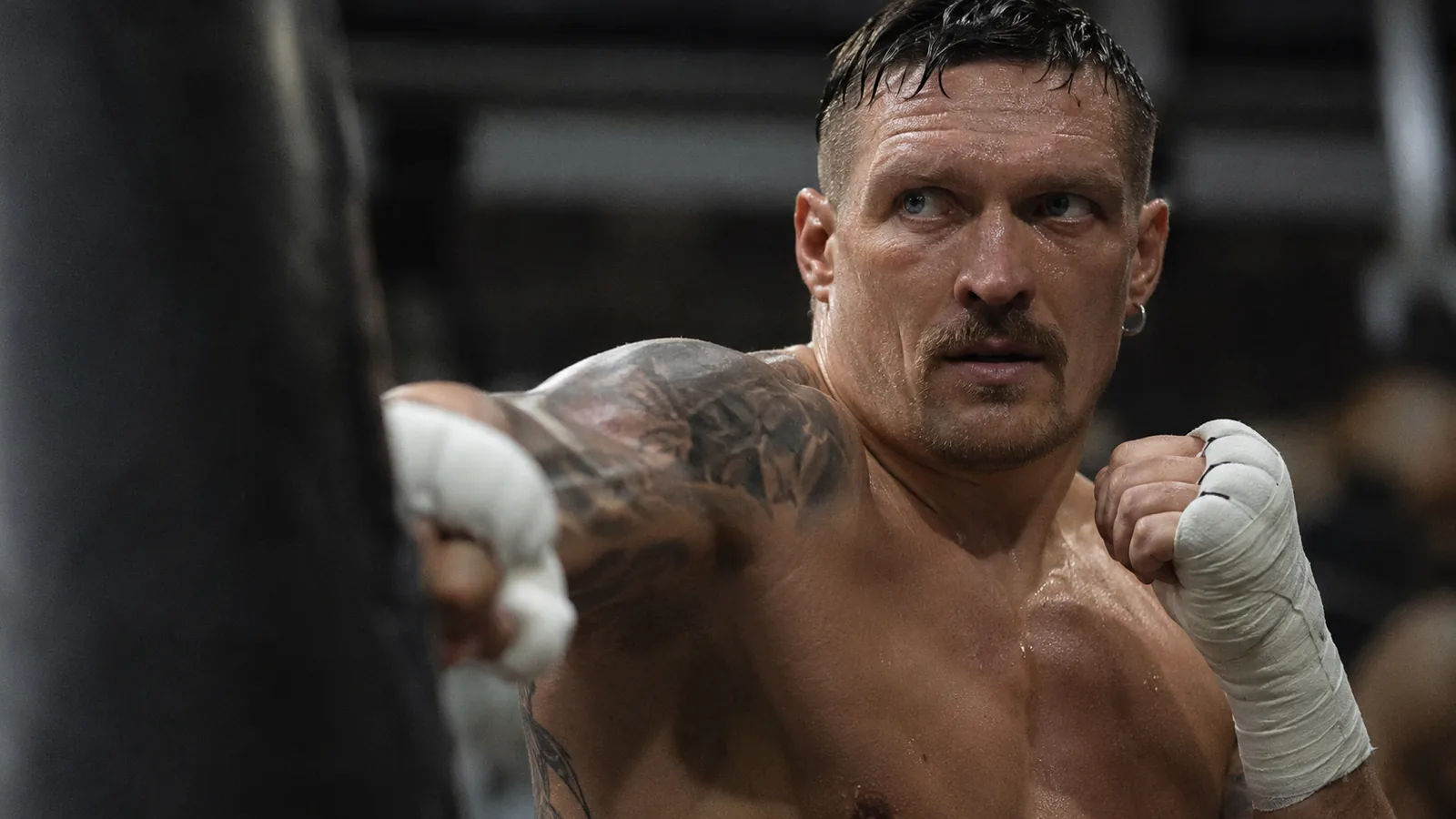
Usyk is not simply running from heavyweight
There will be people who frame this as an exit from a hard division before the hard miles finally catch up with him. That is too simple.
Usyk did not merely pick up a heavyweight belt and move on. He beat Anthony Joshua twice, defeated Tyson Fury twice, stopped Daniel Dubois and took apart a list of bigger men through movement, accuracy, conditioning and relentless tactical discipline. He has earned the right to decide that the heavyweight job is done.
Speaking about the move, Usyk said he had “cleaned out heavyweight” and was ready to return to his own weight. As reported by Brit Brief, he currently sits around 96 or 97kg, roughly 212lb, and has begun reducing his weight.
That matters. Cruiserweight has a 200lb limit, so this is not a token cut. Usyk needs to lose around 12lb while retaining the engine that has made him such an awkward problem for opponents. For a 39-year-old, any weight cut has to be managed properly. Dropping pounds is easy. Arriving sharp, strong and able to maintain a high-output twelve-round pace is the real work.
Still, the physical logic is there. Usyk was a superb cruiserweight before he was an elite heavyweight. He won the World Boxing Super Series, travelled to opponents’ back yards and collected every major belt in a division that was stronger than it often gets credit for. Marco Huck, Mairis Briedis and Murat Gassiev were not decorative names on a record. They were serious champions, beaten by a fighter whose footwork and composure looked a level above.
His adviser Serhii Lapin has called cruiserweight Usyk’s “home”, with the proposed route being a vacant-title fight followed by Benavidez for the undisputed championship. Yahoo Sports reported on Usyk’s declared move and his desire to face the “big champion” Benavidez. That is not a retirement tour against a recognisable old rival. It is a difficult route with a meaningful prize.
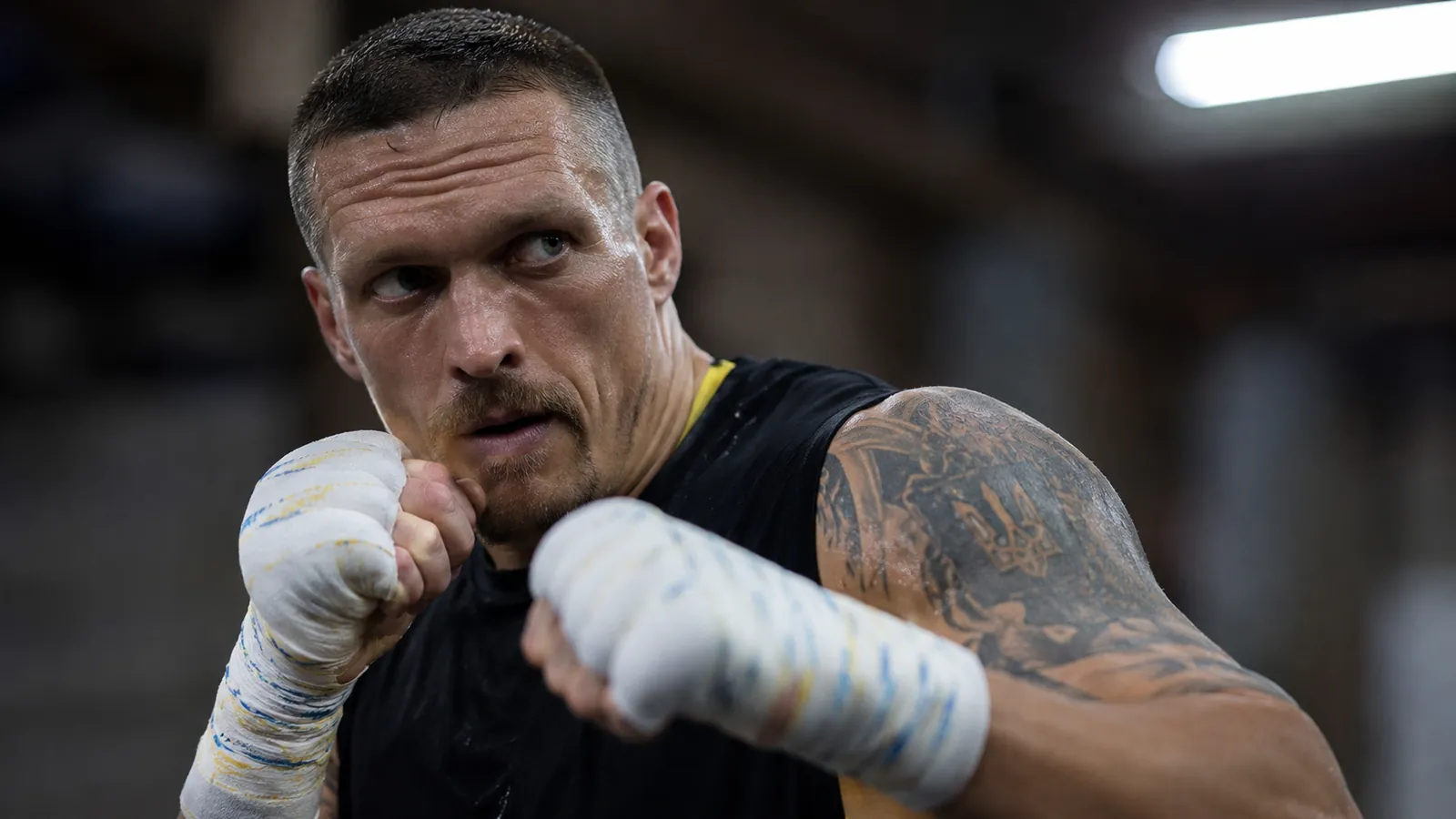
The heavyweight division finally has to move on
The biggest immediate consequence is what happens above 200lb without Usyk.
For several years, every serious heavyweight conversation has come back to him. Could Joshua get a third fight? Could Fury solve the puzzle in a rematch? Could Dubois impose his physicality? Could an emerging contender handle Usyk’s movement and southpaw angles?
If Usyk vacates and stays at cruiserweight, those debates end. Heavyweight begins its succession fight.
That is healthy for the division, even if it feels strange to lose its best boxer. Heavyweight boxing has never lacked large men with power. What it has often lacked is clarity. Usyk brought clarity because he beat the leading names of his era. Without him, the contenders and champions cannot rely on his presence to define their standing.
A proposed meeting with Deontay Wilder had been mentioned before this announcement, but Usyk has now identified Benavidez as the fight that interests him most. The BBC’s report on the planned “final chapter” makes clear that this is a career-closing project rather than an open-ended campaign.
That should put pressure on the heavyweights still circling one another. The next leading man cannot claim the division by inheritance. He needs the fights. Joshua, Fury, Dubois and the emerging names around them all have routes to major nights, but the belts and the reputation must be earned in the ring.
For young boxers, it is also a useful lesson. Usyk’s heavyweight run was not built on being the biggest athlete in the room. It was built on fundamentals made reliable through repetition: balance when punching, feet that reset quickly, a jab that creates decisions, and fitness that holds under pressure. Those are skills worth building from the first session at Honour & Glory’s boxing classes, whether a boxer is seven or a fully grown heavyweight.
Benavidez is not an easy final opponent
The plan only makes sense if Benavidez is a real challenge, and he is.
At 29 and undefeated, Benavidez represents the exact kind of fight that can either elevate Usyk’s legacy further or expose the risks of returning to a division after years carrying heavyweight mass. He is younger, likely fresher, and will not have spent the last several years absorbing the physical cost of heavyweight championship bouts.
Usyk’s side appears to be considering a vacant-title contest first, then a unification fight. Fight TV’s account of the proposed two-fight route correctly describes it as a plan rather than a signed deal. That distinction matters. Boxing plans are often announced long before contracts, sanctioning bodies and broadcasters make them real.
There are practical obstacles. Which title becomes available? Who is ranked to contest it? Will Benavidez still hold his belts and want the fight at the right point? Will Usyk make 200lb without looking drained? Until those questions are settled, this remains an intention rather than a fixture.
But as a sporting idea, it is compelling. Benavidez would not be asked to play supporting actor in an Usyk farewell. Beating Usyk would be the defining result of his own career. That gives the fight edge.
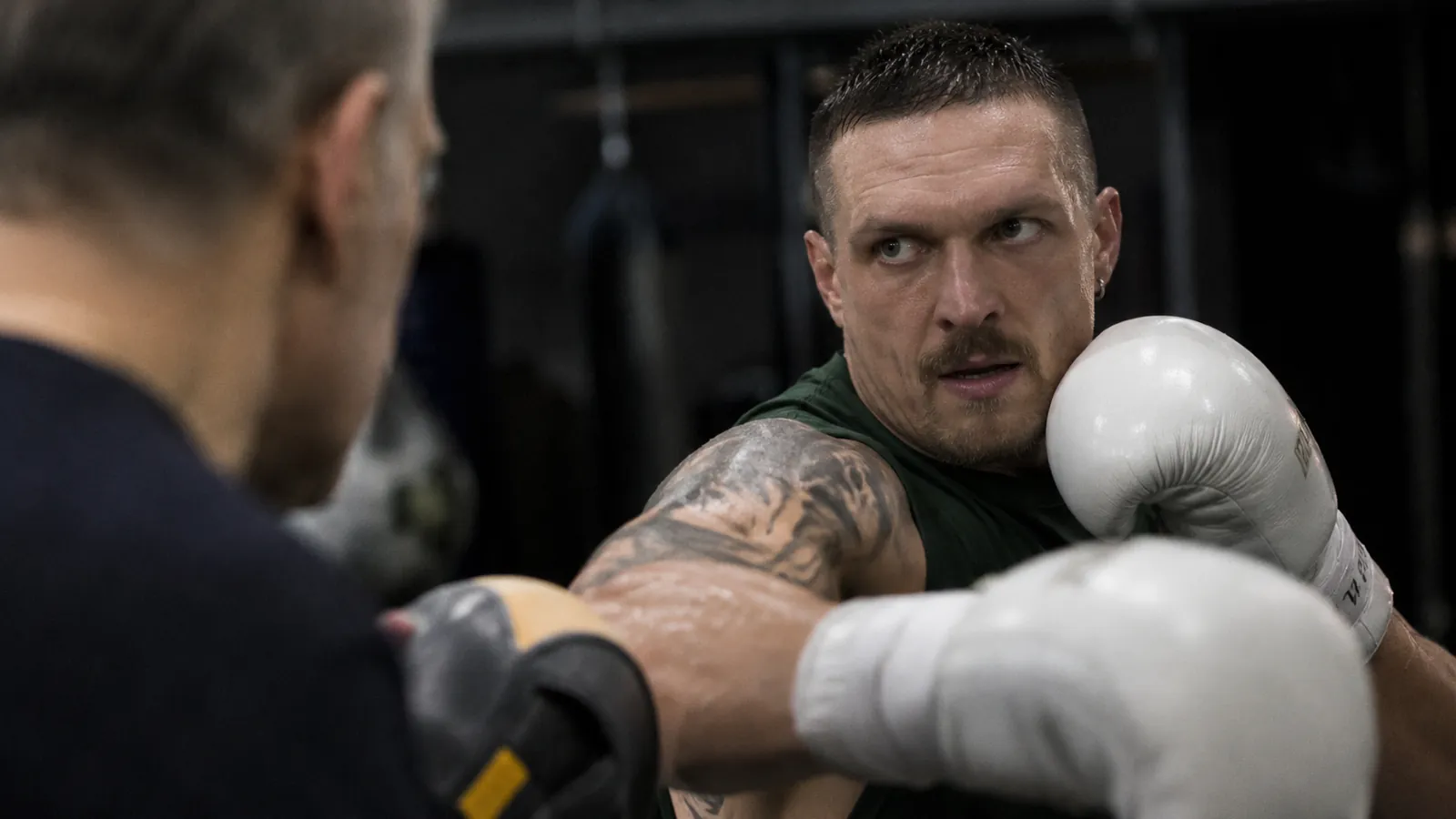
One last legacy fight or a second chapter?
My view is that this is primarily a final legacy mission, not the start of a long second cruiserweight reign.
Lapin has openly described 2027 as the final chapter. The reported structure is also revealing: one world-title fight, then one undisputed fight. That is the schedule of a fighter with a precise target, not somebody intending to defend belts for three years against every mandatory challenger.
There is nothing wrong with that. In fact, it is the sensible version of ambition.
Usyk has already taken risks few modern champions would take. He became undisputed at cruiserweight, moved up to heavyweight, beat the biggest names, and reached the top again. If he can return to 200lb and beat Benavidez, he would add an achievement that is almost impossible to match: undisputed champion in the same division twice, after becoming undisputed at heavyweight in between.
The danger is not that Usyk lacks ability. He plainly does not. The danger is time. Elite boxing punishes even tiny declines in timing, recovery and punch resistance. A younger champion at cruiserweight will not be impressed by old highlights or historic wins.
Yet Usyk has always been at his best when the task looks slightly unreasonable. Moving down at 39, chasing a dangerous young champion and trying to finish with every belt is entirely in character.
Heavyweight boxing will now have to discover its next ruler. Cruiserweight may soon get its greatest recent champion back. If Usyk makes the weight well and gets the Benavidez fight over the line, this will not be a farewell detour.
It will be one final attempt to complete a career that has already changed the standard for what a boxer can achieve.
H&G Team
Writer at Honour & Glory Boxing Club, a community boxing gym in Kidbrooke, South East London.
KEEP READING
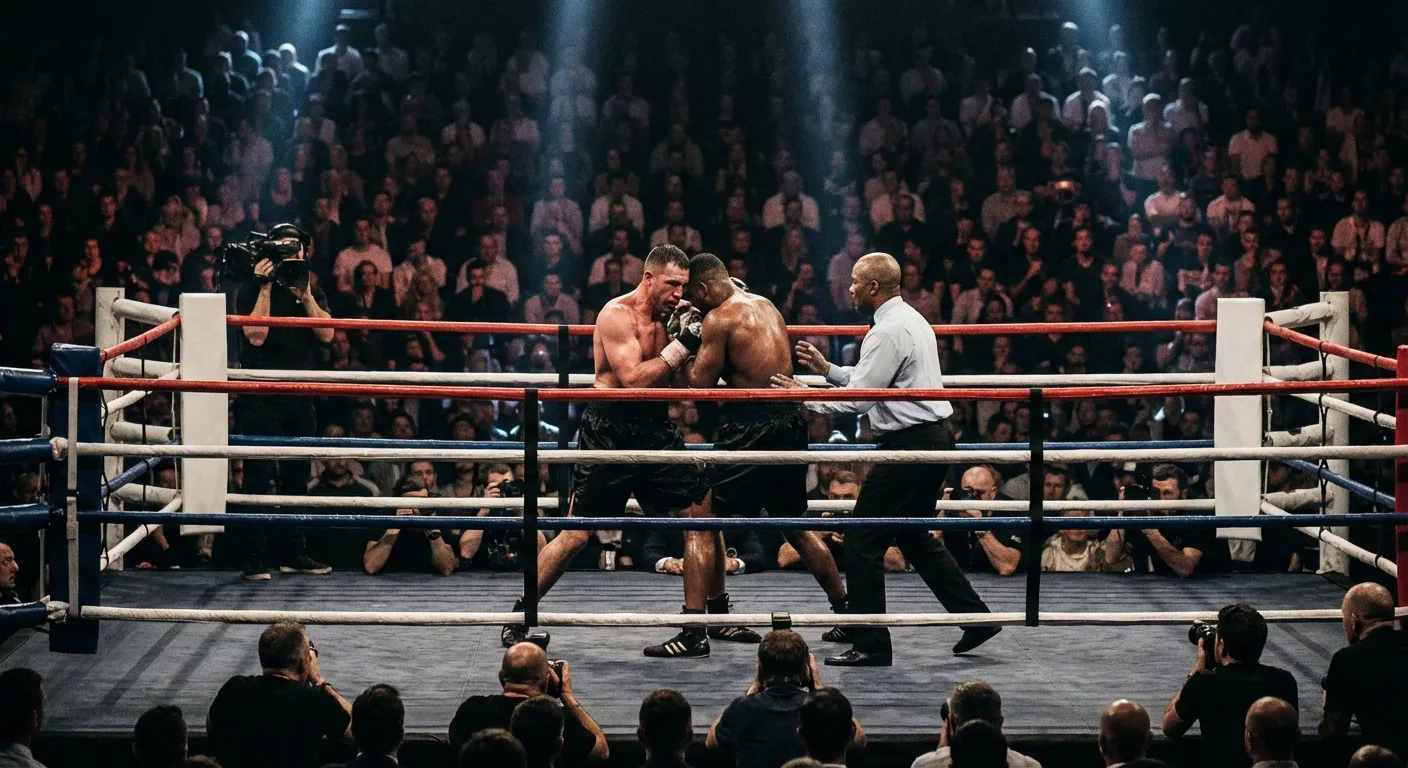
Sheeraz World Title Fight: Usyk vs Verhoeven Undercard Announced!
Preview Hamzah Sheeraz's world title opportunity as the co-main event for Usyk vs. Verhoeven, analyzing his opponent and chances. Highlight the significance for UK boxing.
Usyk Vacates: Why Champions Choose Their Exit
Why Usyk giving up heavyweight belts looks less like surrender and more like a champion taking control of his final fight.
Usyk vs Verhoeven: Was the stoppage right?
Oleksandr Usyk stopped Rico Verhoeven at 2:59 of round 11. The controversy is real, but the useful lesson is how referees judge danger when a fighter is hurt, tired and still swinging.
Was this page helpful?
It takes one tap, and it genuinely helps.
Choose your next step
Turn this article into the right action
Some readers are ready to book. Some need the class route first. Pick the route that matches what you actually want.