Jai Opetaia vs Noel Mikaelian: legal uncertainty before fight night

Jai Opetaia vs Noel Mikaelian: Legal Uncertainty Before Fight Night
The best cruiserweight fight on this weekend’s Las Vegas card should be about pressure, southpaw angles and who controls the middle rounds. Instead, Jai Opetaia versus Noel Mikaelian has arrived at fight week with an unwelcome second contest running alongside it: a dispute over whether Mikaelian was free to make the fight at all.
That matters. Not because a cease-and-desist letter decides the case, and not because anyone outside the parties has seen a court resolve the contract. It matters because uncertainty is a terrible companion in the final days of a championship camp.
Mikaelian is scheduled to meet undefeated Australian Opetaia on Saturday, September 12, at T-Mobile Arena, on the Ryan Garcia versus Conor Benn bill. The British Boxing News preview calls it a meeting of the division’s two genuine champions. That is the sporting case for it. Opetaia is 30-0 with 23 stoppages; Mikaelian is 28-3 with 12. Their respective Box.Live profiles for Opetaia and Mikaelian give the bare outline. The records do not tell you how badly the division needs champions to face each other.
They also do not tell you what happens when the paperwork becomes the headline.
What has been reported
Don King Productions has sent TKO Group and Zuffa Boxing a cease-and-desist letter seeking to stop the bout. The Yahoo Sports report says King’s side claims exclusive promotional rights to Mikaelian and alleges that TKO and Zuffa engaged the fighter without its permission. The letter demands that the fight be cancelled and alleges tortious interference with the promotional agreement.
That is King’s allegation, not an established finding. A cease-and-desist is a demand from one side of a dispute. It is not, by itself, a court order and it does not settle the meaning of a contract.
The reported dispute turns on that meaning. In BoxingScene’s account of the letter, King’s lawyer says Mikaelian may discuss and explore other opportunities, but cannot agree to provide his services elsewhere without Don King Productions’ express consent. A separate Yahoo report published the central parts of the demand and reported that King’s side says earlier talks with Zuffa did not produce a deal.
Mikaelian tells a materially different story. He has said that an addendum gives him and his team scope to pursue third-party opportunities that are financially better for him. In his detailed interview with BoxingScene, he said he felt he had been left inactive and wanted to earn. He also said attorney fees had taken a serious chunk of the purse. Those are Mikaelian’s claims about his own agreement and dealings. They should be reported as such, rather than treated as a verdict on King, TKO or Zuffa.
Yardbarker’s summary similarly reports the competing positions: King’s side says it has exclusive rights and Mikaelian’s camp has maintained that his manager could pursue outside offers. The key word is competing. Until there is an official resolution or a clear settlement announced by the parties, certainty would be dishonest.
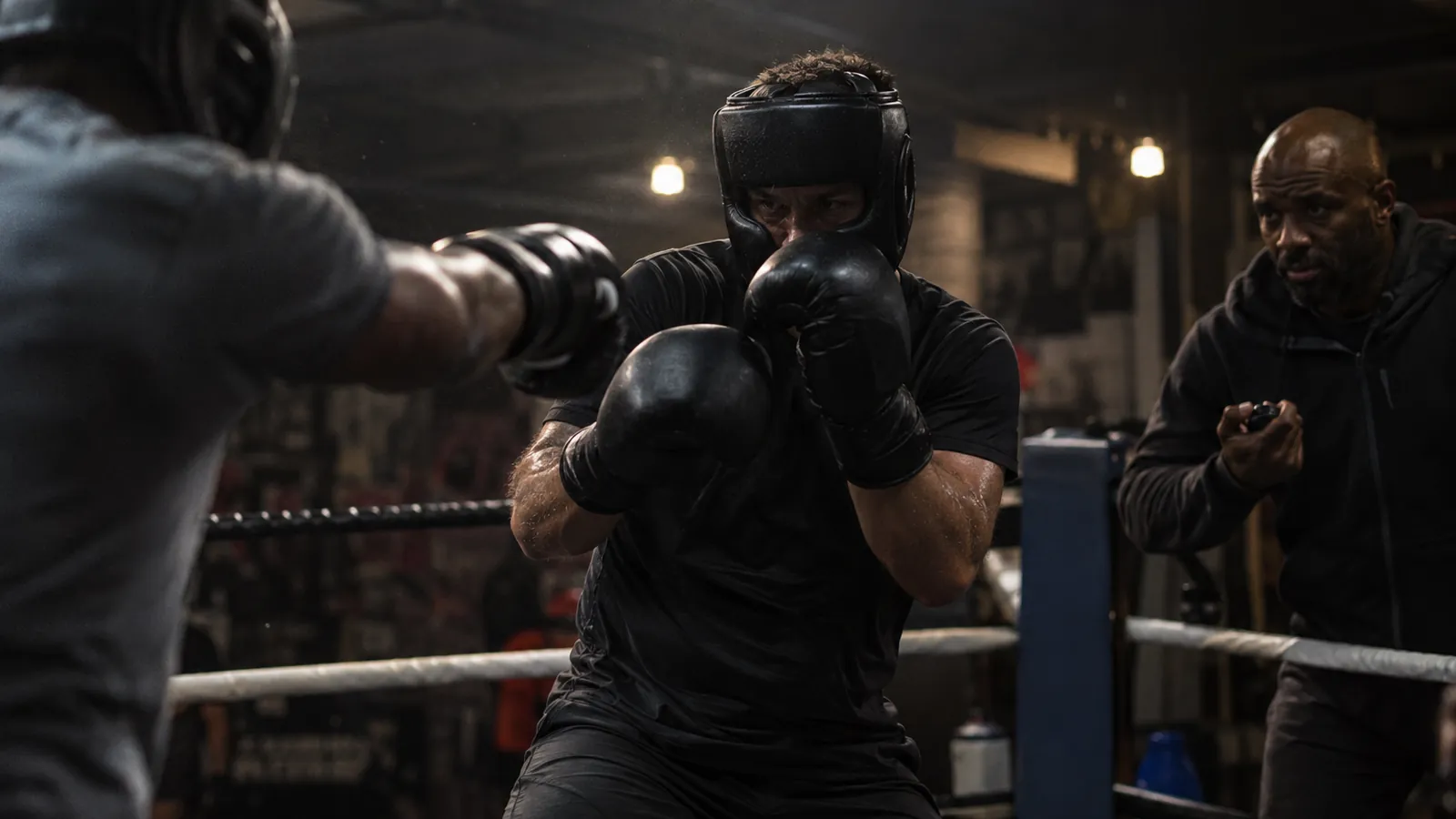
The problem is not just whether the bell rings
There is a lazy way to discuss pre-fight legal noise: say a professional should block it out. Fighters hear that all the time. It is also nonsense.
A proper final week is deliberately narrow. You finish the hard work, sharpen timing, make weight safely, rest, travel, go through media duties and trust the people around you to keep distractions away from the ring. A fighter does not need to be reading legal letters. A trainer does not need to be wondering whether a tactical session is about an opponent who may disappear from the bill. A manager does not need to choose between protecting the athlete’s sleep and taking an urgent call.
That does not mean a legal dispute automatically damages performance. Elite fighters have boxed brilliantly through ugly circumstances. It does mean that the cost is real even when it is not visible on a broadcast. Attention is finite. A camp works because everyone agrees on the next task. Contractual uncertainty asks the fighter and team to hold two incompatible thoughts at once: prepare to fight, and prepare for the possibility that the plan changes.
Mikaelian’s own comments make the point without any need for drama. He told BoxingScene that the training and fight were important but that the legal and promotional problems had been harder to deal with than the bout itself. That is not proof that he will perform poorly. It is evidence that the distraction has been felt.
The practical consequences can be mundane but damaging: late changes to travel and accreditation, lawyers needing signatures, uncertainty around purse terms, questions over what happens to a title and the pressure of explaining it all to family. A fighter who has spent months eating, sleeping and training to a schedule can cope with a bad round. It is much harder to prepare calmly for a moving target.
A title fight with too many asterisks
Mikaelian’s position is complicated further by the WBC. It had ordered him to defend against David Benavidez, and reporting has suggested he could lose the WBC belt when he enters the ring against Opetaia. The earlier DAZN report on the Benavidez route is part of the background to a frustrating chain of events, while BoxingScene reports that Mikaelian was willing to accept the risk of being stripped in order to take this fight.
Opetaia knows the feeling. He has already had sanctioning-body trouble around his own title position. None of this changes the more important sporting fact: these are two credible cruiserweights with styles that can make a serious fight. Opetaia is the quicker, harder-punching southpaw and the established favourite. Mikaelian is bigger, experienced and capable of making a technical fight uncomfortable. One betting preview has Opetaia a heavy favourite, but even its assessment of the matchup accepts that he may have to work for it.
The belts are relevant because they structure careers. They should not be allowed to obscure the contest. Cruiserweight has spent too long giving us near-fights and administrative arguments. Opetaia versus Mikaelian is one of the few matchups that gives the weight class a clear answer in the ring.

Boxing needs a better answer than last-minute lawfare
There is no virtue in guessing who has the stronger contractual claim. The public reporting gives us allegations, selected contractual descriptions and competing accounts, not the complete agreement or a judicial decision. Anyone declaring the dispute finished from the outside is picking a side, not reporting it.
But boxing can be judged for its systems. A world champion should not reach fight week facing a public argument over who is entitled to negotiate his career. Nor should a promoted show be announced without every credible contractual risk being dealt with well before the final days. The fighter is the one who pays for poor planning, first in stress and sometimes in lost opportunity.
My view is simple: if there is no order stopping it, the sporting contest deserves every chance to happen. Any party that believes its contract has been breached is entitled to pursue its claim through the proper process. What it should not do is turn a fighter’s final week into a test of legal endurance.
That principle applies far below Las Vegas. At a good boxing club, coaches protect a boxer’s focus before sparring or competition because concentration is part of preparation. The same respect should exist at the top of the sport. Boxing asks fighters to accept real physical risk. The least the business can do is give them a clear runway to the first bell.
For young boxers and adults learning the sport in Kidbrooke, that is a useful lesson too. Good preparation is not only the hard session. It is the work around it: clear communication, trusted people and a plan that stays steady when pressure rises. That is the standard we aim for in every Honour & Glory class.
H&G Team
Writer at Honour & Glory Boxing Club, a community boxing gym in Kidbrooke, South East London.
KEEP READING
Opetaia vs Mikaelian: Why the cruiserweight title fight matters
A focused look at the reported Jai Opetaia-Mairis Mikaelian announcement and what a difficult, experienced challenger asks of a dominant cruiserweight champion.
Benavidez vs Opetaia: Why Weight Class Still Matters
Use the current debate to explain why a compelling name matchup is not automatically a sensible fight when one boxer’s stated weight-class direction points elsewhere.
Wilder vs Opetaia rumour: does the matchup make sense?
Treat the reported undercard discussion cautiously and assess the sporting logic of a Wilder-Opetaia meeting rather than presenting a rumour as confirmed.
Was this page helpful?
It takes one tap, and it genuinely helps.
Choose your next step
Turn this article into the right action
Some readers are ready to book. Some need the class route first. Pick the route that matches what you actually want.