How to Record Boxing Sparring for Video Analysis
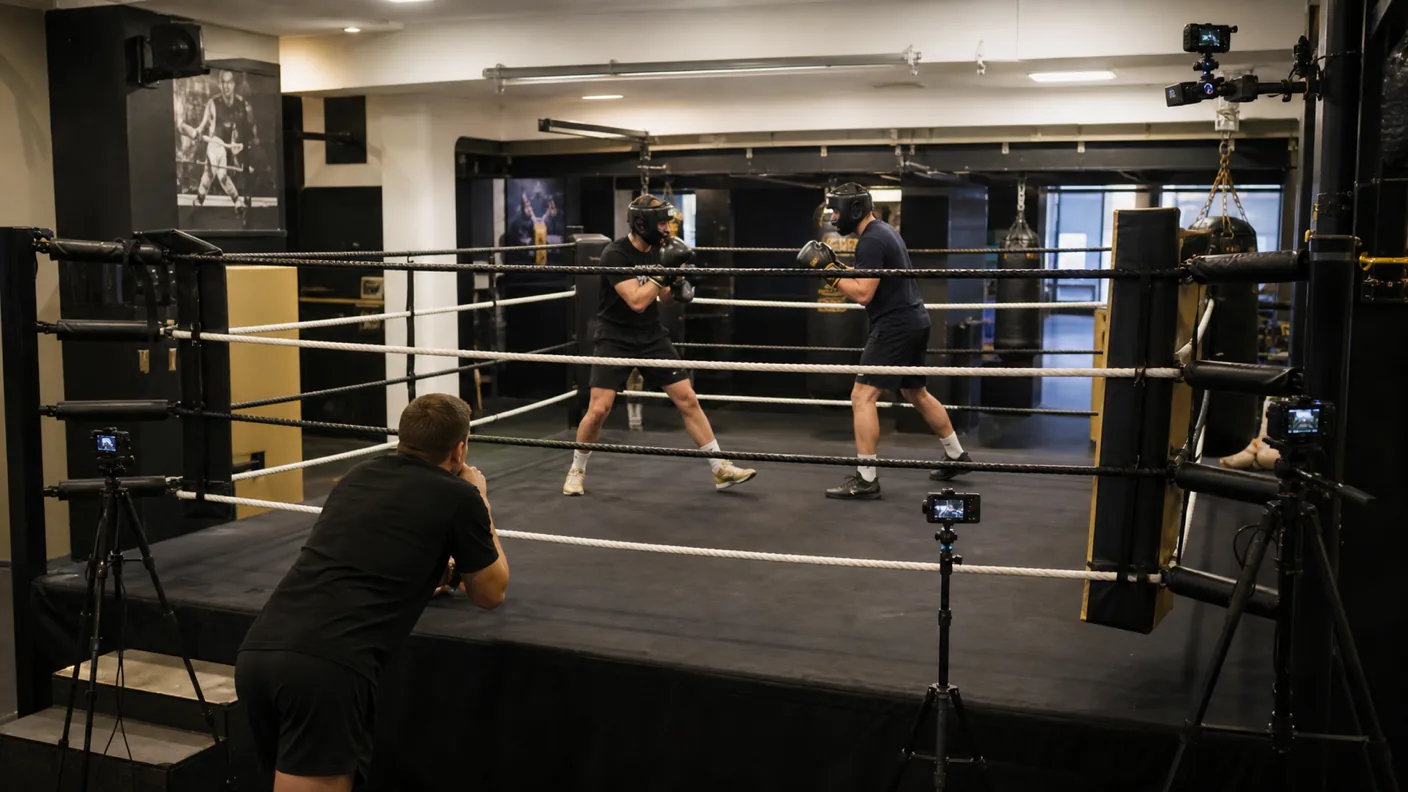
Learning how to record boxing sparring for video analysis starts with a simple rule: film for the review, not for social media. A dramatic close-up may look good on a phone, but it is poor evidence if the boxer’s feet, distance and exit disappear from view.
Professionals and competitive amateurs do not need a cinema crew. They need consent, a stable wide shot and enough visual detail for the coach to follow each exchange. Get those right and even a normal phone can produce useful training footage.
At H&G, visiting adult professional and competitive amateur boxers can arrange to record suitable sparring with our installed AICO system. A parent or guardian must enquire for an under-18 boxer. The system captures the agreed round from fixed views, while an ordinary phone recording follows the practical advice below.
Agree the purpose and permission first
Tell the coach and both boxers why the round is being recorded, who will see the file and where it will be stored. Consent should be clear before the camera starts. If anyone says no, do not film them.
Follow the club’s own filming, privacy and safeguarding process. England Boxing publishes photography and video guidance alongside consent resources for affiliated clubs. Where an under-18 may appear, use the club’s parent or carer consent process and involve its welfare lead rather than making an informal arrangement.
Keep cameras away from changing rooms and weigh-in areas. Do not post a sparring clip simply because everyone agreed to coaching analysis. Sharing it publicly is a separate decision and needs separate permission.
Choose a simple camera setup
A recent smartphone is usually enough. Use the rear camera, clean the lens and place the phone in a proper clamp or tripod. Handheld footage tends to chase punches, shake under impact noise and lose the boxer who moves out of frame.
Landscape orientation gives more room for lateral movement. Recording at 1080p is a sensible starting point for many phones. If the device, light and storage allow it, a higher frame rate can make fast exchanges easier to inspect, but a steady, well-lit view matters more than a large specification number.
Before the first round, check battery, free storage and focus. Switch off notifications and calls where the device allows. Record a short test, play it back and confirm that the image stays sharp when both boxers move quickly.
Put the camera where it can see the boxing
Set the camera outside the ring in a raised, fixed position. A diagonal view from near a neutral corner often shows depth and lateral movement better than a low view through several ropes. The exact spot depends on the gym, so test it while two people move around the ring.
Frame the full boxing area with a small margin around it. You should see both boxers from head to foot when they are at opposite sides. If either boxer vanishes behind a corner post for several seconds, move the camera before sparring begins.
Never put a tripod where a boxer, coach or official could collide with it. Do not block the steps, the corner team or an exit route. The coach running the session decides whether the position is acceptable.
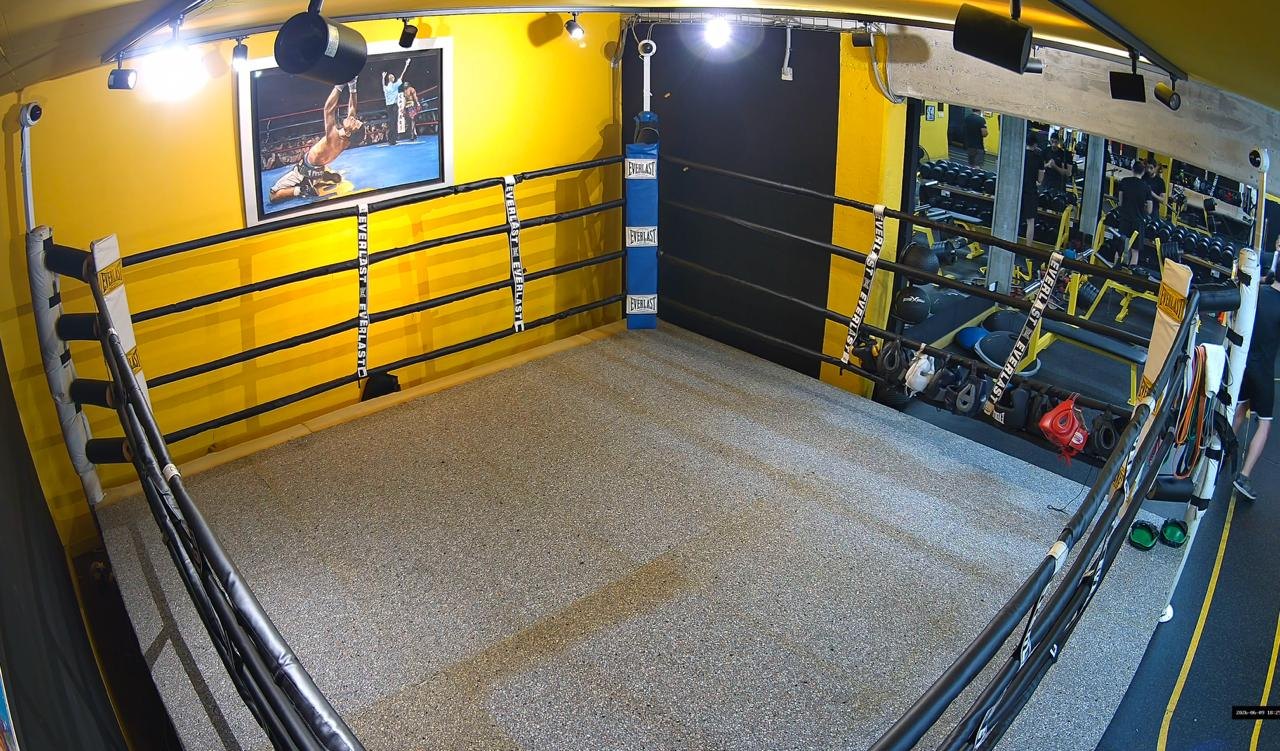
Partner-supplied AICO camera example from another gym. It illustrates the wide, stable view used for analysis; AICO sessions at H&G take place in our Kidbrooke club.
Control light and background clutter
Pointing towards a bright window can turn both boxers into silhouettes. Move to another side of the ring or close a blind if the club permits. Mixed gym lighting may also cause flicker, so include that in the test clip.
Keep the space between lens and ring clear. A heavy bag swinging across the shot, people walking in front of the phone or loose ropes cutting through the action can make an exchange impossible to review. One uninterrupted angle is usually more useful than an operator constantly zooming.
Audio can preserve bell, corner instructions and round context, but agree whether it should be captured. Private coaching conversations do not need to become part of a widely shared file.
Record the complete round
Start a few seconds before the bell and stop after the boxers return to their corners. This keeps the opening position and final exchange intact. It also prevents the camera operator from guessing which action will matter later.
Use a simple file label after the session, such as date, session and round number. Avoid adding unnecessary personal information. If the phone records one long file, note the round start times so review does not become a search through dead space.
Do not pan, zoom or swap orientation during the round. Let the boxers move inside a stable frame. A fixed view makes it easier to compare position from one exchange to the next.
Check the footage before everyone leaves
Watch ten seconds from the beginning, middle and end. Confirm that both boxers stay visible, the picture has not blurred and the file includes the whole round. If the recording failed, make a note rather than presenting a partial clip as complete evidence.
Then store the file where the agreed people can reach it. Keep access narrow, use the club’s process and delete copies when they are no longer needed. A coaching archive should not become a folder that nobody controls.
What changes when you record with AICO at H&G
You do not need to bring a camera rig to try AICO at H&G. Our installed system records the agreed sparring session from fixed views, then makes the usable footage and available outputs easier to review.
That does not mean any clip will produce perfect analysis. An obstructed boxer, low light, blur or an incomplete round can limit what the system and the coach can use. It is not an automated scorecard, and it does not decide whether a boxer is fit to spar or whether a session should stop.
Tell us your level and what you want to learn before you visit. The team confirms whether a suitable AICO session is available, agrees the recording with everyone involved and keeps the review tied to your boxing.
Phone footage can still be useful for an ordinary coach-led review, but that is separate from coming to H&G and using the installed AICO system.
See how to visit H&G and try AICO, then use our guide on how to analyse boxing sparring footage to turn the recording into useful questions.
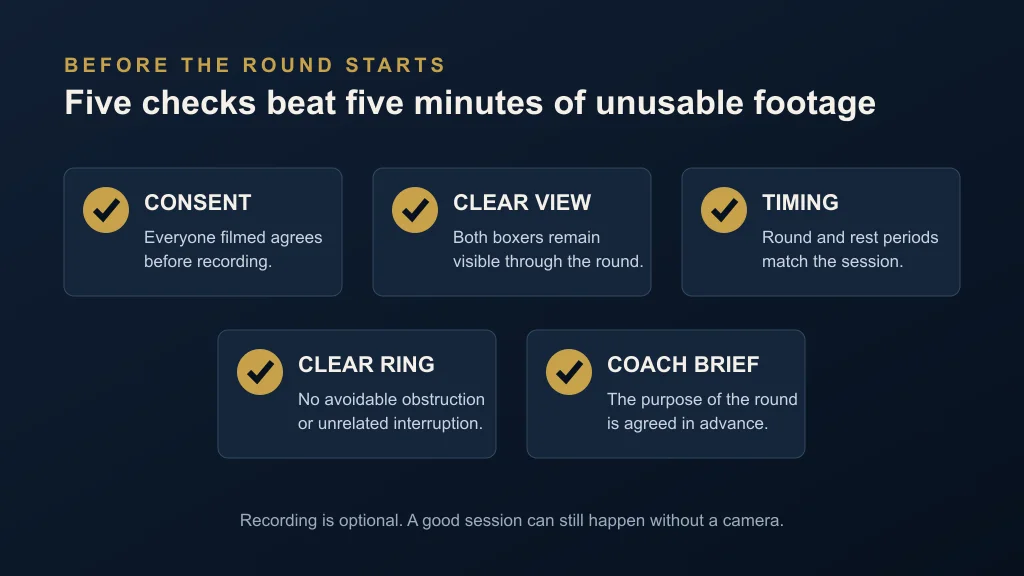
A recording checklist before the bell
- Coach and both boxers have agreed to filming and review.
- The lens is clean, battery is charged and storage is available.
- The phone is fixed securely outside the ring.
- The entire boxing area and both boxers’ feet are visible.
- Lighting, focus and interruptions have been checked with a test clip.
- The file-sharing and deletion plan is understood.
If one of those checks fails, fix it before the round. Ten seconds of preparation can save a session’s footage.
Frequently asked questions
Can I record boxing sparring on a phone?
Yes, if the phone can produce a stable, clear wide shot and has enough battery and storage for the session. Camera position and an unobstructed view usually matter more than buying specialist equipment.
Where should the camera go for sparring analysis?
Use a fixed, raised position outside the ring where the whole boxing area remains visible. Test a diagonal corner view, then adjust it if a post, ropes or bright light hides the action. The setup must not obstruct the people running the session.
Should every sparring round be recorded?
Only when there is a coaching reason and everyone has agreed. A smaller set of well-labelled, comparable rounds is easier to review than hours of footage collected without a question in mind.
Does a good recording guarantee usable analysis?
No. Stable footage gives the review a better starting point, but visibility, the exchange itself and the limits of the analysis still matter. The coach should decide what the clip supports and what remains unclear.
If you are an adult professional or competitive amateur who wants to put your own sparring on screen, ask about recording a session with AICO at H&G. A parent or guardian must make the enquiry for an under-18 boxer.
H&G Team
Writer at Honour & Glory Boxing Club, a community boxing gym in Kidbrooke, South East London.
Was this page helpful?
It takes one tap, and it genuinely helps.
Latest boxing technology at H&G
Come to H&G and put AICO to work on your boxing
Start with an AICO visit, or explore H&G's professional and competitive amateur pathways.