Francesca Hennessy vs Shannon Bridges: the step-up question
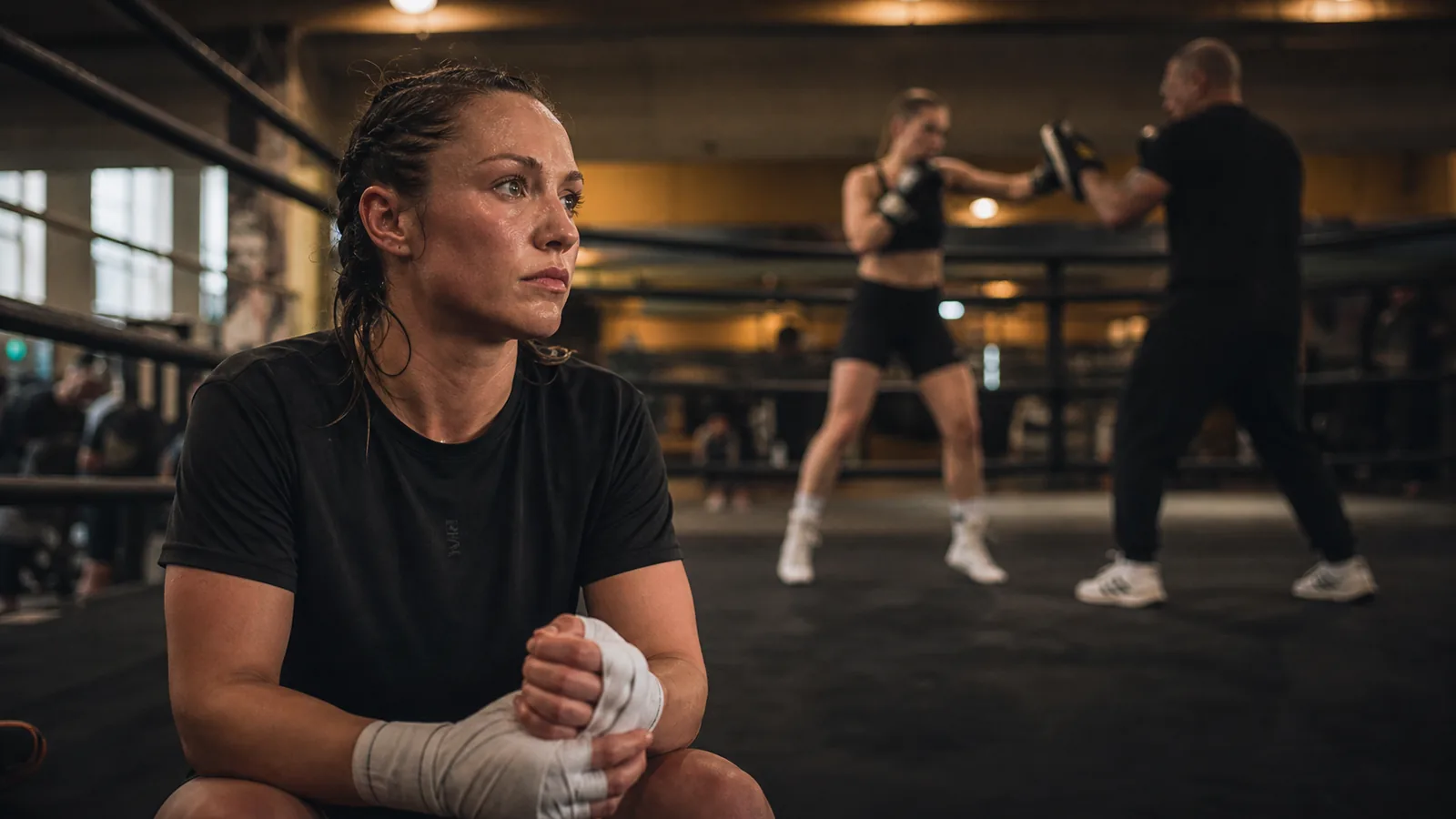
First, the correction matters
The proposed opponent is either Courtenay or Bridges, not a hybrid of both. The BBC’s live report from Hennessy v Bouttell put them forward as separate British options, alongside Tiah-Mai Ayton. Neither Hennessy’s Box.Live profile nor the public fight listings show a next opponent at the time of writing.
The Courtenay angle has been around for a while. This interview is useful context for the personal edge between Hennessy and Courtenay, but it is not an announcement.
Bridges is a different proposition in public terms. She brings recognition, ring experience and the ability to make a domestic fight feel like an event. Courtenay would bring a more pointed sporting conversation because there has already been public back-and-forth. Either match-up would sell. Selling it is the easy bit.
The harder question is whether it would teach Hennessy what she needs before the world-title level comes calling.
Bouttell was the useful warning
Hennessy’s January win over Bouttell was not a glossy prospect performance. Good. It was better than that.
Bouttell forced her to work through cuts, pressure and uncomfortable exchanges. Hennessy won a majority decision, with scores of 95-95, 97-93 and 96-94, after ten close rounds at the Copper Box. The BBC report described Bouttell’s plan clearly: close the distance, make it physical, and deny Hennessy the clean range where her feet and jab can organise a fight.
The live figures underline how tight it was. Hennessy landed 116 punches to Bouttell’s 114, while Bouttell led the power-punch count 98 to 90. That does not make the decision wrong. It makes the fight instructive. Hennessy found enough cleaner work, and enough resilience late on, to edge a hard contest. But a fighter who wants to challenge the very best cannot treat that performance as a box ticked and forgotten.
George Groves’ assessment on the BBC was sensible: Hennessy had been dragged away from the silky work seen in easier fights and should not be rushed straight to the top. That is not a knock. It is the normal logic of a developing fighter’s career. A difficult domestic ten rounds can tell a coach more than three quick wins ever will.

The De Persio stoppage changed the temperature, not the standard
Hennessy then stopped Aurora De Persio in the sixth round at Wembley in May. The Hennessy v De Persio fight record confirms it was a scheduled ten-round bantamweight contest, and the result took her to 9-0. It was her second stoppage as a professional.
That was an important statement, especially after the Bouttell fight had required grit rather than flourish. Yet a stoppage does not erase the questions raised in a close bout. It changes the temperature around a fighter. It does not change the standard of opponent waiting above her.
That distinction matters in the gym. One convincing win can sharpen confidence. It cannot substitute for learning to make adjustments against someone who is happy to lose rounds early, crowd the space, rough up the rhythm and punish predictable exits. That is the sort of problem Hennessy needs to solve repeatedly, not merely survive once.
What a Bridges fight would actually ask
If the discussion is about Ebanie Bridges, the biggest demand would be composure under attention. A high-profile domestic contest has a way of turning every exchanged word, every walkout and every scrappy round into the story. Hennessy would need to be boring in the best possible sense: disciplined in the opening rounds, responsible after scoring, and unwilling to chase a dramatic finish simply because the occasion asks for one.
Technically, the real test would be whether she can hold centre ring without becoming square, use the jab to build exits rather than admire it, and keep her left hand home after throwing the right. Against pressure, the first clean combination is rarely the important one. The important punch is the one that stops the opponent walking into the next exchange.
A win in that kind of fight would mean more if it showed control than if it showed bravado. Hennessy has personality. Nobody doubts that. The next level is proving that she can keep a fight on her terms when an experienced opponent is determined to turn it into a scrap.

And what a Courtenay fight would ask
A Courtenay fight would ask a related but slightly different question: can Hennessy separate emotion from selection? When there is existing friction, a young fighter can become too keen to answer everything immediately. That is when clean boxing becomes a trade, and a trade becomes a gamble.
The mature version of Hennessy would use the first half of the fight to read, score and make the other boxer reset. She would not need to win the argument in round one. She would need to win enough rounds that the argument becomes irrelevant by round eight.
There is a temptation to treat a recognisable domestic name as a shortcut to legitimacy. It is not. It is only a good match-up if it brings the right type of rounds. If it is a commercial detour that delays a meaningful title route, pass. If it gives Hennessy a ten-round test of pace, discipline and decision-making against an opponent with genuine self-belief, take it.
The verdict: step up, but choose the lesson
Our view is that Hennessy is ready for a real step up, but not for matchmaking built solely around a headline. Bouttell gave her the difficult rounds. De Persio gave her a recent stoppage and another ten-round finish. Her record now shows nine wins from nine, but the number that matters more is the experience inside those 67 professional rounds.
The ideal next opponent does not need to be a world champion. She does need to be capable of making Hennessy think under pressure. That could be Bridges. It could be Courtenay. It could be somebody else entirely. Until contracts are signed, it is smarter to discuss the qualities of the test than pretend the fight exists.
For anyone watching from South East London, this is the part worth learning from. Progress in boxing is not just about looking brilliant when the shots land. It is about building the habits that still work when the fight stops going to plan. That is what good coaching is for, whether you are chasing titles or taking your first session at a gym. If you want to learn the craft properly, book a trial at Honour & Glory in Kidbrooke.
H&G Team
Writer at Honour & Glory Boxing Club, a community boxing gym in Kidbrooke, South East London.
KEEP READING

The Greatest Upsets in British Boxing History
British boxing has produced some of the most dramatic upsets in the sport's history. Each one tells a story about preparation, complacency, and what happens when everyone is wrong.
The Greatest Rivalries in British Boxing History
British boxing has produced rivalries that defined eras and divided the country. Here are the ones that mattered most, and why they went beyond the ring.
Troy Williamson vs Callum Simpson: why British titles matter
Use the Leeds fight to explain the value of a properly matched domestic title bout: British and Commonwealth belts still make a fighter prove they can handle pressure, travel and a live home crowd before chasing world-level opportunities.
Was this page helpful?
It takes one tap, and it genuinely helps.
Choose your next step
Turn this article into the right action
Some readers are ready to book. Some need the class route first. Pick the route that matches what you actually want.