Eddie Hearn ‘Bully’ Row: What Boxing Debate Gets Wrong
Eddie Hearn ‘Bully’ Row: What Boxing Debate Gets Wrong
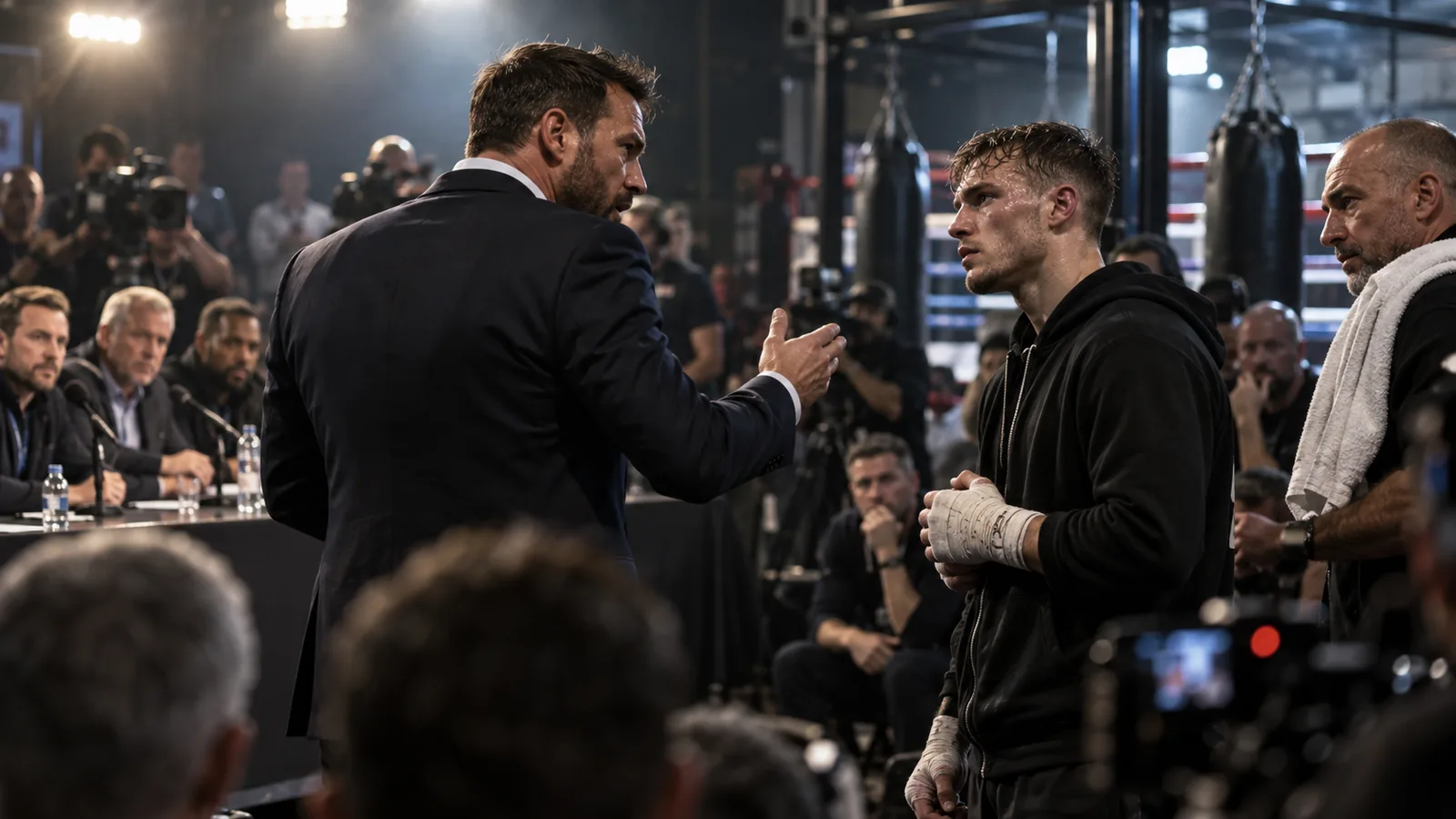
“Eddie Hearn is a bully” is a good title for a boxing show because it demands a side. You either think he is, or you think the accusation is absurd. There is noise, friction, personality, and a ready-made argument before anybody has even explained what happened.
That is also the problem.
The latest talkBOXING episode with Simon Jordan, Liam Smith and guests uses a familiar British boxing tension as its starting point: a powerful promoter is criticised, the criticism becomes personal, and the actual questions about leverage, contracts, opportunities and accountability risk getting lost.
Hearn is an obvious figure for this sort of row. He is visible, articulate, commercially successful and rarely shy about an argument. That makes him compelling television. It also makes him a convenient symbol for everything people dislike about modern boxing business.
But calling a promoter a bully is not analysis. It is a conclusion. If the sport wants to have an adult conversation about power, it needs to ask better questions first.
Why “bully” is such an easy word in boxing
Boxing is a sport full of unequal relationships.
A young professional needs fights, an opponent, a platform, ticket allocation, a manager who believes in them, a trainer who can guide them and, eventually, a promoter capable of investing money and attention. The promoter does not control every part of that chain, but they often control enough of it to make a fighter feel that saying no comes with consequences.
That imbalance can be real even when nobody is behaving improperly.
A promoter may have a limited number of television slots. They may believe one fighter is more marketable than another. They may push a boxer towards a bout because it makes business sense. They may decide that a difficult negotiation is not worth pursuing. From the boxer’s point of view, each decision can feel personal because their career is personal. A lost opportunity is not a spreadsheet entry. It can mean six months without a payday, a missed ranking chance, or momentum gone cold.
That does not prove intimidation. It does explain why accusations gain traction quickly.
The talkBOXING programme is useful precisely because its contributors come from different corners of the fight business. Jordan thinks like an owner and operator. Liam Smith knows the human cost of a career decision inside the ring. Those perspectives do not always sit comfortably together, and they should not.
The trouble starts when a debate about who holds power gets reduced to whether somebody is pleasant in a heated exchange.

A hard negotiator is not automatically a bully
Promoters are not meant to be neutral observers. Their job is to make events, sell tickets, secure broadcast deals, manage risk and protect the value of fighters in whom they have invested. A promoter who never negotiates hard will not last long.
Boxers, managers and fans should be wary of two lazy ideas at once.
The first is that a wealthy, famous promoter must be wrong whenever a fighter feels badly treated. The second is that a fighter must be unreasonable whenever they complain publicly.
Neither gets us very far.
There is a difference between a hard commercial position and an abusive one. There is also a difference between a disagreement over a fight and a system that leaves people unable to challenge decisions without fear.
That distinction matters. “He drove a hard bargain” is one claim. “He used his position to deny someone a fair choice” is another. “He spoke aggressively” is different again from “he threatened a boxer’s livelihood unless they accepted terms they could not properly assess”.
Those claims require evidence, not applause from whichever camp already dislikes the speaker.
Hearn has built a substantial public profile as a promoter, something reflected in his BoxRec promoter listing and years of interviews such as this BoxingScene conversation. That visibility brings benefits. Fans can hear his side directly rather than relying on rumour. It also brings a responsibility: when you are one of the most powerful voices in the room, people will judge not only the deals you make, but how clearly you explain them.
The questions fighters should ask before signing
A fighter does not need to begin every negotiation assuming bad faith. They do need to understand the deal in front of them.
The important questions are less exciting than a viral clip, but they matter more:
- Who is paying for what, including training camp, travel, medicals, sparring and promotional costs?
- What percentage is being taken, by whom, and from which income?
- How many fights is the agreement for?
- Is there a clear route out if the relationship fails?
- Who approves opponents, dates, purses and broadcast opportunities?
- What happens if a proposed fight falls through?
- Can the boxer get independent legal advice before signing?
- Are promises about activity, titles or television written down, or merely discussed?
A manager should be able to answer these plainly. A promoter should not resent a fighter asking. A lawyer should be involved before the fighter has already committed themselves publicly.
This is not anti-promoter. Good promoters should welcome clarity because it protects everybody. It reduces the chance that a disagreement later turns into a public accusation built on memories, assumptions and competing versions of a phone call.
The problem in boxing is rarely that people argue. The problem is that important arrangements are sometimes too vague until the relationship breaks down.

Fans need to stop treating every row as a loyalty test
Boxing supporters love a character. Hearn has one. So do Frank Warren, Ben Shalom, Bob Arum, Dana White and plenty of fighters. That theatre has always been part of the sport.
But fans should not confuse good television with a useful verdict.
When a promoter is criticised, the first response should not be “he is a bully” or “the fighter is bitter”. It should be: what specifically is being alleged?
Was a purse changed? Was a contract term disputed? Did a boxer lose a fight date after refusing an offer? Is there correspondence? Is there an independent account? Has the other side been given a fair chance to respond?
These are not glamorous questions, but they are the ones that separate a serious concern from a personality clash.
The previous talkBOXING discussion involving Jack Catterall shows why these relationships will always be combustible. Boxers are not discussing an abstract industry. They are discussing the narrow window in which their bodies are healthy, their name has value and a major opportunity might arrive. Promoters are making commercial decisions under pressure. Managers are trying to protect a client while keeping doors open.
Everybody has incentives. That is why transparency matters.
Accountability is not the same as hostility
The best response to criticism is not to demand silence. It is to create a structure where valid criticism can be tested.
Promoters should publish clear deal terms where possible, honour payment arrangements promptly, avoid conflicts of interest and communicate directly when plans change. Managers should explain commission, expenses and risk to their fighters rather than speaking in vague reassurance. Fighters should be encouraged to seek independent advice, especially early in a professional career when excitement can outrun caution.
Fans should also resist the urge to make one promoter the entire story of boxing’s power problem. Hearn is a major figure, but professional boxing has always concentrated power in a small number of hands: promoters, broadcasters, sanctioning bodies, managers, sponsors and matchmakers all influence who gets a chance.
That is the real debate worth having.
If a boxer has no practical way to question a decision, no access to independent advice and no clear contractual protection, then the system is failing them whether the promoter involved is charming, abrasive or completely anonymous.
The lesson for young boxers
At Honour & Glory, we teach boxing as a craft before anything else. For young people aged 7+ and adults in Kidbrooke, the immediate job is learning how to stand properly, defend, breathe, listen and improve. Professional politics can wait.
But the wider lesson is still worth learning early: confidence is not the same as aggression, and authority is not the same as accountability.
The best people in boxing should be able to explain their decisions. The best fighters should feel able to ask difficult questions. The best fans should demand evidence before joining a pile-on.
That is the standard. Not whether a promoter wins an argument on a podcast, and not whether a critic can produce the sharpest insult.
The Eddie Hearn row will pass, as most boxing rows do. The question underneath it will not. Who has power? How is it used? And when somebody says it has been abused, what evidence would actually prove it?
That is a conversation worth having properly.
If you want to learn boxing in a gym where discipline, respect and clear coaching come first, book a trial at Honour & Glory Boxing Club.
H&G Team
Writer at Honour & Glory Boxing Club, a community boxing gym in Kidbrooke, South East London.
KEEP READING

Can boxing’s new money create lasting opportunities?
Frank Smith’s warning about Zuffa’s spending opens a broader discussion on whether short-term purses improve boxing, and what happens to fighters when a funding boom cools.
Turki Boxing Summit: Peace Talks Or Power Shift?
A promoter/business angle on whether the latest Saudi-backed ‘peace summit’ talk is about solving boxing’s fragmentation or concentrating matchmaking power in fewer hands.

Zuffa Boxing cuts ties with Gvozdyk: the short leash debate
Use the reported split to explore what fighters trade away when newer boxing platforms prioritise immediate wins over a conventional rebuilding route.
Was this page helpful?
It takes one tap, and it genuinely helps.
Choose your next step
Turn this article into the right action
Some readers are ready to book. Some need the class route first. Pick the route that matches what you actually want.