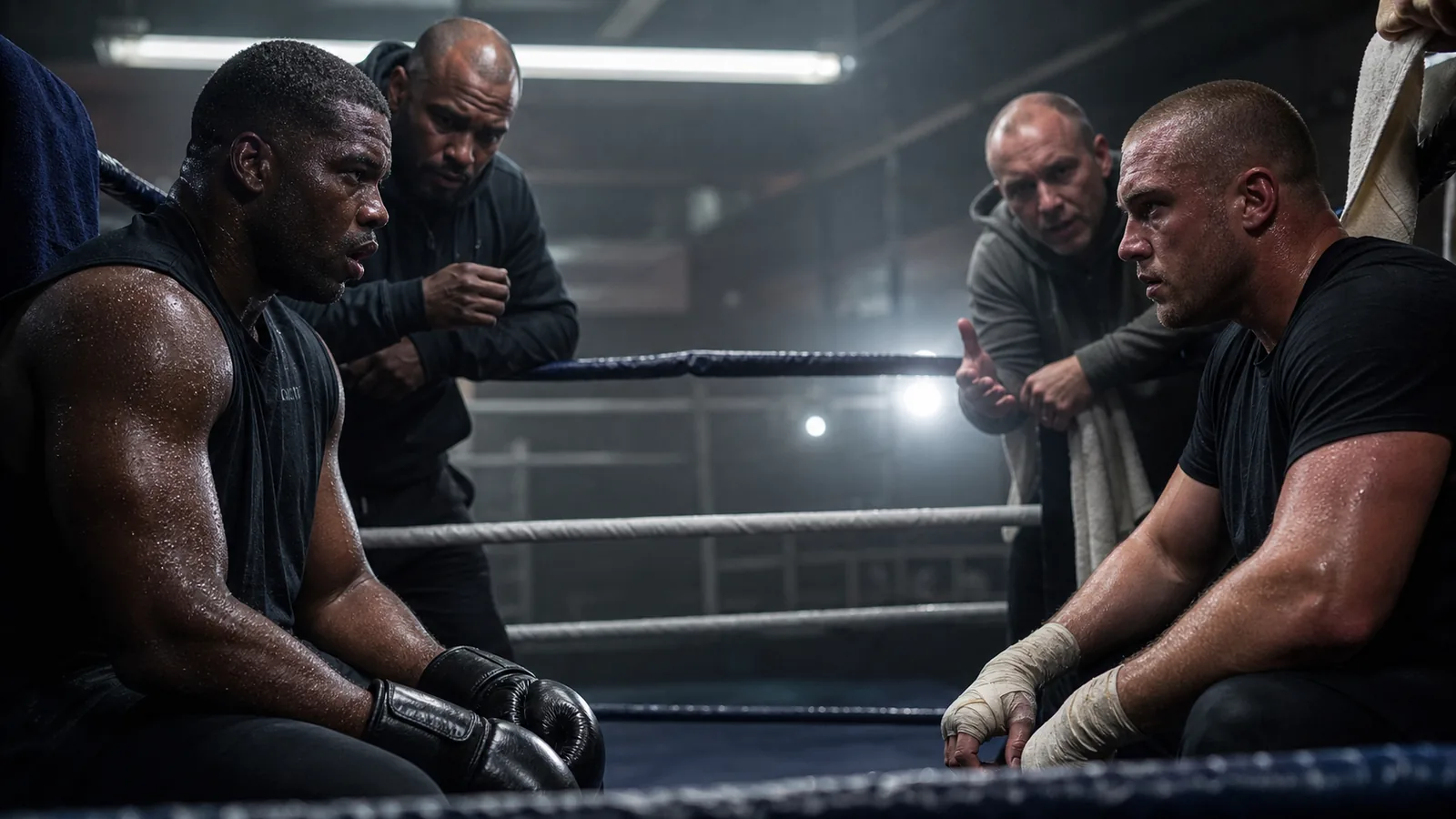
The first fight was not a normal knockout win
Wardley knocked Dubois down inside 10 seconds of round one, then put him over again in the third. For three rounds, his timing, courage and instinct for a loose target made him look like the sharper, hungrier heavyweight.
Then the momentum changed. Dubois steadied himself, began to use his jab with authority and made the fight increasingly physical. Sky Sports’ report captured the essential story: Wardley began at speed, but Dubois’ right hook and sustained pressure gradually inflicted the damage that led to an 11th-round stoppage.
The numbers help explain why this was not simply a last-round rescue job. The BBC’s fight recap recorded 179 punches landed for Dubois against 97 for Wardley, including an 87 to 40 advantage in power shots. Dubois landed 46% of his punches; Wardley landed 27%. Wardley’s early work was brilliant, but the rounds after it belonged increasingly to the new champion.
That is what makes the rematch compelling. Wardley proved that Dubois can be hit, unsettled and dropped. Dubois proved that Wardley can be forced into a punishing fight that toughness alone cannot solve. Each man has hard evidence for his belief. Each man has a warning written into the first contest.
What Wardley must change
Wardley does not need a complete reinvention. That is the lazy response to a loss. His opening plan worked. He found Dubois early with fast, committed right hands and he made the supposedly more experienced man look uncomfortable.
The change is what comes after success.
Wardley cannot treat a two-knockdown lead as permission to keep feeding the same sort of fight. Against a puncher like Dubois, every open exchange is a loan with interest. Wardley needed more disciplined exits after he landed, a more consistent jab to stop Dubois stepping straight into range, and more moments where he made Dubois reset rather than trade.
The hard part is emotional. Wardley’s best quality has been his willingness to stay present in trouble. He has built his career on refusing to go away. Yet in Manchester that quality became dangerous. He absorbed too many clean, heavy shots while visibly damaged. Grit is a weapon only while it lets you make a useful decision. Once it merely keeps you in range, it becomes a liability.
So Wardley’s team need a colder version of him in October. After a good spell, hold centre ring without admiring the result. When the right hand lands, leave on an angle. If Dubois starts finding the jab, take the tie-up, make him work at close range, then begin again. He does not have to win every spectacular exchange. He has to win more minutes than he loses.
The recovery matters too. Five months is enough time to prepare a plan, but it is not a long time after the kind of accumulated punishment Wardley took. A fighter who prides himself on durability must be especially honest about it. The second fight cannot be an attempt to prove that he is tough. Nobody doubts that. It has to prove that he can turn bravery into control.
What Dubois must change
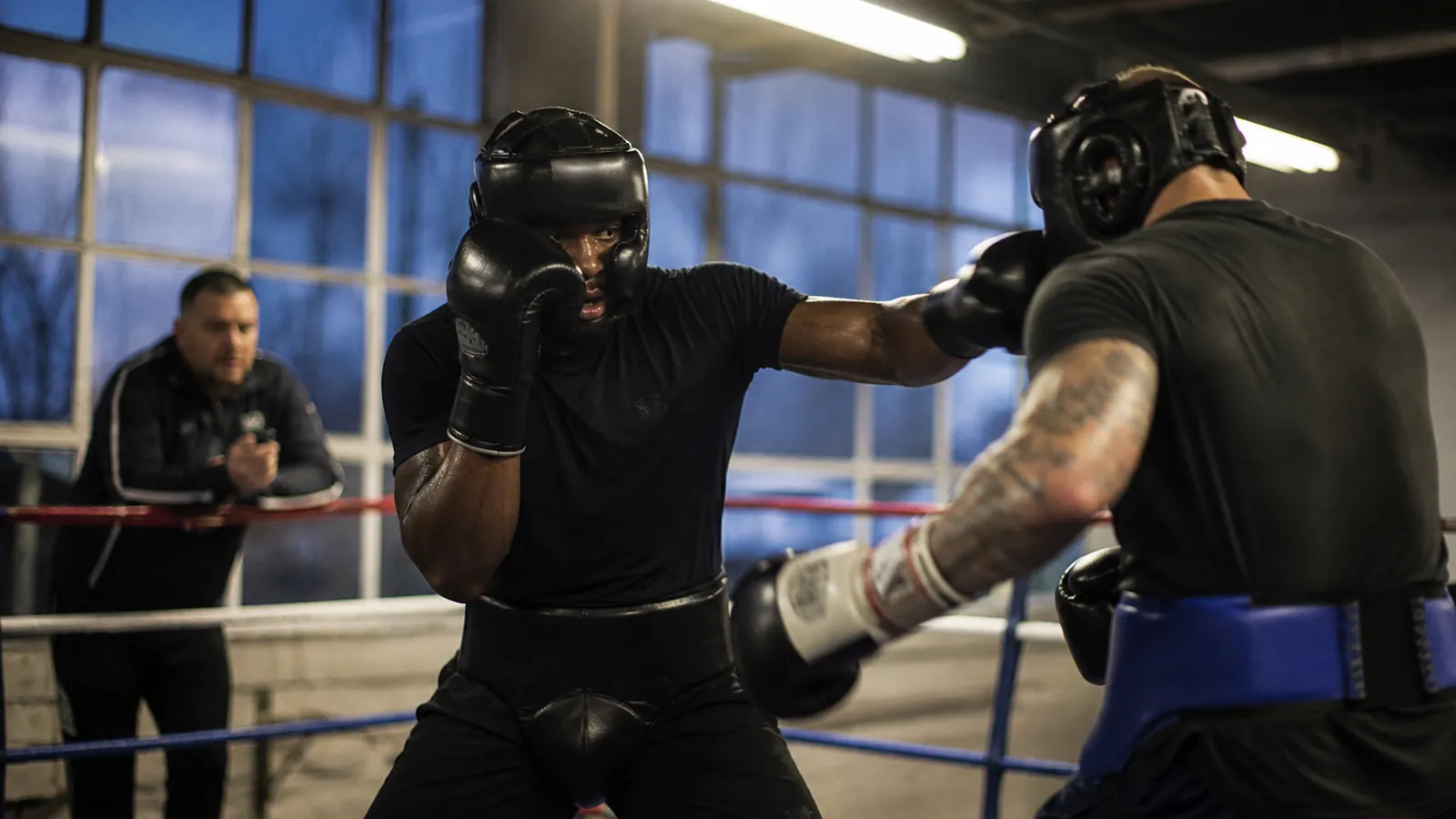
Dubois won a Fight of the Year contender, but a champion cannot take the first three rounds of that fight as a template for a title reign.
The warning is plain. Wardley found him with a right hand almost immediately, then did it again. Dubois deserves enormous credit for getting up, settling and taking over. His trainer Don Charles said afterwards that he had “no right to get up” after the third-round knockdown. The comeback was real, not promotional spin.
But courage is not a defence. Dubois must arrive ready to establish order earlier: jab first, feet under him, chin protected on the way in. His jab was the best technical adjustment of the first bout. It blinded Wardley, disrupted his rhythm and gave the right hand a route through. In the rematch it needs to be there before the crisis, not brought out after it.
He should also avoid trying to settle old questions with one reply. After the first knockdown, Dubois was understandably angry and hurried to answer. In a rematch, Wardley will expect that reaction. A composed Dubois who takes the centre behind the jab is much harder to catch clean than a furious Dubois throwing himself back into range.
The good news for him is that the later rounds gave him a clear blueprint. He can pressure Wardley without sprinting at him. He can push him back with a firm jab, make the exchanges ugly, invest in the body and let his heavier punches arrive when Wardley’s feet are less organised. He does not need to chase a statement. He already made one.
Why the WBO belt raises the stakes
This is not a domestic grudge match with a decorative belt attached. The WBO title gives the winner a real claim on the next stage of the heavyweight division.
Before their first fight, the BBC’s preview set out the contrast clearly: Dubois had the deeper world-level experience, including wins over Filip Hrgovic, Jarrell Miller and Anthony Joshua, while Wardley had arrived at the title after his remarkable rise from white-collar boxing. The first fight did not erase either story. It collided them.
That is good for British heavyweight boxing. For too long, too many major bouts have depended on old names, old rivalries or negotiations that go nowhere. Dubois and Wardley have already given the division something rarer: a live, dangerous title fight between two British heavyweights with an actual sporting argument to settle.
The October rematch needs to become the next reference point, not an afterthought between bigger advertised names. A decisive Dubois win would show that he has grown from a powerful contender into a champion who can adapt under fire and defend against a credible British rival. A Wardley win would be one of the sharpest corrections in recent domestic heavyweight boxing: a man taking his first defeat, learning from it fast and reclaiming the world title from the fighter who beat him.
Either result puts a serious British heavyweight at the front of the queue. It also gives the rest of the division a standard. If you want the WBO champion, you will have to fight a man who has already survived the worst kind of all-British heavyweight night.
Manchester has earned a proper sequel
The first fight was built as a major occasion. The Manchester Evening News published its viewing guide, Virgin Media O2 set out the date, records and viewing details, and even the Express was reporting late ticket availability. Once the bell rang, the promotion stopped mattering. The fight did its own work.
That is why a second meeting, in the same city and for the same WBO belt, feels earned.
Our view is that Dubois should start favourite. He showed the better ability to adjust, his jab changed the contest and his power told over distance. But Wardley has already shown the exact route that can unsettle him. If Wardley can keep the early sharpness while adding patience, defence and a refusal to trade on emotion, this could be even better than the first fight.
The lesson for anyone training at Honour & Glory Boxing Club, from age 7 upwards, is simple. A rematch is not about doing more. It is about understanding what cost you the first fight, then changing it under pressure.
Wardley and Dubois will have five months to show that they have done exactly that.
H&G Team
Writer at Honour & Glory Boxing Club, a community boxing gym in Kidbrooke, South East London.
KEEP READING
Wardley vs Dubois: UK Heavyweight Fight Guide
A practical, club-level guide to the all-British Wardley vs Dubois heavyweight fight: what beginners can learn from the pressure, power, pacing and ringcraft on show.

Dubois vs Wardley Result: What Changed the Fight
Daniel Dubois stopped Fabio Wardley in round 11 after two early knockdowns. Here is what changed the fight and why it matters.
Daniel Dubois: Knockout Power
Daniel Dubois has one of the hardest punches in heavyweight boxing. What is behind the power, and what everyday boxers can learn from his training approach.
Was this page helpful?
It takes one tap, and it genuinely helps.
Choose your next step
Turn this article into the right action
Some readers are ready to book. Some need the class route first. Pick the route that matches what you actually want.