Daniel Dubois’s team split: why a corner change matters
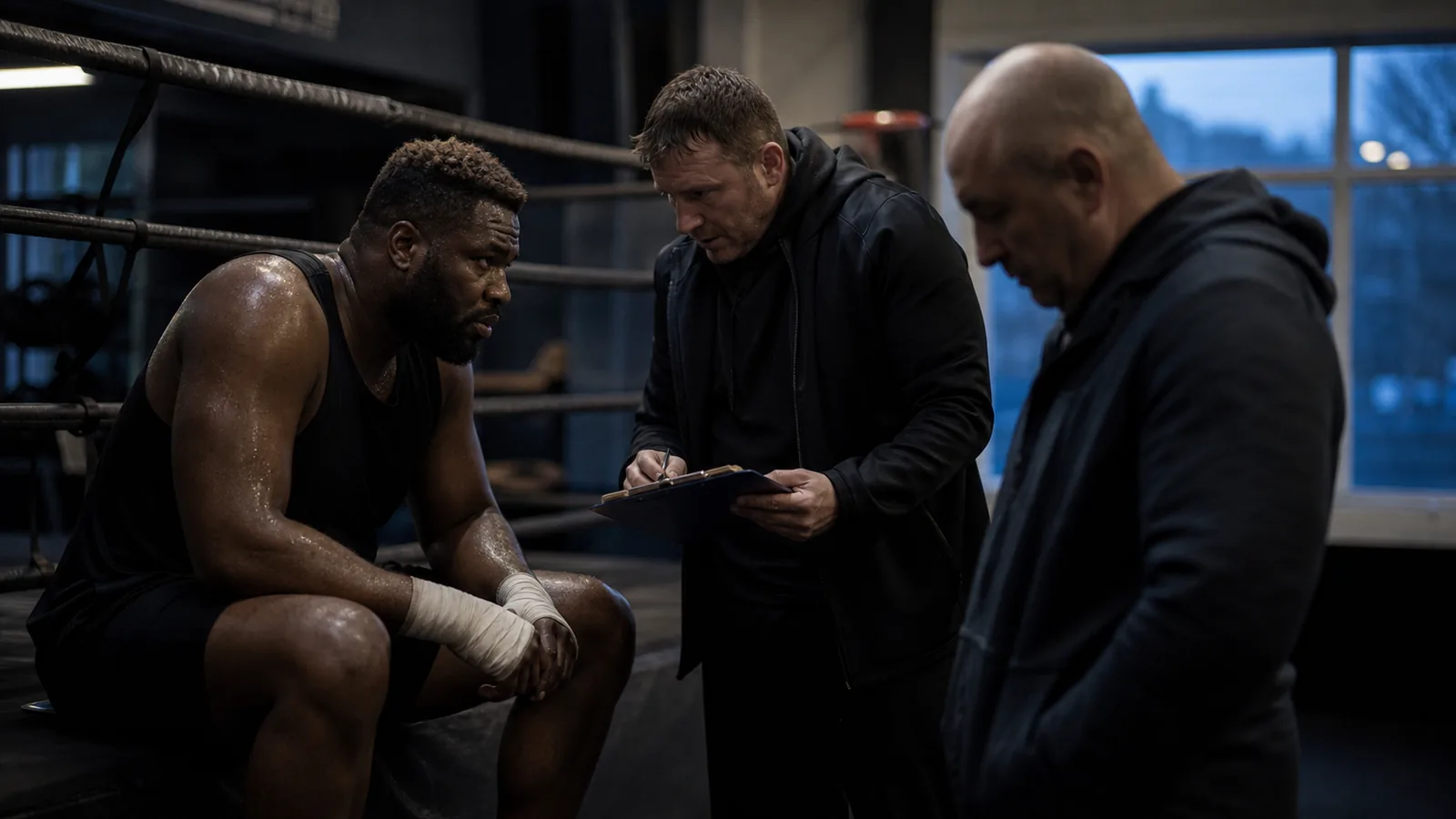
This is not merely a change of personnel
Boxing language can make these moments sound neat. A boxer “needs a fresh voice”. A team “moves in a different direction”. Everybody wishes everybody well, then the work starts again with different people in the room.
Sometimes that is exactly what is needed. Sometimes it is a way of avoiding a harder question.
Dubois has already experienced both sides of a major team change. After his second loss to Oleksandr Usyk at Wembley in 2025, he left Don Charles and Kieran Farrell. Jones said at the time that Dubois was unhappy with his performance and felt he needed “a fresh team, a new voice, a new plan”, while stressing that Charles had done a fantastic job (Sky Sports).
That distinction is important. A new voice should not mean pretending the old one failed. Charles was in Dubois’s corner for some of the biggest nights of his career, including the win over Anthony Joshua. The partnership also followed the first Usyk defeat with a serious run of form. But boxing teams are not judged only by the best night. They are judged by whether the fighter is improving, listening, prepared and clear when the fight stops following the script.
The split with Jones comes after Dubois climbed off the canvas twice to stop Wardley in the 11th round in Manchester and win the WBO title. It was a brilliant comeback, but it was not a perfect performance. Wardley found him early, hurt him badly and showed there is still plenty for Dubois to solve before a rematch.
A corner change will not erase those problems. It may determine whether they are actually addressed.
Preparation is more than hard sparring
Every professional fighter trains hard. That is the baseline. The difference at world level is whether the work in camp answers the right questions.
For Dubois, preparation has to be about more than becoming fitter or hitting harder. He is already one of the division’s most dangerous punchers. The issue is making his power easier to apply and harder to disrupt.
Against Wardley, Dubois showed what he can do when he regains shape. After the early knockdowns, he returned to his jab, established distance and made the right hand count. That was not glamorous. It was good heavyweight boxing. The Independent’s report on the first fight captured the scale of the turnaround: Wardley floored Dubois in rounds one and three, but Dubois gradually broke him down before the late stoppage.
The next camp should start there. How does Dubois stop an opponent getting to him so freely in the opening rounds? How does he establish the jab before the fight becomes an emergency? How does he defend after punching, rather than relying on toughness and firepower to recover the situation?
Those are coaching questions. They need footage, drills, hard rounds with the right sparring partners and complete honesty. A good team does not only tell a fighter what he does well. It creates enough discomfort in camp that the difficult answers are found before fight night.
For boxers learning at our competitive boxing sessions, this is the useful part to watch. The lesson is not to copy a world heavyweight taking huge risks. It is to understand that the jab, balance and recovery habits are what let a fighter survive when the fight gets wild.
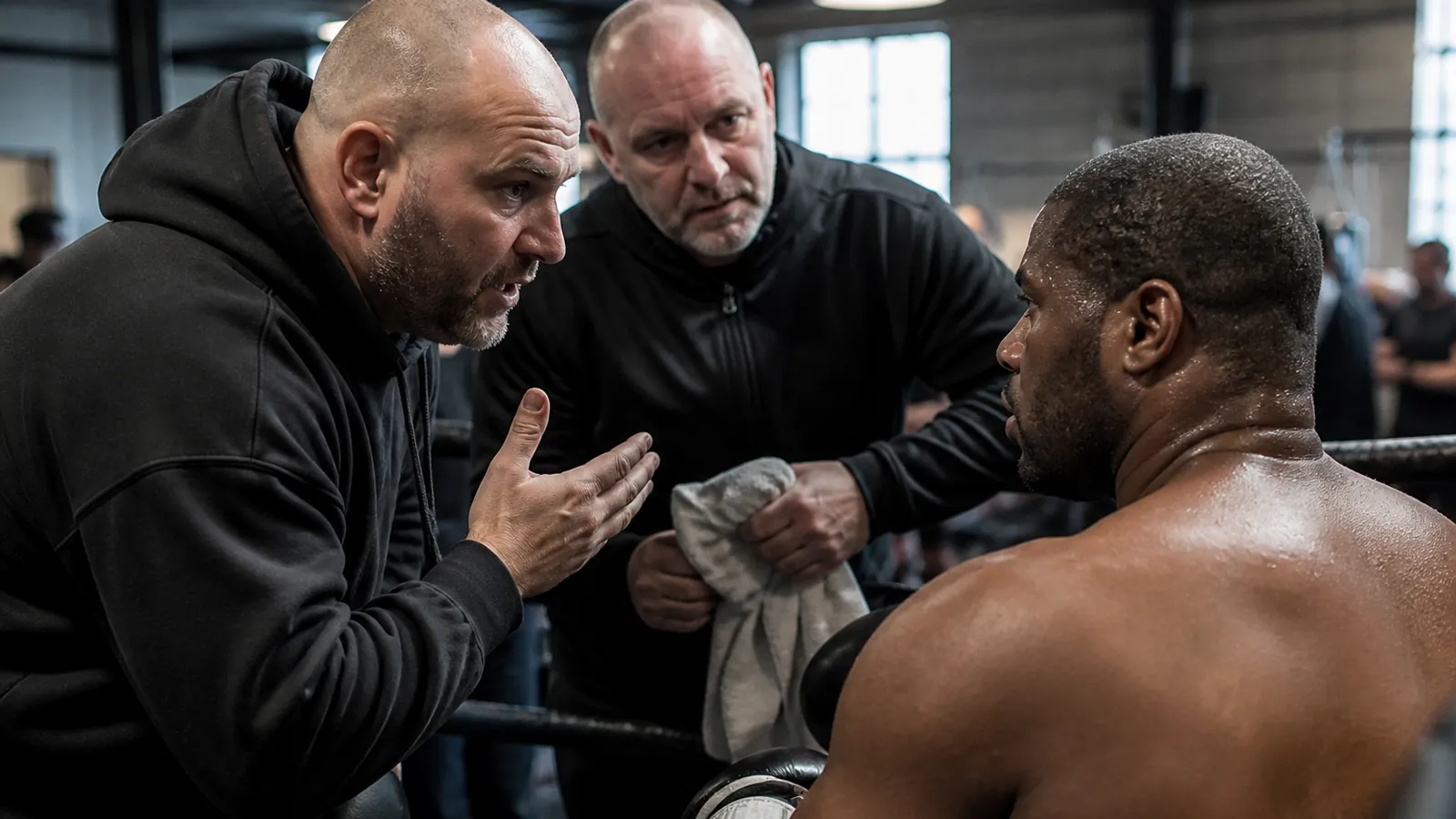
Communication in the corner is a competitive advantage
The corner is often romanticised. In reality, the best corner work is usually quite boring.
A fighter comes back after a difficult round with a minute to breathe, drink, listen and respond. There is no room for six people shouting different instructions. There is no value in a coach trying to win an argument between rounds. The fighter needs one clear idea, delivered calmly enough to use.
Dubois has improved at responding after adversity. His Wardley win was evidence of that. But the build-up also showed why the people around a fighter matter. At the pre-fight press conference, Jones and Wardley’s manager Michael Ofo traded insults, while Dubois’s own media obligations became part of the story. The Independent’s account of that press conference included Wardley’s criticism that Dubois’s team could influence how he reacted to outside noise.
That is not proof that one adviser caused a problem. It is a reminder that an established boxer needs protection from unnecessary chaos, not more of it.
A heavyweight title fight brings promoters, broadcasters, family, sponsors, social media, opponents and people who suddenly want to be involved. The fighter cannot process all of it. Someone has to filter it. Someone has to say no. Someone has to keep the athlete focused on the next session, the next meal, the next tactical adjustment.
The people around Dubois should make his life simpler. If the camp looks busier, louder or more divided than the opponent’s, that is not a personality quirk. It is a performance issue.
Matchmaking is not cowardice when it has a purpose
The immediate question is whether Dubois faces Wardley again. Wardley activated the rematch clause, and the second fight has been expected for later this year. Before Jones’s departure, he argued that Wardley was taking a dangerous quick return, while accepting that the clause was contractually fair (Sky Sports).
There is a commercial case for the rematch. The first fight was dramatic, both men can sell it, and Wardley earned another chance by putting Dubois under serious pressure before being stopped.
There is also a boxing case for asking whether a rematch is the best immediate move.
Dubois is a champion with real power, but he is still being asked the same questions at the highest level: can he control the start of a fight, can he stay composed when hurt, and can he make sound decisions when the opponent takes away his first plan? A team’s job is not simply to chase whichever fight makes the most noise. It is to decide whether the fighter is being developed, tested or merely exposed.
That does not mean avoiding Wardley. It means being precise about why the fight happens and what has to improve before it does. The old boxing habit of calling every sensible career decision “ducking” is nonsense. A proper team builds a route to the biggest fights, rather than walking blindly into them because Twitter demands it.
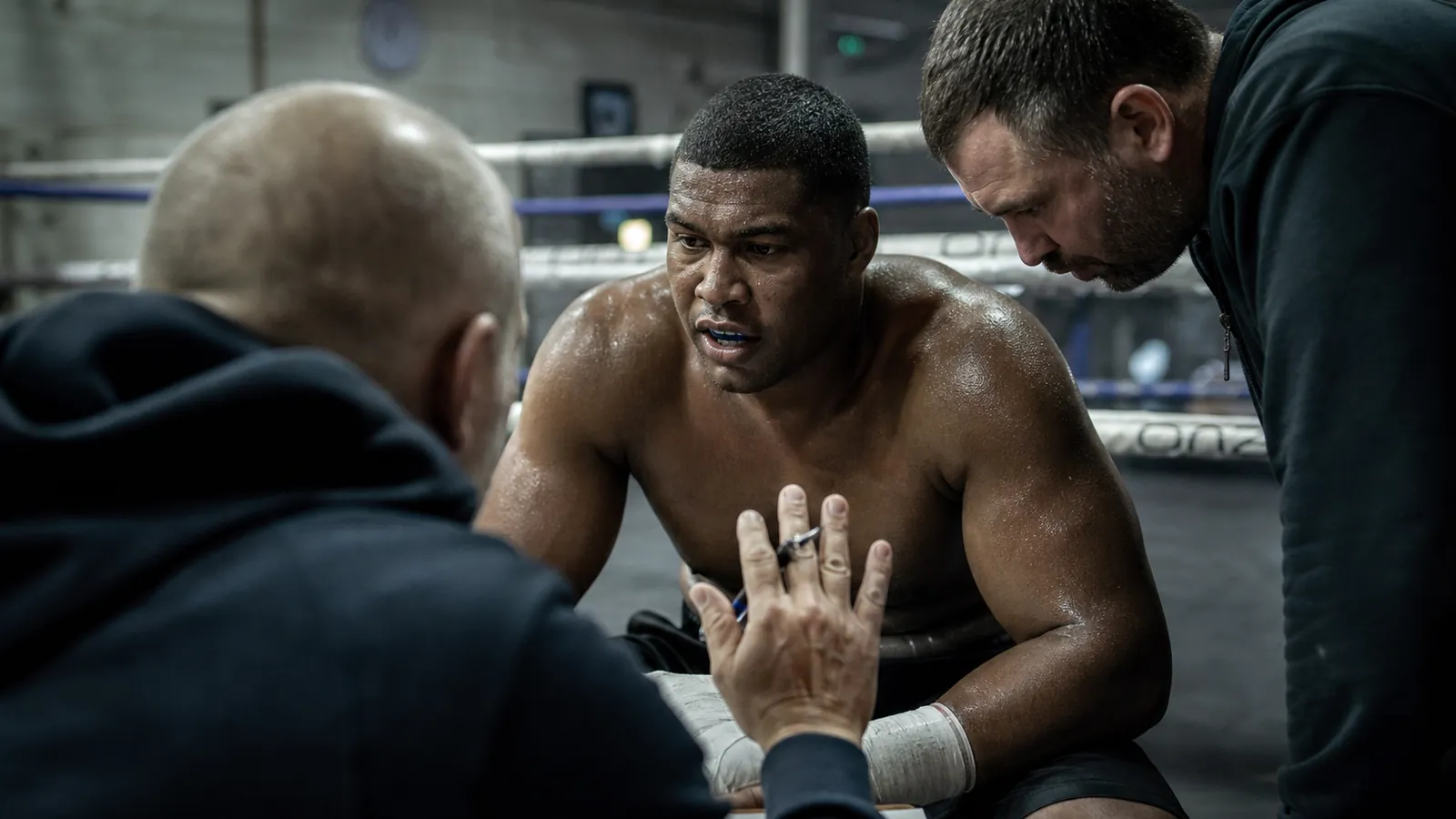
Accountability is the real issue
The biggest value of a good adviser, trainer or manager is not friendship. It is accountability.
A fighter needs people who can tell him when he is slipping. Not in public, not for attention, but directly and early. He needs someone to challenge a lazy camp week, an avoidable distraction, a tactical blind spot or a poor decision without worrying that the fighter will take offence.
Dubois has shown that he can come back from losses. He lost to Joe Joyce and rebuilt. He lost to Usyk in Poland and became an IBF champion. He lost to Usyk again at Wembley and returned to stop Wardley for the WBO belt. That resilience is real.
But resilience is not the same as a plan. At 28, Dubois should be moving from recovery stories to control. He has the size, power and experience to stay near the front of the heavyweight division for years. Whether he does will depend less on who says the cleverest thing at a press conference and more on whether the new version of Team Dubois is organised, disciplined and willing to tell him the truth.
For young boxers and adults starting out in Kidbrooke, the principle is the same at a much smaller scale. Find coaches who teach you clearly, correct you honestly and make you better when training is difficult. The corner should not flatter you. It should help you win.
H&G Team
Writer at Honour & Glory Boxing Club, a community boxing gym in Kidbrooke, South East London.
KEEP READING
Daniel Dubois: Knockout Power
Daniel Dubois has one of the hardest punches in heavyweight boxing. What is behind the power, and what everyday boxers can learn from his training approach.
Dubois vs Wardley Result: What Changed the Fight
Daniel Dubois stopped Fabio Wardley in round 11 after two early knockdowns. Here is what changed the fight and why it matters.
Wardley vs Dubois: UK Heavyweight Fight Guide
A practical, club-level guide to the all-British Wardley vs Dubois heavyweight fight: what beginners can learn from the pressure, power, pacing and ringcraft on show.
Was this page helpful?
It takes one tap, and it genuinely helps.
Choose your next step
Turn this article into the right action
Some readers are ready to book. Some need the class route first. Pick the route that matches what you actually want.