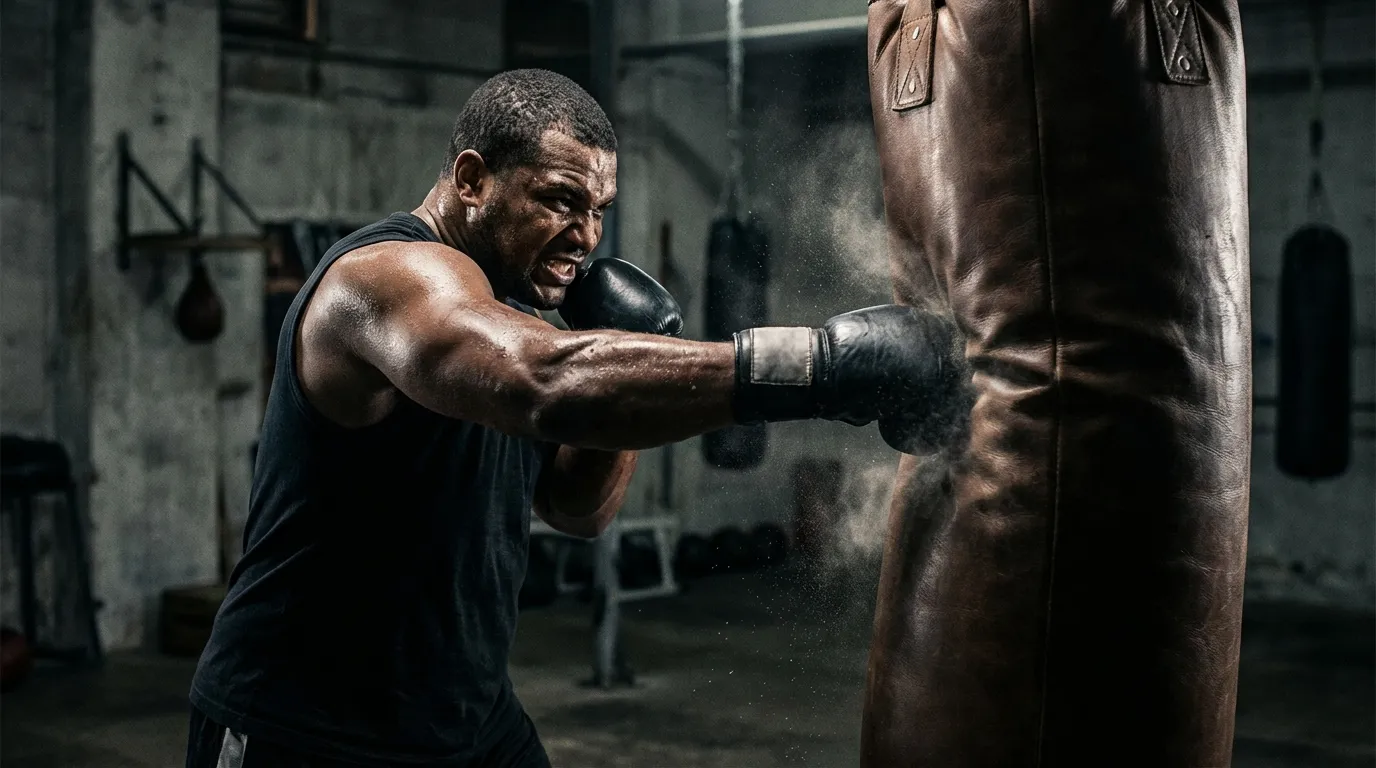
Daniel Dubois hits harder than almost anyone in world boxing. The nickname "Dynamite" is not marketing - it is a genuine description of what happens when his right hand lands clean. Opponents do not just go down. They go down in a way that makes you worry about them.
But knockout power is not just about being big and strong. Dubois is both of those things, but so are plenty of heavyweights who could not crack an egg. What makes his punching different is technique, timing, and thousands of hours of work that most people never see (source).
The Dubois Style
Setting Up the Bomb
Watch Dubois carefully and you will notice something that casual fans miss. The knockouts look sudden, but they are rarely unearned. Dubois works behind his jab to create openings, uses his size to push opponents onto the back foot, and waits for the moment when their guard opens or their balance shifts.
The right hand - the one that ends fights - is almost always preceded by two or three jabs that move the opponent's guard around. This is textbook boxing. You do not just throw the big shot and hope. You set it up.
Generating Power
Dubois generates his power from the ground up. Watch his feet when he throws the right hand. His back foot pivots, his hips rotate through the punch, and his shoulder drives forward. The punch arrives with the weight of his entire body behind it, not just his arm.
This is exactly what coaches teach at every level. At Honour & Glory, one of the first things our coaches work on is the kinetic chain - getting beginners to understand that punching power comes from the legs and hips, not from muscling the arm forward.
Most people's natural instinct is to arm-punch. It feels powerful because your arm muscles are working hard, but the actual force generated is a fraction of what a properly rotated punch delivers. Dubois makes it look natural because he is been doing it since he was a kid, but it is a learned skill.
Defensive Questions
Dubois's career has not been without setbacks. The loss to Joe Joyce exposed defensive vulnerabilities - specifically his reaction to sustained body attack and his tendency to shell up under pressure rather than use movement and angles.
These are common issues even at the highest level. When a fighter relies heavily on their power, there is a temptation to stand in range waiting for the opportunity to land. But standing in range also means getting hit, and against a quality operator like Joyce, the accumulation of punches eventually told.
The comeback from that defeat showed character and adaptability. Dubois made genuine improvements to his upper body movement and his willingness to reset distance when under pressure.

What You Can Learn from Dubois
1. Power Is Technique, Not Muscle
The biggest misconception in boxing is that you need to be strong to hit hard. You do not. You need to be technically correct. A 60kg boxer who rotates properly will generate more force than a 90kg beginner who arm-punches (source).
When you start training at a boxing club, resist the urge to throw everything into your punches. Focus on rotation. Focus on balance. Focus on timing. The power will come once the technique is right.
2. The Jab Sets Up Everything
Dubois's knockout reel is full of right hands, but every single one was set up by the jab. The jab controls distance, moves the opponent's guard, creates timing patterns you can then disrupt, and keeps your opponent thinking defensively.
In our recreational adult classes, pad work always starts with the jab. It is the most important punch in boxing and the one most beginners want to skip past. Do not skip it.
3. Body Conditioning Is Non-Negotiable
The Joyce fight showed what happens when a heavyweight does not have the conditioning to absorb sustained body work. Your core is not just for looking good - in boxing, it is your armour.
Every session at Honour & Glory includes conditioning work. Core strength, cardiovascular endurance, and muscular stamina. When you are tired, your technique falls apart. When your technique falls apart, you get hit. Conditioning prevents that chain reaction.
4. Setbacks Are Part of the Sport
Dubois's response to the Joyce defeat is worth studying for anyone who takes up boxing. He did not make excuses. He went back to the gym, worked on his weaknesses, and came back better. Boxing teaches resilience in a way that few other sports can match (source).
Even at recreational level, there will be sessions where nothing clicks. Combinations you could do last week suddenly feel awkward. Your timing is off. Your footwork is sluggish. That is normal. The boxers who improve are the ones who keep showing up.

Training Like a Heavyweight
You do not need to be Daniel Dubois's size to train like him. The fundamentals are identical whether you weigh 60kg or 120kg:
- Skipping for footwork and cardio
- Shadow boxing for technique and movement
- Pad work for combinations and timing
- Heavy bag for power development and stamina
- Core work for stability and protection
Every session at Honour & Glory covers all of these. The intensity scales to your fitness level - you work as hard as you can, and the coaches make sure your technique stays clean as you tire.

Give It a Go
If watching Dubois makes you want to throw punches, book a free trial at our Kidbrooke gym. No experience needed, all equipment provided. Our coaches will have you throwing proper combinations by the end of your first session.
£10 for adults, £5 for under-16s. No contract, no joining fee. Just proper boxing training at a community club that is been developing boxers since 2020.
H&G Team
Writer at Honour & Glory Boxing Club, a community boxing gym in Kidbrooke, South East London.
KEEP READING
Daniel Dubois’s team split: why a corner change matters
Sam Jones discussing his departure from Daniel Dubois’s team opens a useful look at what changes when an established heavyweight changes the people around him: preparation, communication, matchmaking and accountability.
Wardley vs Dubois: UK Heavyweight Fight Guide
A practical, club-level guide to the all-British Wardley vs Dubois heavyweight fight: what beginners can learn from the pressure, power, pacing and ringcraft on show.
Dubois vs Wardley Result: What Changed the Fight
Daniel Dubois stopped Fabio Wardley in round 11 after two early knockdowns. Here is what changed the fight and why it matters.
Was this page helpful?
It takes one tap, and it genuinely helps.
Choose your next step
Turn this article into the right action
Some readers are ready to book. Some need the class route first. Pick the route that matches what you actually want.