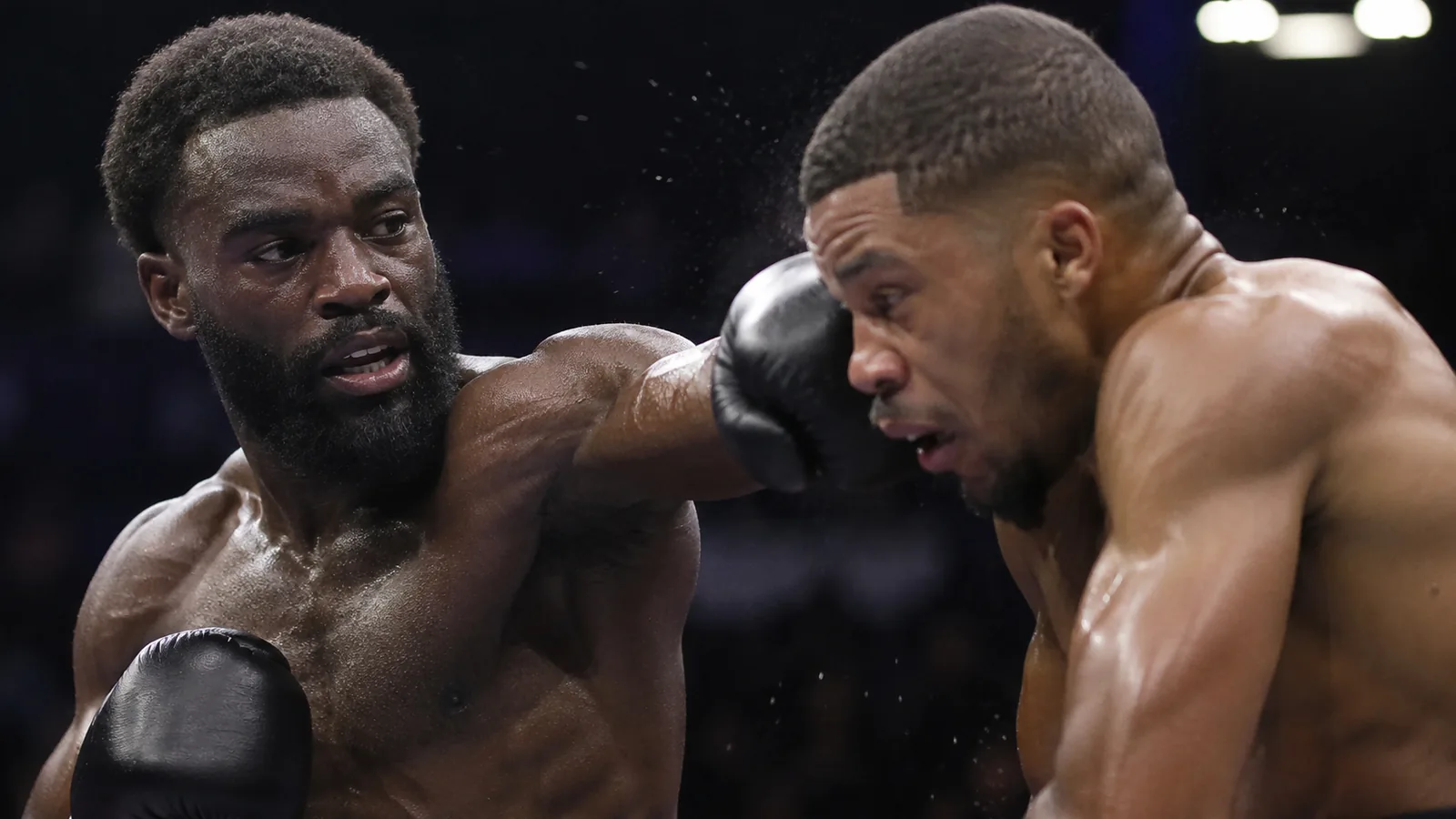
Hutchinson won the fight in the first half
This was not a case of a fighter nicking a close decision on reputation or a single eye-catching round. Hutchinson built the platform for victory when the fight was young.
He controlled range with the jab, changed his feet intelligently and punished Buatsi for coming in predictably. Buatsi is an excellent athlete with a sound amateur grounding, but he can be too willing to follow rather than cut off the ring. Hutchinson understood that tendency and made it the central theme of the fight.
The Scot was sharper to the target. He threw the cleaner counters. He stepped away after scoring rather than standing in front of Buatsi and allowing him to build combinations. According to the round-by-round account from Boxing News 24, Hutchinson repeatedly caught Buatsi with the lead hand as Buatsi attempted to close the distance, while Buatsi found it difficult to trap him on the ropes.
That is the important technical point. Pressure is only useful when it removes exits. Buatsi had forward motion, but Hutchinson often had the final say because there was still enough space for him to pivot, jab and reset.
The 117-112 card was wider than the other two, but it is not hard to understand. A judge who preferred clean, visible scoring over forward pressure could have given Hutchinson a clear lead through the first six rounds. Bad Left Hook’s live blog also tracked the sense that Hutchinson’s early accuracy and movement were deciding the contest.
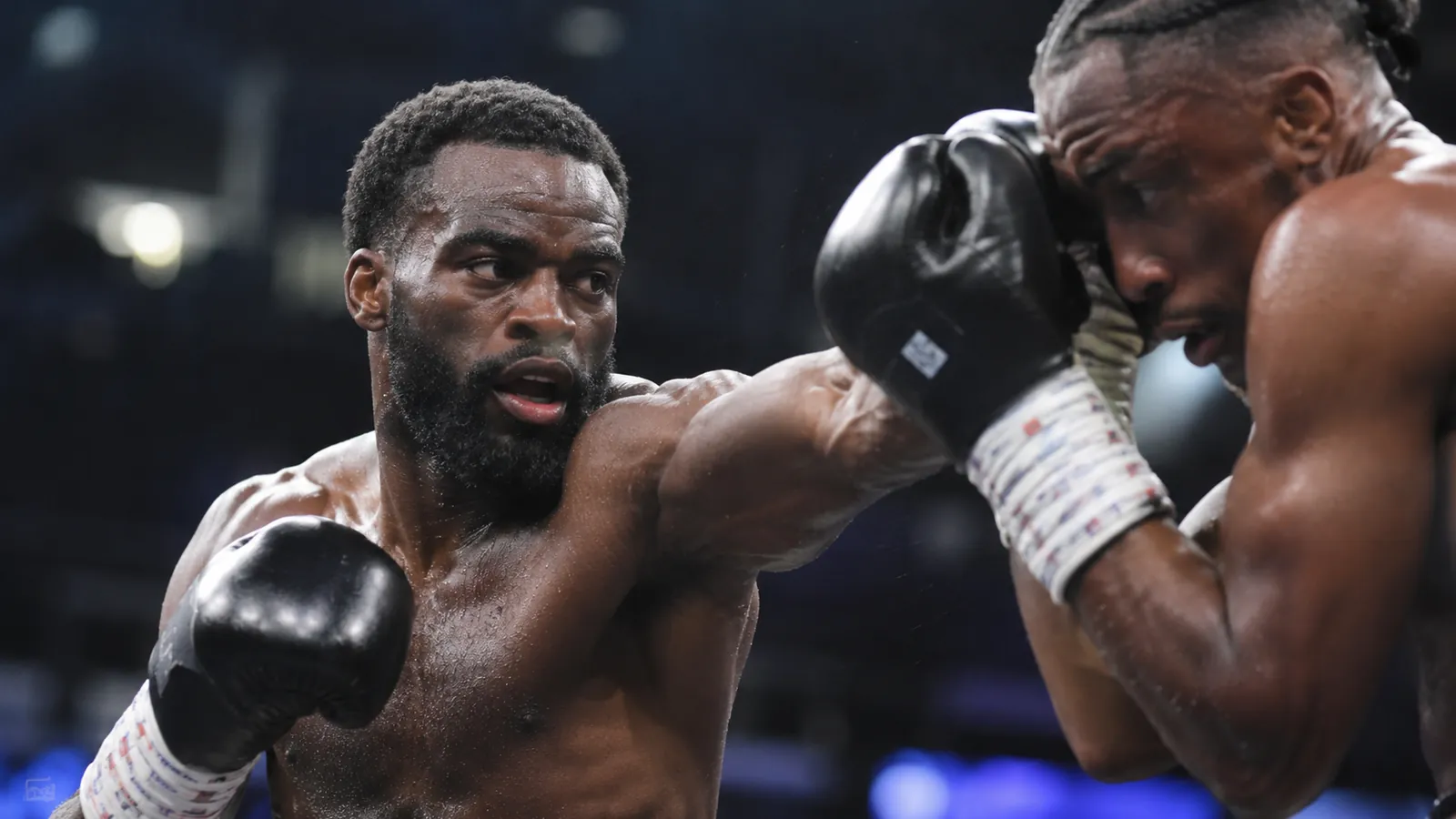
Buatsi’s body work changed the momentum
Buatsi deserves credit for making the second half meaningful.
He did not panic after losing ground early. Instead, he began investing more consistently downstairs, working to Hutchinson’s body and forcing him to expend energy moving and tying up. The pace began to tell. Hutchinson’s output dipped, his movement became less free and Buatsi started to have more sustained moments.
This was where the contest became genuinely interesting. Hutchinson had been the better boxer early, but Buatsi’s pressure began to carry greater weight as the rounds passed. He was closer, busier and more willing to make the fight physical.
There were no knockdowns, and no single round that changed everything. But Buatsi made Hutchinson work for every point and finished strongly enough to leave no room for complacency. Yahoo Sports’ report described Buatsi narrowing the contest with pressure and body punching as Hutchinson’s output fell away.
That late surge is why the two 115-113 cards feel right. Buatsi did not win enough of the early fight, but he won enough late rounds to make the result tense rather than routine.
The tactical difference from the first fight
Hutchinson was not merely more motivated because he had lost the first bout. Revenge is a good headline, but tactics win title fights.
In the 2024 meeting, Buatsi was able to make more of the exchanges happen on his terms. In Manchester, Hutchinson was much more disciplined about range. He did not try to prove he was the stronger man. He used his jab, his timing and his movement to make Buatsi reset repeatedly.
That was mature boxing.
Hutchinson also showed better composure when Buatsi began to apply pressure. He held when he needed to hold. He did not allow pride to turn a technical fight into a brawl. He survived difficult spells without donating rounds through reckless exchanges.
The pre-fight conversation had naturally focused on their close first bout and the implications of David Benavidez vacating the WBC title to move to cruiserweight. The latter development was discussed in this Reddit thread on the vacancy, while the earlier confirmation that a rematch deal had been reached can be seen in this Boxing discussion. Neither point changes the reality in the ring: Hutchinson earned the championship with his performance.
The title may have become vacant, but there was nothing vacant about the standard needed to win it.

What went wrong for Buatsi?
Buatsi did too much following.
Against a mobile opponent, there is a difference between applying pressure and chasing. Buatsi often walked into Hutchinson’s preferred punching range without first creating an opening. He needed more feints, more double jabs and more work to the chest before loading up on attacks.
His body work was effective, but it arrived too late as a consistent weapon. Had Buatsi committed to that plan from the opening bell, it may have slowed Hutchinson’s legs sooner and made the middle rounds far more difficult for the new champion.
Buatsi also needed to cut the ring rather than simply move forward. A good ring cutter takes away one side, pins the opponent to a boundary and makes the opponent choose between a punch or an escape. Buatsi too often gave Hutchinson a clear lane to his right or left.
That said, this was not a collapse from Buatsi. He was beaten by a fighter who boxed better over the first half and held his nerve over the final rounds. There is a difference.
The online build-up was busy, with a fight-thread discussion and a separate pre-fight guide reflecting the interest in a competitive domestic world-title fight. The actual fight delivered on that premise. It was competitive, tactical and physical without becoming scrappy.
What Hutchinson’s win means
Hutchinson is now a legitimate world champion in one of boxing’s most demanding divisions. He did not get there by catching Buatsi cold with one punch. He won a 12-round championship fight by making better decisions for longer.
The light heavyweight division rewards fighters who can combine patience with authority. Hutchinson did that in Manchester. His jab was purposeful, his counters were accurate and his movement was not movement for its own sake. Every step was designed to make Buatsi miss, reset or walk onto a shot.
For Buatsi, the route back remains clear. He is still a high-level light heavyweight, still dangerous and still capable of forcing difficult fights on anyone in the division. But he will need to become more adaptable against movers. Physical strength and fitness are not enough when a skilful opponent controls the geography of the ring.
For young boxers, there is a useful lesson here. Fitness matters, toughness matters, and pressure matters. But a jab, intelligent footwork and the ability to leave after scoring can win rounds before the heavier punches ever land.
At Honour & Glory Boxing Club’s classes in Kidbrooke, boxers aged 7+ learn those foundations from the start: balance, distance, foot position and composure under pressure. Hutchinson versus Buatsi was a reminder that the basics remain decisive at every level of the sport.
H&G Team
Writer at Honour & Glory Boxing Club, a community boxing gym in Kidbrooke, South East London.
KEEP READING

Buatsi vs Hutchinson 2: fight-week guide
Joshua Buatsi faces Willy Hutchinson again for the vacant WBC light-heavyweight title in Manchester, with DAZN broadcasting live in the UK.
Dubois vs Wardley Result: What Changed the Fight
Daniel Dubois stopped Fabio Wardley in round 11 after two early knockdowns. Here is what changed the fight and why it matters.
Navarrete vs Foster: result and analysis
The key exchanges, tactical decisions and implications of Navarrete vs Foster, with a closer look at what each boxer takes from the contest.
Was this page helpful?
It takes one tap, and it genuinely helps.
Choose your next step
Turn this article into the right action
Some readers are ready to book. Some need the class route first. Pick the route that matches what you actually want.