
Boxing is one of the most effective workouts for weight loss. A single session can burn 500-800 calories, you build lean muscle, and it is actually fun - which means you will stick with it (source).
But here is what most people get wrong: they think they can out-train a bad diet. You cannot. Weight loss comes from combining solid training with smart nutrition. One without the other will not get you where you want to be.
Why Boxing Works for Weight Loss
Before we get into the diet stuff, let us look at why boxing is so effective:
- Heavy bag: 400-600 calories per hour (source).
- Pad work: 500-700 calories per hour (source).
- Sparring: 700-1,000 calories per hour
- Shadow boxing: 300-400 calories per hour (source).
Compare that to jogging (400-500 calories/hour) or the cross trainer (300-400 calories/hour). Boxing wins.
Full body workout
Every punch involves your legs, core, and upper body. You are not isolating muscles on machines - you are using everything simultaneously.
HIIT effect
Boxing naturally incorporates high-intensity intervals. Three minutes on, one minute rest. This format burns more fat than steady-state cardio.
Muscle building
Unlike pure cardio, boxing builds functional muscle. More muscle means higher metabolism means more calories burned at rest.
Actually enjoyable
Most people quit gyms because they are boring. Boxing is engaging, skill-based, and constantly varied. When you enjoy training, you do it more often.
The Weight Loss Equation
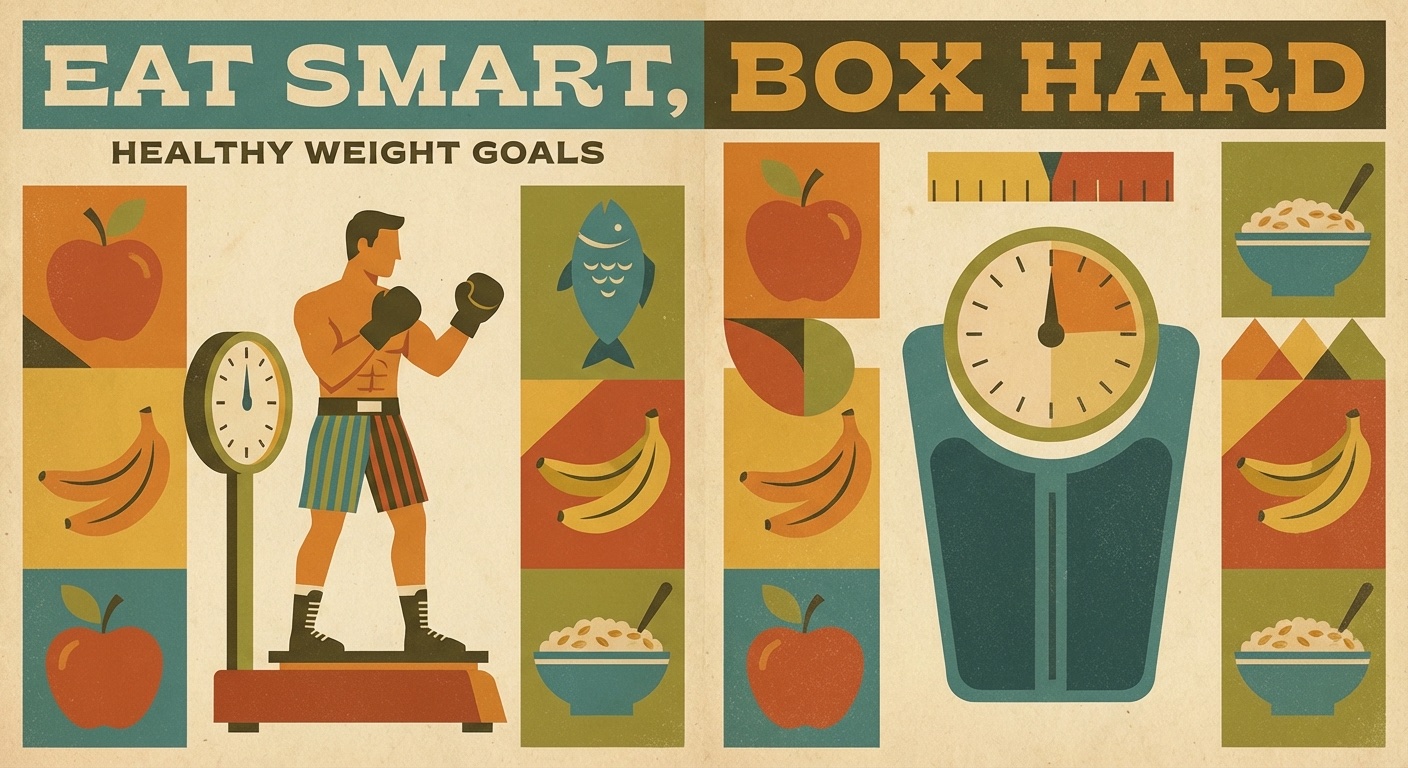
Weight loss is fundamentally simple: consume fewer calories than you burn.
Calorie deficit = weight loss
A 500 calorie daily deficit creates approximately 0.5kg (1lb) of fat loss per week. A 750 calorie deficit creates about 0.7kg. A 1,000 calorie deficit creates about 1kg.
Bigger deficits mean faster loss but also:
- More muscle loss
- Lower energy for training
- Worse recovery
- Higher chance of giving up
For sustainable weight loss while boxing, aim for 400-750 calories below maintenance.
Calculating Your Numbers
To create a deficit, you need to know your baseline.
Step 1: Calculate maintenance calories
A rough estimate:
- Sedentary: bodyweight (kg) x 28-30
- Moderately active: bodyweight (kg) x 32-35
- Very active: bodyweight (kg) x 36-40
For a 75kg person training boxing 3-4 times weekly:
75 x 33 = approximately 2,475 calories to maintain weight
Step 2: Create your deficit
Subtract 400-750 calories for weight loss:
2,475 - 500 = approximately 1,975 calories daily target
Step 3: Set protein
Keep protein high to preserve muscle:
75kg x 2g = 150g protein daily (600 calories)
Step 4: Fill the rest
Remaining calories split between carbs and fats:
1,975 - 600 = 1,375 calories for carbs and fats
A reasonable split: 60% carbs (825 cal / 206g), 40% fats (550 cal / 61g)
What to Eat for Boxing Weight Loss
Here is a practical approach:
Breakfast (400-500 calories)
Options: - Scrambled eggs (2-3) on wholemeal toast with tomatoes - Porridge with berries and a drizzle of honey - Greek yoghurt with granola and sliced banana
Lunch (500-600 calories)
Options: - Chicken salad with olive oil dressing - Tuna jacket potato with side salad - Turkey and avocado wrap with fruit
Dinner (500-600 calories)
Options: - Grilled salmon with sweet potato and vegetables - Chicken stir fry with rice (measured portion) - Lean beef mince bolognese with pasta
Snacks (200-300 calories total)
Options: - Apple with peanut butter (1 tbsp) - Greek yoghurt (small pot) - Handful of almonds - Protein bar - Banana
Training day adjustments
On boxing days, eat slightly more carbs around your training: - Pre-training: banana or rice cakes (add 150-200 calories) - Post-training: protein shake with fruit (add 200-300 calories)
This brings training days closer to maintenance while rest days stay in deficit.
The Foods That Help
Focus on these for weight loss:
- Chicken breast (165 cal per 100g, 31g protein)
- White fish (80-100 cal per 100g, 20g protein)
- Egg whites (52 cal per 100g, 11g protein)
- Greek yoghurt 0% (57 cal per 100g, 10g protein)
- Cottage cheese (98 cal per 100g, 11g protein)
- Cucumber (16 cal per 100g)
- Lettuce (14 cal per 100g)
- Tomatoes (18 cal per 100g)
- Celery (16 cal per 100g)
- Courgette (17 cal per 100g)
- Oats (68 cal per 100g cooked)
- Sweet potato (86 cal per 100g)
- White potato (77 cal per 100g)
- Rice (130 cal per 100g cooked)
- Avocado (160 cal per 100g - measure portions)
- Olive oil (884 cal per 100g - a little goes far)
- Nuts (500-600 cal per 100g - handful only)
The Foods to Limit
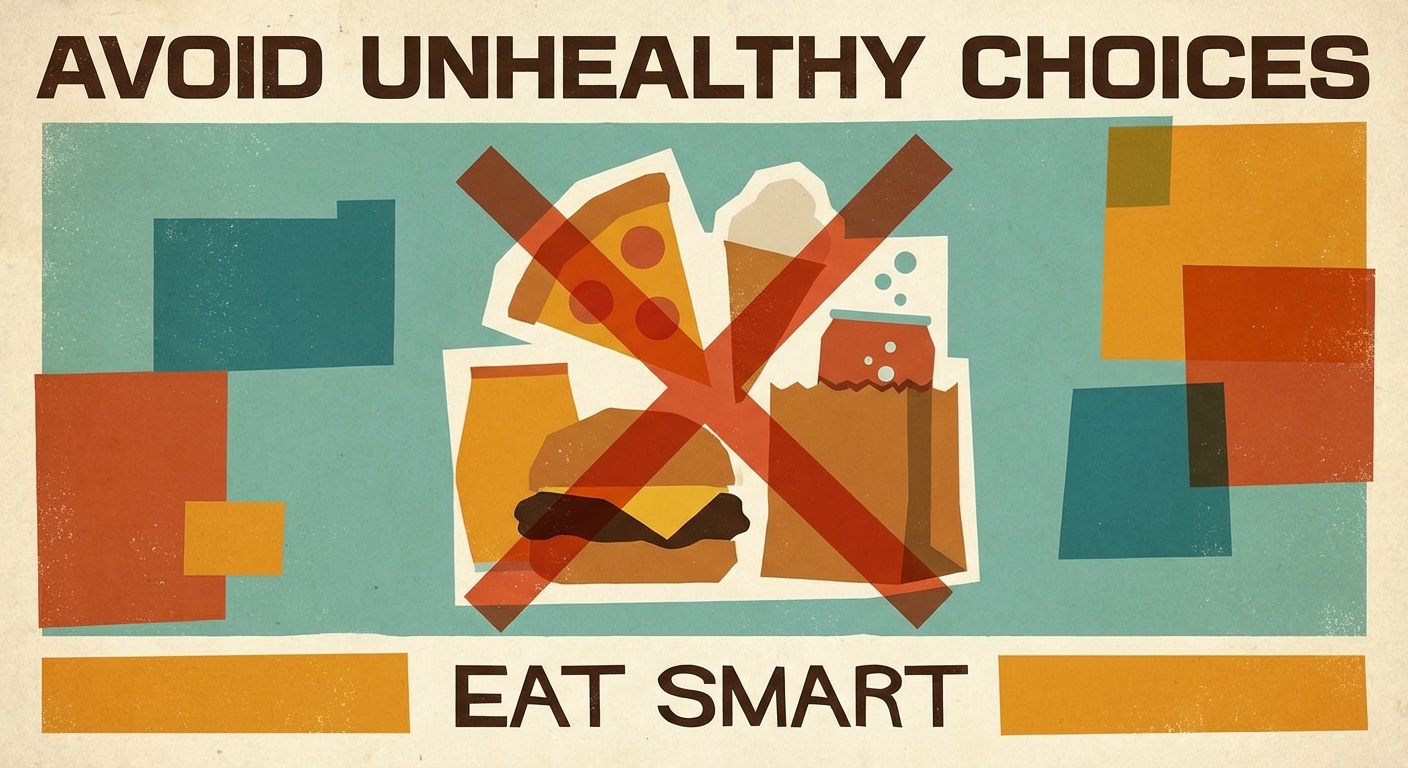
These sabotage weight loss efforts:
- Alcohol (liquid calories add up fast)
- Takeaways (portion sizes are huge)
- Sugary drinks (Coke is 140 calories per can, no nutrition)
- Crisps (500+ calories per large bag)
- Chocolate (550 calories per 100g)
- Cooking oil (underestimated by most people)
- Salad dressings (can add 200-300 calories)
- Condiments and sauces
- "Healthy" snack bars (often sugar-loaded)
- Fruit juices (sugar without fibre)
You do not need to eliminate these completely. But be honest about how often you are consuming them.
Training Schedule for Weight Loss
For optimal fat loss while boxing:
- 2-3 boxing sessions weekly
- 1-2 additional cardio sessions (walking, cycling)
- Focus on learning technique, not killing yourself
- 3-4 boxing sessions weekly
- 1-2 strength sessions (bodyweight or weights)
- Active recovery (walking, stretching)
- 4-5 boxing sessions weekly
- 2 strength sessions
- Can increase intensity once technique is solid
Do not add more training if your nutrition is not sorted. Training more on a terrible diet just leaves you tired and hungry.
Common Mistakes
Eating back all your exercise calories
"I trained hard so I deserve this pizza" is how weight loss stalls. Treats are fine occasionally. Treats every training day are not treats anymore.
Not tracking anything
"I eat pretty healthy" means nothing. Track your food for two weeks. Most people discover they eat 30-50% more than they thought.
Crash dieting
Dropping to 1,200 calories when you need 2,500 will backfire. You will lose muscle, feel awful, train poorly, and eventually binge.
Ignoring protein
When you are in a calorie deficit, protein protects muscle. Low protein diets during weight loss result in muscle loss alongside fat loss.
Weighing daily and panicking
Weight fluctuates 1-2kg daily based on water, food in your system, and hormones. Weigh weekly at the same time, or track a weekly average.
Weekend blowouts
Eating perfectly Monday to Friday then consuming 4,000+ calories Saturday and Sunday wipes out your weekly deficit. Consistency beats perfection.
A Realistic Timeline
Set proper expectations:
Week 1-2: Weight might not move much. Water retention from new training. This is normal.
Week 3-4: Should start seeing the scale move if your deficit is real.
Month 1: 2-4kg loss is realistic and sustainable.
Month 2-3: Another 2-4kg per month if you are consistent.
Month 4-6: Progress slows as you get lighter. Adjust calories down slightly.
Long term: 0.5-1kg per week is sustainable. Faster than that usually means muscle loss.
If you are losing weight faster than this early on, you might be cutting too hard. If you are not losing at all, your deficit is not real - either you are eating more than you think or burning less.
Making It Sustainable
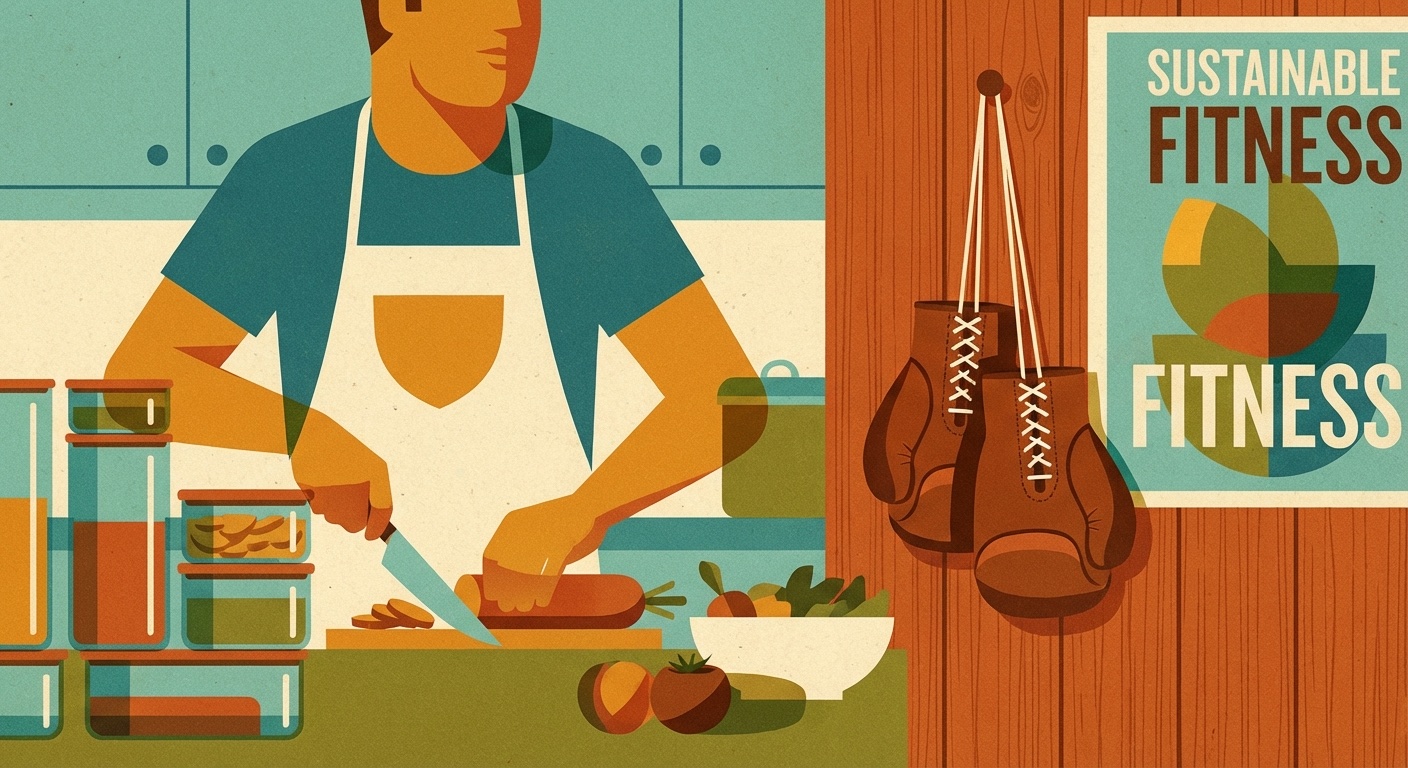
The best diet is one you can stick to long term. Here is how:
Plan your meals
Know what you are eating before you are hungry. Hunger makes bad decisions.
Prep in batches
Cook chicken, rice, and vegetables in bulk. Having food ready prevents takeaway orders.
Allow treats
One treat meal per week keeps you sane. Pick it, enjoy it, move on.
Find alternatives
Like pizza? Make it at home with quality ingredients. Like chocolate? Have two squares of dark chocolate instead of a whole bar.
Track progress
Take photos monthly. Measurements sometimes show progress when the scale does not.
Get support
Training with others helps. Come to Honour & Glory for a free trial and train alongside people on similar journeys. If you need more accountability, weight-loss PT can include boxing nutrition support from Coach Jon around food timing, portions, protein, hydration and recovery.
Frequently Asked Questions
How much weight can I lose boxing?
With consistent training (3-4 times weekly) and a proper calorie deficit, expect 0.5-1kg per week. That is 4-8kg in two months - a significant transformation.
Should I eat before boxing if I am trying to lose weight?
Yes. Training fasted sounds hardcore but usually means worse performance and increased hunger afterwards. Eat a light meal 2-3 hours before.
Why am I not losing weight even though I am boxing?
You are probably eating more than you think. Track everything for two weeks - including cooking oil, drinks, and "small bites." The calories add up.
Will boxing make me bulky?
No. Boxing builds lean, functional muscle, not bulk. Getting bulky requires specific training and eating in a calorie surplus - the opposite of weight loss.
How many calories does a boxing class burn?
Depending on intensity, 400-700 calories per hour. Do not use this to justify eating more though - calorie burn estimates are often inflated.
Fitness and weight-loss route
If you want the main H&G route for this goal, start with boxing for weight loss. If you want a broader class-based workout, use fitness boxing. If you want paid one-to-one accountability plus boxing nutrition support, compare boxing PT for weight loss.
H&G Team
Writer at Honour & Glory Boxing Club, a community boxing gym in Kidbrooke, South East London.
Was this page helpful?
It takes one tap, and it genuinely helps.
Choose your next step
Turn this article into the right action
Some readers are ready to book. Some need the class route first. Pick the route that matches what you actually want.