Benavidez at Light Heavyweight: Why Opetaia Talk Matters
Benavidez at Light Heavyweight: Why the Opetaia Talk Matters
David Benavidez has spent years being described as a problem that other fighters were keen to discuss but slow to meet. The interesting part now is that he has created a problem for himself.
After winning titles at super-middleweight and light heavyweight, Benavidez moved to cruiserweight and stopped Gilberto “Zurdo” Ramirez in six rounds. BoxingScene’s report from Las Vegas called it the biggest jump of his career. That is correct, but it still understates what happened. Benavidez did not merely survive at 200lbs. He broke down an established, bigger champion and made him quit.
That performance has made the Jai Opetaia conversation far more than matchmaking noise.
At first, there was a clear business obstacle. Benavidez said he would not go to Zuffa Boxing to fight for a Zuffa title, while leaving the door open if the sides could agree terms. Read his comments in this Boxing News 24 report. It was a sensible position, even if boxing has trained us to hear “we can make it” and wonder which part will collapse first.
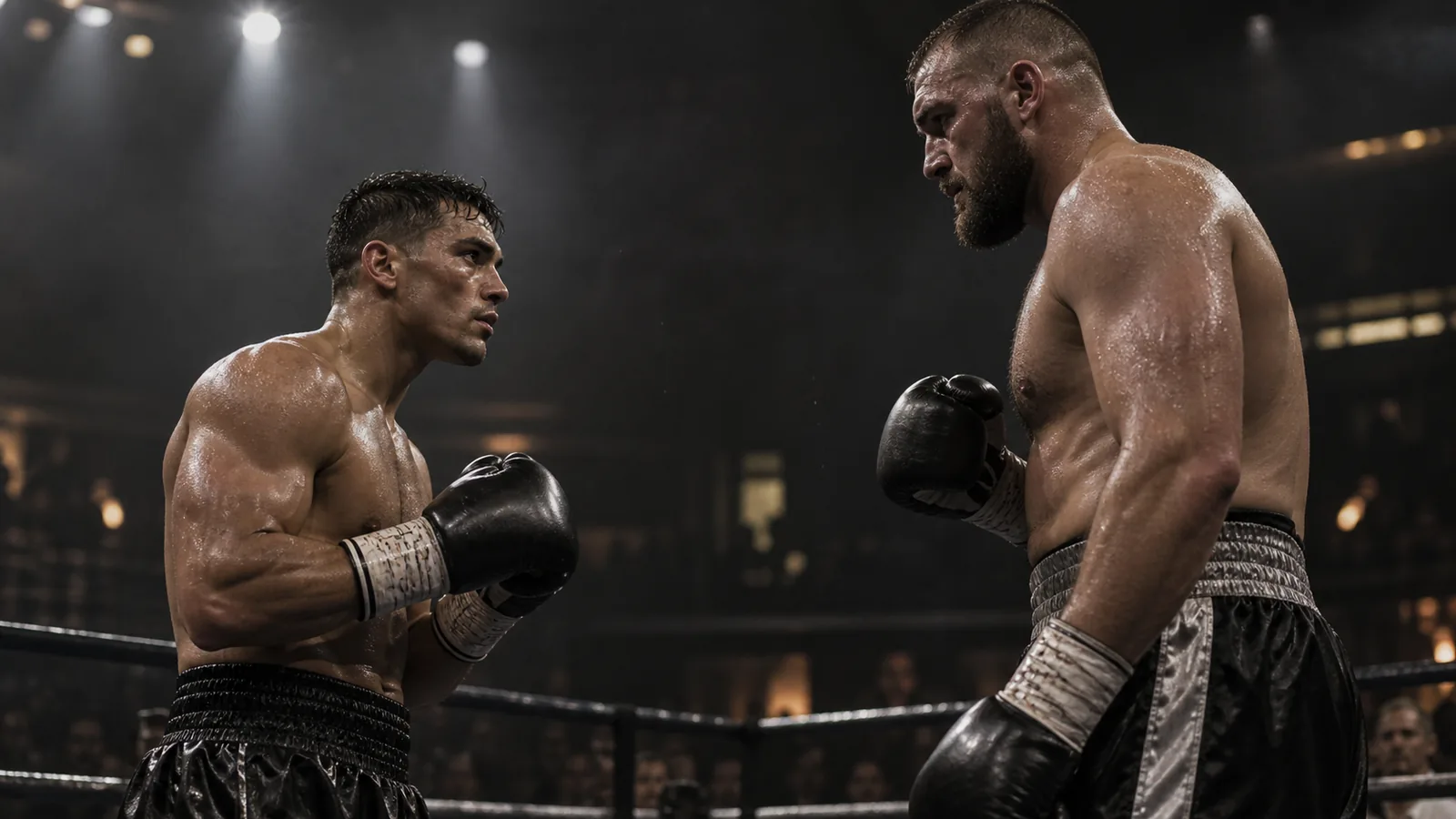
Then, after Opetaia’s stoppage of Noel Mikaelian, the pair met in the ring and spoke as if a Cinco de Mayo fight was agreed. Boxing News recorded the exchange, with Benavidez proposing the date and Opetaia replying: “Done. It’s done.” Boxing247 covered the same face-off.
That is a strong public signal. It is not the same thing as contracts, purses, broadcasters, sanctioning arrangements and an actual opening bell. Boxing people should know the difference. But the talk matters because Benavidez against Opetaia would answer a proper boxing question: how far can a brilliant pressure fighter carry his game when the opponent is not simply heavier on the scales, but a full-sized elite cruiserweight built around those dimensions?
Light heavyweight to cruiserweight is not a cosmetic move
The weight-class gap between light heavyweight and cruiserweight is 25lbs: 175lbs to 200lbs. On paper, that is a number. In a ring, it is a change in the type of problems a fighter has to solve.
At 175lbs, Benavidez can make opponents uncomfortable with pace, physicality and an unusually high volume of clean, spiteful punches. His best work has never been about one isolated bomb. He crowds the target, changes the level of attack and keeps putting punches together after many fighters would be resetting.
At cruiserweight, that pressure meets men who are more accustomed to absorbing it. They are generally stronger in the clinch, harder to shift off balance and more capable of making a smaller fighter pay for spending too long in range. A body shot that freezes a light heavyweight may only persuade a top cruiserweight to tighten his elbows and return fire.
That does not mean every cruiserweight is automatically too big for every light heavyweight. Boxing has never been that simple. It does mean that carrying weight well for one night against one opponent is not proof that a division has become easy.
Benavidez has already passed a serious test against Ramirez. That must be acknowledged. Too many previews treat a weight jump as an abstract warning, then ignore a fighter who has actually won at the new weight. But Ramirez and Opetaia present different questions.
Ramirez is a proven champion with skill, toughness and a strong body attack. Opetaia is a natural cruiserweight specialist with a southpaw stance, fast feet and the confidence of a fighter who has spent years meeting men his own size. The Box.Live profile lists Opetaia at 6ft 3in with a 76-inch reach, fighting southpaw at cruiserweight. Those are not decorative facts. They shape the contest before either man throws a punch.
Why Opetaia is the harder style problem
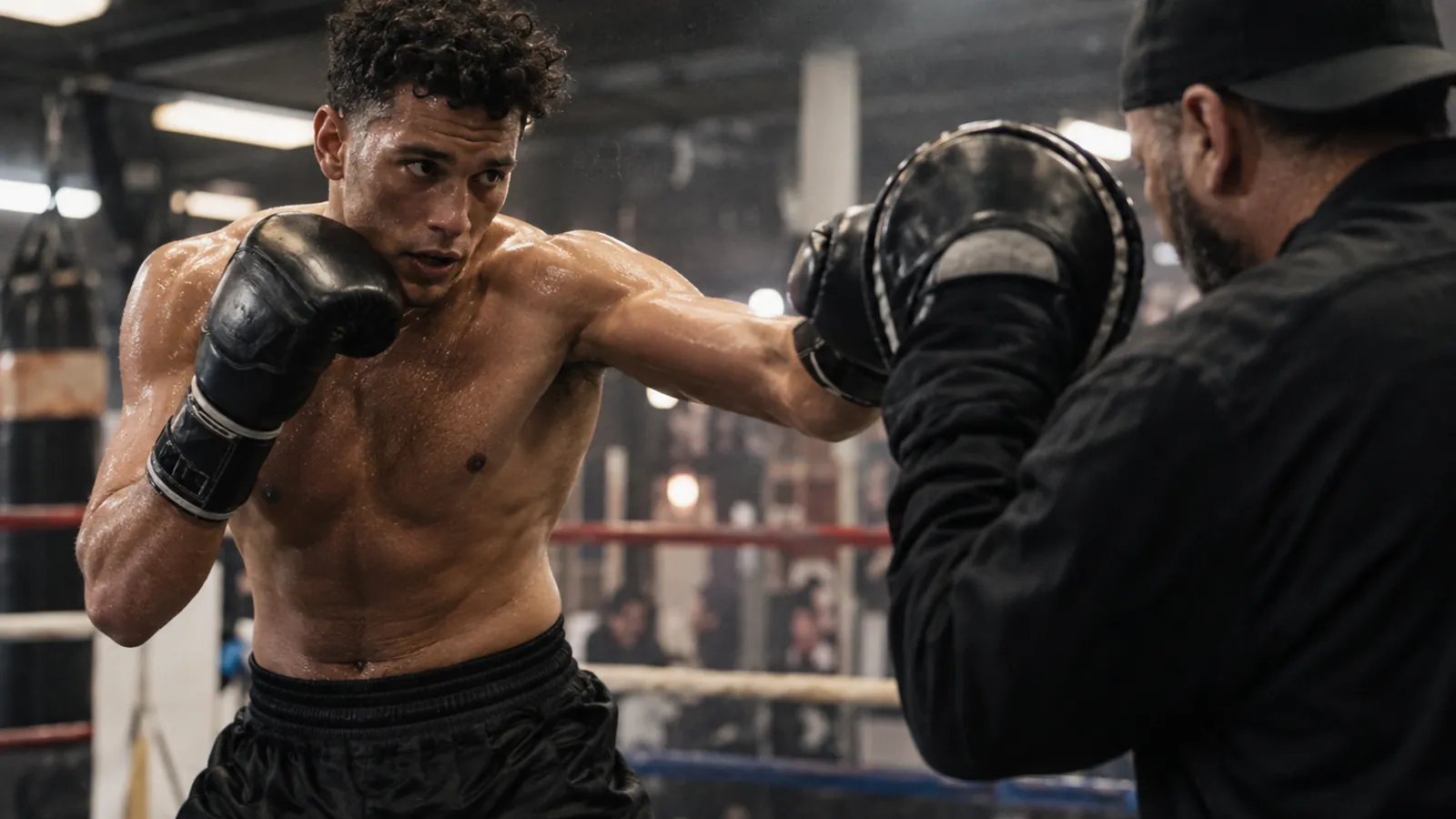
Benavidez is usually most dangerous when he can step forward behind intelligent pressure, find his opponent’s guard and keep them working under stress. He thrives when the other man starts giving ground in straight lines.
Opetaia is not likely to offer that type of fight.
As a southpaw against the orthodox Benavidez, he has the built-in angle battle. His right jab can disrupt Benavidez’s entry, his lead foot can seek the outside position, and his left hand has a direct route down the middle or into the body when Benavidez squares up. A tall southpaw who can punch is awkward at any weight. At cruiserweight, where the shots arrive with more mass behind them, the cost of a slow entry becomes much higher.
Opetaia also has the temperament for it. He does not box like a man hoping to nick rounds from range. He can be sharp, spiteful and willing to take a fight into dangerous territory. His previous contests with Mairis Briedis, Jordan Thompson, Ellis Zorro, David Nyika and Huseyin Cinkara show a fighter who can deal with different shapes and levels of resistance. The Opetaia vs Brandon Glanton guide is a useful reminder that he can also work through a full 12 rounds when an opponent does not collapse early.
That makes him a more testing opponent for Benavidez than a generic “bigger man”.
For Benavidez, the key cannot be simply to rush him. Walking straight at a southpaw with a hard left hand is how a fighter turns a pressure style into a target. He needs to jab to the chest, feint the lead hand, make Opetaia reset his feet and attack the body without falling over the front knee. He needs to make Opetaia work in the clinch without hanging around long enough to be tied up and leaned on.
Most importantly, Benavidez needs to make the fight long.
The temptation in a contest like this is to prove strength early. That would be a mistake. His route is to invest in the ribs, arms and shoulders, keep his combinations compact, and see whether Opetaia can maintain his sharpness after being forced to defend for nine or ten hard rounds. Benavidez is an excellent finisher, but his best finishing work is usually built rather than hunted.
The case for staying at 175lbs
There is also a perfectly strong case for Benavidez to remain at light heavyweight.
His WBC belt at 175lbs remains valuable, and fights with Dmitry Bivol or Artur Beterbiev would give him the sort of division-defining wins that title reigns are built on. BoxingScene reported preliminary Benavidez-Bivol discussions, while the earlier debate about whether Benavidez would ever willingly return to the “brutal 175 battlefield” was covered by Boxing News 24.
My view is straightforward: Benavidez should not abandon 175lbs just because he has shown he can win at 200lbs. Light heavyweight contains unfinished business and exceptional opponents. A Bivol fight would be an elite tactical test. A Beterbiev fight, if circumstances allow it, would be a collision of pressure, strength and nerve.
But Opetaia is the more audacious challenge.
If Benavidez beats Opetaia, he will not merely have added another belt. He will have beaten the man many regard as the division’s defining operator, a natural cruiserweight who has the size, stance and aggression to make the jump feel real. It would be one of the most meaningful modern weight-class moves in the sport.
I would make Opetaia a narrow favourite if they fight. He is the bigger specialist, has the longer southpaw frame, and has more natural answers to the physical demands of cruiserweight. But Benavidez has earned the right to make that prediction uncomfortable. The Ramirez result changed the conversation from fantasy to a legitimate 50-50 argument.
Keep the reporting separate from the chatter
There is plenty of speculation around this matchup. There are active discussion threads here, here, here, here, here and here. They are useful for seeing which questions excite people. They are not proof that a fight is signed.
For practical fight information, use a current Opetaia next-fight listing, plus official broadcaster information from DAZN Australia and DAZN UK.
The bigger point is simple. Weight jumps should be respected, not romanticised. Benavidez has already done something special at cruiserweight. Opetaia would tell us whether he belongs there.
If you want to learn how good foot position, body work and disciplined pressure actually feel, rather than just argue about them online, book a trial at Honour & Glory in Kidbrooke, SE London.
H&G Team
Writer at Honour & Glory Boxing Club, a community boxing gym in Kidbrooke, South East London.
KEEP READING
Usyk Vacates: The Heavyweight Title Queue Explained
A clear, beginner-friendly explainer on why one champion giving up WBA, WBC and IBF belts can reshape the whole heavyweight division, without repeating a simple 'Usyk vacates' news piece.

Usyk’s Last Dance: What Vacating Belts Really Means
Move beyond the already-covered mandatory routes: assess why an unbeaten champion would clear three belts while still planning one final fight, and what that says about the heavyweight division’s need for new leaders.
Usyk Vacates Heavyweight Belts: What It Means
Oleksandr Usyk has vacated the WBC, WBA and IBF heavyweight titles. Here is why the decision matters for Kabayel, Joshua, Wardley and the whole division.
Was this page helpful?
It takes one tap, and it genuinely helps.
Choose your next step
Turn this article into the right action
Some readers are ready to book. Some need the class route first. Pick the route that matches what you actually want.