Agit Kabayel crowned WBC champion: what elevation means
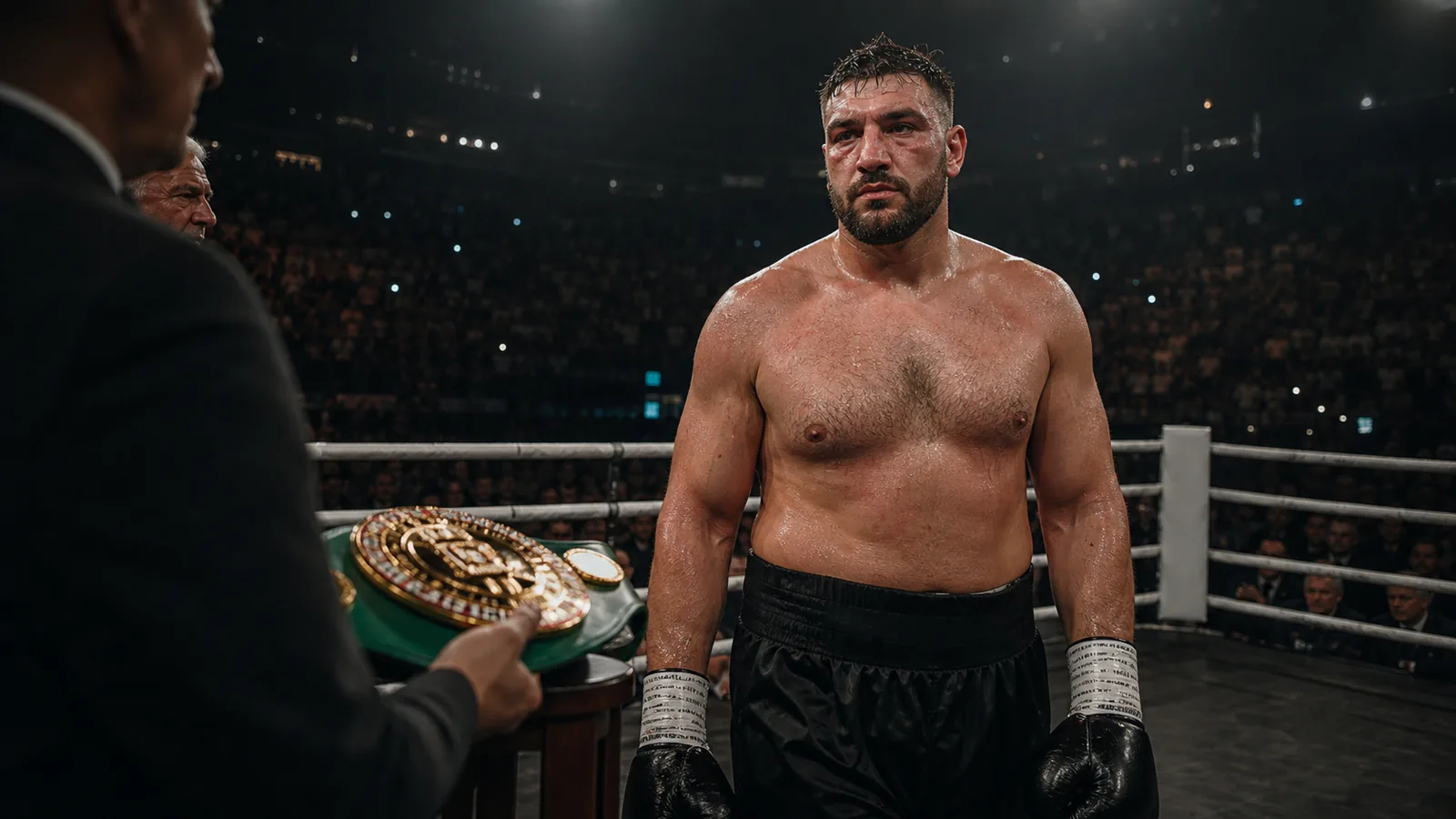
What happened to the WBC heavyweight title?
Usyk was the WBC heavyweight champion and had been ordered to defend against Kabayel, who had become the organisation’s mandatory challenger. The two sides had been given a deadline to agree terms before purse bids. Instead, Usyk relinquished the belt as part of his decision to step away from the sanctioning bodies’ title obligations for the final stage of his career.
That left the WBC with a choice. It could order a fight for the vacant championship between two leading contenders, or it could elevate the interim champion already sitting directly beneath the full champion.
It chose the latter.
Kabayel had held the interim belt since stopping Zhilei Zhang in the sixth round in February 2025. He then defended it against Damian Knyba, stopping the Polish heavyweight in three rounds in Oberhausen in January. Box.Live’s Kabayel profile lists him at 27-0 with 19 stoppages and confirms that he has yet to make a defence of the full WBC belt.
The WBC did not invent a new contender from nowhere. It promoted the man it had already installed as Usyk’s mandatory challenger and interim champion.
That distinction matters.
Elevated champion versus vacant-belt winner
Boxing is usually at its clearest when a champion loses in the ring. One fighter enters with the belt, the other leaves with it. There is no administrative argument needed.
But championships do not always change hands that way. Champions retire, move divisions, get stripped, suffer long injuries, or vacate rather than take a mandatory defence. When that happens, a governing body has to decide how its vacant title will be filled.
Winning a vacant belt in the ring
The most familiar route is a vacant-title fight. The sanctioning body selects two eligible contenders, usually from the top of its rankings, and they fight for the championship.
That gives the new champion a moment of proof. The belt is vacant, but someone has still had to win a proper championship contest under pressure. The outgoing champion is not beaten, but the new champion has defeated another top contender for the prize.
It is a clean sporting outcome. It does not settle every debate about who the best heavyweight is, but it establishes a champion through a live fight.
Being elevated from interim champion
Elevation works differently.
An interim champion is already recognised as the WBC’s stand-in titleholder, usually because the full champion is unavailable or because the division needs a clear mandatory route. If the full champion vacates, the interim champion can be moved up automatically rather than being asked to fight again for a belt he was already positioned to inherit.
That is what happened with Kabayel.
It means he did not win the full WBC title in a single title-changing fight. It does not mean he was simply gifted a position without doing the hard work. He earned the interim title against Zhang, defended it against Knyba, and had built his place with a run that also includes stoppages of Arslanbek Makhmudov and Frank Sánchez.
The WBC’s own account traces that climb from his European title win over Hervé Hubeaux, through the Derek Chisora victory, to the big Saudi wins that moved him into the world-title picture.
The fair wording is straightforward: Kabayel is the WBC champion by elevation, not by defeating Usyk or winning a vacant-title fight. That is a description, not an insult.
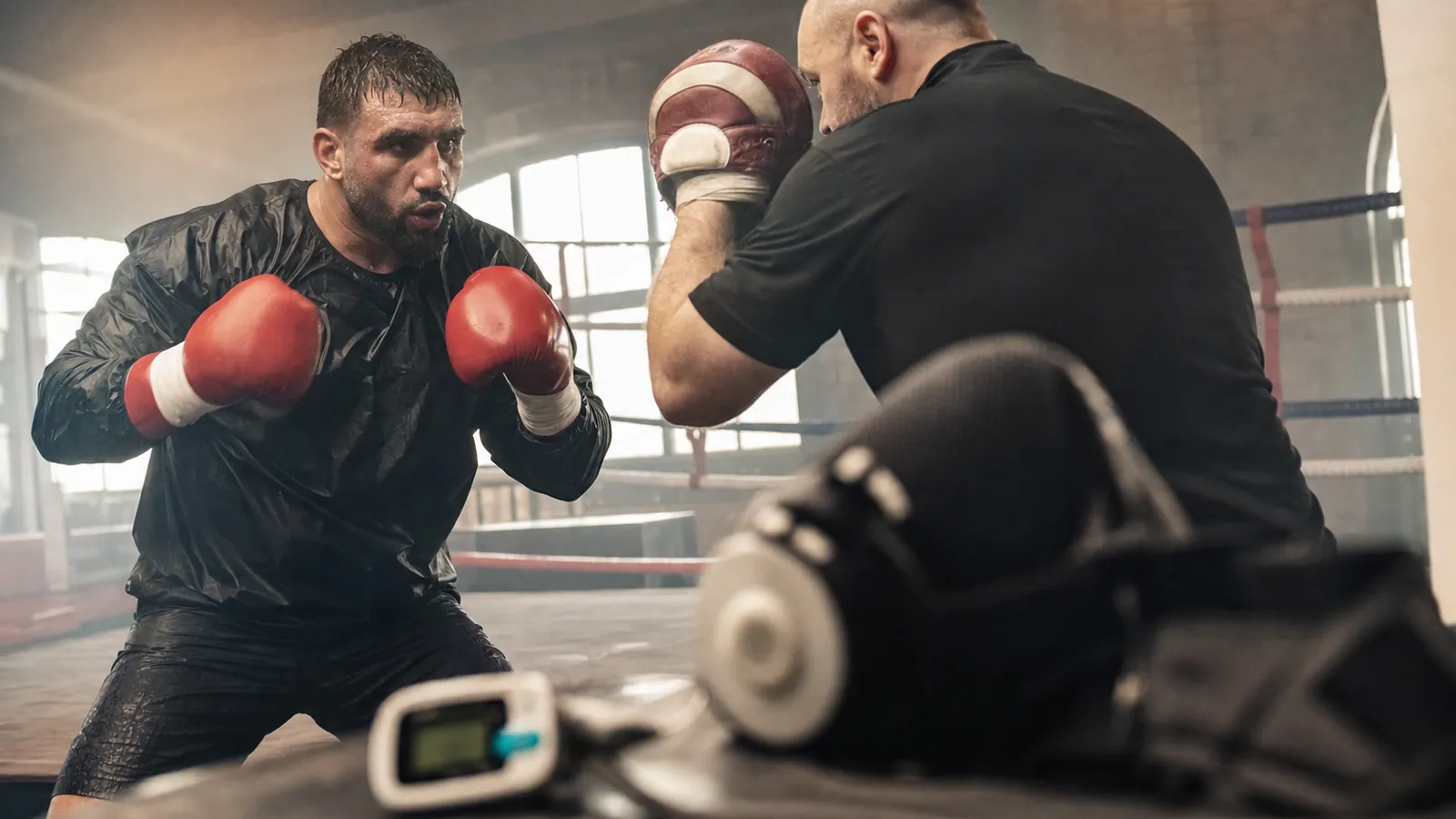
Kabayel had earned a serious opportunity
The lazy version of this story is that Kabayel got lucky because Usyk did not fight him. That is too simple.
He did benefit from Usyk’s decision, obviously. No fighter would pretend otherwise. But he had also done more than most heavyweights to force himself into the conversation.
Kabayel stopped Makhmudov in four rounds in December 2023, when Makhmudov was still unbeaten and widely viewed as a dangerous test. He followed that by stopping Sánchez in seven rounds, another result that looked better rather than worse as the division moved on. Then came Zhang, where Kabayel’s body attack broke down a giant, heavy-handed opponent who looked physically imposing until he was forced to deal with movement, patience and sustained work downstairs.
That is not the record of a man who has been protected into relevance.
Bad Left Hook’s report on the elevation made the important point: Kabayel had won the interim championship and defended it while waiting for the mandated Usyk fight. Boxing News 24’s coverage also notes that he was promoted after Usyk elected not to make that mandatory defence.
There is a difference between being champion and being proven as the division’s best heavyweight. Kabayel has the first. He has a strong case to be taken seriously for the second. The next fight is where the gap closes or widens.
The next opponent is the real test
A belt announcement creates headlines for a day. A first defence creates a reign.
Kabayel has said he wants to defend in September or October and has named Tyson Fury, Anthony Joshua, Moses Itauma, Daniel Dubois and Fabio Wardley as possible opponents. In comments reported by Sky Sports, he was direct: “I want competition, I will fight with the best ones.”
Good. That is the correct attitude. But names on a wish-list are not contracts.
Fury would bring the biggest immediate test and the biggest commercial event. He is also a former WBC champion, a former Kabayel sparring partner, and a fighter whose size, jab and awkwardness ask questions few heavyweights can answer. If Kabayel beat Fury, no sensible observer would spend much time arguing about how he received the belt.
Joshua would be a huge British event, but the practical routes around Joshua’s own plans are never simple. Itauma is perhaps the most interesting boxing match-up, particularly if the young southpaw gets through Filip Hrgovic. Kabayel against Itauma would be an excellent contrast: Kabayel’s pressure, body work and experience against a fast-rising talent with serious ambition.
Wardley and Dubois would make more immediate British-heavyweight fights, depending on the wider title situation. None would be soft. At heavyweight, a champion does not need a dozen defences to be tested. One good opponent can tell you plenty.
For Kabayel, the wrong first defence would be a low-risk homecoming against a name nobody rates. He has done enough to avoid that. The Kabayel versus Knyba homecoming event served its purpose when he was interim champion. As full champion, the standard has changed.
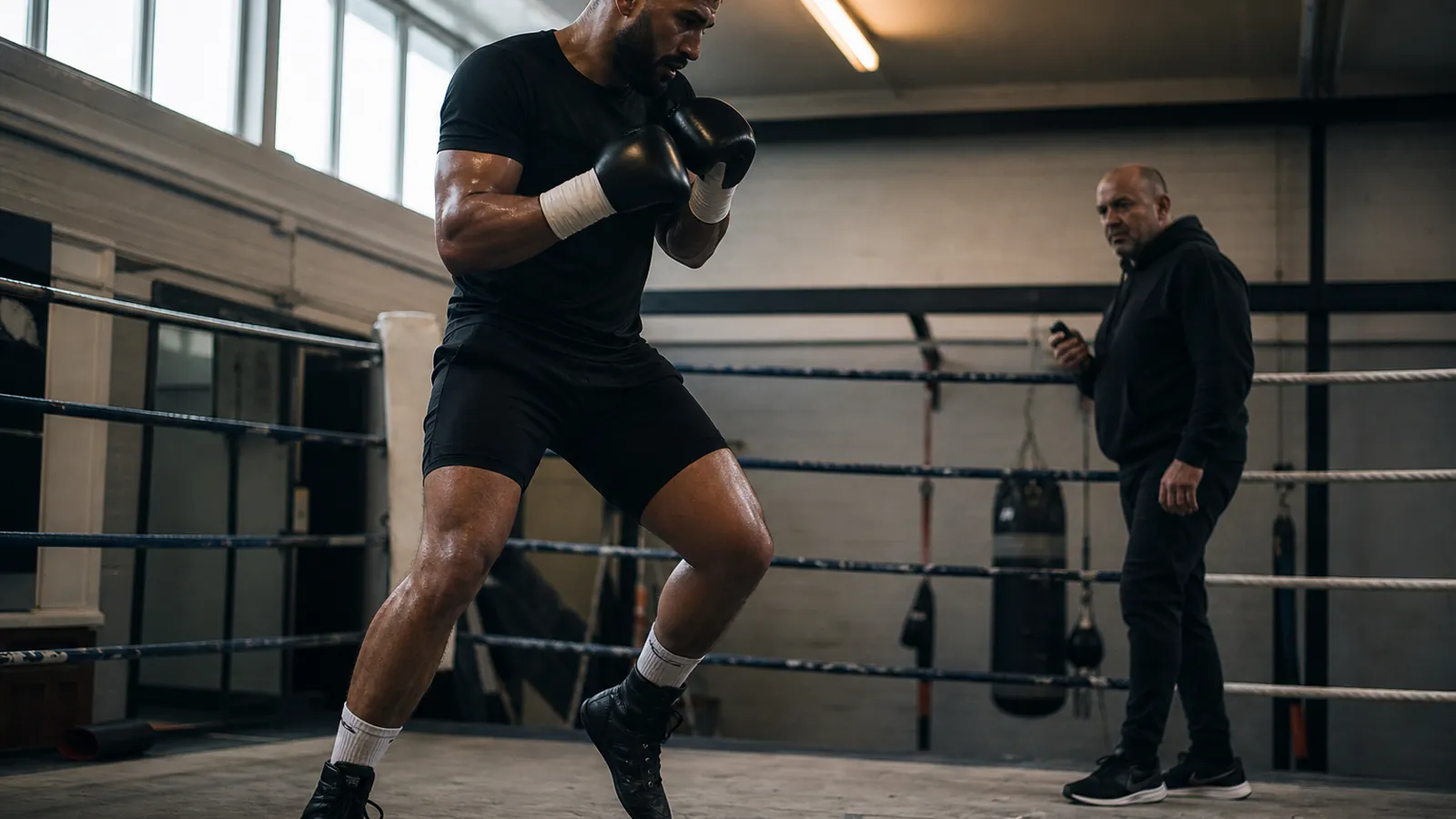
Why this matters to people learning boxing
There is a useful lesson here for anyone who trains.
Belts, rankings and announcements can make boxing sound confusing because they are confusing. But the ring usually sorts the important questions out. Who can control distance? Who can stay composed when the plan breaks down? Who can keep making good decisions when a heavyweight is trying to take their head off?
Kabayel has built his rise on repeatable things: pressure without recklessness, hard body punching, solid feet, and the willingness to take difficult fights. Those are better lessons than the belt itself.
At Honour & Glory, that is the part worth copying. Not the social-media declarations or the title photographs. The habits. The jab that sets up the next move. The patience to work the body. The balance to keep punching without falling square. The discipline to keep improving before anybody is calling you a champion.
Kabayel is now officially WBC heavyweight champion. He has earned respect for the route he took to get there. But his reign will be judged by the opponent he chooses and what he does when the bell rings.
If watching heavyweight boxing makes you want to learn what those details look like up close, book a free trial at Honour & Glory Boxing Club.
H&G Team
Writer at Honour & Glory Boxing Club, a community boxing gym in Kidbrooke, South East London.
KEEP READING
Usyk vs Kabayel Purse Bid: What Happens Next?
Explain what a WBC purse bid means, why it matters for Usyk’s next heavyweight move, and what fans should watch for before June 30.

Anthony Joshua's Boxing Journey
Anthony Joshua started boxing at 18 with no experience. Within five years he was Olympic champion. Here is the full story of how AJ went from complete beginner to heavyweight king.
'FIGHT ME OR VACATE!' Jack Catterall CALLS OUT Teofimo Lopez for WBA
Explain why this title-vacancy story matters beyond belt paperwork: mandatory routes, divisional politics, fighter leverage, and what fans should watch next.
Was this page helpful?
It takes one tap, and it genuinely helps.
Choose your next step
Turn this article into the right action
Some readers are ready to book. Some need the class route first. Pick the route that matches what you actually want.