Usyk Vacates: The Heavyweight Title Queue Explained
Usyk Vacates: The Heavyweight Title Queue Explained
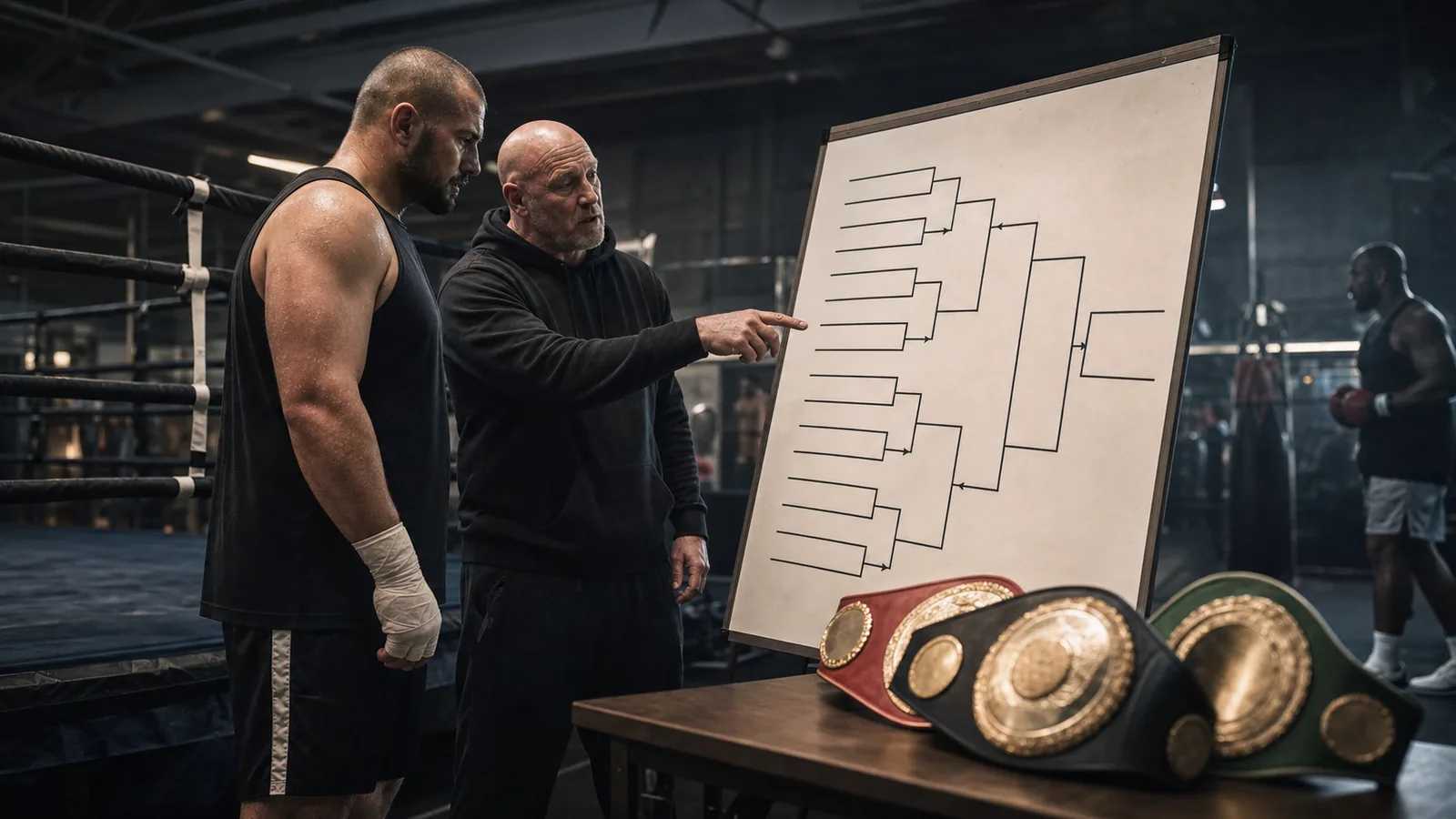
Oleksandr Usyk has not simply dropped a few belts on a table. He has pulled the plug out of the heavyweight title system and let every queue start moving at once.
That is why this story matters beyond the headline. Yes, Usyk has given up the WBA, WBC and IBF heavyweight titles. Yes, he says he is not retired. Yes, he still wants one last fight. Those facts are covered clearly by The Athletic, Sky Sports, BBC Sport, The Guardian, Boxing News and Boxing247.
But the better question is not “why did Usyk vacate?” It is this: why does one man stepping away from three belts change the job prospects of half the heavyweight division?
The answer is that boxing belts are not just trophies. They are queues.
The champion is not only a fighter. He is a roadblock.
A champion with one belt has one set of obligations. A champion with three or four belts has several bosses at once.
Each sanctioning body has rankings. Each has mandatory challengers. Each has rules around deadlines, exceptions, purse bids and vacant titles. That means a unified champion is not just defending his status in the ring. He is also trying to satisfy different organisations that all want their turn.
Usyk was the rare heavyweight who could make that mess look simple because his authority was so strong. He had cleaned out cruiserweight, moved up, beaten Anthony Joshua twice, beaten Tyson Fury twice, beaten Daniel Dubois twice, and remained unbeaten at 25-0. When a fighter has that kind of record, the belts almost become evidence rather than argument.
That is why his decision has a strange double effect.
On one hand, Usyk is freeing himself. Sky Sports explained that his team want him to decide the final chapter of his career himself, rather than have mandatory defences make the choice for him.
On the other hand, he is freeing everyone behind him. The heavyweight title queue is no longer waiting for Usyk to answer three separate doors.

What is a title queue?
Think of each belt as its own lane.
The WBC lane has its rankings, its interim champion, its mandatory route. The WBA has its own list and its own habit of making things more complicated than they need to be. The IBF tends to be stricter, with a more formal process. The WBO, already outside this latest Usyk vacancy, has Daniel Dubois sitting with its belt in the current title picture.
When Usyk held several belts, those lanes all pointed towards one man. If the WBC wanted Agit Kabayel, the IBF wanted its route sorted, and the WBA had its own claimant, Usyk could not satisfy everyone at the same time.
That is where boxing becomes frustrating for beginners. You can be “next” for one belt and nowhere near “next” for another. You can be mandatory but still wait. You can hold an interim title and still need the full champion to move. You can be highly ranked and still lose out to politics, timing or broadcast money.
That is why we have already written on H&G about mandatory challengers after Usyk and what Usyk vacating the heavyweight belts means. The paperwork is not the sport, but it shapes who gets paid, who gets promoted, who gets frozen out, and who gets called “champion” next.
The WBC queue moved first
The clearest case is Agit Kabayel.
Kabayel had the WBC interim title and was in position as the WBC’s next major obligation. Once Usyk stepped away, the WBC did not need to pretend there was still a normal defence to arrange. It could move the queue forward.
Sky Sports reported that the WBC confirmed Kabayel as its new heavyweight champion. That is a huge career turn for him, but it comes with a catch: being elevated is not the same as beating Usyk.
That is not an insult to Kabayel. It is boxing reality.
If you beat the champion, you take the authority with the belt. If the champion leaves and you inherit the belt through the rules, you still have to build that authority yourself. The title gives Kabayel status. His defences will decide how much respect comes with it.
That is the first beginner lesson here: a belt can be real and still need proof behind it.
The IBF and WBA queues are more awkward
The IBF and WBA pictures are not as clean.
The Athletic noted the IBF implications around Frank Sanchez, Moses Itauma and Filip Hrgovic. The Washington Times reported that the IBF had ordered Frank Sanchez to negotiate with Moses Itauma for the title fight, with the deadline set for late July.
That is where things get interesting for British boxing. Itauma is young, dangerous and being moved with real ambition. Hrgovic is still in the mix. Sanchez has ranking strength. None of this is as simple as “the best two fight next” because rankings, availability, promotional influence and sanctioning-body decisions all matter.
The WBA is even more likely to test people’s patience. Murat Gassiev, who lost to Usyk at cruiserweight in 2018, has been part of the WBA picture as a secondary title-holder. Reports have pointed to the possibility of him being upgraded. Again, that would be legal within the belt system, but boxing people will still ask the same question: who did you beat at heavyweight to make the claim feel strong?
That question matters more than the belt ceremony.
Why Usyk’s shadow still hangs over the division
Here is the hard truth for the next wave: whoever collects these belts will not automatically become the heavyweight king.
Usyk may no longer hold the WBA, WBC and IBF belts, but he has not lost them in the ring. He has put them down. That leaves a gap between official status and sporting authority.
This is why the “last dance” matters. If Usyk fights once more, especially against a major name, many people will still treat that night as the real top-table event at heavyweight, even without the alphabet belts attached. The belts can move to Kabayel, Gassiev, Sanchez, Itauma or someone else. Usyk’s wins do not move with them.
That is also why straight news pieces miss the better story. This is not only about Usyk leaving. It is about the division having to create new meaning without the man who gave it order.
The Fury and Joshua question
Tyson Fury and Anthony Joshua sit in a strange place after all this.
They are still enormous names. Their fight would still sell without a belt. But Usyk vacating makes their route back to title relevance easier in theory, because the champion who beat both men is no longer blocking every major belt path.
That does not mean either man deserves an automatic title shot. It means the board has changed. Promoters will look at vacant belts and see leverage. Broadcasters will look at old names and see safer business. Sanctioning bodies will look at rankings and see room for deals.
For beginners, this is worth remembering: heavyweight boxing is never just about who is best. It is about who is available, who is ranked, who brings money, who has a promoter with influence, and which belt needs a champion quickly.
That is why online discussion has been so messy. Threads asking whether Usyk has cleaned out the heavyweight division, whether contenders have failed to move quickly enough after Usyk vacating, and whether Itauma could face Frank Sanchez all point to the same confusion. People are not only asking who is best. They are asking which queue matters.
Other discussion around Usyk’s original belt announcement, the explanation for his choice, the WBO situation, Ukrainian reaction, claims about an open secret around his plans, and even older confusion around Usyk vacating the IBF route shows how hard boxing makes simple questions.
Who is champion? Who is next? Who deserves it? Boxing often gives three different answers.
The H&G view
Usyk has earned the right to choose his ending. That might irritate people who want every belt defended in perfect order, but it is hard to demand more from a fighter who has already beaten the men he needed to beat.
The risk is that the heavyweight division becomes cluttered: several champions, several claims, and nobody willing to fight the right fights quickly. That would be bad for the sport.
The opportunity is better. Kabayel can prove himself as a real champion. Itauma can test whether the hype is ready for world level. Sanchez can turn a ranking into a career-defining chance. Gassiev can show whether his heavyweight run is more than a paper route. Dubois can use the WBO belt to demand serious unification talk.
For young boxers watching from the gym, including our boxers at Honour & Glory’s Kidbrooke classes, there is a useful lesson here. Belts matter, but they are not magic. They are symbols attached to work, timing, choices and pressure. The best fighters do not only win titles. They make the titles mean something.
Usyk did that. Now the queue has moved.
The next champions have the belts to chase. What they need now is the authority.
H&G Team
Writer at Honour & Glory Boxing Club, a community boxing gym in Kidbrooke, South East London.
KEEP READING

Mandatory challengers after Usyk: who gets the belts?
Use the Usyk vacancy to explain how mandatory challengers, vacant belts and sanctioning-body routes actually work, without repeating a straight Usyk-vacates news piece.
Usyk vacates heavyweight belts: the mandatory routes now open
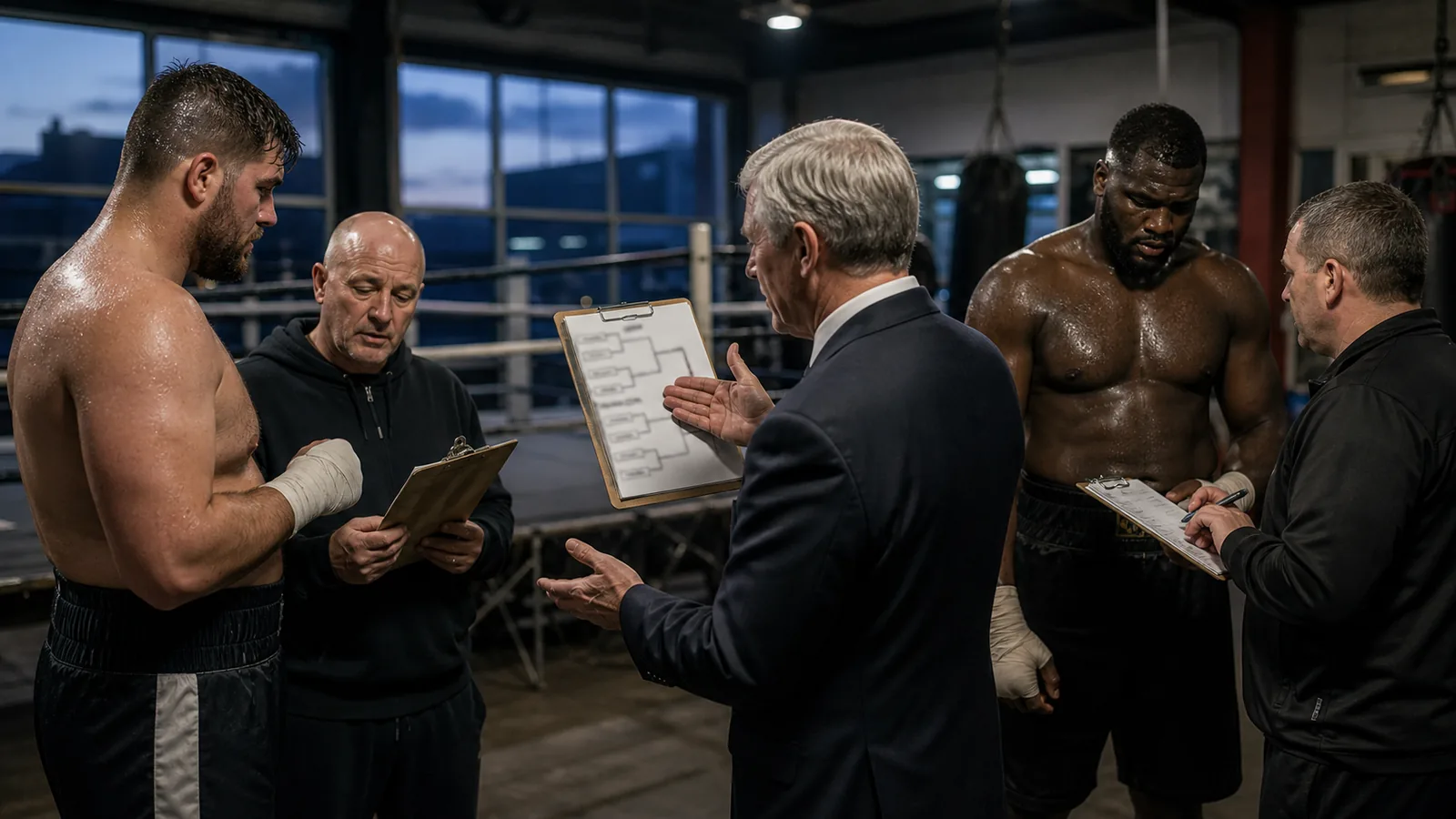
A practical guide to what happens when a unified champion vacates WBC, WBA and IBF titles: mandatory challengers, sanctioning-body rankings and why separate vacant-title fights can reshape heavyweight quickly.

Usyk vacates three heavyweight belts: what changes next
A focused explainer on how Oleksandr Usyk giving up the WBC, WBA and IBF titles changes the heavyweight queue, why governing-body routes now matter, and why vacant belts create opportunities without proving who is the best heavyweight.
Was this page helpful?
It takes one tap, and it genuinely helps.
Choose your next step
Turn this article into the right action
Some readers are ready to book. Some need the class route first. Pick the route that matches what you actually want.