Usyk vacating the belts is not admin. It is a heavyweight reset.
Oleksandr Usyk giving up heavyweight title belts is the kind of story that can look small if you only read the sanctioning-body language.
It is not small.
The Guardian reported that Usyk will relinquish the WBC, WBA and IBF heavyweight titles. ESPN reported the same core point: Usyk is leaving the belts, not leaving the sport, and still talks about one final "last dance".
That matters because Usyk has not been an ordinary belt-holder. He has been the reference point of the division. He beat Anthony Joshua twice, beat Tyson Fury twice, became undisputed at heavyweight, and carried the awkward authority of a fighter who had already solved the biggest men of his era.
When that man gives up belts, the heavyweight division does not just lose some jewellery. It loses its organising principle.
What exactly has Usyk given up?
Usyk had already stepped away from the WBO route. This latest move, according to the Guardian and ESPN, covers the WBC, WBA and IBF titles he still held.
The wording matters. He is not saying he is finished. He is saying he wants the belts free so the fighters behind him can box for them. ESPN quotes Usyk making the distinction clearly: he is leaving the belts, but not leaving the sport.
That means two things can be true at once.
First, Usyk remains the fighter most people would still call the man at heavyweight. Beating the man and collecting a vacant belt are not the same thing.
Second, the formal title picture has changed immediately. Mandatory challengers, interim champions, sanctioning bodies, promoters and broadcasters now have a different board to play on.
This is why it is a huge story. The belts create routes. Routes create fights. Fights create money, leverage and opportunity. Once Usyk steps away from those belts, everyone who was waiting behind him moves forward.
Why he might have done it
The simplest reading is control.
A champion with multiple belts is not just a champion. He is an appointment diary for several sanctioning bodies. Mandatory orders arrive. Purse bids appear. Exceptions expire. Interim champions demand clarity. Every belt creates another obligation.
That was already obvious before this announcement. We wrote recently about the Usyk vs Kabayel purse bid because the WBC route looked like a real pressure point. Agit Kabayel had earned position, his side wanted movement, and the June 30 date looked like a test of whether Usyk still wanted to carry the full burden of being champion.
Now we have the answer.
Usyk wants to choose his finish. That does not make him scared. It makes him a late-career great fighter deciding that the belts no longer have enough value to justify every obligation attached to them.
If you are 39, unbeaten, already undisputed in two divisions, and looking at the last chapter of your career, the question changes. It is no longer, "How do I keep every belt?" It becomes, "Which fight is worth the final camp, the final risk, and the final piece of the story?"
That is a very different calculation.
Kabayel is the immediate winner
Agit Kabayel was the most obvious pressure point before this news. He had a real WBC claim, and his team had every reason to force the issue.
For Kabayel, Usyk vacating is not as satisfying as beating Usyk. Nothing replaces beating the champion in the ring. But it does remove the waiting-room problem. If a great champion no longer wants the mandatory route, the challenger should not be trapped behind his legacy.
That is the brutal fairness of boxing politics. The belt should move if the champion does not want the obligation.
Kabayel now becomes central to the heavyweight conversation, not peripheral. Depending on how each body handles its belt, he could be moved up, ordered into a vacant-title fight, or used as the anchor for a new route.
The key point is that he is no longer only asking for his opportunity. The opportunity now has to be structured.
Joshua and Wardley suddenly matter more
ESPN reported comments from Usyk sporting director Sergey Lapin suggesting the move could give Anthony Joshua a chance to compete for and reunify titles. Whether that is strategy, diplomacy, or a little of both, it is exactly the kind of quote that shows why this story is bigger than one fighter.
Joshua has already shared 24 rounds with Usyk and lost them on the cards. A route to vacant belts would be commercially enormous because Joshua remains one of the biggest heavyweight names in the world. It would not prove he is better than Usyk. It would give him a way back into title authority without needing to solve Usyk again first.
Fabio Wardley also matters in this new picture because the WBO route had already moved. Dan Rafael reported on Usyk vacating the WBO title and Wardley being raised from interim champion. That was the first crack in the undisputed picture. This latest move turns the crack into a full reset.
Suddenly the heavyweight picture is not one champion with challengers queuing behind him. It is several belt routes looking for new ownership.
That can be messy. It can also be fun.
The danger: belts without clarity
Here is the problem with vacant titles.
They create opportunity, but they can also create confusion. Four different bodies can crown four different champions. Promoters can call every belt-holder a world champion. Fans can be left asking who the real number one is.
That is where Usyk's shadow remains. If he fights again, especially against a major name, many people will still treat that fight as the real heavyweight summit even if no major alphabet belt is attached.
That is not romantic nostalgia. It is how boxing works. Lineage, recent wins and public authority matter. A vacant belt can be legitimate and still not answer the biggest question.
The sport now has to avoid the worst version of itself: four champions, three interim champions, two mandatory disputes, and everyone pretending the picture is clearer than it is.
The best version is better. Kabayel gets his route. Joshua gets a meaningful comeback route if he earns it. Wardley gets proper recognition. Other contenders are forced into real fights. Usyk chooses one final occasion without holding up every belt line.
Boxing usually gives us a bit of both.
What this says about belts
Belts matter. They are not meaningless props.
They create goals for fighters. They give contenders a route. They help casual fans understand stakes. In amateur and professional boxing, status markers matter because people need to know what they are chasing.
But belts are not the whole sport.
Usyk is a perfect example. His authority came from the belts, but it also came from the work underneath them: footwork, discipline, timing, southpaw angles, emotional control, and the ability to solve elite heavyweights away from home. The belts recognised that work. They did not create it.
That is a useful lesson for anyone training at club level. Medals, belts, trophies and rankings are outcomes. The daily work is the substance.
At Honour and Glory, we care about the ordinary pieces that do not trend: stance, guard, feet, breath, balance, jab, composure, showing up again after a hard round. That is true whether someone wants to compete, get fitter, or simply learn the sport properly.
The professional game makes the lesson louder. A fighter can collect every belt and still eventually decide the obligation is no longer worth the control it costs. The belt is valuable. The fighter's body, timing and final choices are more valuable.
Is this good or bad for heavyweight boxing?
Short term, it is probably frustrating.
Fans wanted clarity. Usyk had clarity. He was the one man at the top of the division with the record to make most arguments sound silly. When that kind of fighter gives up belts, the sport immediately becomes harder to explain.
Medium term, it could be good.
The division needed movement. Kabayel needed an answer. Wardley needed recognition. Joshua needed a route if he was going to be part of the title picture again. Younger heavyweights needed a sign that the top table was not permanently locked.
Usyk vacating creates that movement.
The risk is that the movement becomes fragmentation. The opportunity is that it forces serious fights between the people who have been waiting behind him.
What should happen next?
The sanctioning bodies should move quickly and clearly. No vague timelines. No endless interim language. No soft holding patterns.
If Kabayel is next in the WBC line, make the route clear. If the WBA and IBF have their own mandatory orders, make those clear too. If Joshua, Wardley, Kabayel, Fury, Dubois, Itauma or others are going to be part of the picture, get them into fights that tell us something.
The heavyweight division does not need more press-conference theory. It needs matches that answer questions.
For Usyk, the question is different. Who is worth the last dance? A Verhoeven rematch? Joshua? Fury again? A United States finale? A left-field spectacle? That is now his lane.
For the belts, the question is simple: who is prepared to fight through the queue rather than just inherit the noise?

The H&G view
This is massive, and the trending boxing conversation should treat it that way.
A beard row before a press conference is noise. A champion vacating the belts that structure the heavyweight division is signal.
Usyk has earned the right to choose his final chapter, but the belts cannot wait around for sentiment. If he is not defending them, they should move. That is fair to Kabayel, fair to the other contenders, and better for the sport than a frozen title picture.
The only thing boxing must not do is pretend the vacant-belt winners automatically become Usyk. They can become champions. They can build authority. They can prove themselves through fights. But the man who beat Joshua, Fury and Dubois does not disappear from the argument because he put the belts down.
That is the tension now.
The belts are free. The division is open. The real question is who can make the vacancy feel earned rather than inherited.
For more heavyweight context, read our earlier piece on the Usyk vs Kabayel purse bid and Frank Warren's Usyk hint around Moses Itauma. If the politics makes you want to understand the sport from the inside, book a free trial session at Honour and Glory Boxing Club in Kidbrooke.
H&G Team
Writer at Honour & Glory Boxing Club, a community boxing gym in Kidbrooke, South East London.
KEEP READING
Usyk vacates titles: what it means for heavyweight boxing
A clear UK-club explainer on how Oleksandr Usyk giving up the WBC, WBA and IBF belts reshapes the heavyweight division, separates a vacant-title route from retirement, and explains why the contenders now matter.
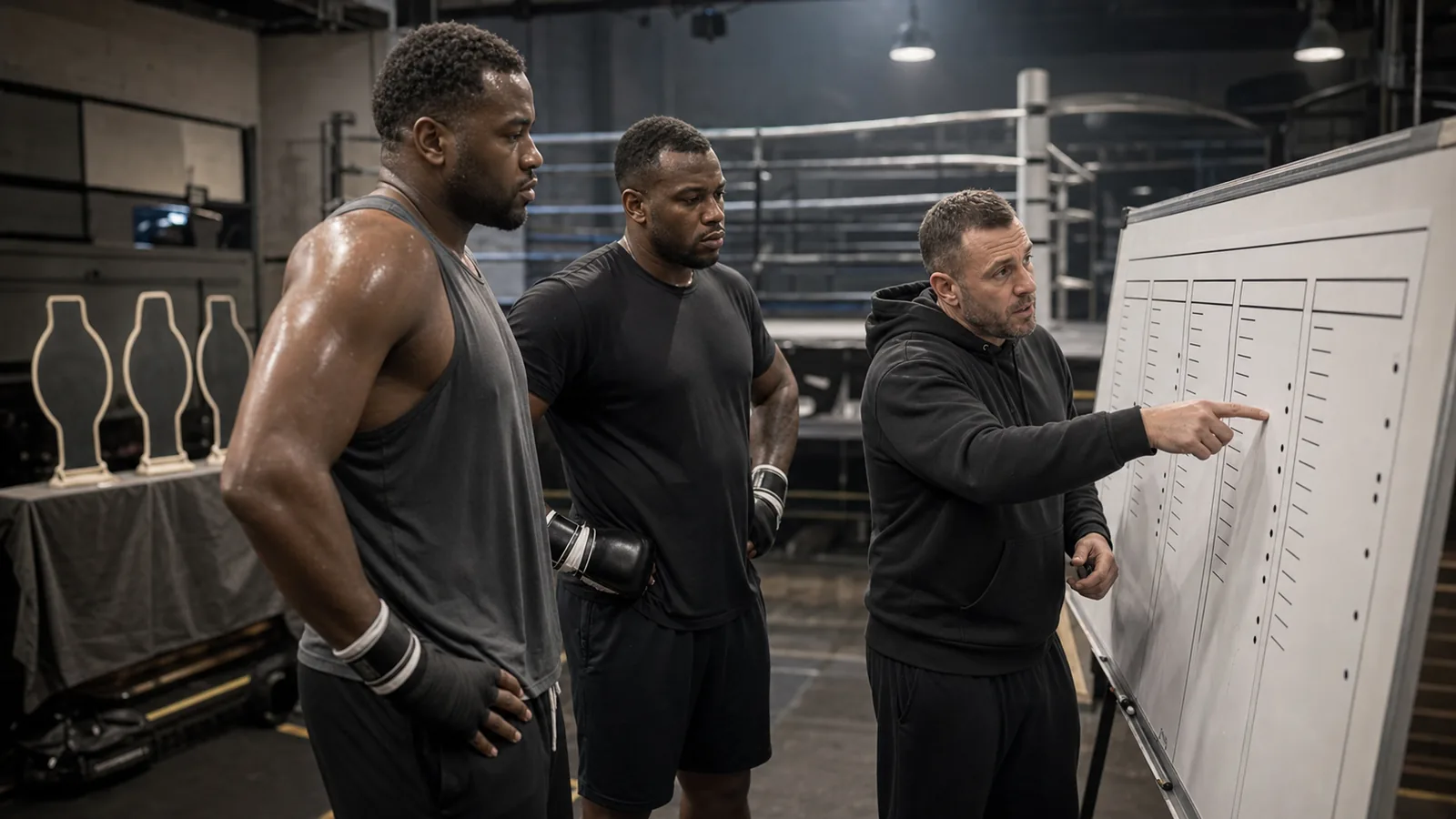
Usyk vacates three heavyweight belts: what changes next
A focused explainer on how Oleksandr Usyk giving up the WBC, WBA and IBF titles changes the heavyweight queue, why governing-body routes now matter, and why vacant belts create opportunities without proving who is the best heavyweight.
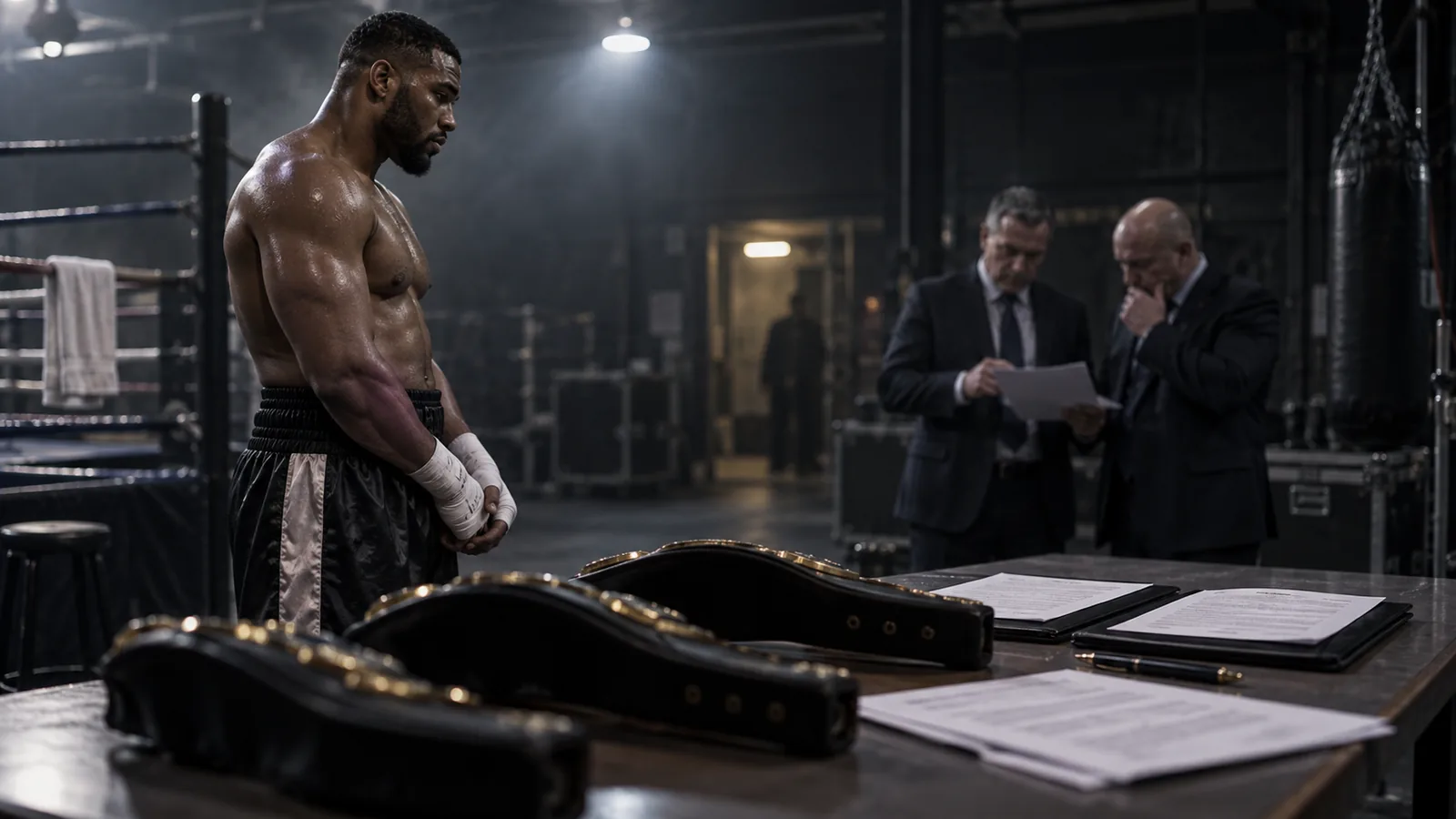
Usyk’s last dance: what vacating three belts really changes
A governance-led explainer on why Usyk giving up the WBA, WBC and IBF titles before one final bout reshapes the heavyweight division, without repeating a simple vacant-belt routes piece.
Was this page helpful?
It takes one tap, and it genuinely helps.
Choose your next step
Turn this article into the right action
Some readers are ready to book. Some need the class route first. Pick the route that matches what you actually want.