
Ryan Garcia’s Benn knockout claim raises the stakes
Ryan Garcia has made the fight harder for himself before either man has entered the ring.
His prediction that Conor Benn will be stopped inside five rounds is not ordinary promotional noise. It is a tactical claim. Garcia is saying that Benn’s best quality, his willingness to press, close space and make a fight physical, will become the mistake that gets him knocked out.
That is possible. It is also the kind of prediction that can become expensive if the man making it starts chasing proof of his own words.
Garcia defends the WBC welterweight title against Benn at T-Mobile Arena in Las Vegas on 12 September. ESPN’s fight guide lists Benn as the mandatory challenger for his first world-title shot. The fight has already supplied its share of theatre, including the media-day confrontation where security stepped in, as BBC Sport reported.
But the five-round call gives the fight a much clearer sporting argument than the shouting.
Garcia is betting on the counter left hook
Garcia’s case is easy to understand. He wants Benn to feel that he has to take ground, then punish the moment that forward step becomes too predictable.
Speaking to the Mr. Verzace podcast, Garcia said Benn would get frustrated by being hit, become angry and “run into something bad”. Boxing News 24 reported the exchange, while The Ring’s report recorded his public promise that five rounds would be enough.
The technical idea is not foolish. Garcia remains a fast, sharp counterpuncher, and the left hook is the shot opponents must respect when they step in carelessly. His knockout of Luke Campbell showed how little warning that shot needs. His fight with Gervonta Davis showed the other side: a world-class opponent can set traps, make him reach and turn his own attacking instinct against him.
Benn is more likely than most opponents to offer Garcia a chance to fire that hook. He has never built his identity around a quiet points win. He wants the centre of the ring. He likes a hard jab, physical exchanges, body work and combinations that make an opponent reset under pressure. Garcia sees that as an invitation.
He should see it as a risk as well.

Pressure is not simply walking forward
There is a lazy version of this match-up which says Benn will rush in and Garcia will pick him off. That is the route Garcia is selling. It ignores what Benn does well when he is disciplined.
Good pressure is not mindless aggression. It is measured ground-taking. It is using the jab to make the opponent move, then cutting off the exit rather than following him around the ring. It is touching the arms and body to make a slicker fighter carry weight. It is making every retreat cost a little more than it should.
Benn has shown that he can sustain that type of work over distance. ESPN’s report from the first fiery media day noted his back-to-back wins over Chris Eubank Jr and Regis Prograis, while BBC Sport’s fight announcement set out the difficult route back down to welterweight after those larger assignments.
The weight question matters, but it is not the only question. A fit Benn who pressures with a jab, keeps his chin tucked behind his lead shoulder and does not fall square after the right hand is not merely a target for Garcia’s left hook. He is a man trying to reduce Garcia’s time to see the shot.
That is the real contest: can Garcia make Benn overreach, or can Benn make Garcia react before he has set his feet?
The physical work is Benn’s advantage
Garcia’s deadline is particularly bold because it assumes he can stop a fighter who has not been stopped as a professional. Boxing247 noted that point, as well as the awkward contrast with Garcia’s recent fights, which have generally gone beyond the five-round mark he has now set.
Benn’s physical strength does not mean he will simply outmuscle Garcia. Boxing is not a pushing contest. It means that when he gets close, he can make the exchanges unpleasant: forearm pressure within the rules, a strong shoulder in the clinch, body shots that take some spring from the legs, and a steady demand for Garcia to hold his shape.
That matters against a boxer who likes space. Garcia is most dangerous when he sees an opponent’s entry, takes the half-step he wants and releases his hands cleanly. A physical fighter can disrupt that picture without landing a dramatic punch. Lean on him. Crowd him. Make him punch while moving. Make the jab a defensive tool rather than an attacking one. Repeat.
The aim is not to turn the fight into a brawl for its own sake. That would hand Garcia the clean lanes he wants. Benn needs intelligent pressure: busy enough to deny comfort, controlled enough not to give away the counter.

Five rounds is a trap for the man who said it
Garcia has made a useful psychological move because he has challenged Benn’s pride. Benn is unlikely to enjoy being described as a man who will become angry and walk into a knockout. The danger is that Benn tries to disprove it by fighting too cautiously and gives Garcia the calmer, longer-range contest he wants.
But Garcia has also set his own trap.
If the first two rounds are close, the prediction can tempt him to force a spectacular finish. A counterpuncher who goes looking for the counter can become an attacker. He starts reaching with the hook, waiting too long at range or throwing a big shot without the feet beneath it. That is when pressure suddenly looks different. Benn does not need to win a shootout. He needs Garcia to give him the sequence: a missed hook, a square stance, ropes behind him, then work to the body and head.
Benn made his own five-round promise at the media day. The BBC account captured both men talking as though the fight cannot last. That makes for a fine trailer. In the ring, it should make both corners nervous.
A quick finish is possible because each man carries enough speed and spite to change a round with one clean sequence. But the better plan is not to believe the trailer. Garcia must box long enough to make Benn impatient. Benn must press well enough to make Garcia uncomfortable, without giving him the exact counter he has advertised.
The lesson is in the entry
For boxers at Honour & Glory’s recreational adult classes, this is a useful fight to watch with the sound down.
Do not only watch the big hook or the loud exchanges. Watch Benn’s feet before he closes distance. Does he enter behind a jab or reach with his head? Watch Garcia after he throws the left hook. Does he leave on an angle or admire the punch? Watch who controls the reset after a clinch. Those are the decisions that decide whether pressure becomes a weapon or a liability.
My view is that Garcia is right to respect his own counterpunching, but wrong if he believes Benn’s pressure is automatically crude. Benn’s strength is not just that he comes forward. It is that he can make a fight feel heavy, personal and urgent.
If Garcia turns that pressure into a clean left hook, his prediction will look prophetic. If he underestimates how hard Benn is to discourage once he has built rhythm, five rounds may feel like a very long promise.
H&G Team
Writer at Honour & Glory Boxing Club, a community boxing gym in Kidbrooke, South East London.
KEEP READING

Garcia vs Benn: What the Zuffa Boxing Deal Really Means
Ryan Garcia vs Conor Benn is not just another big-name fight. It is the clearest test yet of Zuffa Boxing's money, matchmaking and UK ambitions.

De La Hoya’s Garcia-Benn response: the promoter’s stake
Oscar De La Hoya speaking during fight week offers a distinct business angle: what Garcia-Benn means for the promoter, the fighter’s next leverage point and the welterweight market if Garcia wins.
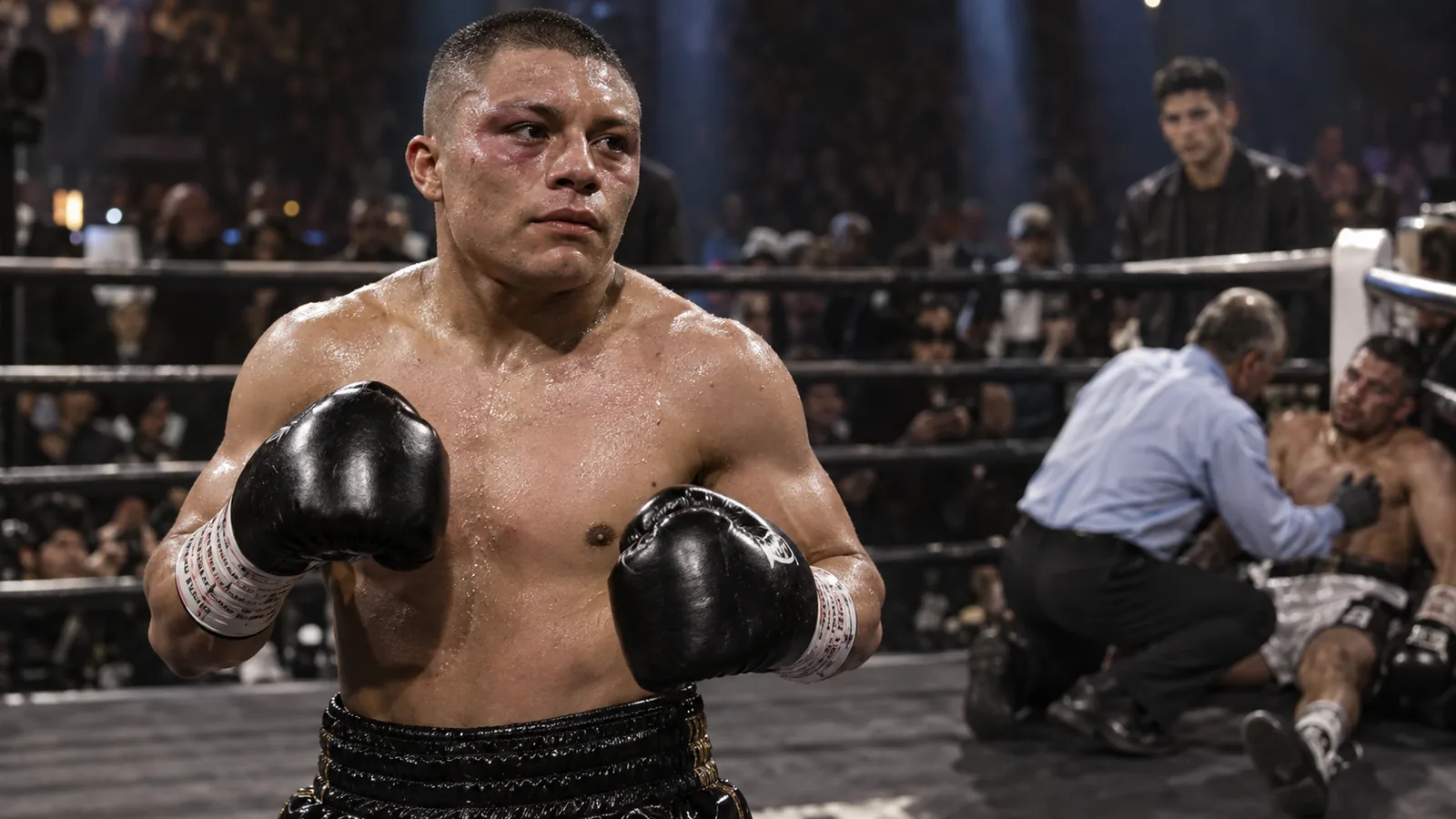
Isaac Cruz stops Nestor Bravo and targets Ryan Garcia
A result-led look at what Cruz’s knockout says about his leverage in a possible Ryan Garcia fight, separating a genuine call-out from a made-for-TV one.
Was this page helpful?
It takes one tap, and it genuinely helps.
Choose your next step
Turn this article into the right action
Some readers are ready to book. Some need the class route first. Pick the route that matches what you actually want.