Hamza Uddin's British title win: what comes after the breakthrough
Hamza Uddin’s British Title Win: What Comes After the Breakthrough
If you win the British title in your eighth professional fight, people will immediately ask how far you can go.
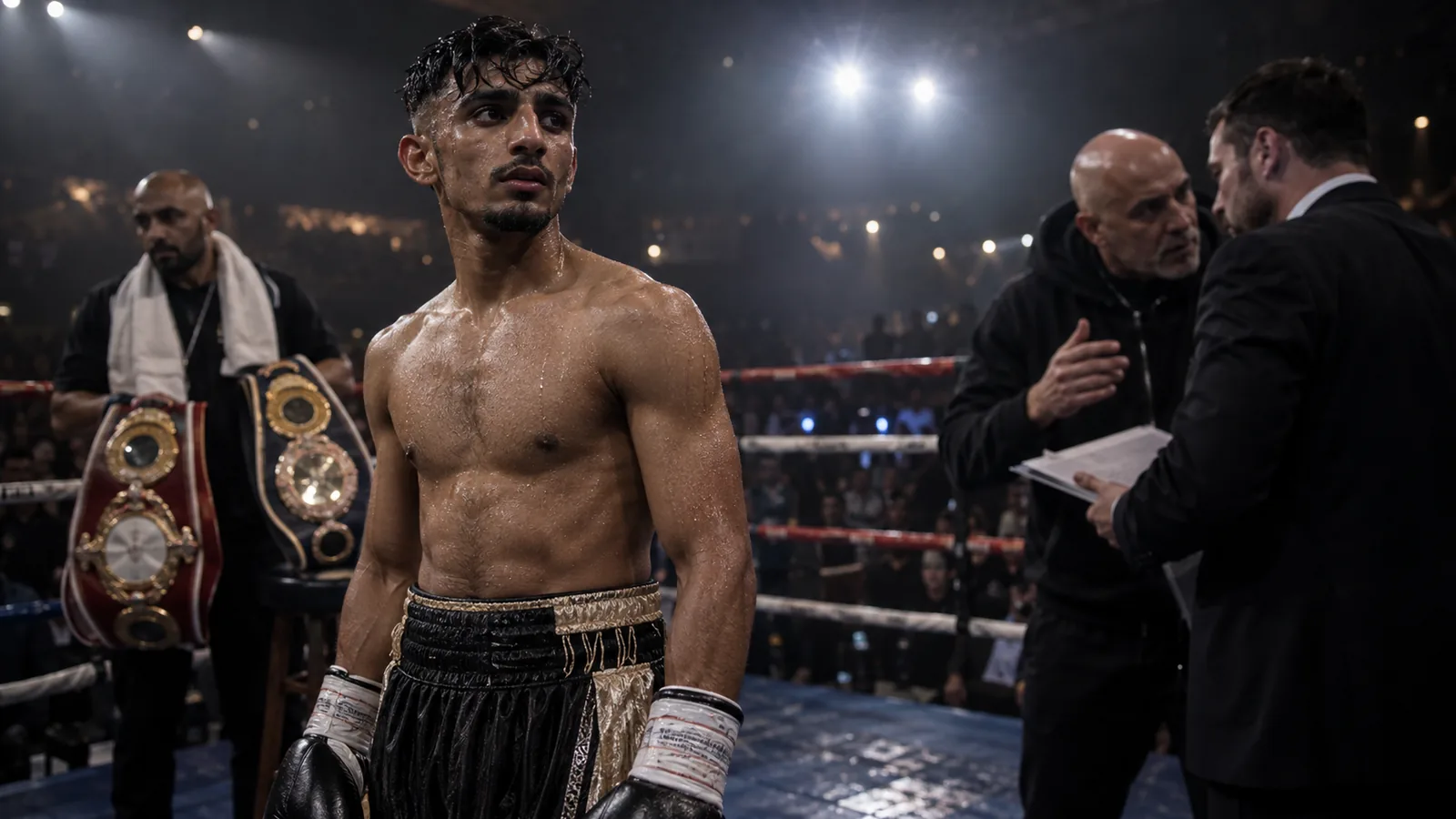
That is understandable. Hamza Uddin’s performance against Sean Bruce gave them plenty to get excited about. The Walsall flyweight stopped the defending British champion in the eighth round at Birmingham’s Utilita Arena, adding the vacant Commonwealth title and moving to 8-0 with five stoppages. It was not a fortunate decision or a cautious points win. Uddin broke Bruce down with speed, variety and sustained body work before referee Victor Loughlin ended it. Express & Star’s report on the title win captured the essential point: Uddin was in charge for most of the contest.
That is a real breakthrough. It is also where sensible career management becomes more important than exciting headlines.
The worst thing a young champion can do after an emphatic title win is mistake momentum for completion. Uddin has earned the right to look beyond domestic level. He has not earned the right to skip the difficult stages in between.
The Sean Bruce win was a statement, not the finished article
Bruce was not brushed aside in a single rush. Uddin put him down twice in the fifth, first with a hard body shot and then during a follow-up assault. Bruce showed toughness by surviving and had his best spell immediately afterwards, landing sweeping left hands that made Uddin reset.
That passage matters.
A young fighter does not learn much from opponents who collapse at the first clean punch. He learns when the opponent gets up, fires back and asks whether the favourite can remain calm. Uddin did. He regained control, worked the body again, and forced the stoppage late in the eighth.
The reports agree on the pattern. BoxingScene’s account of the card described Uddin’s sharp hooks, counters and steady pressure. Big Fight Weekend’s results report recorded the official finish at 2:49 of round eight, after Bruce had been dropped by shots to body and head.
Those details make the performance more impressive, not less. Uddin could hurt a champion, stay composed when the fight became awkward, and return to his game plan. That is the beginning of a proper professional identity.
But there is a reason the word “beginning” matters. Eight fights is still eight fights.
The next opponent should be better, not merely bigger
British boxing loves a fast track. Promoters love a fresh face, broadcasters like a knockout, and fans understandably want to see talent tested as soon as possible. At flyweight, where the world scene is often more active abroad than it is on British television, that pressure can become even stronger.
Uddin has already spoken about a possible British title defence before moving towards European level. That is the correct instinct. In comments reported by the Express & Star, he said: “Maybe I will have one defence and then try to move on to European level. That is one for my team.”
Good. Let the team earn its commission.
A meaningful British or Commonwealth defence is not a backward step. It is a chance to do three things:
- Fight a different style.
- Go scheduled championship distance against a live opponent.
- Build a stronger base before the opponents become deeper, sharper and more experienced.
The right next opponent is not necessarily the highest-ranked available name. It is someone who asks a new question.
Can Uddin lead against a mobile southpaw? Can he deal with a compact pressure fighter who can take his body shots? Can he win rounds at range when an opponent refuses to engage? Can he stay disciplined if his opponent is experienced enough to make him miss and counter him?
Those are the questions that turn a gifted prospect into a reliable contender.
Activity matters as much as matchmaking
There is another issue that should not be overlooked: activity.
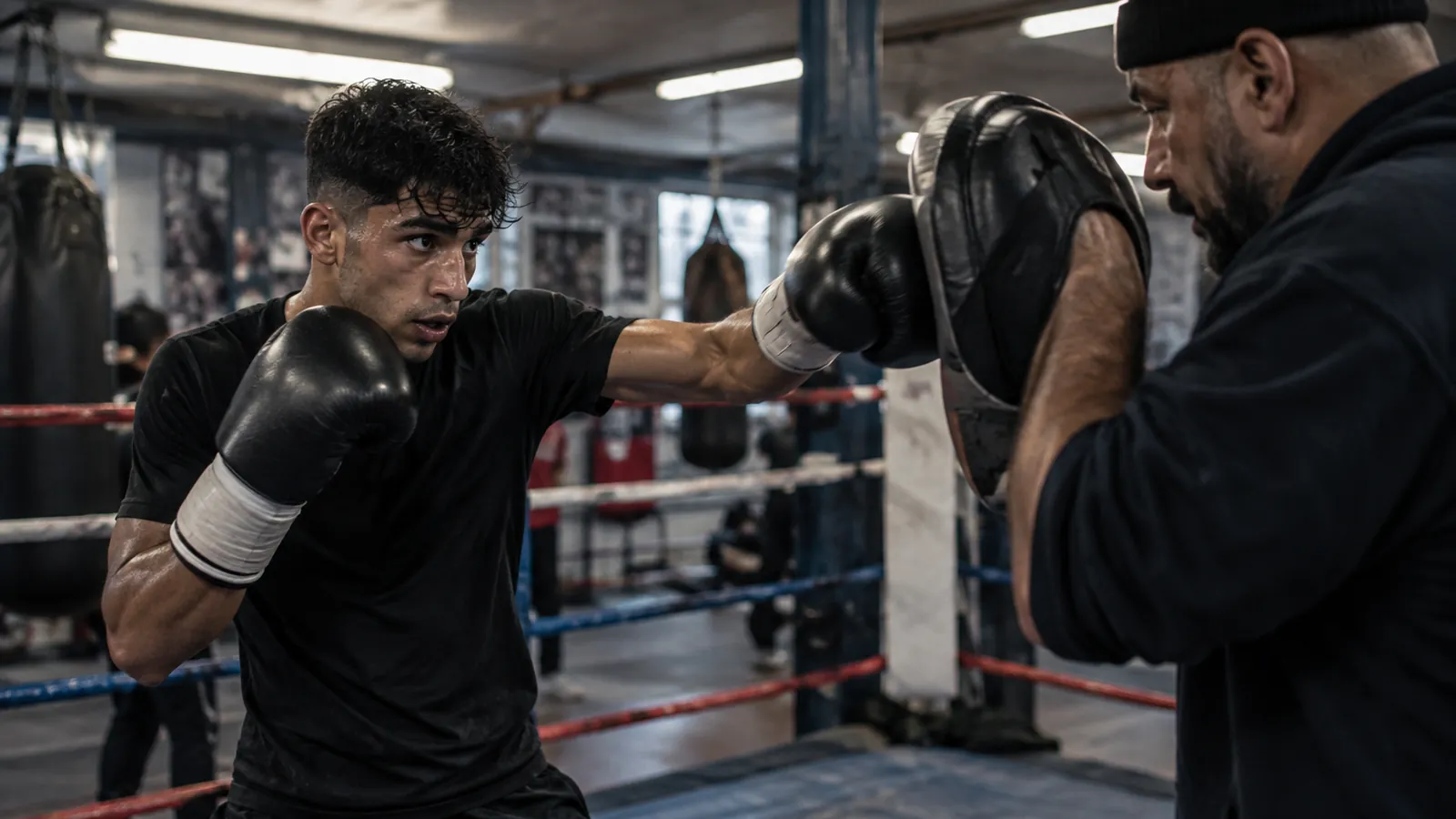
Uddin had hand surgery and spent around 10 months away from competitive boxing before returning in August. He then beat Bruce in October. The comeback has gone extremely well, but a fighter still needs rounds, timing and regular competitive work.
His amateur pedigree is serious. Uddin won national titles, boxed for Team GB and became the youngest boxer to win two England Boxing National Elite Championships, according to his biographical record. That foundation helps. It explains why he looks comfortable under lights and why he has been able to make an early move through the domestic ranks.
Still, amateur experience does not replace professional experience.
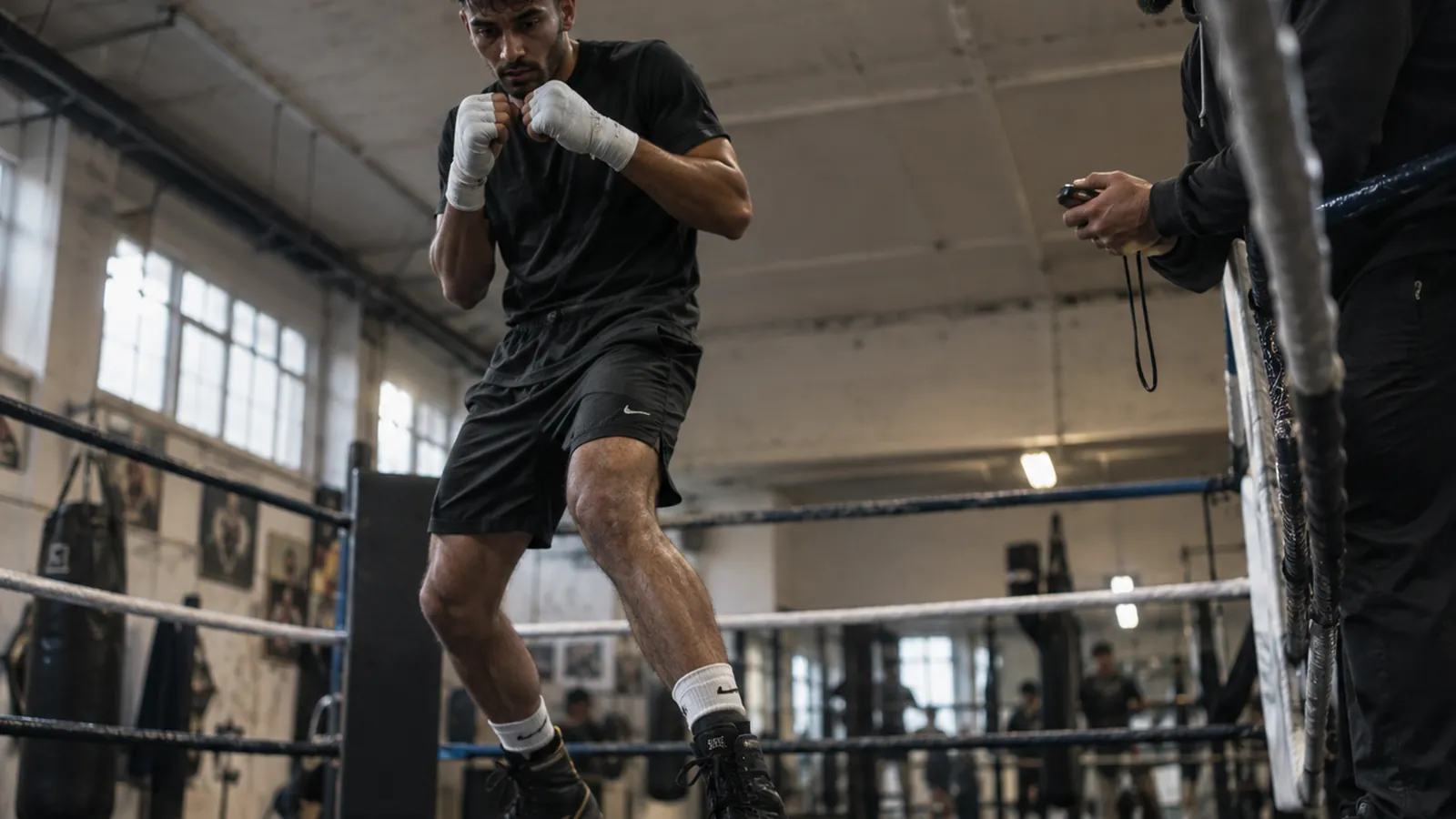
Twelve-round pacing, injury management, the smaller gloves, the slower rhythm of a tactical title fight and the pressure of defending a belt are professional lessons. They arrive one at a time. The safest way to learn them is in winnable but demanding fights, not in a sudden jump into a world-level contest against an established champion.
A boxer does not become more ready by sitting out for long stretches while waiting for a perfect opportunity. Nor does he become better by taking soft six-rounders once he has won a British belt. The target should be consistent title-level activity: a defence or strong ten-round fight, then a European-level challenge if the performance supports it.
That is progress. It may not be glamorous every month, but it is how careers last.
The Galal Yafai temptation can wait
Uddin has not hidden his ambition. In an interview with Sky Sports, he spoke about his power, his desire to become a multi-weight world champion and a possible future meeting with Galal Yafai.
It is a compelling idea. Walsall versus Birmingham. Two high-level amateurs turned professionals. A fight with regional pride and real sporting meaning.
It is not necessarily the right fight next.
Yafai’s amateur background, Olympic gold and experience in high-pressure contests make him a different level of assignment. Uddin may eventually be good enough to win that kind of fight. The point is that “eventually” is not an insult. It is good judgement.
The boxing public often treats patience as a lack of belief. It is the opposite. If Uddin’s team believe he can become Britain’s first Bangladeshi world champion, as he has said he wants to be, then they should protect the years required to build him properly.
There is no prize for reaching world level before you are ready. There is a heavy cost if you arrive there too early and take a damaging defeat before the fundamentals have been tested.
The style is exciting. The discipline must match it
Uddin is easy to notice. He has fast hands, real spite in his body shots, confidence and a willingness to let his personality show. Sky Sports reported his comparison to Prince Naseem Hamed’s showmanship, while Uddin insisted that the flash is part of how he has always boxed.
There is nothing wrong with that. Boxing needs fighters with character.
But the next stage will test whether the showmanship sits on top of discipline. At domestic level, quick feet and fast combinations can create openings. At European and world level, opponents are more likely to set traps, give away a round to steal a later one, or make a talented fighter work harder than expected for every clean shot.
The answer is not to make Uddin less expressive. It is to make him harder to read.
He should keep the angles, the feints and the body work. He should also keep improving his exits after combinations, his shot selection when an opponent is hurt, and his ability to control a quiet round without chasing a stoppage. The fifth round against Bruce showed both sides of the equation: Uddin had the power to change the fight, but Bruce also found moments when Uddin stayed in front of him.
That is useful evidence for a young champion. Better to learn it now than against a world-class operator.
A lesson for every young boxer
The British title still means something. Uddin made that point himself after beating the champion rather than taking an easier route around him. He is right.
For young boxers in Kidbrooke and across London, this is the lesson worth taking from his win: ambition matters, but the next step should make you better, not simply make you more famous.
Uddin has the talent to make serious noise at flyweight. He has punch power, poise and an unusually strong amateur base. But the smartest route from here is clear: defend or take a demanding domestic fight, remain active, move to European level with purpose, and let world-title talk become a consequence of winning hard fights rather than a substitute for them.
That approach is not cautious. It is how the best careers are built.
If you want to develop the same habits that matter at every level of boxing, from footwork and composure to learning under pressure, book a trial class at Honour & Glory. We welcome new boxers aged 7+ in Kidbrooke, SE London.
H&G Team
Writer at Honour & Glory Boxing Club, a community boxing gym in Kidbrooke, South East London.
KEEP READING
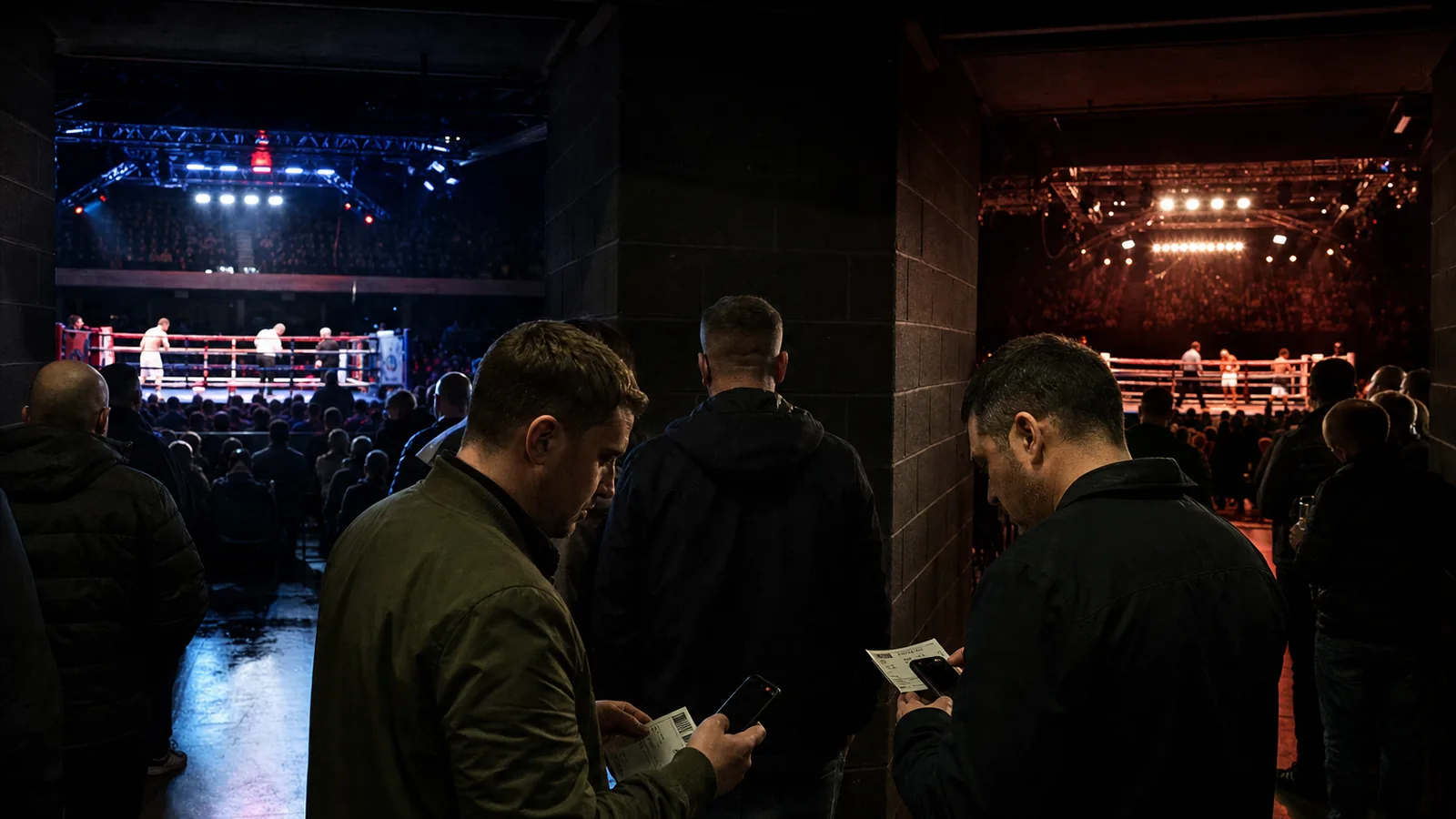
June 6 Boxing Pile-Up: Why UK Fans Have Choices
A practical fan-focused look at the unusually busy UK boxing night, with Bournemouth and Sheffield cards competing for attention and what that says about the depth of domestic boxing.
Sikho Nqothole world title push after Edwards win
Use the Charlie Edwards vs Sikho Nqothole card as a current hook to explain how a fighter moves from a high-profile win into world-title contention, without making it a straight results report.

Viddal Riley eyes a world-title route at cruiserweight
A UK-focused look at Riley’s stated ambitions, his November headline date and why calling for major fights is different from building a credible route to them.
Was this page helpful?
It takes one tap, and it genuinely helps.
Choose your next step
Turn this article into the right action
Some readers are ready to book. Some need the class route first. Pick the route that matches what you actually want.