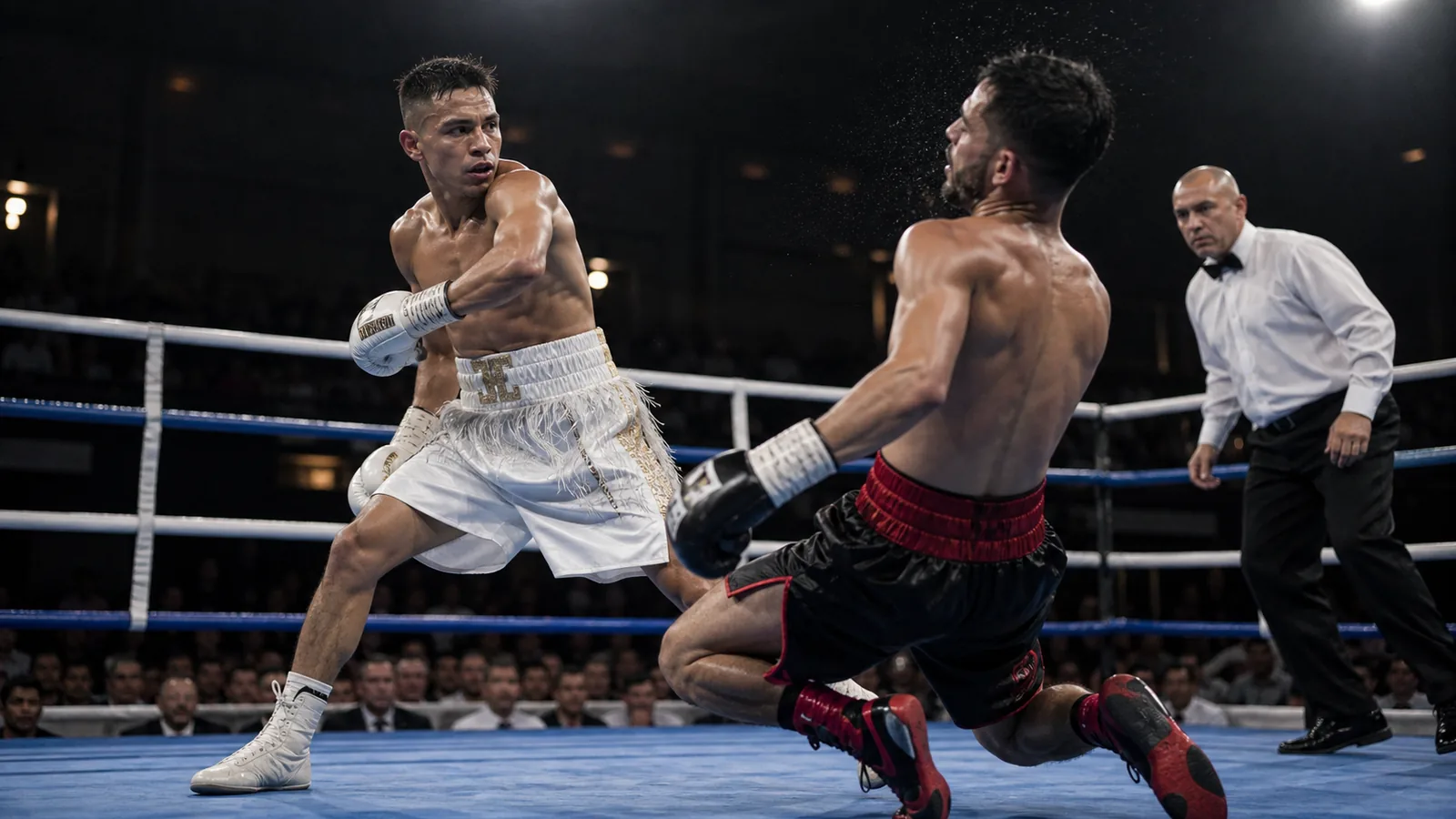
Oscar Collazo KO: Small Fighter, Big Finish
Oscar Collazo is 5ft 1in, fights around the lightest championship weights in boxing, and still produced one of the cleanest reminders you will see all year: size is useful, but timing is cruel.
Against Neider Valdez in Oceanside, Collazo did not need a long war to make the point. He boxed like a man who understood that a smaller fighter does not have to beg his way into range. He can take it. He can step, set, draw the mistake, and make the right punch arrive before the opponent has finished making his decision.
The result was a second-round stoppage. FIGHTMAG reported Collazo against Valdez as a WBO International flyweight title bout, while Boxing247 described the fight as a late-replacement main event after Joey Canoy’s withdrawal. The Ring reported that Collazo dropped Valdez three times before the finish. That is not just power. That is control.
Small Does Not Mean Harmless
Boxing loves tall fighters. Long arms look good on posters. Reach gets mentioned in every tale of the tape. Beginners often look at a taller opponent and feel beaten before the first bell because they imagine the jab as a locked gate.
Collazo is a useful cure for that thinking.
He is not winning because he is big. He is winning because he gets into the right places at the right times. Box.Live lists Collazo among the active names to watch in the lower weights, and his rise has been fast enough that his wider career record is already a regular reference point) when people talk about the best small fighters in the sport.
Against Valdez, the important lesson was not simply that Collazo could punch. It was that his feet made the punching possible.
A shorter boxer who walks straight in is not brave. He is available. A shorter boxer who steps in behind a feint, angles his lead foot, bends at the knees and makes the taller man reset is dangerous. Collazo did the dangerous version.
For beginners watching elite boxing, that matters. If you are smaller, you do not solve the problem by swinging harder. You solve it by arriving better.
Feet First, Punches Second
Watch the finish and the knockdowns, but do not only watch the hands. That is the beginner mistake.
The hands are the loud part. The feet are the reason the hands matter.
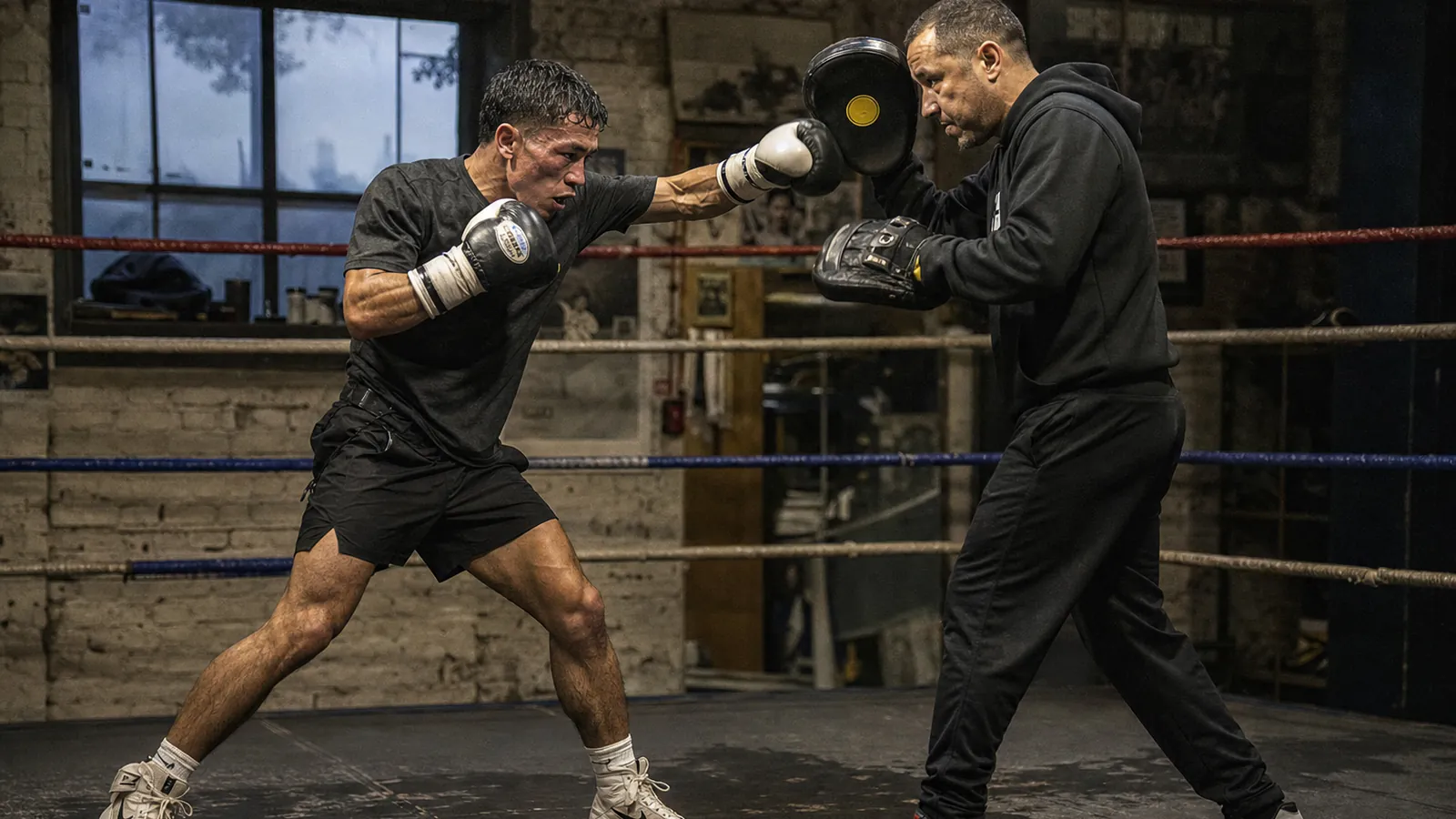
Collazo’s pressure worked because he was not chasing Valdez in straight lines. He was closing the space in stages. Small step, pause, threat. Another step, shoulder hint, jab look. Then the punch. That rhythm is hard to read because the opponent cannot tell which movement is real and which one is bait.
This is where many new boxers get it wrong. They think footwork means bouncing. It does not. Good boxing footwork is not dancing for the sake of it. It is balance with purpose.
At Honour & Glory in Kidbrooke, we see this all the time with newer boxers in our boxing classes. Someone wants more power, so they throw harder. Usually the answer is not “throw harder”. It is “put your feet under you first”. If your stance is too square, your punch leaks power. If your feet are too close together, you cannot punch, defend or move again. If you step in too far, you smother your own work.
Collazo’s lesson is simple: the punch starts before the punch.
Timing Beats Reach
Reach helps when the longer fighter controls time. If he can touch you first, make you hesitate, and keep you outside his danger line, he can turn the fight into a measuring contest.
Timing breaks that.
Collazo’s second-round stoppage was not a wild blitz. It was the work of a fighter recognising when Valdez was open, then punishing the opening immediately. Reports differ on the exact timing of the stoppage, with Yardbarker listing the result as a round-two KO and Boxing247 giving the halt at 2:35 of the round, but the broader point is clear: Collazo made the fight end early because Valdez could not keep him off at the moments that mattered.
That is timing.
Timing is not just speed. Speed is how fast your hand moves. Timing is when you choose to move it.
A beginner can be fast and still miss all night. A calm boxer can look slower and still land first because he punches while the other boxer is stepping, blinking, leaning, loading up or pulling straight back. Collazo has that quality. He does not look like he is rushing to prove power. He looks like he is waiting for the opponent to hand him the key.
That is why small fighters can be terrifying. They do not need to win every second at long range. They need to win the moments when the range changes.
Punch Selection Is The Real Finisher
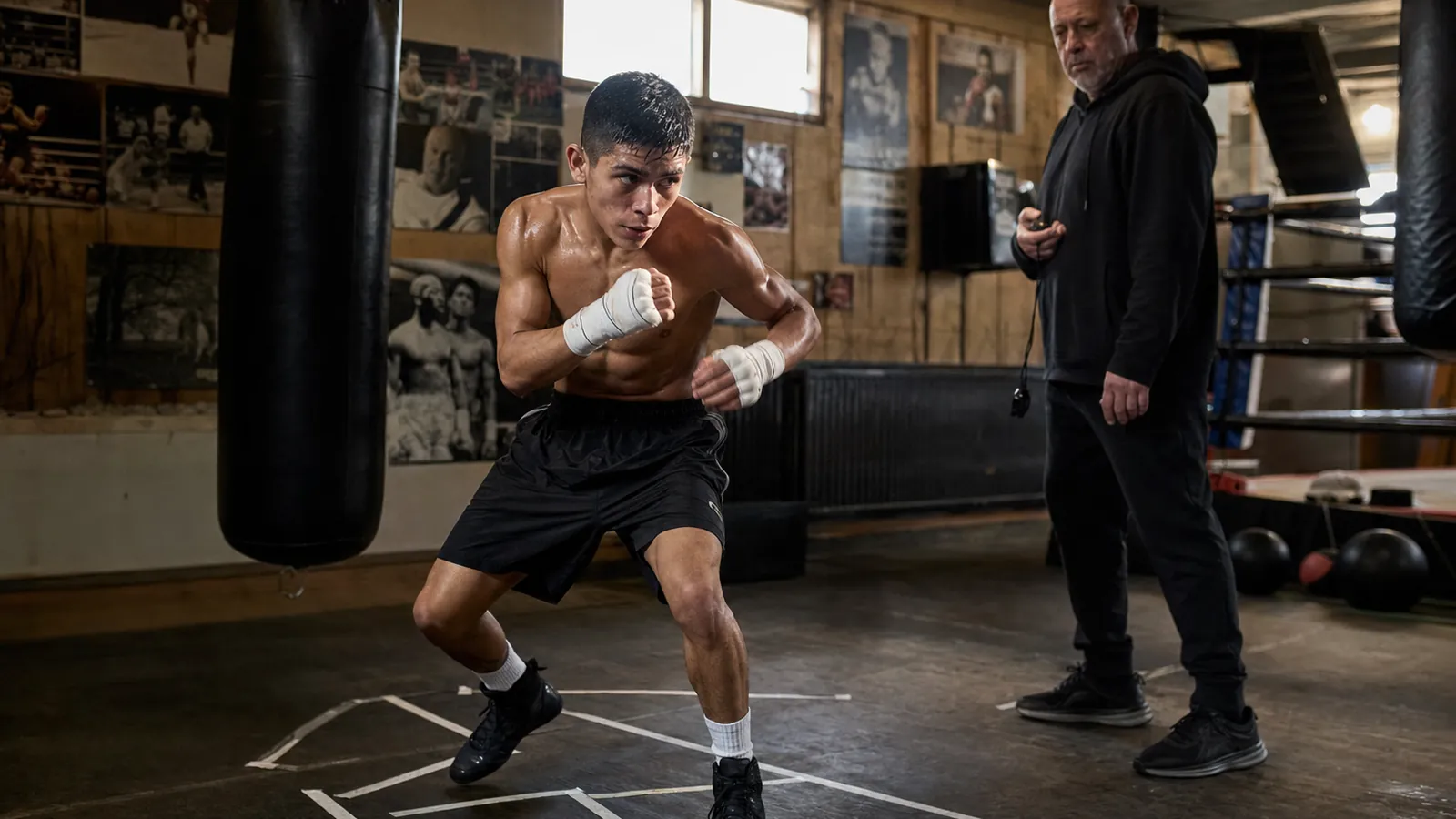
There is a difference between throwing combinations and choosing punches.
Beginners often treat combinations like memorised sentences. Jab, cross, hook. Jab, cross, hook, roll. Useful in the gym, but fights are not pad rounds. The opponent moves. He blocks. He panics. He gives you different gaps every few seconds.
Collazo’s punch selection stood out because it was not just volume. He picked shots that matched Valdez’s reactions. If the guard lifted, the body was there. If Valdez tried to square up or reset under pressure, Collazo attacked before he could rebuild his stance. If the head was available, Collazo did not waste the chance by throwing from too far away.
That is the part young boxers should study.
Do not ask, “What is my favourite combination?” Ask, “What is open?” If the opponent keeps a high guard, touch the body. If he drops the right hand after jabbing, bring the left hook. If he pulls straight back, step with him. If he shells up and waits, change the level and make him defend twice.
Collazo’s finish looked explosive because the choices before it were tidy.
The Valdez Context Matters
This was not the perfect competitive test. Valdez came in as a late replacement, and that matters when judging the result. Bad Left Hook’s live coverage framed the night as Collazo versus Valdez after the original opponent change, while Tapology’s bout listing gives the event context for the Golden Boy Fight Night card. Yahoo Sports also carried live streaming results and reactions, and the full card highlights are available separately.
So no, we should not pretend Valdez was the final answer to every Collazo question. He was overmatched. The Ring’s phrasing was blunt about that. But boxing analysis should not only ask whether the opponent was elite. It should ask whether the winner showed habits that travel upward.
Collazo did.
Sharp feet travel. Timing travels. Punch selection travels. Staying balanced after hurting someone travels. Those are the habits that still matter when the opponent is better, stronger and less willing to fall apart.
The bigger question now is where Collazo goes next. Boxing News 24 reported that Collazo called for Ricardo Sandoval after the win, and The Ring also covered Collazo’s interest in staying at flyweight and fighting Sandoval. That is the sort of fight that would tell us far more. Sandoval is not a last-minute body. He is a serious name at 112lbs.
But the Valdez finish still has value because it shows what Collazo is trying to become above minimumweight: not just a clever small champion, but a small champion whose timing can hurt bigger men.
What Beginners Should Take From It
If you are new to boxing, do not watch Collazo and think, “I need to knock people out.”
That is the wrong lesson.
Watch him and think:
Can I step in without falling in?
Can I punch without losing my stance?
Can I make someone react before I commit?
Can I choose the right punch instead of throwing the same combination every time?
Can I stay calm when I hurt someone?
Those questions matter far more than arm length. They are why boxing is not just a contest of body types. A tall beginner with poor balance is beatable. A strong beginner who loads up every punch is readable. A quick beginner who rushes his feet is counterable.
A smaller boxer with sharp feet, calm eyes and sensible punch selection is a problem.
That is the proper Collazo lesson. The knockout was the highlight. The craft was the story.
H&G Team
Writer at Honour & Glory Boxing Club, a community boxing gym in Kidbrooke, South East London.
KEEP READING
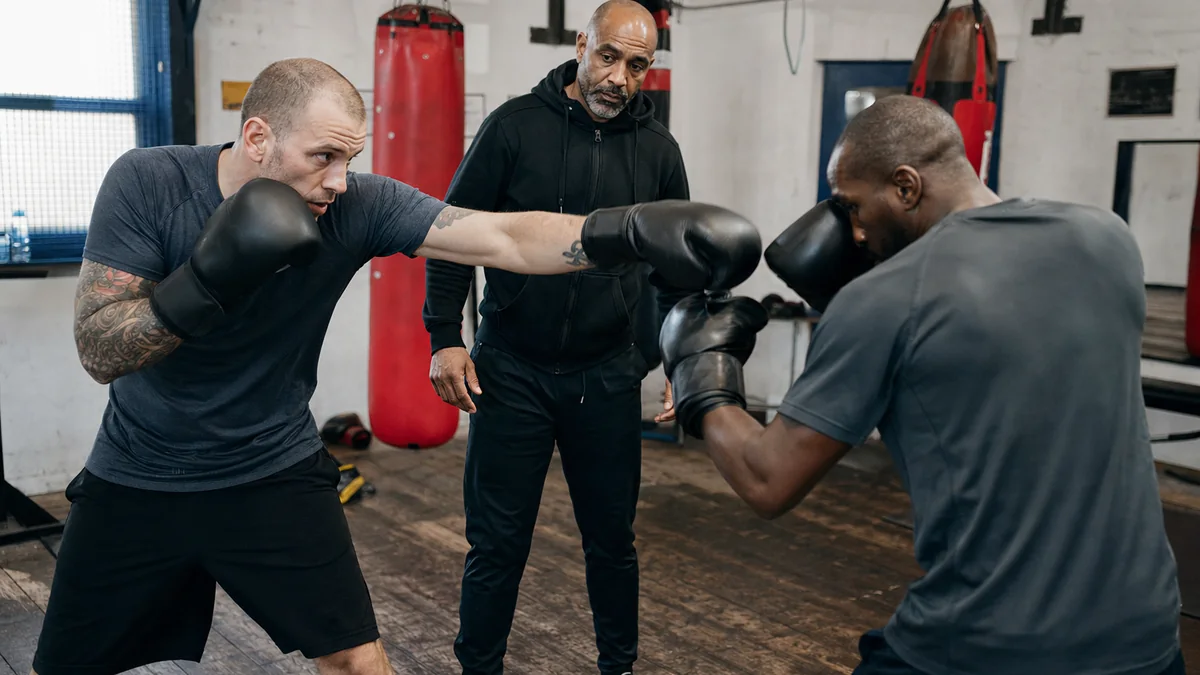
What to Do After You Punch in Boxing
Most beginners only think about landing the shot. Good boxing starts with what happens next: reset, exit, angle, or build the next phase.
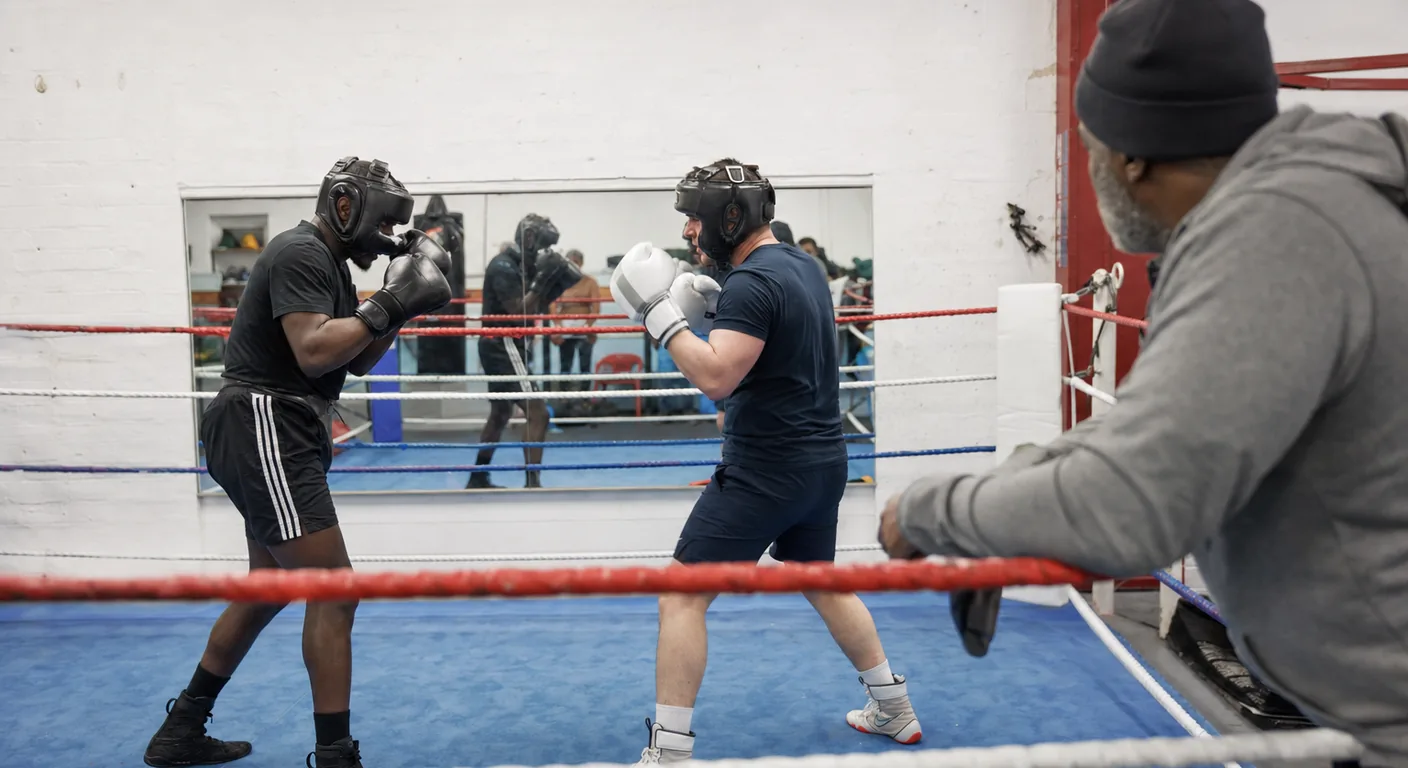
How to Box Against Any Fighting Style
Slugger, pressure fighter, out-boxer or counter-puncher: here is how to spot the problem and box with a cleaner plan.
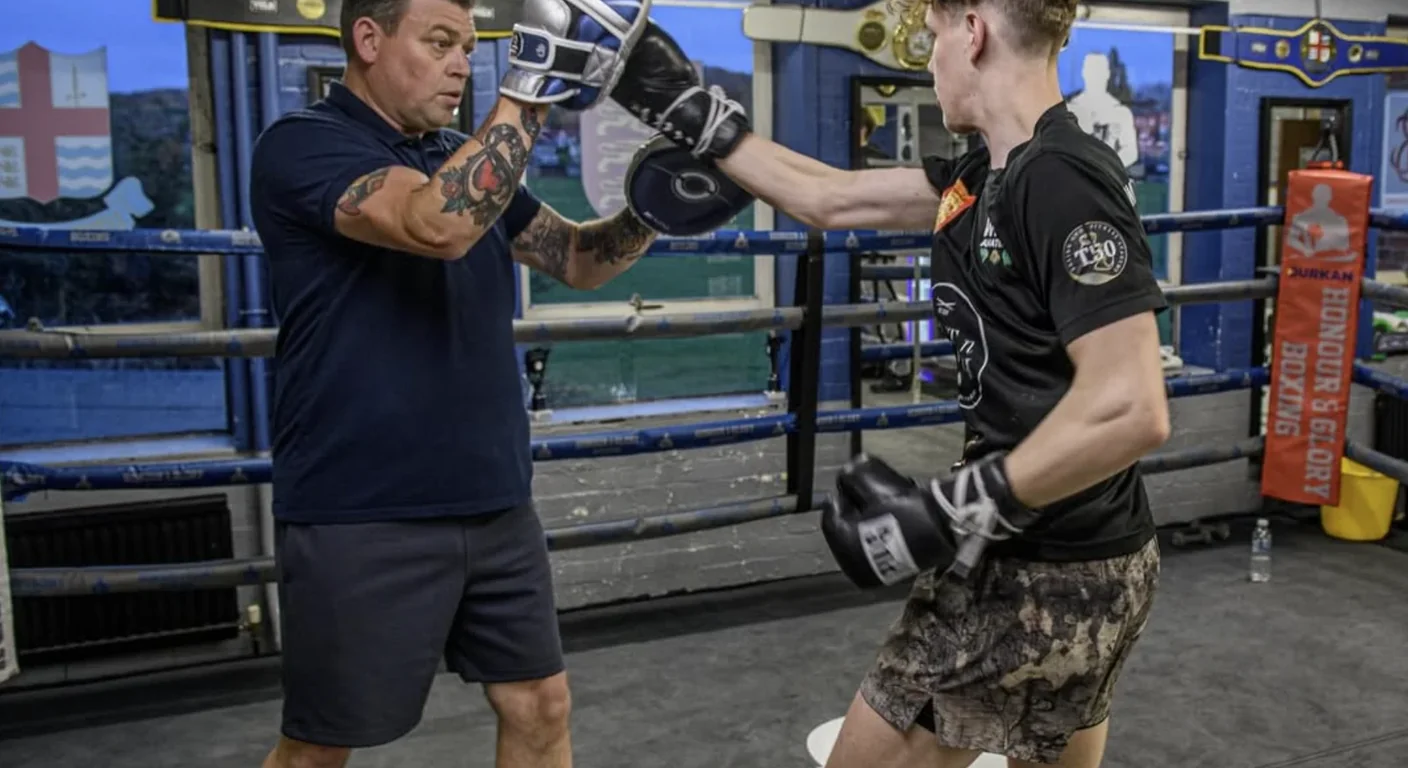
Stop Crossing Your Feet in Boxing
Crossed feet wreck balance, defence and punch recovery. Here is how beginners can fix the habit with simple boxing footwork drills.
Was this page helpful?
It takes one tap, and it genuinely helps.
Choose your next step
Turn this article into the right action
Some readers are ready to book. Some need the class route first. Pick the route that matches what you actually want.