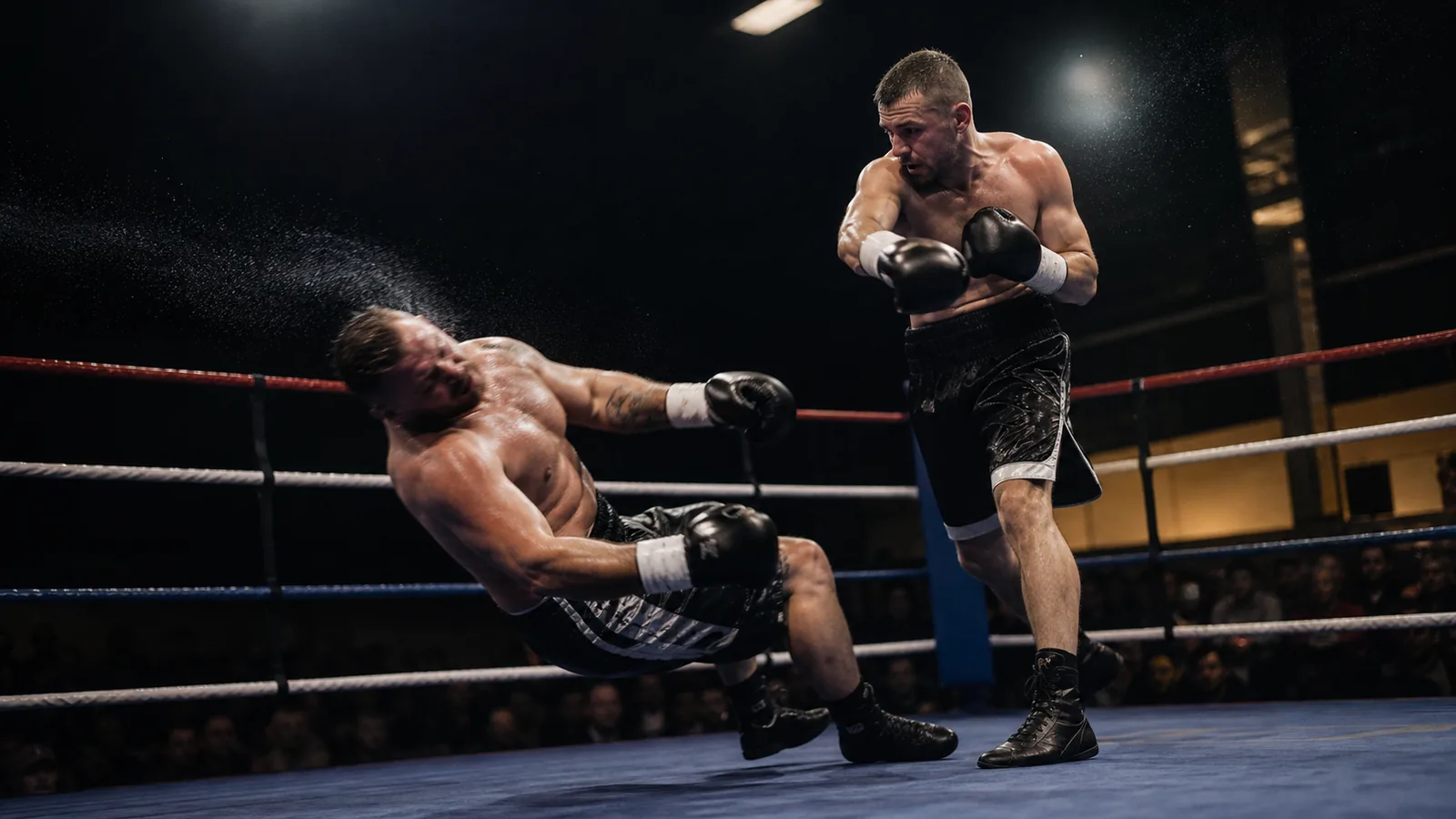
Juanmita Lopez KO: Why Control Creates Power
A first-round knockout always tempts people into the wrong lesson.
They see the punch. They hear the crowd. They watch the opponent hit the canvas and think, “That is power.”
It is, partly. But the fresh Top Rank highlight of Juanmita López de Jesús flattening Alberto Motos is a better lesson than that. The finish was not wild. It was not a beginner swinging himself off balance and hoping something landed. It was a young southpaw staying organised long enough for one clean left hand to mean everything.
That is why this knockout is worth studying at Honour & Glory in Kidbrooke. For beginners, especially those who have just started learning how to hit pads or spar lightly in boxing classes, the obvious question is usually, “How do I punch harder?”
The better question is, “How do I stay controlled enough for my punch to arrive properly?”
What Happened In Brooklyn
López de Jesús stopped Spain’s Alberto Motos in the opening round at the Barclays Center in Brooklyn, on the undercard of the Xander Zayas versus Jaron “Boots” Ennis event.
Primera Hora reported that the Puerto Rican prospect landed a straight left that sent Motos down with about a minute remaining in the first round. Metro Puerto Rico described the same essential finish: a powerful left to the face, Motos unable to beat the count, and López de Jesús moving to 6-0 with three knockouts.
FIGHTMAG listed the official result as Juanmita Lopez De Jesus defeating Alberto Motos by first-round knockout at 2:05. Boxing247 also recorded the finish as a sharp straight left to the chin, with referee Ricky Gonzalez stopping it in the opening round.
The details matter because this was not a long accumulation fight. It was not six rounds of pressure finally breaking a tired opponent. It was a short fight, one exchange made decisive by positioning, timing and balance.
That is the boxing lesson.
The Punch Was Loud. The Feet Were Quieter.
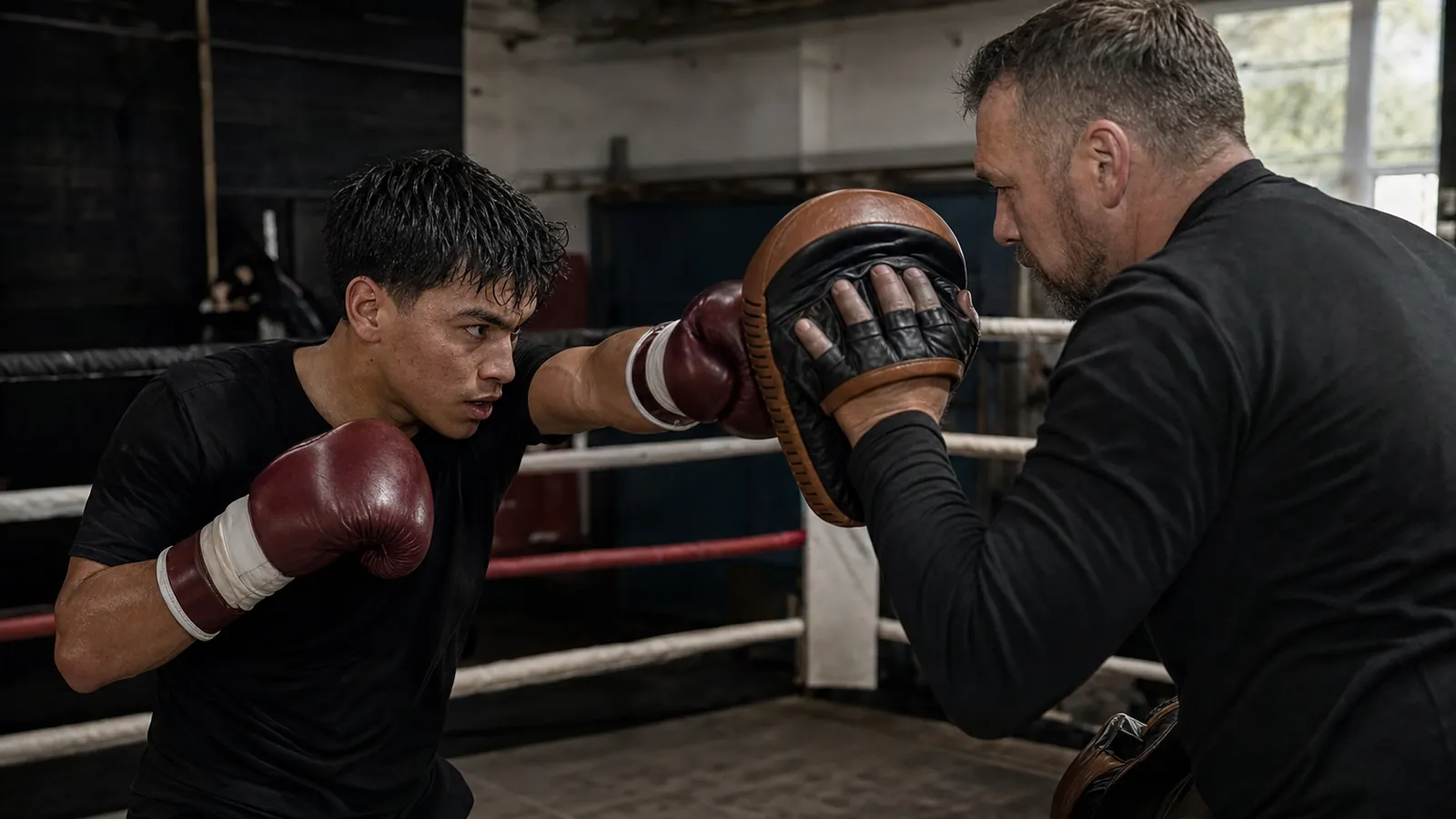
Beginners usually watch hands first. Coaches watch feet first.
The left hand that ended the fight was the visible part. The work before it was quieter. López de Jesús did not look like a fighter chasing a knockout. He looked like a fighter keeping himself in range without losing shape.
That distinction is everything.
When a beginner wants to hurt someone, the first instinct is often to reach. The back foot trails. The chin comes up. The shoulders tighten. The punch becomes a lunge. Even if it lands, it lands without the body underneath it. If it misses, the boxer is wide open.
López de Jesús did the opposite. He stayed balanced enough for the left hand to travel from the floor, through the hip and shoulder, then straight down the line. That is why the shot looked so heavy. It was not only arm speed. It was structure.
Power in boxing is not just force. It is force delivered while your body is in the right place.
Why Control Creates Power
There is a false idea that power comes from anger or effort. You see it in gyms all the time. Someone loads up on the bag, swings hard for twenty seconds, then spends the next minute off balance, breathing heavily and admiring the noise.
That is not boxing power. That is exercise with gloves on.
Real boxing power comes from control. The stance has to be wide enough to give you a base, but not so wide that you cannot move. The knees have to stay soft. The rear foot has to stay connected to the floor. The head cannot drift past the front knee. The punch has to land at the correct distance, not at the end of a desperate reach.
López de Jesús gave a clean example of that. He did not need five big swings. He needed one shot at the right time, from the right position, while Motos was available.
That is why knockouts can look sudden to spectators but logical to coaches. The finish may happen in one second, but the conditions are built before it.
Timing Beats Rushing
The bout was scheduled for six rounds, according to the Puerto Rican reports from El Vocero and Primera Hora. López de Jesús did not need those rounds because he did not rush the important moment.
That is a serious point for beginners.
Fast is not the same as early. Aggressive is not the same as accurate. Throwing first is not the same as landing first.
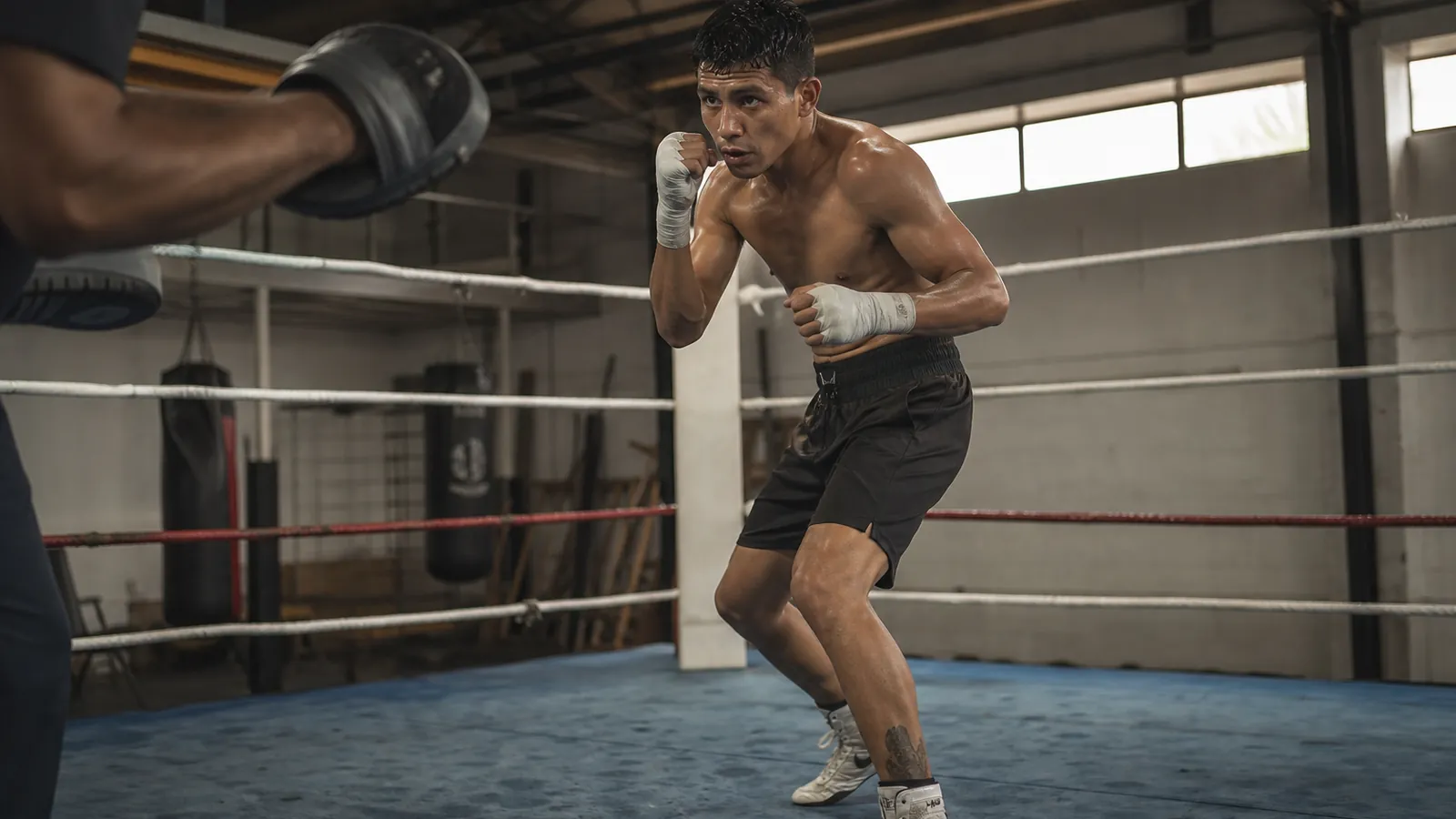
Timing is the skill of punching when the other boxer cannot answer properly. That might be when he is stepping. It might be when his weight is moving backwards. It might be when his guard has split for a fraction of a second. It might be when he has just finished his own attack and has not reset.
The Top Rank slow-motion clip matters because it lets you see that a knockout punch is rarely just a punch. It is a decision made at exactly the moment the opponent is least ready for it.
For a new boxer, this is freeing. You do not need to be the hardest puncher in the room to become dangerous. You need to become the boxer who sees the opening, keeps calm, and puts the right shot through it.
Balance Makes The Second Punch Possible
Even when the first punch finishes the fight, good boxing asks a deeper question: could you have thrown the next one?
That is one of the simplest ways to judge whether a punch was controlled. If you throw and fall in, you were not balanced. If you throw and spin yourself square, you were not balanced. If you throw and cannot defend afterwards, you were not balanced.
A proper punch should leave you able to continue. Hit, defend, move, hit again.
That is why coaches spend so much time correcting stance before talking about power. It can feel boring to beginners. Foot position, chin position, guard recovery, hip rotation, rear heel, front knee. But these details are the difference between a punch that only looks strong and a punch that actually carries fight-ending force.
López de Jesús is early in his professional career. BoxRec’s Juanma Lopez De Jesus profile and the event listings around this fight, including Tapology’s bout page for Lopez Jr. versus Alberto Motos, mark him as a developing prospect rather than a finished article. That is exactly why the clip is useful. You are not watching a veteran with every answer. You are watching a young boxer showing one habit that should travel well as the opposition improves.
He punched from balance.
That travels.
Why Southpaw Straight Lefts Hurt So Much
López de Jesús is a southpaw, and the finishing punch was the classic southpaw weapon: the straight left.
Against an orthodox opponent, that shot can be brutal when the lead feet are positioned correctly. If the southpaw gets his lead foot outside the orthodox boxer’s lead foot, the left hand has a clearer lane. The punch can travel straight through the centre while the opponent’s defence is slightly turned or late.
That does not mean the southpaw automatically wins. Plenty of orthodox fighters are excellent at taking that angle away. But it does mean beginners should understand why the foot battle comes before the hand battle.
If your feet are wrong, your best punch has to travel around the guard. If your feet are right, the punch can travel through the gap.
That is what makes the straight left so dangerous. It is not magic. It is geometry, timing and nerve.
The Bigger Card Context
The knockout came on a major night for Puerto Rican boxing, but the wider event also gave a harsh reminder that control matters at every level.
The main event ended with Jaron “Boots” Ennis stopping Xander Zayas. FIGHTMAG reported that Ennis scored knockdowns in rounds one and five before Zayas’s corner ended the contest in the seventh, while Boxing247 carried the event as a major DAZN pay-per-view card from Barclays Center.
That context matters because the undercard knockout was not happening in a small vacuum. It was part of a big, emotional Puerto Rican boxing night. Those are exactly the nights when young fighters can overperform or overreach.
López de Jesús did the useful thing. He made the moment smaller. He boxed within himself, found the shot, and ended the fight.
For a 20-year-old prospect, that is a good sign.
What Beginners Should Copy
Do not copy the knockout celebration. Do not copy the idea that every spar or bag round needs to end with someone being flattened. That is not how good gyms work.
Copy the control.
Start with these points:
Keep Your Feet Under You
Before throwing, ask whether your stance can support the punch. If your feet are too narrow, you will topple. If they are too wide, you will freeze. If your rear foot drags behind, your power leaks away.
Punch At The Right Range
A hard punch thrown from too far away becomes a reach. A hard punch thrown too close gets smothered. Good power happens at the range where your arm can extend, your shoulder can turn, and your feet still belong to you.
Do Not Chase The Finish
The quickest way to lose power is to want the knockout too badly. Chasing makes you tense. Tension slows the punch, ruins the recovery and exposes the chin. López de Jesús looked dangerous because he was not frantic.
Reset After Every Shot
Even if the punch lands, get back to shape. Hands return. Chin stays tucked. Feet stay ready. Boxing is not one heroic swing. It is repeated control under pressure.
The Lesson For Kidbrooke Beginners
At Honour & Glory, we train ages 7+ through to adults, and this is one of the first truths people learn when they stop trying to “look powerful” and start learning to box properly.
Power is not separate from technique. Power is technique expressed cleanly.
The Juanmita López knockout is exciting because it is brutal. It is useful because it is tidy. One southpaw left hand ended the fight, but the lesson is not “swing harder”. The lesson is that controlled feet, timing and balance allow the punch to matter.
That is the part beginners should take into the gym.
Not wild punching.
Not panic.
Not loading up from the car park.
Control first. Power follows.
H&G Team
Writer at Honour & Glory Boxing Club, a community boxing gym in Kidbrooke, South East London.
KEEP READING
Abass Baraou joining Top Rank: what a new platform changes
Use Baraou’s reported signing to examine what a promotional move can realistically change: opponent access, broadcast reach, activity and the difference between visibility and a genuine title route.
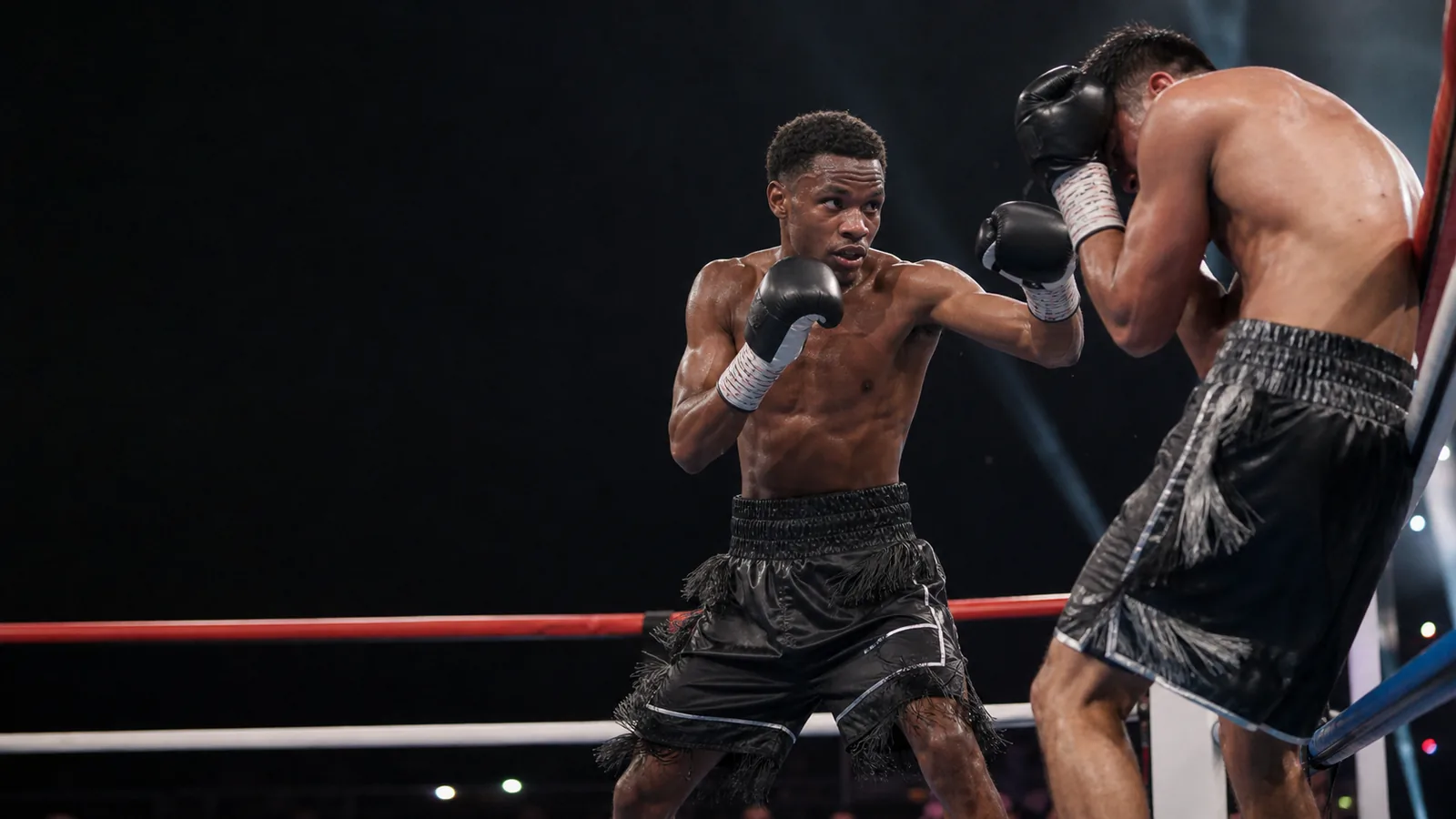
Bruce Carrington masterclass: pressure without rushing
Use Carrington’s fresh win over Mateus Heita to explain how a composed boxer builds pressure, controls range, and wins rounds without forcing a stoppage.
Itauma Stops Franklin: A Heavyweight Shift
Moses Itauma became the first fighter to stop Jermaine Franklin. What that fifth-round knockout tells us about British heavyweight boxing.
Was this page helpful?
It takes one tap, and it genuinely helps.
Choose your next step
Turn this article into the right action
Some readers are ready to book. Some need the class route first. Pick the route that matches what you actually want.