Boxing With Hay Fever: Train When Pollen Is High

Hay fever can make a normal training week feel messy. Your eyes itch, your nose runs, your throat feels dry, and the first hard round can feel sharper than it should.
That does not mean boxing has to stop every time the pollen count rises. It means the session needs a better plan. The boxer who ignores symptoms and tries to blast through a class usually ends up tense, mouth-breathing and frustrated. The boxer who adjusts early can still get useful work done.
This is the practical version for beginners, returning adults and regular H&G members who want to train through hay fever season without turning every session into a battle with their own face.
The short answer
You can usually box with hay fever if your symptoms are mild, your breathing feels normal and you are sensible with intensity. You should not train hard if you feel wheezy, dizzy, unusually breathless, feverish, or generally unwell.
The NHS lists common hay fever symptoms as sneezing, coughing, a runny or blocked nose, itchy or watery eyes, an itchy throat, headache and tiredness, with symptoms often worse from late March to September when pollen counts rise (NHS hay fever guidance). None of that is improved by pretending you are fine when you are not.
The useful question is not, "Am I allowed to train?" The useful question is, "What kind of session can I train well today?" On a low-symptom day, that might be a normal class. On a high-symptom day, it might be slower technical work, shorter bursts, more breaks and no ego on the bag.
If you are joining our Recreational Adults boxing classes, tell the coach if hay fever is affecting your breathing or eyes. It is a small detail that can change how the first half of the session is paced.
Why hay fever feels worse in boxing
Boxing exposes hay fever because the sport is stop-start and breathing-heavy.
A steady walk lets you settle. Boxing keeps asking you to punch, move, listen, reset, brace, relax and go again. If your nose is blocked, beginners often switch to noisy mouth-breathing, then grip harder, lift the shoulders and rush the combination. The symptoms are hay fever, but the bad round is usually caused by tension on top of hay fever.
It can also affect your eyes. Watery eyes are annoying in normal life. In boxing, they make distance and focus feel less clean. Bag work is usually manageable. Pad work can still be fine. Anything that needs fast visual reaction should be treated with more care when your eyes are streaming.
The answer is not to make the class soft. The answer is to make the first fifteen minutes controlled enough that you can find a rhythm. Clean jabs, tidy footwork, light pad rounds and bag work at sensible power are better than one wild round followed by twenty minutes of recovery.
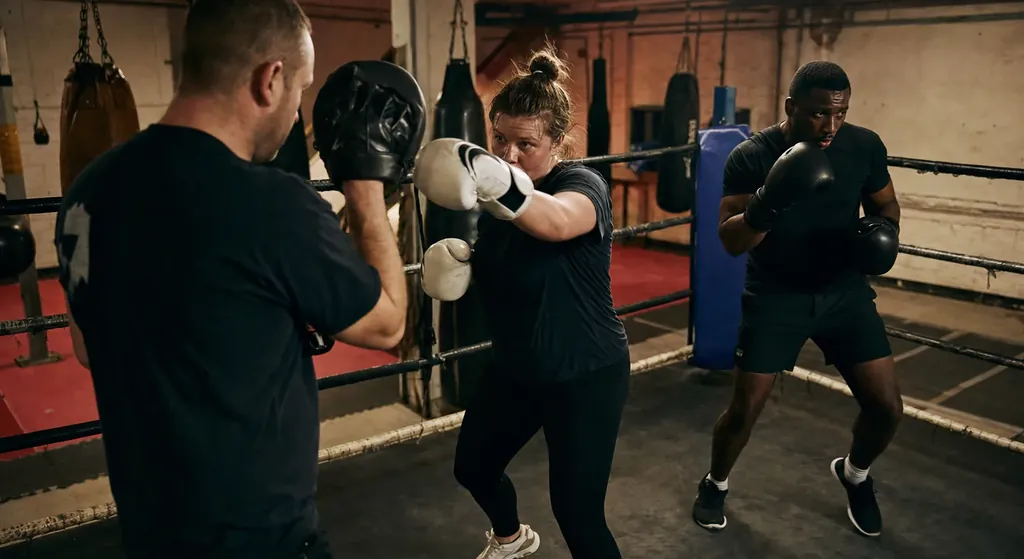
Check the pollen forecast before you decide the session
Look at the pollen forecast before you decide how hard to train. The Met Office publishes a daily UK pollen forecast, and that is more useful than guessing from how the morning felt.
A high forecast does not automatically cancel boxing. It gives you a warning. If symptoms are already active before class, arrive earlier, drink water, warm up gradually and avoid starting like you are trying to win a fitness test.
For South East London, this matters because people often arrive from different pockets of pollen exposure. Someone walking from Greenwich, Kidbrooke, Blackheath or Charlton may have spent time outside before even reaching the gym. If your symptoms are already up, say so before the warm-up rather than halfway through the first hard round.
The best training decision often happens before you leave home. Check the forecast. Notice your symptoms. Bring water. Take any hay fever treatment as advised by a pharmacist or clinician. Then train the session that fits the day in front of you.
What to do before class
The boring preparation helps most.
Do not arrive late, sweaty and irritated after rushing through pollen-heavy streets. Get in a few minutes early, wash your hands if you have been outside, fill your bottle and let your breathing settle. If your eyes are itchy, avoid rubbing them during the session, especially after touching bags, gloves, handrails or door handles.
Speak to a pharmacist if hay fever keeps interfering with training. The NHS says pharmacists can advise on treatments such as antihistamine tablets, drops or nasal sprays, and notes that some antihistamines can make people sleepy (NHS hay fever treatment advice). That last part matters for boxing. If a medicine makes you drowsy, do not ignore that before a class built around movement and reaction.
Bring tissues, but do not build the whole session around stopping every thirty seconds. If symptoms are that active, scale the work down. You can still do useful boxing by taking the pace out and keeping the skill in.

How to train on a high-pollen day
Train cleaner, not louder.
Start with controlled shadow boxing. Keep the guard relaxed, breathe through the movement and avoid smashing the first drill. On the bag, use technical rounds: jab-only rounds, one-two-step-out, body-head rhythm, or light combination rounds with a clear reset after each burst.
If you are doing pads, tell the feeder to keep the first round simple. A sensible coach will build from clean mechanics to sharper work. Hay fever days are not the time to begin with frantic six-punch combinations if you are already fighting a blocked nose.
Use this simple structure:
- first round: half pace, clean breathing, no heavy shots
- second round: add combinations, still below full power
- third round: decide whether to push or stay technical
- between rounds: drink, breathe, check whether symptoms are settling or rising
This is not weakness. It is good training. A controlled session you finish well beats an ugly session where every punch feels like a panic response.
Our guide to breathing properly in boxing is worth reading if hay fever makes you gasp or hold tension. The habit is the same: small exhales on the work, calmer breathing on the reset.
Indoor boxing can be easier than outdoor training
For some people, an indoor boxing class is easier to manage than outdoor running during hay fever season. You are not spending the whole session moving through parks, grass verges or windy streets. You are in a coached space where intensity can be changed quickly.
That does not make indoor boxing pollen-proof. Pollen still comes in on clothes, hair, bags and open doors. Dust can also irritate some people. But a gym session gives you more control than a long outdoor run where you are stuck finishing the route even if symptoms rise.
This is where boxing suits normal adults. You can train hard without needing every minute to be maximal. You can do footwork, bag work, pads, skipping, core work and mobility. You can make the session technical when the body is not giving you a perfect day.
If heat is part of the problem as well, read our guide to hot weather boxing training. Hay fever and heat together can make beginners over-breathe early, so the first round needs even more discipline.

Breathing, asthma and when to stop
Do not treat breathing symptoms casually.
Hay fever can be annoying. Wheezing, chest tightness or unusual breathlessness is a different conversation. Stop training and speak to the coach if your breathing feels wrong. If you have asthma, follow your asthma action plan and bring your prescribed inhaler. A boxing coach can scale training, but a coach is not a replacement for medical advice.
Our careful guide to boxing with asthma for beginners covers that topic in more detail. The short version is simple: tell the coach early, keep medication available if prescribed, and do not use a hard class to test whether your breathing is safe.
You should also stop if your eyes are so watery that you cannot see properly, if you feel dizzy, or if tiredness feels unusual rather than normal training fatigue. Boxing asks for attention. If hay fever has taken too much of that attention away, change the session or call it there.
What not to do
Do not use hay fever as a reason to abandon training for three months if your symptoms are mild and manageable. Consistency still matters.
Do not use hay fever as a reason to be reckless either. The worst version is turning up irritated, skipping the warm-up, loading every punch, mouth-breathing through the round, then blaming the pollen for everything. Pollen may be part of it. Poor pacing is usually part of it too.
Do not wear yourself out before class with an unnecessary outdoor run on a high-pollen day. If you want extra work, keep it light or move it indoors. Do not try a new medicine for the first time and then assume your reaction time will be normal. Do not rub your eyes with glove wraps that have been on the gym floor.
Most of this is ordinary common sense. Hay fever just makes the cost of ignoring it more obvious.
A simple H&G plan for hay fever season
Use this plan when pollen is high:
- Check the forecast before class.
- Notice whether symptoms are mild, moderate or already hard to manage.
- Arrive early and settle your breathing.
- Tell the coach if symptoms affect breathing, eyes or energy.
- Start the warm-up at controlled pace.
- Choose technical rounds before maximum-output rounds.
- Stop if breathing or vision feels wrong.
That is enough for most people. You do not need a dramatic hay fever protocol. You need a session that respects the conditions without letting them run your whole summer.
Boxing is still one of the best ways to stay active when ordinary fitness routines feel stale. It gives you skill, structure, stress relief and a room full of people doing the same work. Hay fever may change the pace for a few weeks. It does not have to take the sport away from you.
If you want to start in a coached environment rather than guessing alone, book a free trial session at Honour and Glory Boxing Club.
H&G Team
Writer at Honour & Glory Boxing Club, a community boxing gym in Kidbrooke, South East London.
KEEP READING

I Tried Boxing for 30 Days: What Actually Changed
Thirty days of boxing training at Honour and Glory - what actually changed physically and mentally, and what takes longer than a month to show up.

Why You Get a Side Stitch During Boxing
A side stitch during boxing is common, but not every pain is one. Learn what to change in the round and when to stop.

How Often Should You Train Boxing?
Two times a week? Three? Every day? Find out how often you should train boxing based on your goals, experience level, and lifestyle - with honest advice on what actually works.
Was this page helpful?
It takes one tap, and it genuinely helps.
Choose your next step
Turn this article into the right action
Some readers are ready to book. Some need the class route first. Pick the route that matches what you actually want.