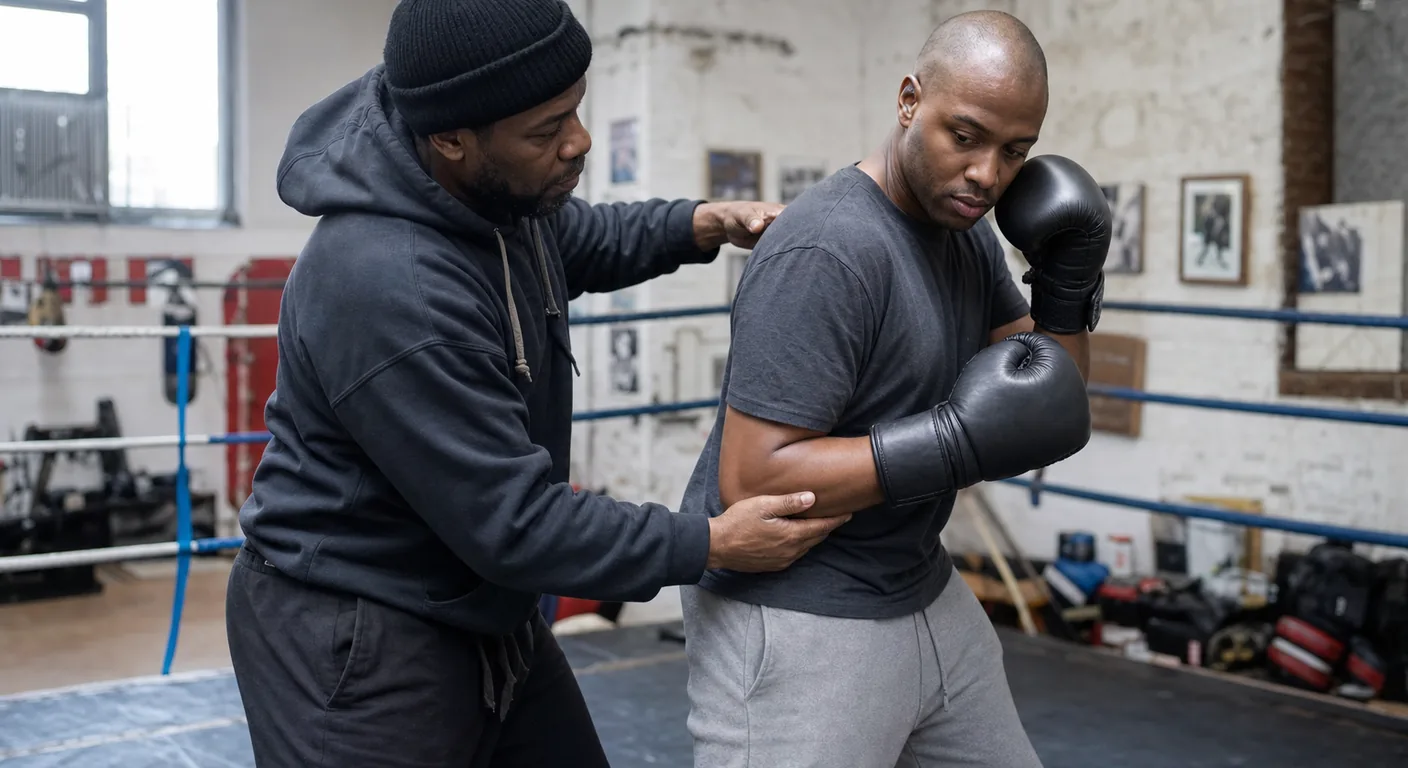
Getting hit in boxing is normal. Staying easy to hit is usually optional.
That distinction matters for beginners. A lot of new boxers think they are getting caught because they have slow reflexes, poor reactions, or no natural talent. Sometimes speed is part of it. More often, the problem is simpler: their default shape gives the other boxer too much to hit.
They stand too square. Their head sits on the centre line. Their rear hand drops when they jab. Their feet are even, flat, or too close together. They punch and stay where the punch started. Then they wonder why the other person keeps finding them.
Boxing is not only about throwing shots. Research on technical and tactical boxing profiles describes performance through punching, movement, defence, distance and tactical behaviour together. In gym language: if your stance and movement are poor, your defence is already late.
Here is why beginners are so easy to hit, and what to fix first.
1. You stand too square
The square stance is the beginner giveaway.
Both shoulders face the opponent. Both feet point forward. The chest is broad. The head sits in the middle. It can feel strong because both hands seem available, but it gives the other boxer a large target and fewer problems to solve.
A more useful boxing stance makes you narrower without making you stiff. The lead shoulder turns slightly toward the opponent. The rear hand protects the chin. The feet give you balance and a line of escape. You are not hiding, but you are not offering your whole body either.
That is why stance work can feel boring and still change everything.
A beginner who is square has to make big defensive movements. A boxer with a better stance often needs smaller ones. The shoulder already covers a lane. The chin is already less available. The rear hand is already near home. The feet are already ready to move.
A simple check:
- Stand in your boxing stance.
- Look down and check that your feet are not on one tight line.
- Turn your lead shoulder slightly toward the target.
- Keep the rear hand near the cheek.
- Ask whether you can jab, defend, and step out without rebuilding the stance.
If the answer is no, fix that before adding more punches.
2. Your weight is stuck in the wrong place
Beginners often stand as if they are waiting for a bus: weight even, knees loose but inactive, feet not ready to push.
That looks harmless until someone punches.
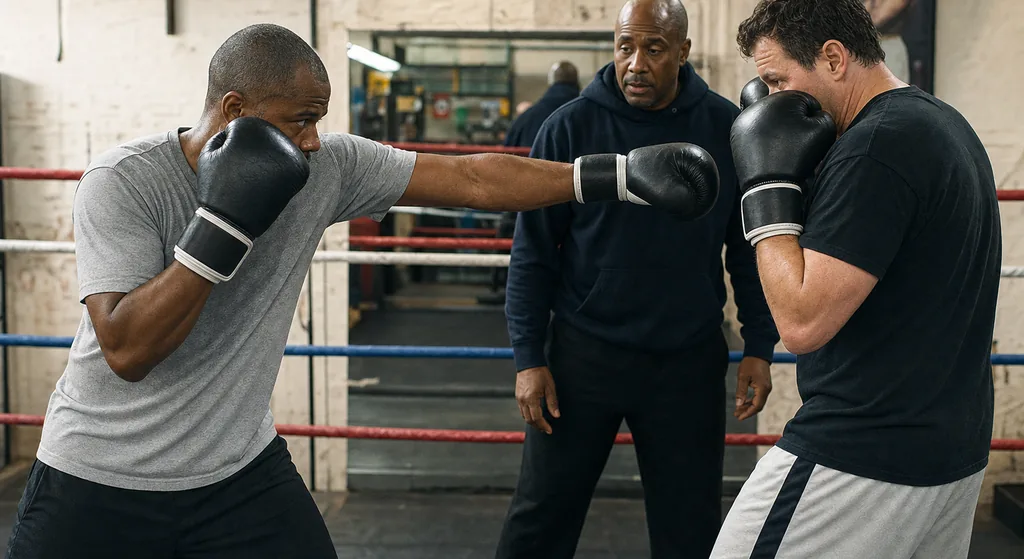
If your weight is too far forward, you lean into counters. If your weight is too far back, your jab becomes a reach and your right hand has no base. If your feet are flat, you cannot adjust quickly. If your stance is too narrow, one step or one missed punch can tip you over.
Good defence starts before the punch arrives. You need enough balance to move your head, enough base to bring the hands home, and enough foot pressure to leave the line.
My Boxing Coach's boxing stance guide makes a useful point about foot position and balance: small details in the feet change whether the rest of the body can work. That is exactly what beginners feel when their hands know what to do but their feet do not support it.
Try this drill on the spot:
- Take your stance.
- Throw a single jab.
- Freeze.
- Check whether your head has fallen over the front knee.
- Check whether your rear hand is still home.
- Step out and repeat.
If you cannot freeze in a useful position after one jab, the problem is not the opponent yet. It is your shape.
3. Your jab opens the door
The jab should be one of the safest punches in boxing.
For beginners, it often becomes an invitation.
The hand goes out and stays out. The rear hand drops. The chin follows the punch. The front foot reaches too far. The shoulder does not cover the jaw. The jab is thrown like a tap before the real punch, rather than a defensive tool in its own right.
That is why beginners get countered by shots they feel they should have seen coming. They did see the danger. They just left the door open.
A better jab protects you while it scores.
The shoulder rises slightly. The rear hand stays home. The chin stays quiet. The feet move just enough. The hand comes back straight. You are using the jab to ask a question, not to abandon your guard.
Our guide on how to throw a jab in boxing covers the punch in more detail, but the defensive version is simple: the jab is not finished when it lands. It is finished when it comes back and your stance still works.
Use a jab-only round with rules:
- every jab returns straight to guard
- the rear hand stays near the cheek
- the head does not drift over the front foot
- every miss is followed by a reset or a step
- no right hand until the jab is clean enough to deserve one
That round will expose you quickly. Good. That is the point.
4. You defend after the punch instead of during it
A lot of beginners treat defence as a separate event.
First they attack. Then, if something comes back, they try to defend.
That is too late.
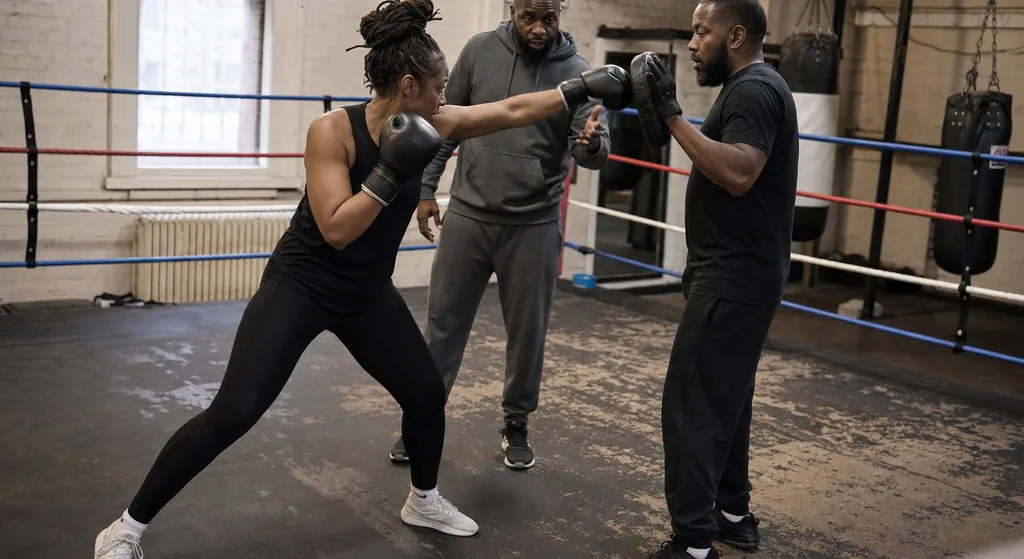
In boxing, defence needs to be built into the punch. Your jab should bring your hand back. Your right hand should not leave your left hand asleep. Your hook should finish with your chin protected. Your combination should end with a step, guard, slip, roll, frame, or reset.
The beginner habit is to punch and admire it. Even if the punch lands, the head often stays in the same place. The other boxer does not need to be clever. They just answer where you still are.
Think of every attack as having a return journey:
- jab, hand back, small step
- jab-cross, high guard, reset
- hook, hand home, roll under
- body shot, elbow back in, head off the line
- combination, small angle before looking again
Our boxing defence techniques for beginners article explains the main tools, but the order matters. Do not wait until you have been hit to remember defence exists.
5. Your head lives on the centre line
The centre line is where beginners spend too much time.
They start there, punch from there, finish there, and reset there. That makes the other boxer comfortable. The straight shot has a path. The counter hook has a target. Even a slow punch can land if the target never moves.
This does not mean beginners should start doing wild head movement.
Random slipping is not defence. Dropping your head with no view of the opponent is not defence. Rolling under punches you cannot read yet is not clever. Advanced defence without basic stance is usually just guessing with style.
Start smaller.
Move your head a few inches when you jab. Bring the rear hand home. Step off after the second punch. Finish your right hand with your chin tucked and your eyes up. Make the other boxer adjust before they answer.
A useful coaching cue is: do not be there twice.
If you jab from the centre, do not leave your head in the same place after it. If you throw the right hand, do not finish tall in the same lane. If you miss, do not wait on the centre line to find out what happens next.
6. You only practise defence when someone is trying to hit you
This is a big one.
Beginners often practise punches on the bag, combinations on pads, and defence only when sparring begins. That makes defence feel like panic instead of skill.
The fix is to put defence into normal training before the pressure rises.
England Boxing's sparring resource describes a progression from technique sparring to conditioned sparring and open sparring, with coaches controlling variables such as power, speed, distance, task and pressure. That is a sensible way to think about beginner defence. You should not learn every defensive habit for the first time in an open round.
At H&G, a defensive progression might look like this:
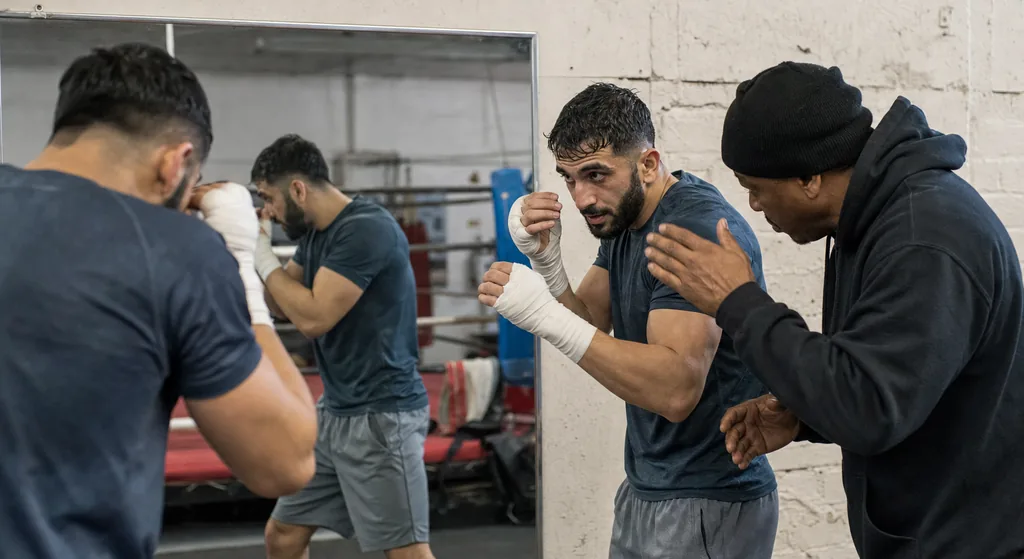
Stage 1: stance mirror check
Stand in front of a partner or mirror. Check shoulder angle, rear hand, chin, feet and balance. No punches yet. Build the shape.
Stage 2: jab with guard rule
Throw a jab while the coach watches only one thing: does the rear hand stay home? If not, slow down.
Stage 3: jab and step out
Throw the jab, bring it back, and take a small angle. Do not leap away. Just leave the lane.
Stage 4: jab-cross-slip-return
Throw two straight shots, slip slightly, return to stance. The slip is small. The aim is not drama. The aim is to finish balanced.
Stage 5: conditioned partner round
One boxer jabs. The other can only catch, parry, or step. Low power, clear rules, coach watching. Now the defensive habit has pressure, but not chaos.
That is how defence becomes normal.
What beginners should not copy too early
The internet makes this harder than it needs to be.
New boxers see shoulder rolls, pull counters, switch stances, low guards, hand traps and clever slips. Those tools can be real. They are also easy to copy badly.
The danger is skipping the boring layer.
If you cannot hold a basic stance, do not build your defence around a shoulder roll. If your jab drops every time, do not start trying to bait counters. If your feet cross when you step out, do not make your first goal advanced angle work.
Get hard to hit in the simple ways first:
- stand less square
- keep the rear hand useful
- bring the jab home
- move after punching
- defend as part of the attack
- reset before you rush
- practise under controlled pressure
That list is not glamorous. It works.
The simple rule
Beginners are easy to hit because they make the target obvious.
The fix is not magic reflexes. It is better shape, cleaner habits and coached pressure.
Turn the shoulders a little. Keep the rear hand alive. Jab without giving away the chin. Move your head and feet by small amounts. Build defence into every punch. Practise it before sparring becomes messy.
If you are in Greenwich, Kidbrooke, or nearby, our Recreational Adults boxing classes are built around this kind of correction: stance, guard, footwork, partner drills and controlled rounds that make beginners harder to hit for the right reasons.
H&G Team
Writer at Honour & Glory Boxing Club, a community boxing gym in Kidbrooke, South East London.
KEEP READING
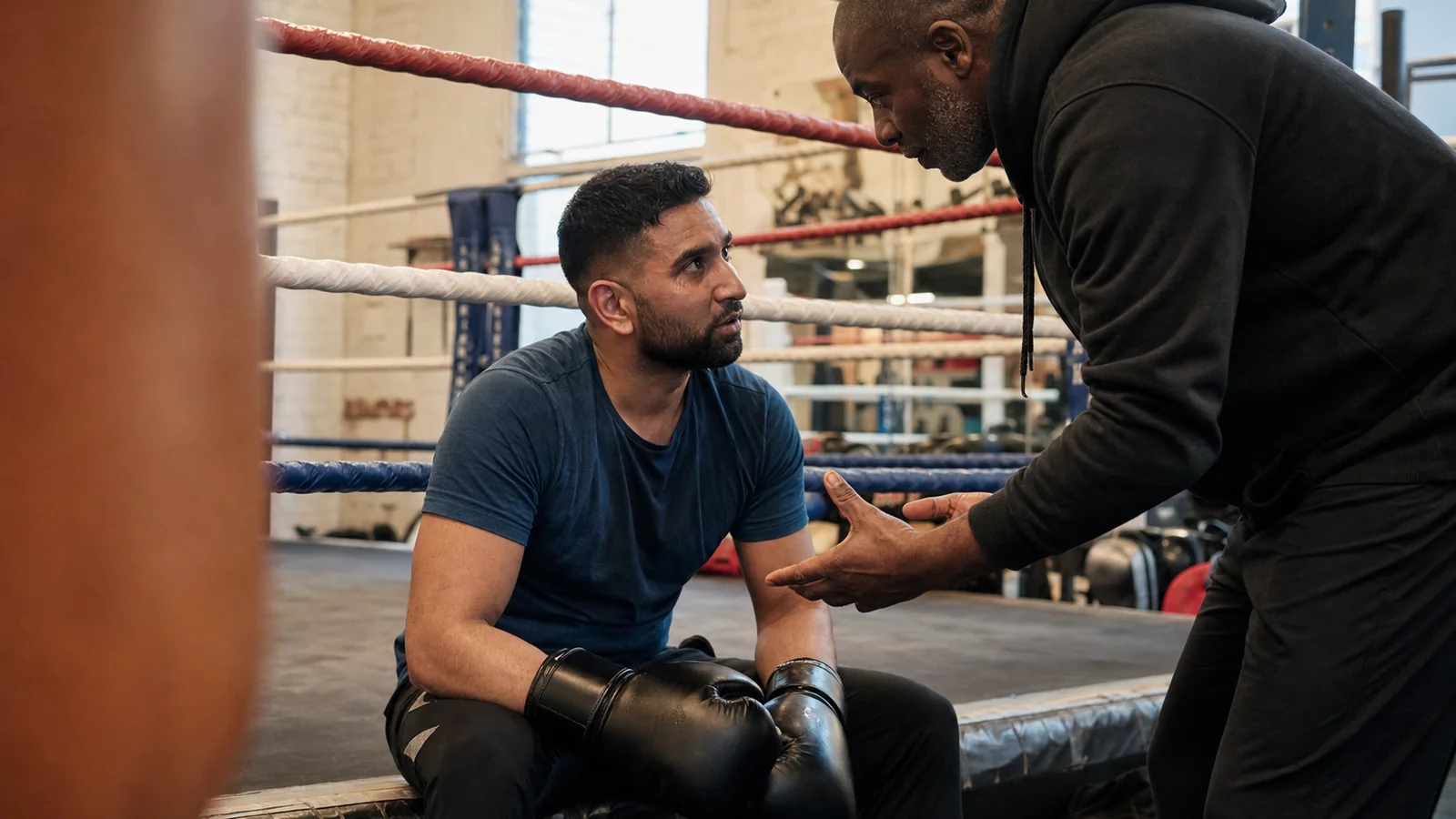
Boxing Lessons Beginners Learn the Hard Way
Most beginners chase power, big combinations and toughness. Better boxing usually comes from calmer breathing, cleaner feet, a sharper jab and fewer thoughts at once.
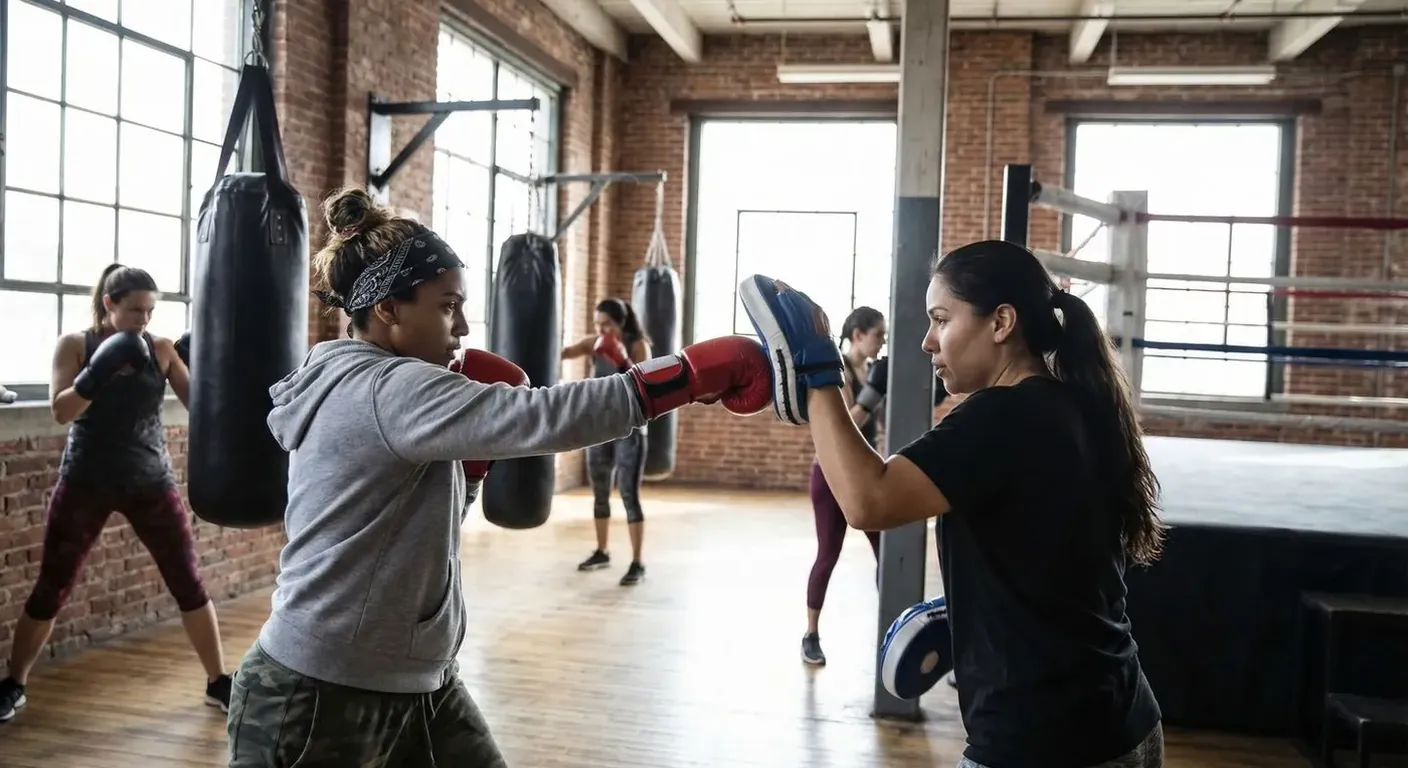
Boxing for Overthinkers: Get Out of Your Head
If your brain keeps running after work, boxing gives it a cleaner job: move, breathe, listen, hit pads and reset.
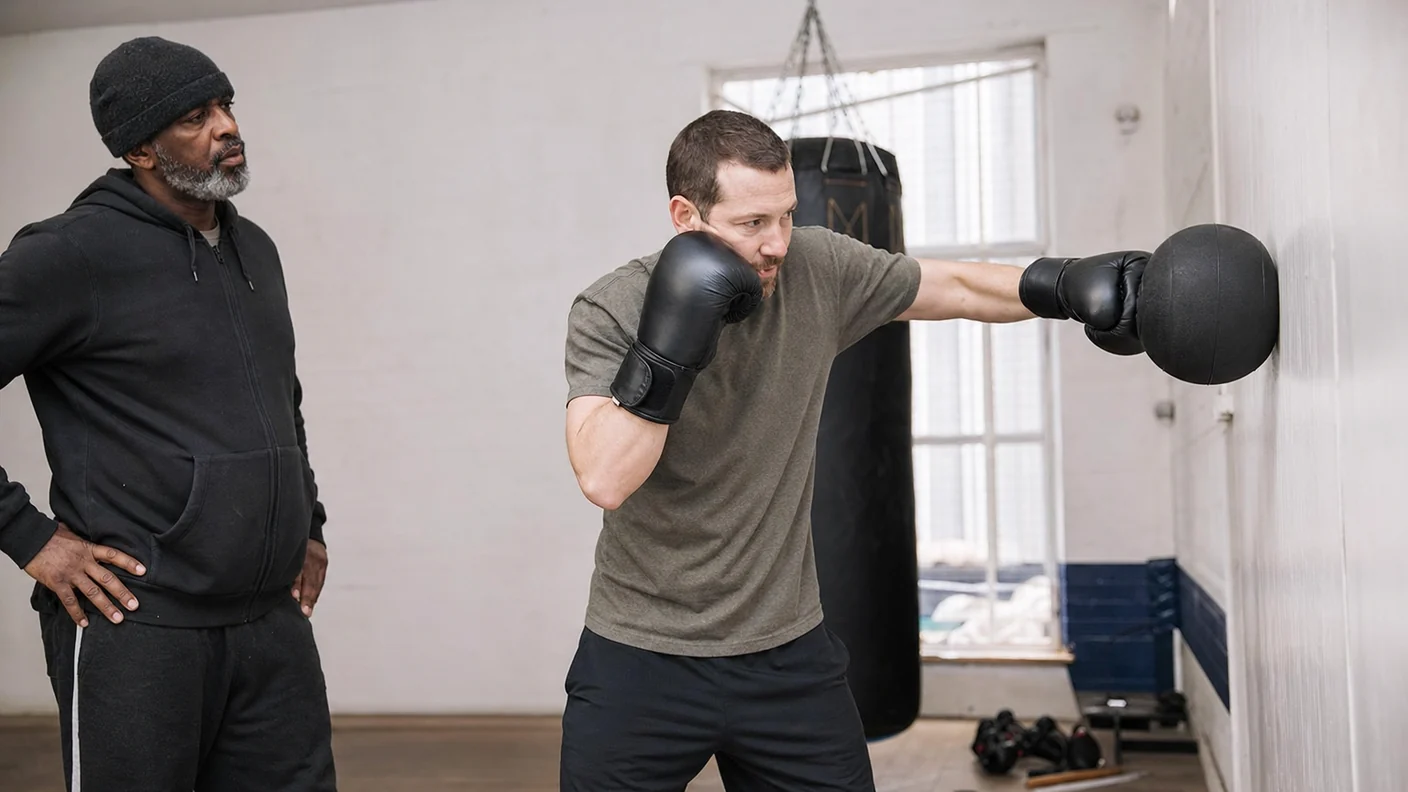
Medicine Ball Wall Drill for Boxing
A simple wall-ball punching drill can sharpen speed, stance and shoulder endurance if you keep it light, tidy and controlled.
Was this page helpful?
It takes one tap, and it genuinely helps.
Choose your next step
Turn this article into the right action
Some readers are ready to book. Some need the class route first. Pick the route that matches what you actually want.