
If you are new to boxing, the first pad round can sound like a code.
The coach says "one-two". Then "one-two-three". Then something like "one-six-three, move" and everyone else seems to know what is happening.
Boxing punch numbers are not there to make the sport mysterious. They are there to make coaching faster. Instead of saying "jab, cross, lead hook" every time, a coach can say "1-2-3" and the boxer knows the shape of the combination straight away.
That matters because boxing happens quickly. You do not want to be translating language while your feet, guard and breathing fall apart. The number system gives beginners a simple shared language, then the real coaching can start.
The basic boxing punch numbers
Most beginner boxing gyms use a 1-6 system:
- Jab - lead hand straight punch
- Cross - rear hand straight punch
- Lead hook - lead hand hook
- Rear hook - rear hand hook
- Lead uppercut - lead hand uppercut
- Rear uppercut - rear hand uppercut
Some gyms add 7 and 8 for extra shots such as overhands, body hooks, or more advanced variations. That is why you should always listen to your own coach's system. But if you understand 1-6, you can walk into most beginner boxing sessions and follow the basic pad calls.
If you want a punch-by-punch technique breakdown, start with our guide to the basic boxing punches for beginners. This article is about the numbering system: how to understand it, combine it, and avoid the beginner traps.
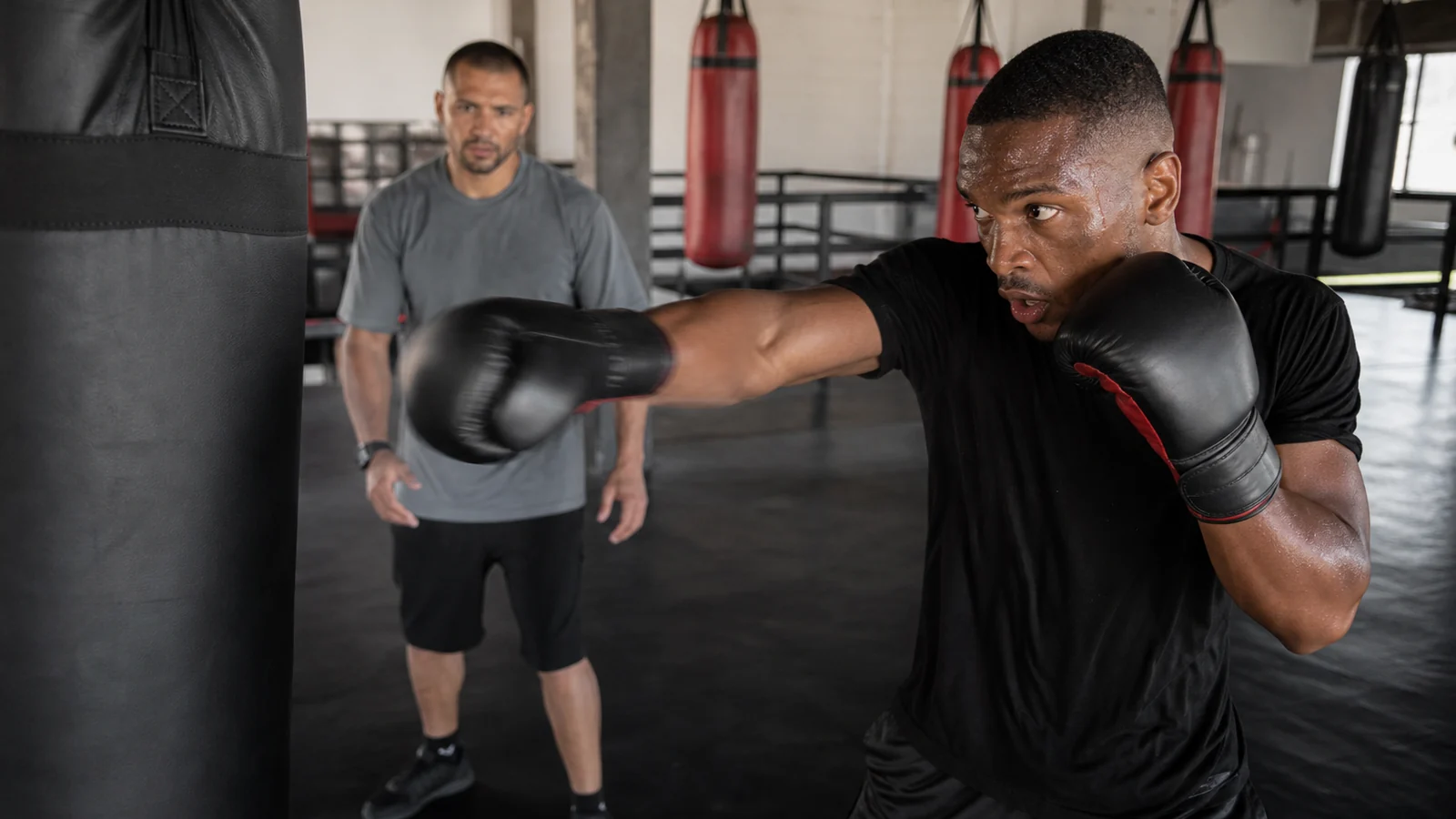
Lead side and rear side matter more than left and right
The most useful way to understand punch numbers is not left hand versus right hand. It is lead side versus rear side.
For an orthodox boxer, the lead hand is usually the left hand and the rear hand is usually the right hand. For a southpaw, it is reversed. The numbering still makes sense because the job of the punch is the same:
- 1 and 2 are straight punches. One comes from the lead side, one comes from the rear side.
- 3 and 4 are hooks. One comes from the lead side, one comes from the rear side.
- 5 and 6 are uppercuts. One comes from the lead side, one comes from the rear side.
That pattern helps beginners stop memorising random numbers. Odd numbers are usually lead-side punches. Even numbers are usually rear-side punches.
There are exceptions in some gyms, but this pattern is the cleanest starting point.
Why coaches use numbers instead of punch names
Numbers let a coach give information quickly.
On pads, a coach might call "1-2" and immediately see whether the boxer understands stance, distance, rotation and guard recovery. If the coach has to say "jab, cross, bring the hands back, do not fall in, turn the hip, breathe", the round slows down and the boxer overloads.
Numbers also make combinations easier to build.
A coach can start with:
- 1 - jab only
- 1-2 - jab-cross
- 1-2-3 - jab-cross-lead hook
- 1-2, slip, 2 - jab-cross, defend, cross back
- 1-2-3, pivot - jab-cross-hook, leave on an angle
The numbers are only the skeleton. The coaching is in the details: feet, balance, guard, rhythm, defence and decision-making after the shot.
That is why a boxer who simply memorises numbers is not automatically boxing well. You can know that 3 means lead hook and still throw it from the wrong range, with your chin in the air and your feet square.
How to read common boxing combinations
Here are the combinations beginners hear most often, with what they should teach you.
1-2: jab-cross
This is the first serious combination most boxers learn.
The jab measures, blinds, touches, or disrupts. The cross follows through the lane the jab helped create. For a beginner, the key is not power. It is order.
A good 1-2 should teach you:
- the lead hand starts the conversation
- the rear hand follows without reaching
- the rear hip and foot rotate on the cross
- both hands return to guard
- your feet stay underneath you
If your 1-2 makes you fall forward, you are not ready to make it faster. Slow it down and fix the shape.
1-2-3: jab-cross-lead hook
The 1-2-3 teaches you to change line.
The first two punches travel straight. The third comes around the side. That is useful because opponents do not defend in one neat lane. A high guard can block straight punches, then still leave space around the side for the hook.
For beginners, the danger is swinging the hook too wide. The 3 should be compact. Elbow roughly level with the fist. Chin tucked. Rear hand home. Feet balanced.
If the hook makes you spin past the target, you are throwing too hard or too long.
1-1-2: double jab-cross
A double jab is not just two lazy taps before the right hand.
The first jab can measure. The second can step you into range or make the guard react. Then the cross lands because the opponent has been made to look at the lead hand.
This is a good beginner combination because it teaches patience. You do not have to rush to the power shot. Sometimes the second jab is what earns it.
2-3-2: cross-hook-cross
This one feels exciting, so beginners often throw it too soon.
The pattern is useful because it alternates sides and uses body rotation well. Rear hand, lead hook, rear hand. But it only works when your stance survives the first 2. If you throw the cross and fall over your lead knee, the hook and final cross become arm punches.
A coach may use 2-3-2 to teach you how one punch loads the next. The cross rotates one way. The hook rotates you back. The final cross uses that return rotation.
It should feel connected, not frantic.
1-6-3: jab-rear uppercut-lead hook
This is more advanced, but you may hear it on pads.
The jab starts the entry. The rear uppercut comes up the middle. The lead hook follows around the side. It teaches level change and angle change in a short sequence.
For beginners, the big warning is range. Uppercuts are not long-range punches. If you try to throw a 6 from too far away, you will lean, lift your chin, or punch thin air.
Use this kind of combination slowly at first. Learn the shape before you chase speed.
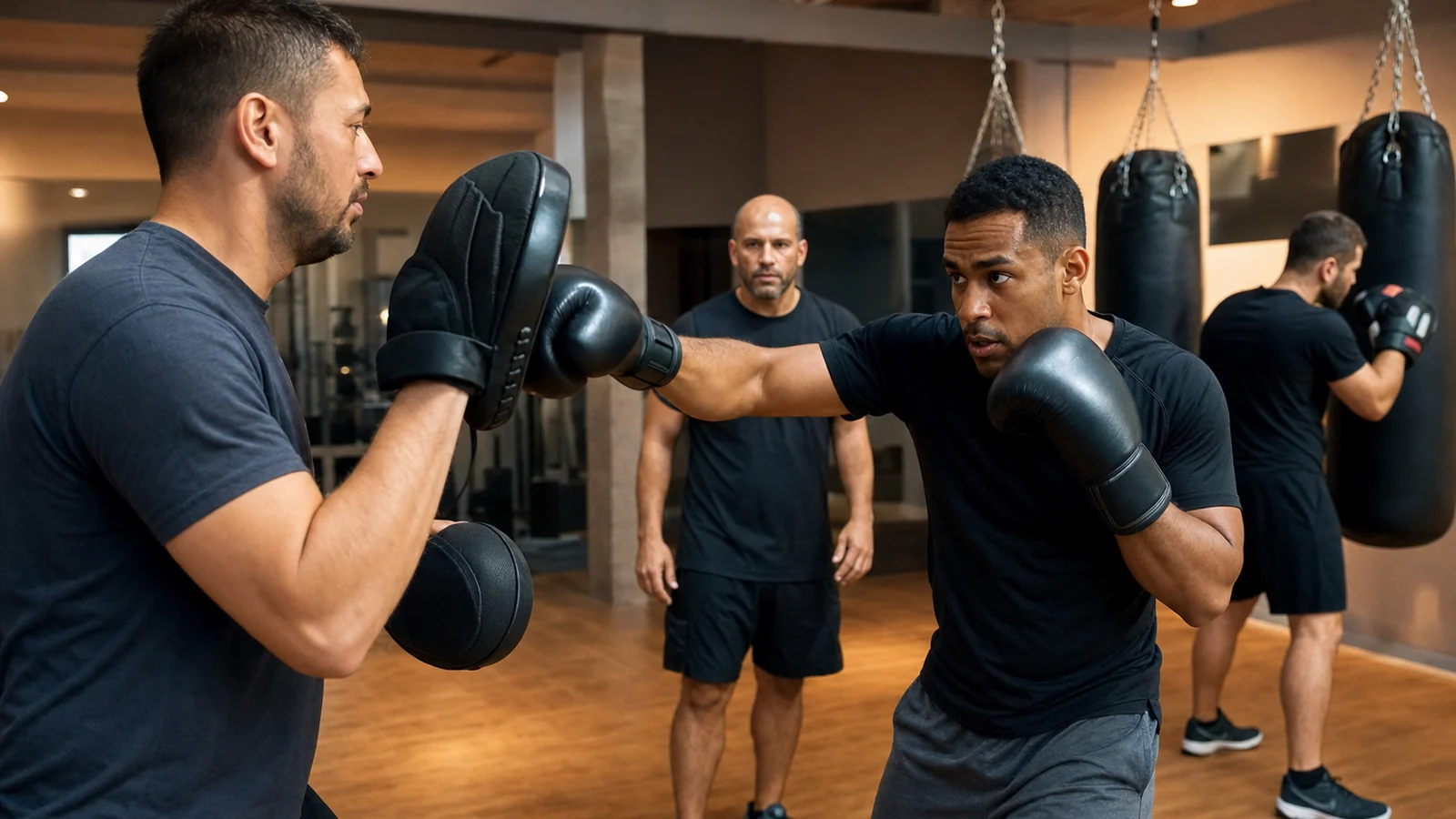
Numbers do not replace technique
This is the mistake we see most often: a beginner learns the code and thinks the skill is done.
It is not.
A coach calling "1-2-3" is not asking for any jab, any cross and any hook. They are asking for the right version of each punch at the right range, with the right feet, with the right recovery.
Every number still needs:
- stance
- balance
- breathing
- hand return
- chin position
- hip rotation where appropriate
- the non-punching hand in guard
- an answer after the combination finishes
That last point matters. In boxing, the combination is not the end of the exchange. If you finish your 1-2-3 in front of someone with your hands down, you have done half the job and left the dangerous half untouched.
Our guide on what to do after you punch in boxing explains that next decision: reset, defend, exit, angle, or build again.
The beginner drill: call, punch, freeze
Here is a simple drill we use with new boxers because it shows the truth quickly.
Pick one short combination. Start with 1-2.
- Coach or partner calls the numbers.
- Boxer throws the combination at half speed.
- Boxer freezes at the end.
- Check the position before throwing again.
Ask:
- Are both hands back?
- Is the chin tucked?
- Are the feet still in stance?
- Is the rear heel organised after the cross?
- Can the boxer move immediately?
- Could the boxer defend if a punch came back?
If the answer is no, do not add more punches. Clean the ending first.
This drill is not glamorous. It works because it stops beginners hiding bad shape behind speed and effort.
How to practise punch numbers on the bag
The heavy bag is useful, but it can also flatter you. It will not counter, judge your balance, or punish a dropped hand.
Use rules.
Round 1: single numbers
Call or choose one number at a time: 1, 2, 3, 4, 5, 6. Throw it cleanly, return to guard, move your feet, then choose the next one.
The aim is recognition and clean mechanics.
Round 2: short combinations
Use only 1-2, 1-1-2 and 1-2-3. Keep the pace moderate. Do not chase noise from the bag. Chase clean return to stance.
The aim is rhythm without rushing.
Round 3: add the exit
Every combination ends with a decision:
- step back
- pivot
- roll
- high guard
- reset
- jab again
The aim is to stop treating the final punch as the finish line.
Round 4: coach calls only
If you have a coach or training partner, let them call numbers randomly. Your job is to respond without tensing, guessing, or throwing extra shots.
The aim is calm listening under fatigue.
Common mistakes with boxing punch numbers
Trying to learn too many combinations at once
A beginner does not need 30 combinations.
You need a small number you can throw correctly. A clean 1-2, 1-1-2 and 1-2-3 will teach you more than a messy eight-punch pad sequence performed for social media.
Forgetting what the jab is for
Because 1 is the simplest number, beginners sometimes treat it as disposable. That is backwards. The jab sets range, rhythm and timing. If your 1 is weak, rushed or lazy, the rest of the combination usually falls apart.
Throwing numbers like a drum beat
A combination is not just equal beats: one, two, three, four.
Good boxing changes rhythm. Sometimes the jab is a touch and the cross is sharp. Sometimes the first jab is a probe and the second jab steps in. Sometimes there is a pause after the 1 to see what the opponent does.
Numbers help you remember the order. They do not tell you the timing by themselves.
Dropping the hand that is not punching
When the right hand punches, the left hand guards. When the left hand punches, the right hand guards. Beginners forget this because their attention follows the punching glove.
A good coach watches the quiet hand as much as the active hand.
Ignoring the feet
Punch numbers are hand language, but boxing is still built from the floor.
If your feet cross, narrow, square up, or freeze, the numbers will not save you. You can throw the correct sequence and still be in a terrible position. Pair combination practice with footwork work, especially simple step-drag movement, pivots and exits.

Do punch numbers change for southpaws?
The idea stays the same, but the hands reverse.
A southpaw's lead hand is usually the right hand. So their 1 is a right jab, their 2 is a left cross, their 3 is a right hook, and their 6 is a left uppercut.
That is why lead and rear language matters. If a coach explains everything as left and right, southpaws have to translate constantly. If the coach explains lead and rear, the system stays clean.
Our southpaw stance guide breaks down the stance, jab and rear hand in more detail.
What should a beginner learn first?
Start with these four layers:
- Learn what 1-6 means.
- Learn the mechanics of each punch slowly.
- Learn three short combinations: 1-2, 1-1-2 and 1-2-3.
- Learn to finish each combination in shape.
That is enough for your early sessions.
You do not need to memorise every possible pad call. You need to understand the pattern so that when a coach calls numbers, you can stay calm and focus on quality.
The simple rule
Punch numbers are a language, not a shortcut.
They help coaches communicate. They help beginners recognise combinations. They help pad rounds move. But the numbers only matter if the boxing underneath them is organised.
So learn the code, then keep asking the better questions:
- Was I in range?
- Did my feet stay under me?
- Did my hands come back?
- Did I breathe?
- Did I finish safe?
- Did the first punch actually set up the next one?
That is where the real learning happens.
If you want to learn punch numbers properly, come into a coached session. You will hear the calls, feel the rhythm on pads, and get corrected before bad habits settle in.
H&G Team
Writer at Honour & Glory Boxing Club, a community boxing gym in Kidbrooke, South East London.
KEEP READING
Boxing Combinations for Beginners
Learn the essential boxing combinations every beginner needs to know. From the basic 1-2 to more advanced sequences, these combos form the foundation of your offence.
Why You Rush Boxing Combinations
Rushing makes combinations fall apart. Learn how to slow the first punch, keep your stance and build speed that still looks like boxing.
How to Punch in Bunches Without Getting Hit
Learn how to throw boxing combinations without pausing, reaching or leaving your chin available for the return shot.
Was this page helpful?
It takes one tap, and it genuinely helps.
Choose your next step
Turn this article into the right action
Some readers are ready to book. Some need the class route first. Pick the route that matches what you actually want.