Boxing vs Taekwondo
Boxing is punches. Taekwondo is kicks. That is the simplest summary, but the differences go far deeper. One has a belt system and forms. The other has a rich professional circuit and no belts at all. Both are Olympic sports. Both teach discipline. Here is the honest comparison.

Hands vs Feet
Boxing
Punching only. Four punches, infinite combinations. Tight defence, close-to-mid range.
- • Jab, cross, hook, uppercut
- • Head movement and slipping
- • Footwork and angles
- • No belt system or grading
- • Professional and amateur competition
Taekwondo
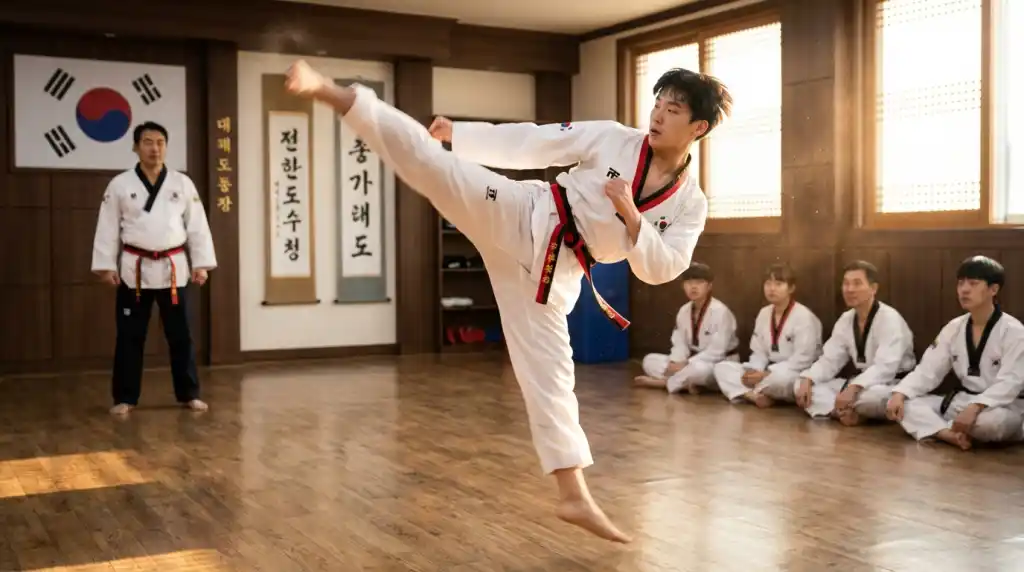
Kick-dominant. Spinning kicks, head kicks, and jumping techniques. Long range, spectacular athleticism.
- • Roundhouse, axe, spinning, side kicks
- • Forms (poomsae/patterns)
- • Board breaking demonstrations
- • Belt system (white to black, 10+ ranks)
- • Olympic and World Taekwondo competition
As BoxerCue's detailed analysis noted, boxing prioritises hands and close-range effectiveness, while taekwondo prioritises kicks and longer-range techniques. The physical demands of each reflect this: boxing develops upper body power and reactive hand speed; taekwondo develops hip flexibility, leg strength, and acrobatic ability.
Self-Defence: The Hard Truth
This is where the comparison gets direct. As the r/SelfDefense community discussed extensively, boxing is generally considered more effective for real-world self-defence. The reasons are practical rather than theoretical.
Boxing trains with genuine pressure. Sparring in boxing involves being hit and hitting back with real intent (controlled, but real). This develops the ability to think under pressure, manage adrenaline, and maintain technique when stressed. Many taekwondo schools spar with limited contact, which develops technique but not the ability to perform under genuine pressure.
High kicks, while spectacular, are risky in a real confrontation. They require space, balance, and clean footing. Street confrontations typically happen at close range, on uneven surfaces, often with restricted clothing. Boxing's close-range punching and defensive head movement are more directly applicable to these situations.
Competition Pathways
Both are Olympic sports, so both offer competition pathways from grassroots to the Games. Boxing has a more established professional circuit (with promoters, title fights, and pay-per-view events) as well as an extensive amateur system. In the UK, Amateur Boxing Alliance (ABA) affiliated clubs provide a clear pathway from novice to national competition.
Taekwondo competition is structured through World Taekwondo and the belt grading system. Competitions are typically organised by weight and belt level, which provides clear progression. The forms (poomsae) element also allows non-contact competition, which appeals to people who want the competitive element without full-contact sparring.
One practical difference: boxing belt grades do not exist. You measure your progress by your ability, your sparring, and eventually your competitive record. Taekwondo's belt system provides visible milestones, which some people find motivating. Others find that the belt system can become a commercial exercise, with gradings costing £30-£50 each and new belts required regularly.

Kids Programmes and Cost
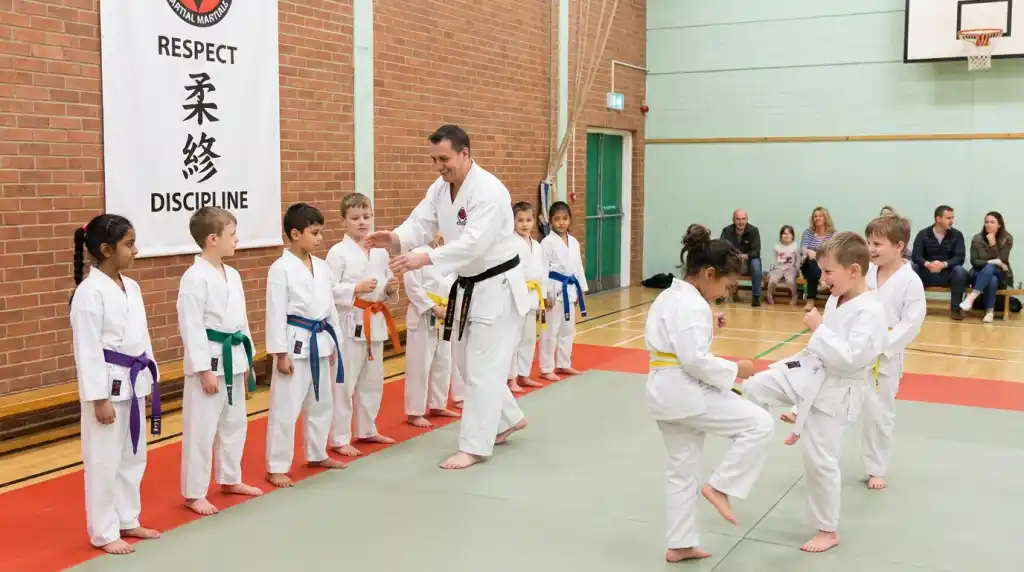
Both sports are popular choices for children. Taekwondo's belt system gives kids visible goals and a sense of progression, which is genuinely valuable for young learners. The forms and patterns also develop coordination and memory. Many parents choose taekwondo specifically for the discipline and structure it provides.
Boxing for kids focuses on fitness, coordination, and confidence. At Honour and Glory, our juniors programme teaches real boxing technique in a supportive environment. There are no belts to pay for, no forms to memorise, and no grading fees. Children learn through doing rather than through a prescribed syllabus.
Cost Comparison
Fitness and Physical Demands
Boxing and taekwondo develop different physical qualities. Boxing builds upper body endurance, explosive hand speed, and cardiovascular fitness. The constant guard position develops shoulder endurance that no other activity matches. A boxing session burns calorie burn varies by body size, intensity and session format.
Taekwondo develops hip flexibility, leg strength, and dynamic balance to a degree that boxing does not. The ability to throw high kicks, spinning kicks, and jumping kicks requires extraordinary flexibility and core stability. A taekwondo session burns approximately 400-700 calories per hour, somewhat less than boxing due to the more static nature of forms practice.
Physical Development Comparison
Availability in London
Both boxing and taekwondo are well-established in London. Boxing gyms exist in virtually every borough, from large commercial operations to small community clubs. Taekwondo schools are also widely available, though somewhat less numerous than boxing gyms.
One difference is the commercial model. Many taekwondo schools operate on a monthly membership with additional grading fees (£30-£50 per grading, with gradings every 3-4 months). Over a year, the grading fees add £90-£200 to the base cost. Boxing at a community club is typically pay-per-session with no additional fees. At Honour and Glory, a session costs £5-£10 with no joining fee, no grading fee, and no contract.
For children, both activities have strong offerings. Taekwondo's structured belt system appeals to many parents because it provides visible progression milestones. Boxing's approach is less formal but equally developmental, focusing on fitness, coordination, and confidence without the pressure of grading examinations.
Was this page helpful?
It takes one tap, and it genuinely helps.
The Verdict
Choose boxing if:
- • Practical self-defence is a priority
- • You want pressure-tested sparring
- • You prefer pay-as-you-go with no grading fees
- • Calorie burn and fitness are important
- • You value simplicity over ceremony
Choose taekwondo if:
- • Spectacular kicks and acrobatics appeal to you
- • You want a structured belt progression system
- • Flexibility and leg strength are priorities
- • Non-contact competition interests you (poomsae)
- • Your children enjoy the discipline and grading milestones
Our honest take: Both are legitimate martial arts that teach discipline, fitness, and self-respect. Boxing is more practical for self-defence and more affordable long-term. Taekwondo develops impressive athleticism and flexibility. If you want to be able to handle yourself, box. If you want to throw spectacular kicks, choose taekwondo. If you want both, start boxing and add flexibility training. Want to see for yourself? Book a free session and find out.
See also: Boxing vs Karate | Boxing vs Kickboxing | Boxing vs Muay Thai | Boxing vs Aikido | Boxing vs Capoeira | Boxing vs Wing Chun
The best way to decide? Come and try it.
Your first session is free. No contract, no commitment.
Book Your Free Boxing Session
Your first session is free. No contract, no joining fee, no catches.
📍 122 Broad Walk, SE3 8ND · Pay as you go from £5