The ABA's club structure provides the competition pathway that differentiates boxing from Muay Thai at grassroots level. England Boxing reports 36,000+ registered members nationally, with boxing remaining the more widely accessible combat sport due to the 1,086+ affiliated clubs across England.
So you have decided to learn a combat sport. Smart move. But now you are stuck choosing between boxing and Muay Thai, and Google is not making it any easier with people arguing passionately for both sides.
Here is the honest breakdown from coaches who've trained in both.
The Fundamental Difference
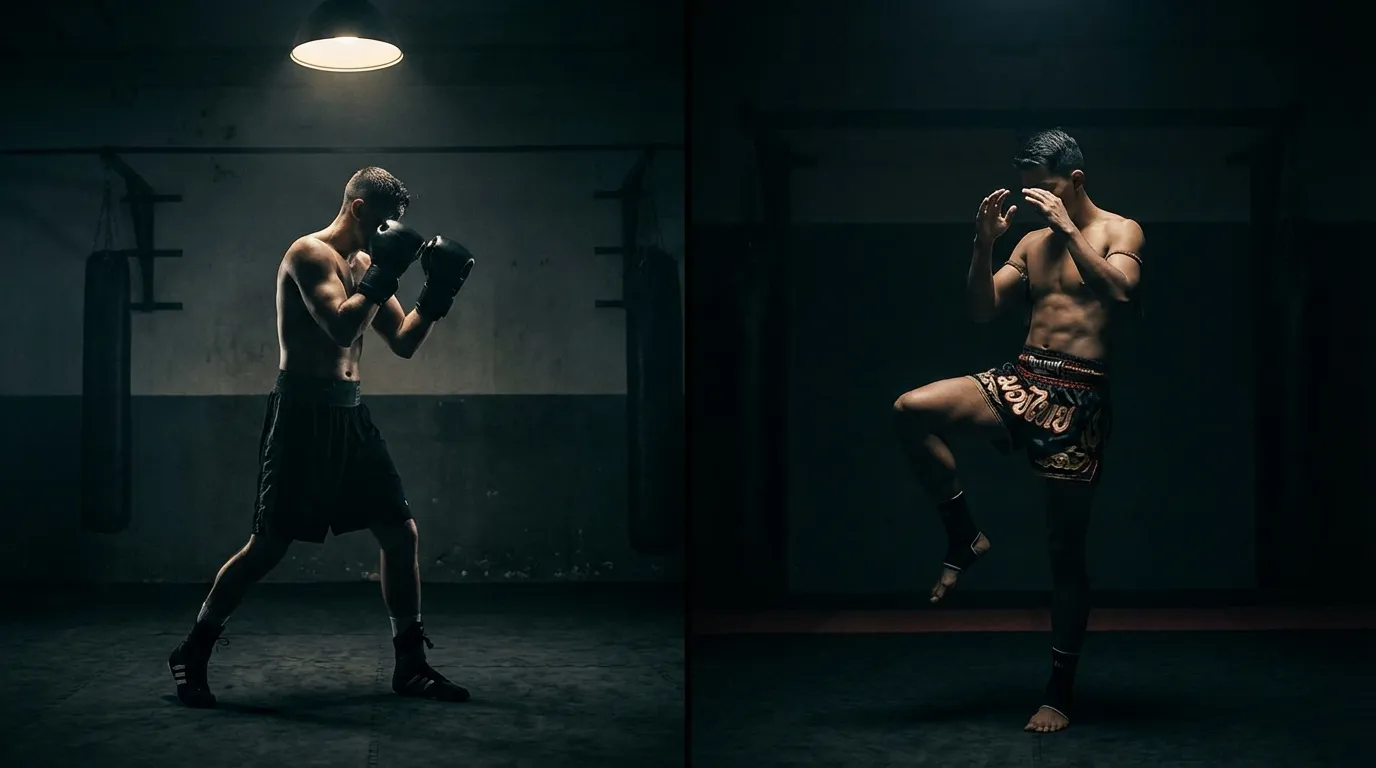
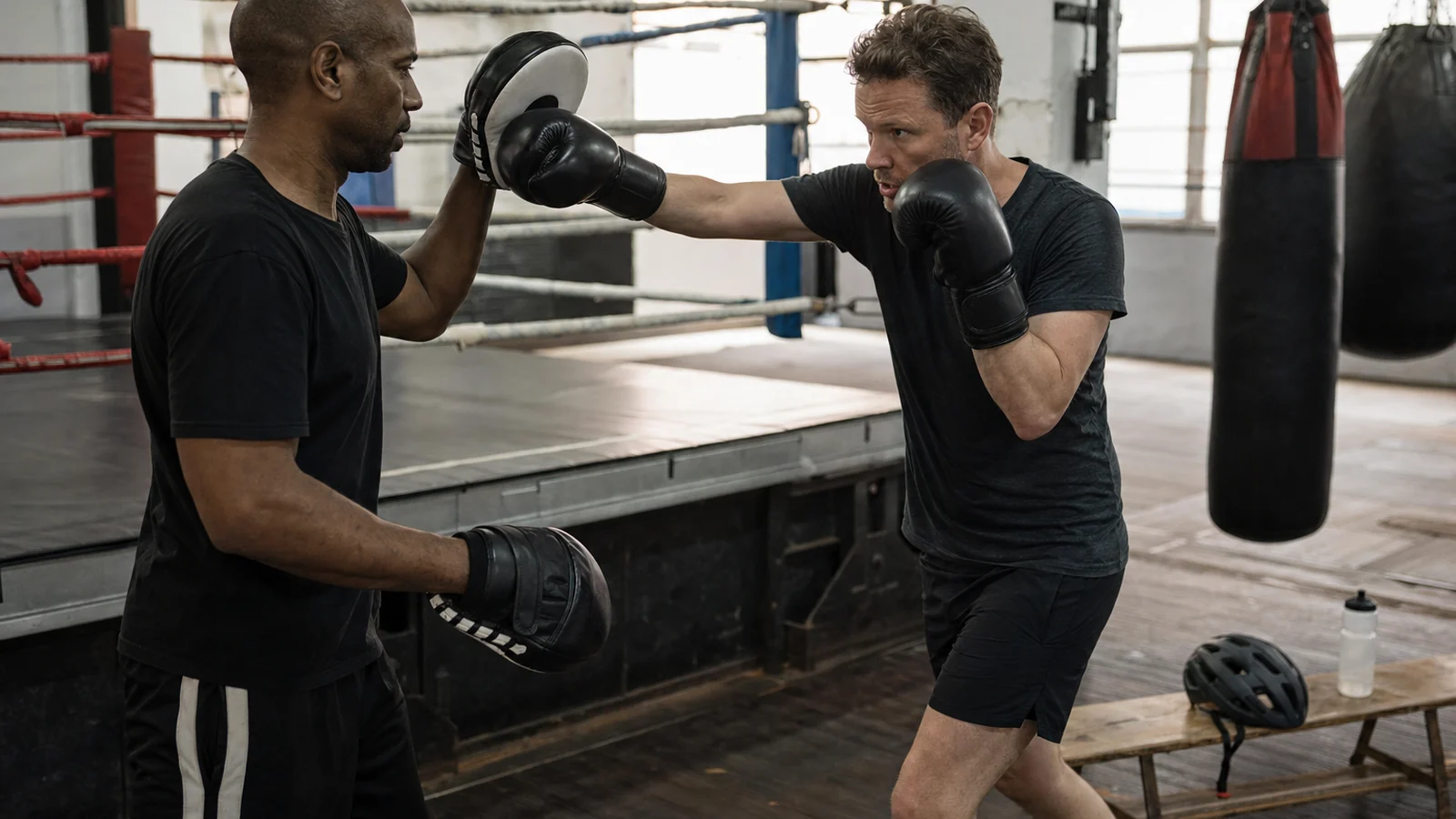
Boxing uses your fists. Only your fists. You learn to punch with precision, move your head to avoid getting hit, and control distance using footwork.
Muay Thai uses everything. Punches, kicks, elbows, knees, and clinch work. It is often called "the art of eight limbs" for exactly this reason.
Neither is better. They are different tools for different jobs.
What You will Learn in Boxing
Boxing might seem limited because you only use your hands, but that limitation creates depth. When you can only punch, you get really good at punching.
A typical boxing gym will teach you:
- The six basic punches (jab, cross, hook, uppercut, and variations)
- Defensive head movement (slipping, rolling, ducking)
- Footwork patterns for angles and distance control
- Combinations that flow naturally together
- Counter-punching timing
The focus is narrow but deep. After a year of boxing, your hands will be sharper than someone who split their time across multiple weapons.
What You will Learn in Muay Thai
Muay Thai covers more ground but spreads your learning across more techniques.
A typical Muay Thai gym will teach you:
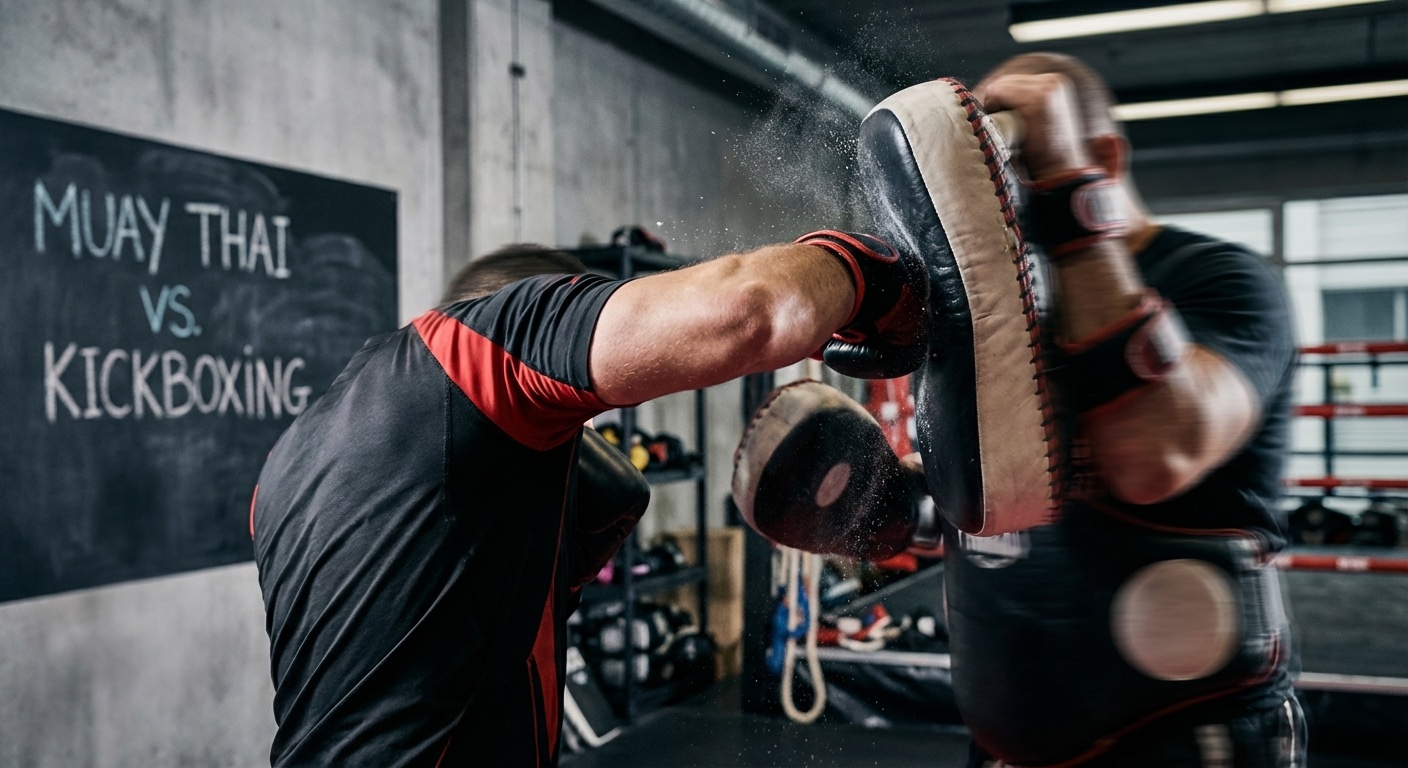
- Punches (similar to boxing but with different mechanics)
- Kicks (roundhouse, teep/push kick, low kicks)
- Knees and elbows for close range
- Clinch fighting and sweeps
- Defensive blocks and checks
You will become competent in more areas, but mastering each weapon takes longer because you are dividing your training time.
Boxing Has Better Hands
This is not really debatable. Boxers develop better punching technique than Muay Thai fighters.
Why? Because that is all they do.
Boxing footwork is more refined. The head movement is more developed. The combinations flow more smoothly. When it comes to pure punching skill, boxing wins.
If you watch a Muay Thai fighter and a boxer of similar experience levels throw hands, the boxer usually looks cleaner. They have spent thousands of hours on just that one thing.
Muay Thai Has More Tools
But boxing's hand advantage comes with a trade-off. A Muay Thai fighter can kick your legs, knee you in the body, and elbow you in the face.
In a self-defence situation, having kicks in your arsenal matters. Most untrained people have no idea how to handle a leg kick, and a solid teep can create distance quickly.
Muay Thai also teaches you to deal with being grabbed. The clinch work is something boxing simply does not cover. If someone grabs you in a pub, a boxer's training has less direct application than a Muay Thai fighter's.
The Fitness Comparison
Both sports will get you fit. Really fit.
Boxing training tends to involve more continuous movement. Lots of footwork, constant upper body rotation, and shadow boxing rounds that keep your heart rate elevated.
Muay Thai training often has more impact conditioning. Kicking pads builds different leg muscles than boxing footwork. The clinch work is exhausting in a way that feels more like wrestling.
Calorie burn is roughly similar. Both will destroy you if you train hard.
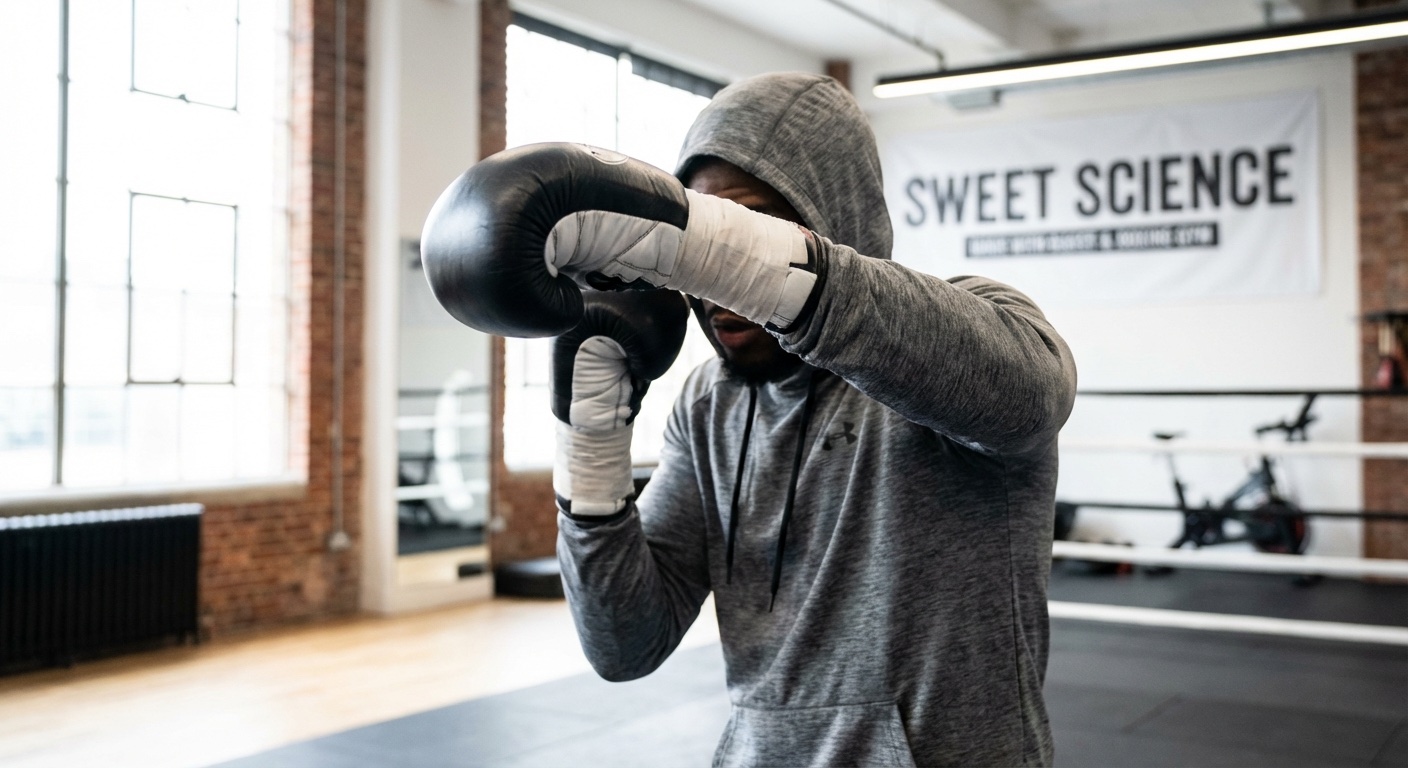
The difference is in how your body adapts. Boxers often develop leaner, more mobile physiques. Muay Thai fighters sometimes carry more muscle in their legs and develop harder shins from conditioning.
Which Is Easier to Start?
Boxing has a gentler learning curve for the first few months.
You only need to think about your hands and your feet. The fundamentals are easier to grasp, even if mastering them takes years.
Muay Thai throws a lot at beginners. In your first few sessions, you are trying to punch, kick, and maybe throw knees. It can feel overwhelming, and there is more to remember.
That said, Muay Thai gyms are used to beginners and will pace things appropriately. You will not be throwing elbows in week one.
Class Availability
In most UK cities, finding a boxing gym is easier than finding a Muay Thai gym.
Boxing has deeper roots here. There are more clubs, more coaches, and more options across different areas. Many are community-based and affordable.
Muay Thai has grown massively in the last decade, but classes are still less common outside major cities. You might need to travel further or pay more for quality instruction.
If You Want to Compete
Both sports offer clear competitive pathways in the UK.
Boxing has an established amateur system through Amateur Boxing Alliance, with regular shows and national championships. The structure is well-developed, and moving into professional boxing later is a clear path.
Muay Thai competition exists but is less formalised. Shows happen regularly, but the amateur-to-pro pathway is not as structured as boxing. Inter-club shows and smokers are more common than official sanctioned events.
If competition is your goal, ask local gyms about their fighters and show frequency. A gym that competes regularly will prepare you better than one that just does pad work.
Self-Defence Considerations
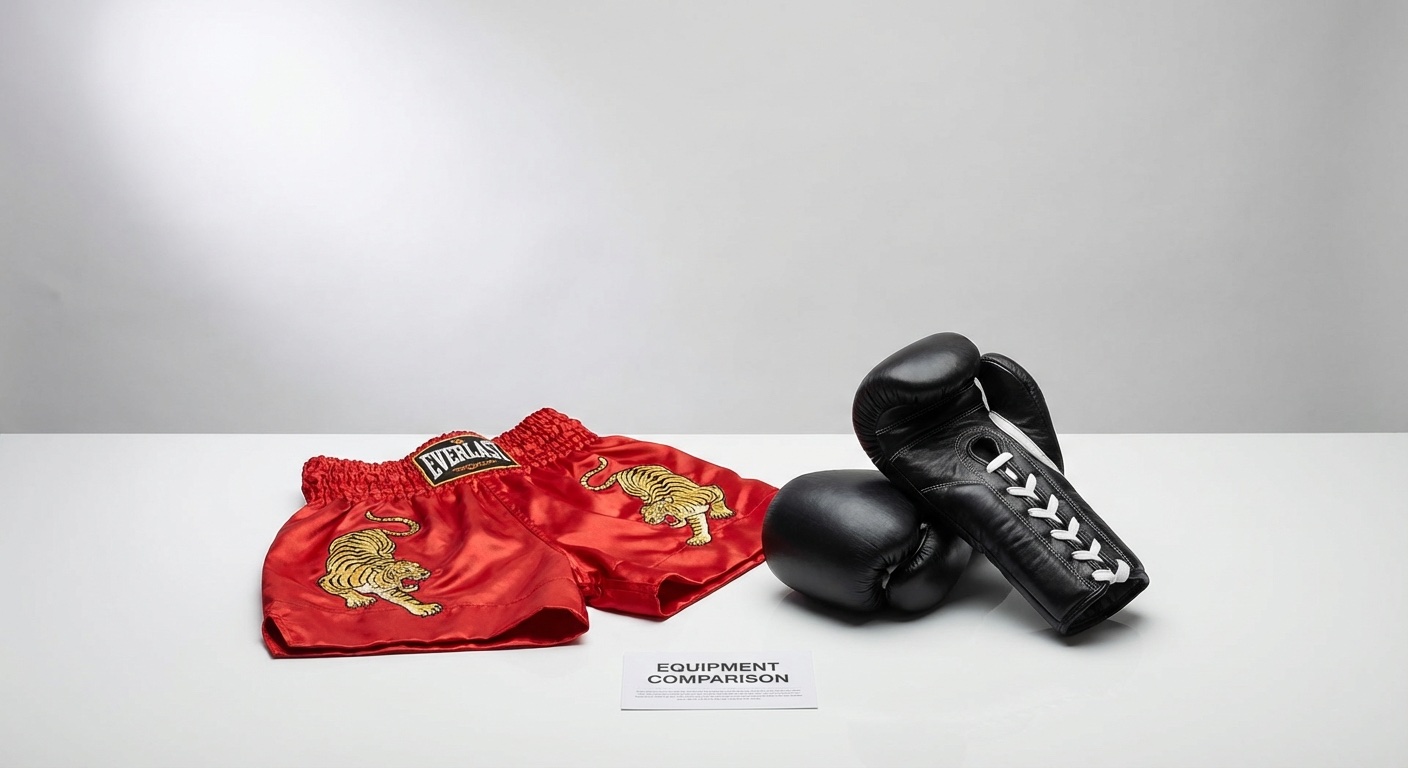
For pure self-defence, Muay Thai arguably offers more tools.
The ability to kick creates distance. Clinch work teaches you what to do when grabbed. Low kicks can end fights against untrained people before they really start.
But boxing teaches you to hit without getting hit. The defensive skills transfer well to street situations, and a boxer's counterpunching timing is hard to deal with.
Honestly, either art will put you ahead of 95% of the population who've never trained anything. The self-defence difference between them is smaller than the difference between training and not training (source).
Our Honest Take
We teach boxing at H&G, so we are biased. But here is our genuine opinion.
Boxing is the better starting point for most people.
The learning curve is more manageable. Classes are more available. The skills you develop transfer well if you later want to try other combat sports.
If you have already done some boxing and want to expand your skills, Muay Thai is an excellent next step. Many fighters cross-train in both.
But if you are starting from zero and want to learn how to fight properly, boxing gives you a solid foundation. You will learn to move, to defend, and to throw punches with real technique.
Later, you can add kicks if you want them. Starting with everything at once often means mastering nothing.
Ready to Start?
If boxing sounds right for you, come try a class at H&G. We welcome complete beginners and focus on building proper technique from day one.
Claim a free trial and see what you think. No pressure, no commitment.
H&G Team
Writer at Honour & Glory Boxing Club, a community boxing gym in Kidbrooke, South East London.
Was this page helpful?
Your feedback helps us improve this page
Got questions about what you just read?
ASK OUR AI ASSISTANT ✨MORE LIKE THIS


WANT TO JOIN US?
Book a free trial session and see what we're all about.
Book a Free Trial