The ABA's competition structure provides a clear championship pathway for Alliance clubs. England Boxing's membership data shows the wider scale of amateur boxing nationally. That club-and-championship structure is one of the things that separates traditional boxing from kickboxing at competitive level.
Boxing and kickboxing look similar from the outside. Both involve hitting people. Both will get you fit. Both teach you to defend yourself (source).
But spend a few weeks training each and you will feel how different they really are. Here is the breakdown.
What is the difference between boxing and kickboxing?
Boxing uses your hands. Kickboxing uses your hands and legs.
That is the surface-level answer everyone gives, and it is true. But it is not the whole story. The addition of kicks changes everything else about how the sports work.
How Kicks Change Everything
When legs come into play, distance works differently.
In boxing, you are mostly operating at punching range. You move in, you move out, but the effective fighting distance is relatively narrow. Footwork is about angles and small adjustments.
In kickboxing, the range is wider. Someone can hit you from further away with a kick. This changes how you stand, how you move, and how you defend.
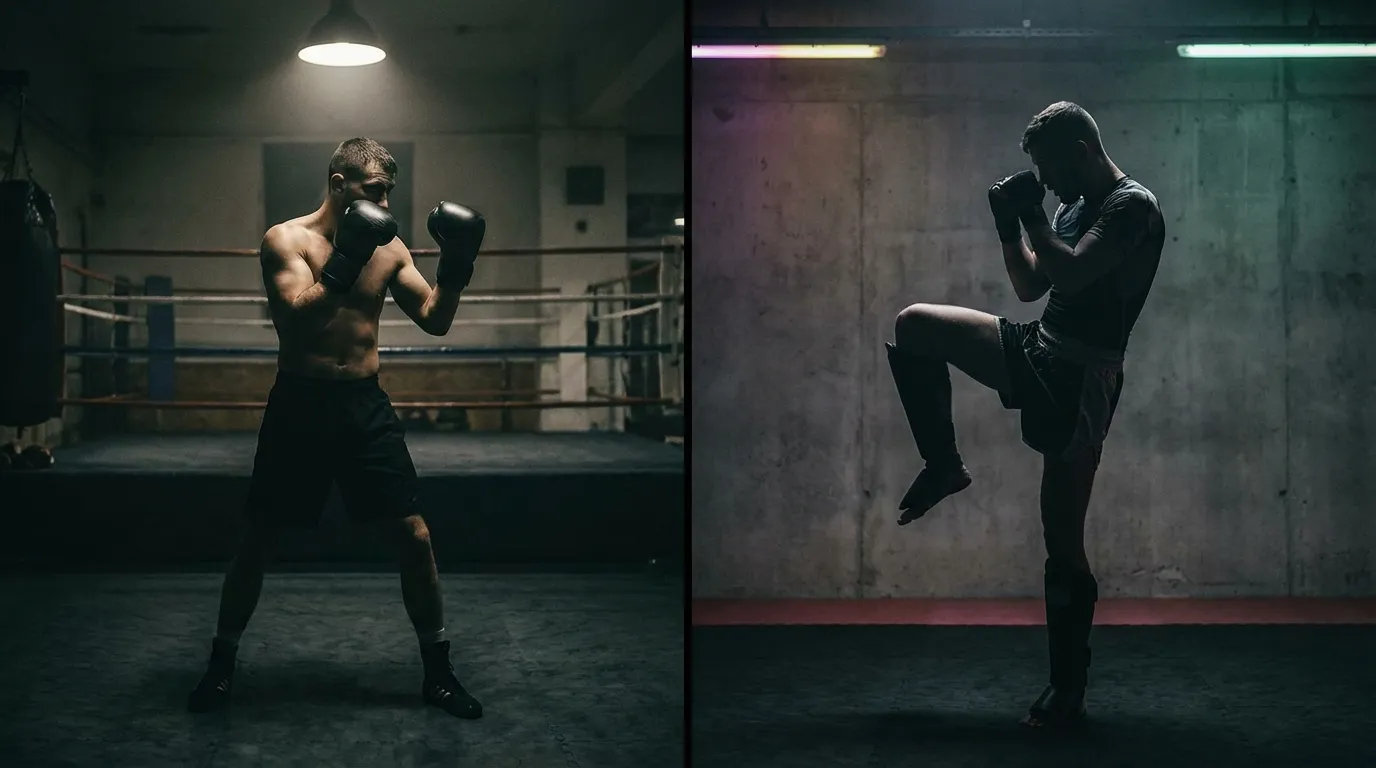
Boxers typically stand more side-on with their weight shifting fluidly. Kickboxers often stand more square to make kicking easier and to defend against leg kicks. Different stances for different weapons.
Punching Technique Differs
This surprises people. Surely a punch is a punch?
Not quite.
Boxing punches often involve more rotation and weight transfer because you can commit fully to your hands. You are not worried about someone sweeping your legs while you throw.
Kickboxing punches tend to be slightly more conservative. You stay more balanced because you need to check incoming kicks or throw your own. The full commitment of a boxing cross is not always wise when a leg kick might be coming.
This is why boxers generally have better hands than kickboxers of similar experience. They are specialising in punching while kickboxers spread their training across more skills.
Defence Is Different
Boxers spend enormous time on head movement. Slipping, rolling under punches, ducking and weaving. This lets them avoid punches while staying in range to counter.
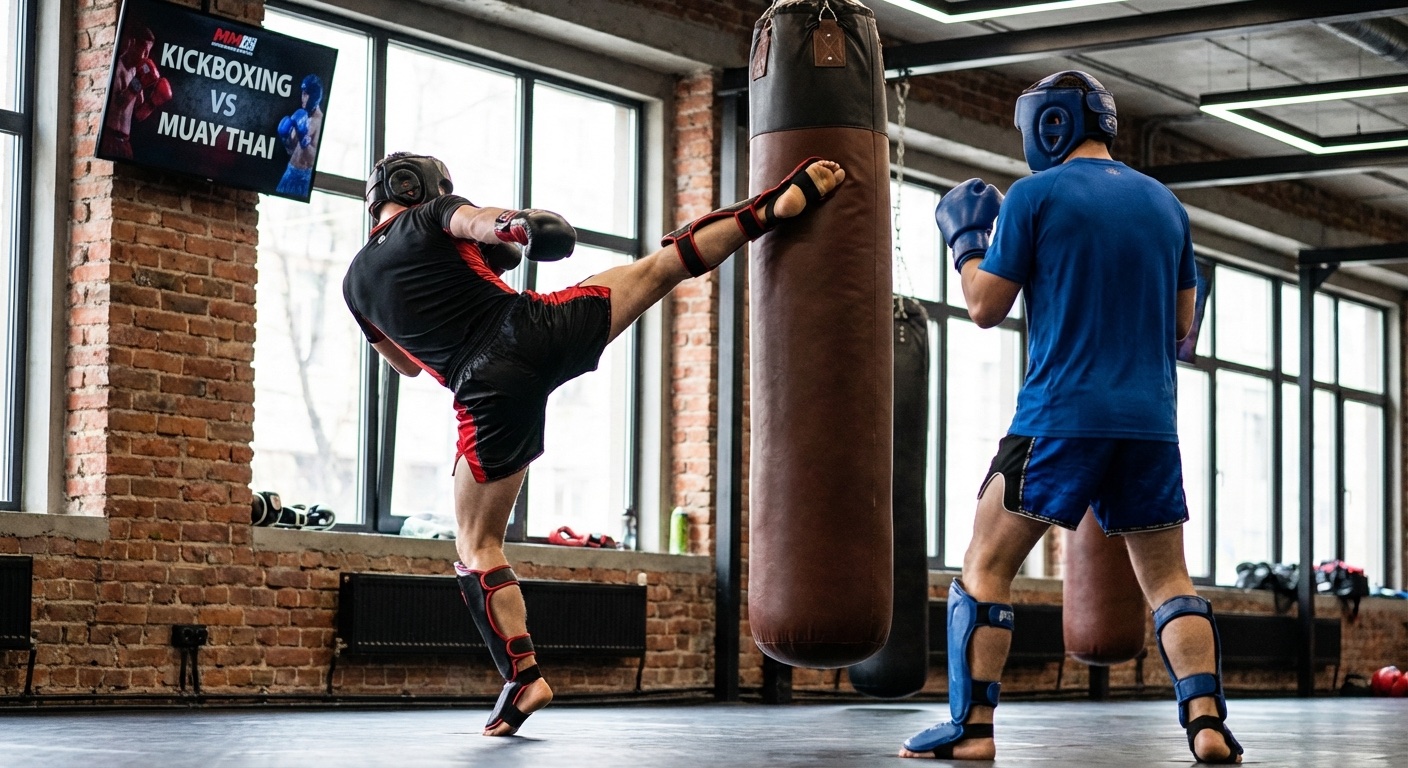
Kickboxers cannot rely on head movement as heavily. Duck under a punch in kickboxing and you might eat a knee. The defensive approach involves more blocking, parrying, and moving out of range entirely.
Both approaches work within their sports. But transfer a pure boxer's ducking style to kickboxing and they will learn quickly why that does not work.
Footwork Differences
Boxing footwork is designed for small, precise adjustments. Cutting angles, pivoting, creating slight positional advantages. The movements are tight and controlled.
Kickboxing footwork needs to account for leg kicks. You will often see kickboxers checking kicks with their shin, which requires a different weight distribution than boxing. Stance is often wider and more grounded.
Boxers bounce more. Kickboxers sit heavier. Both make sense for their respective sports.
Training Focus
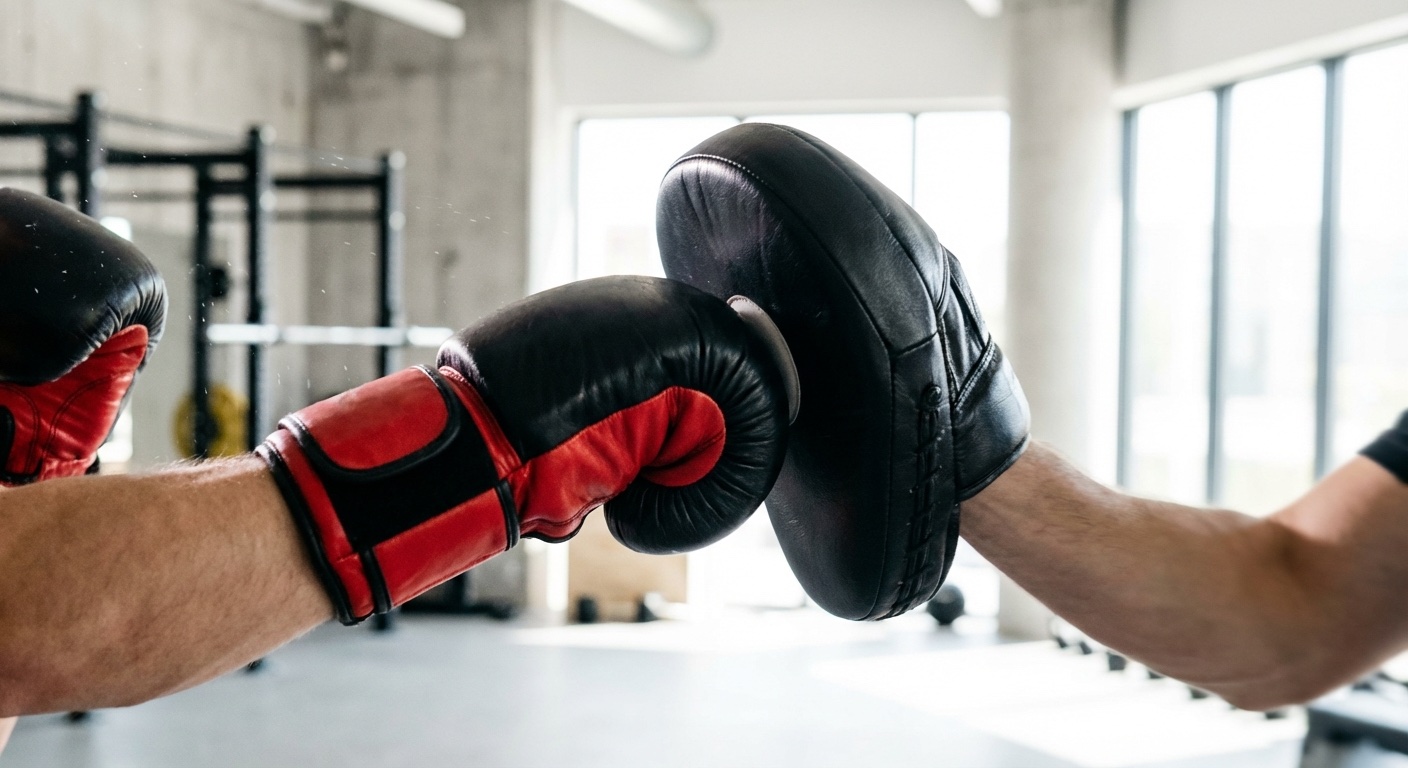
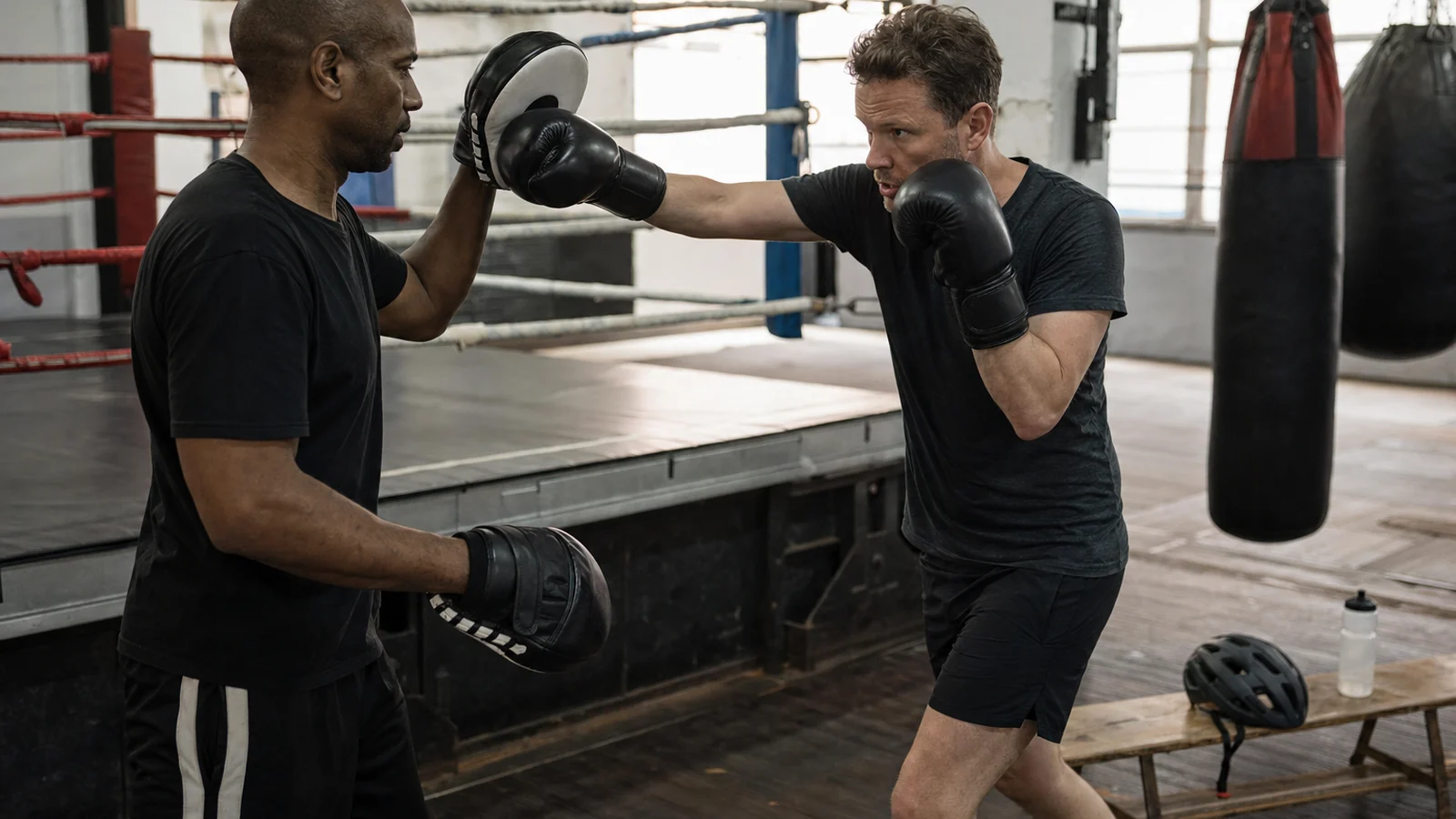
A typical boxing session involves shadow boxing, bag work, pad work, and partner drills. Everything focuses on punching, movement, and defence against punches.
A typical kickboxing session covers similar ground but adds kicking drills, shin conditioning, and combo work that mixes hands and feet. The time available gets split across more techniques.
This is the fundamental trade-off. Boxing goes deep on fewer techniques. Kickboxing goes broader but shallower on each.
Does boxing or kickboxing build more fitness?
Both sports build excellent fitness. The emphasis differs.
Boxing conditioning focuses heavily on shoulder endurance (holding your guard up is tiring), leg endurance from constant footwork, and core strength for rotation and power.
Kickboxing adds more demands on the legs. Throwing kicks requires hip flexibility, leg strength, and balance. Checking kicks conditions your shins. The conditioning is more evenly distributed across your whole body.
Neither is "better" for fitness. They are different training stimuli. Many people find kickboxing more varied because you are using more of your body in more ways.
Is boxing or kickboxing safer?
Both sports carry some injury risk. The types differ.
Boxing's main concerns are hand injuries and head trauma from sparring. The repetitive impact of punching stresses hands and wrists. Concussion risk exists in any sparring that involves headshots.
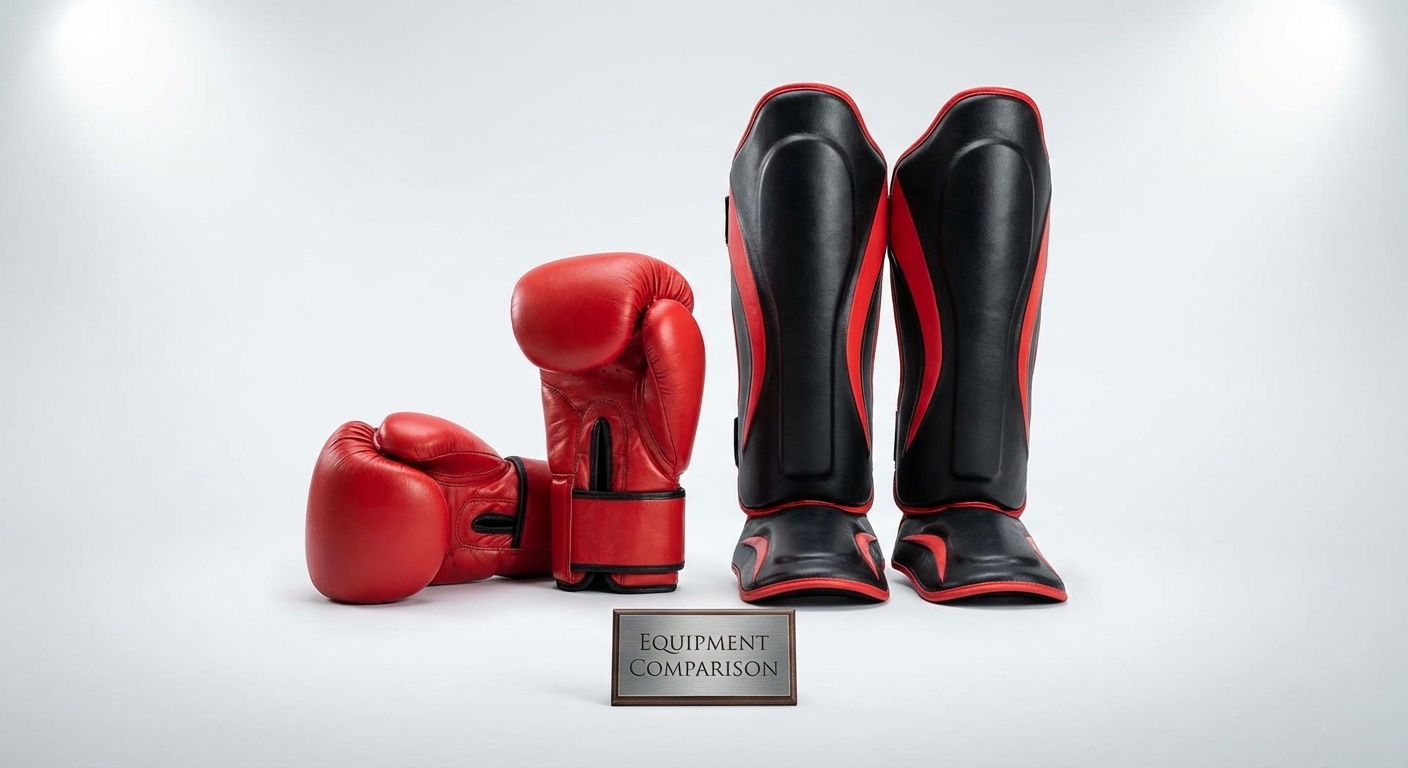
Kickboxing adds leg injuries to the mix. Shin-to-shin contact hurts, especially early on. Hyperextended knees from checked kicks happen. Bruised thighs from leg kicks are practically guaranteed.
Kickboxing probably has more overall minor injury potential because more body parts are involved. Boxing's injuries tend to be concentrated in fewer areas.
Is boxing or kickboxing better for self-defence?
Both arts improve your ability to defend yourself. The tools differ.
Kickboxing gives you more range options. A solid front kick (teep) creates distance that punches cannot. Leg kicks work against untrained opponents who have no idea how to handle them.
Boxing gives you faster, more refined hands. If distance closes quickly, a boxer's counterpunching and defensive reflexes are hard to deal with.
The realistic answer: either puts you far ahead of someone with no training. Most real confrontations involve people who've never trained anything. Both arts give you a massive advantage.
Class Availability
In the UK, boxing gyms outnumber kickboxing gyms significantly.
Boxing has deeper roots here. Community boxing clubs exist in most towns. The infrastructure is well-established and often affordable.
Kickboxing classes exist but are less common, especially outside major cities. Many are attached to general martial arts academies rather than dedicated kickboxing gyms.
This matters for consistency. The best martial art is one you can actually train regularly. A great boxing gym nearby beats a theoretical kickboxing gym you will rarely visit.
Competition Options
Both sports have competitive scenes in the UK.
Boxing's amateur structure through Amateur Boxing Alliance is well-established with clear pathways and regular shows. Moving from amateur to professional is a defined process.
Kickboxing competition exists but is more fragmented. Different organisations use different rulesets. Some allow leg kicks, some do not. Some allow knees, others do not. The competitive scene is messier.
If competing is your goal, talk to local gyms about their fighters and what shows they compete on. Gym culture matters more than sport choice for competitive preparation.
Which Is Harder to Learn?
Boxing is easier to start but perhaps harder to master.
The movements are simpler at first. Punch, move, defend with your hands. Beginners can feel competent faster because they are only learning a few things.
Kickboxing is harder initially because you are coordinating more limbs. Throwing kicks while maintaining hand position is genuinely tricky. The learning curve is steeper in the first few months.
Long-term, both have massive skill ceilings. But boxing's initial accessibility makes it a gentler introduction to combat sports.
How does shadow boxing differ in boxing vs kickboxing?
Shadow boxing looks different in each sport. In boxing, shadow boxing focuses on punching combinations, head movement, and footwork angles. You are drilling hand speed and defensive reflexes.
In kickboxing, shadow boxing adds kicks, knees, and checking drills. The rhythm is different because you are practising weapons from more ranges. Shadow boxing in kickboxing is a more complete full-body workout, but boxing shadow work is more precise because you are polishing fewer techniques.
Both versions are excellent for conditioning and technique refinement. If you want a focused shadow boxing workout, boxing shadow rounds tend to burn more calories per minute because the pace stays higher.
Our Recommendation
We teach boxing, so we are biased. But here is our honest view.
Boxing is the better starting point for most beginners.
You will develop solid fundamentals faster. Hand speed, timing, and defensive reflexes translate to any combat sport. And the focused training means you will actually get good at something rather than splitting your attention across several skill sets at once.
Kickboxing makes sense if you specifically want to kick, if you have already done some boxing and want more tools, or if there is an excellent kickboxing gym near you and no good boxing gym.
The worst choice is not training at all. Either art will make you fitter, more confident, and better prepared for whatever life throws at you.
Come Try Boxing
If you are in South East London and curious about boxing, we'd love to have you.
Claim a free trial and see what it is actually like. No obligation, no pressure.
Related Guides
- How Many Calories Does Boxing Burn? - the fitness benefits compared
- Benefits of Shadow Boxing - a key part of both sports
- Basic Boxing Punches for Beginners - where to start if you choose boxing
- What to Wear to a Boxing Class - preparing for your first session
H&G Team
Writer at Honour & Glory Boxing Club, a community boxing gym in Kidbrooke, South East London.
Was this page helpful?
Your feedback helps us improve this page
Got questions about what you just read?
ASK OUR AI ASSISTANT ✨MORE LIKE THIS


WANT TO JOIN US?
Book a free trial session and see what we're all about.
Book a Free Trial