Boxing vs Aikido
A pressure-tested striking art versus a philosophical martial art built on harmony and redirection. The debate about aikido's practical effectiveness has raged for decades, but there is more to this comparison than who would win in a fight.
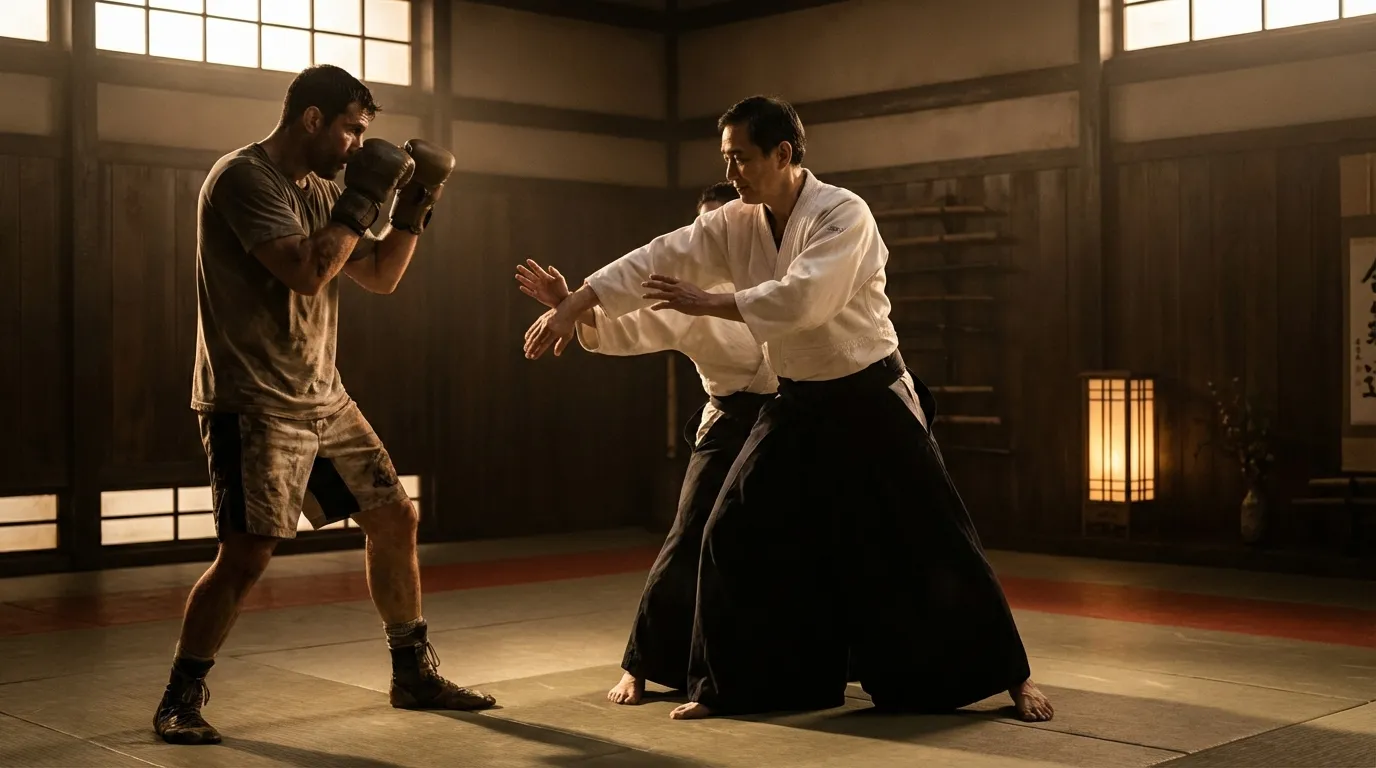
The Core Difference
Boxing
Offensive striking with active defence. Learn to hit hard, move well, and take pressure.
- • Four core punches, infinite combinations
- • Regular sparring against resisting opponents
- • Competition pathway from amateur to professional
- • High-intensity cardiovascular conditioning
- • Decades of proven effectiveness
Aikido
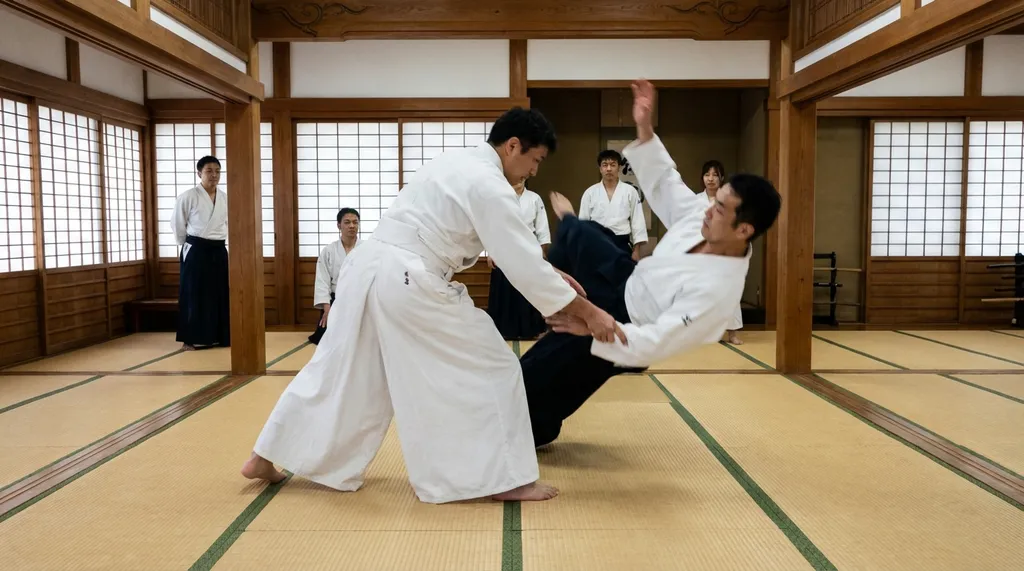
A defensive art focused on redirecting an attacker's energy through joint locks and throws.
- • Joint locks: nikyo, sankyo, kotegaeshi
- • Throws and pins using circular motion
- • Cooperative partner practice (kata)
- • Philosophical emphasis on harmony (ai-ki-do)
- • No competitions in most traditions
These two arts represent opposite philosophies. Boxing says: learn to hit people effectively. Aikido says: learn to neutralise aggression without causing harm. Founded by Morihei Ueshiba in the early 20th century, aikido grew from older Japanese jujutsu systems but stripped out most of the aggressive techniques, aiming to create "the art of peace."
Boxing has no such philosophical ambitions. It is a sport built on controlled violence, refined through millions of competitive bouts over centuries. The question most people want answered is: does aikido actually work? That depends entirely on what you mean by "work."
The Pressure Testing Debate
This is the central controversy. Boxing is pressure-tested constantly. Every sparring session puts your skills against a resisting opponent who is actively trying to hit you. You learn what works under stress because stress is built into every training session.
Traditional aikido trains cooperatively. Your partner attacks in a predetermined way, and you practise the technique against that expected attack. Critics argue this creates a false sense of competence. As one r/martialarts discussion put it: "All martial arts are effective if they are pressure tested." The implication is that aikido, by and large, is not.
Some modern aikido schools have introduced more resistant training methods, but they remain a minority. The mainstream aikido position is that competitive sparring contradicts the art's philosophy of non-aggression. This is a legitimate philosophical stance, but it does mean that most aikido practitioners have never tested their techniques against someone genuinely trying to resist them.

Fitness and Physical Benefits
Boxing is the far superior workout. A typical session includes skipping, shadow boxing, bag work, pad rounds, and conditioning circuits. Heart rate stays elevated for 60 to 90 minutes, burning 500 to 800 calories. It builds functional strength across the entire body: shoulders, core, legs, and back.
Aikido training is lower intensity. Sessions involve warm-ups, breakfall practice (ukemi), and technique drilling with a partner. The cardiovascular demand is modest. Where aikido does offer physical benefits is in balance, coordination, and body awareness. Learning to fall safely (ukemi) is genuinely useful and is a skill that becomes more valuable as you age.
For weight loss, muscle tone, or cardiovascular health, boxing is not even close to aikido. It is in a different category. If your primary goal is getting fit, boxing delivers results that aikido simply cannot match.
Philosophy and Mindset
Aikido's strongest argument is philosophical. The idea of neutralising conflict without causing harm is genuinely appealing. Many aikido practitioners report significant personal growth: improved patience, better conflict resolution skills, and a calmer disposition. These are real benefits that matter in daily life.
Boxing develops a different kind of mental strength. It teaches you to stay calm under pressure, to think clearly when someone is trying to hit you, and to manage fear and adrenaline. The confidence that comes from knowing you can handle physical confrontation is distinct from aikido's more contemplative approach.
At Honour and Glory, we see this regularly. Members who were anxious or lacked confidence when they started develop a quiet self-assurance through boxing. Not because they want to fight anyone, but because they have tested themselves against real resistance and know what they are capable of.
Cost and Accessibility
Both are reasonably affordable compared to many martial arts. Aikido classes in London typically run £10 to £15 per session, with some clubs offering monthly memberships. You will need a gi (training suit), which costs £30 to £60. Boxing is slightly cheaper per session at community clubs, and the equipment is comparable in cost.
The real difference is availability. London has hundreds of boxing clubs across every borough. Aikido dojos are fewer and tend to be concentrated in specific areas. If proximity and convenience matter, boxing is almost certainly easier to access.
Was this page helpful?
It takes one tap, and it genuinely helps.
The Verdict
Our honest take: If self-defence, fitness, or competitive sport is your goal, boxing wins this comparison clearly. It is pressure-tested, physically demanding, and has a proven track record. Aikido has real value as a movement practice and philosophical system, but it is not an effective fighting art in its standard training format.
We respect aikido's philosophical tradition. But if someone asks us "which one should I train for self-defence?", the answer is boxing, and it is not particularly close. Want to see for yourself? Book a free session and find out.
See also: Boxing vs Judo | Boxing vs Martial Arts | Boxing vs Taekwondo | Boxing vs Capoeira | Boxing vs Wing Chun
The best way to decide? Come and try it.
Your first session is free. No contract, no commitment.
Book Your Free Boxing Session
Your first session is free. No contract, no joining fee, no catches.
📍 122 Broad Walk, SE3 8ND · Pay as you go from £5