Boxing vs Golf Fitness
At first glance, boxing and golf seem to have nothing in common. But strip away the aesthetics and both sports are built on the same physical foundations: rotational power, core stability, and hip drive. Here is how they compare as fitness activities, particularly for the over-40s.
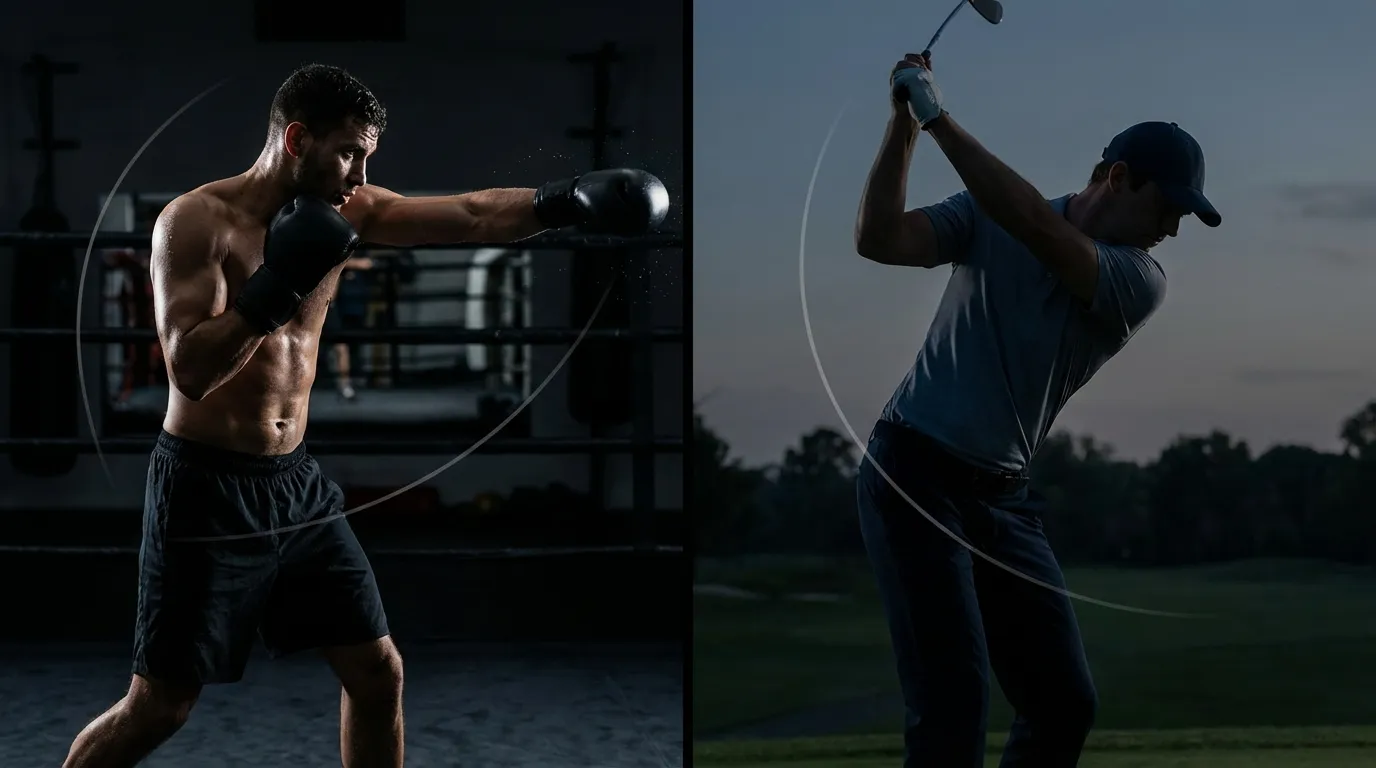
The Rotational Power Connection
A boxing cross and a golf drive use remarkably similar biomechanics. Both generate power from the ground up: feet push into the floor, hips rotate, the core transfers force, and the extremity (fist or club) delivers it. The kinetic chain is almost identical.
Golf fitness programmes from organisations like Par4Success emphasise rotational exercises: medicine ball throws, cable rotations, and hip mobility work. These are exercises that boxing coaches have used for decades under different names. A boxer throwing hooks and crosses on the heavy bag is performing loaded rotational work for an hour straight.
The key difference is intensity and volume. A golfer might swing 60 to 80 times during a round. A boxer throws hundreds of rotational punches in a single session. As a training stimulus for building rotational power, boxing is a strong option.

Core Strength and Stability
Golf fitness trainers consistently identify core strength as the number one physical quality for better performance. A strong core prevents lower back injuries (the most common complaint among golfers) and allows more efficient energy transfer from the lower body to the club.
Boxing builds core strength as a byproduct of every single exercise. Punching, slipping, rolling, and moving on the balls of your feet all demand constant core engagement. It is not isolated core work like planks or crunches. It is functional, dynamic core training that develops the obliques, transverse abdominis, and lower back simultaneously.
If you are a golfer looking to improve your game through fitness, boxing training will strengthen exactly the muscles that matter most for your swing. Several of our members at Honour and Glory play golf and report that their driving distance increased after a few months of regular boxing.
Fitness for Over-40s
Golf is popular with older adults for good reason. It is low-impact, social, and played outdoors. Walking 18 holes covers 5 to 7 miles and burns around 300 to 400 calories. The pace is gentle, and the injury risk is low if you warm up properly and do not overtrain your swing.
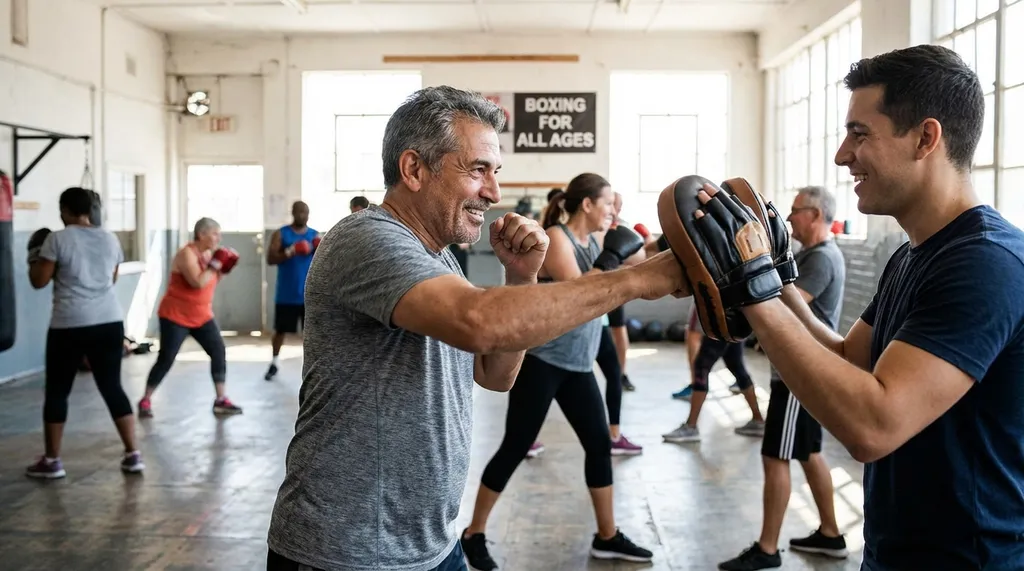
Boxing offers a more intense workout but remains surprisingly accessible for older adults. Non-contact boxing training (pad work, bag work, shadow boxing) is low-impact on the joints while delivering high cardiovascular output. Research published by the Performance Golf Institute emphasises that golfers over 50 need to maintain mobility, strength, and balance. Boxing training addresses all three simultaneously.
The balance and coordination benefits of boxing are particularly relevant as you age. Learning to move your feet quickly, slip punches, and maintain stance builds neuromuscular connections that help prevent falls. This is something that walking a golf course does not provide.
Cost and Time
Golf is expensive and time-consuming. A London-area club membership runs £1,000 to £3,000 per year before green fees, equipment, and the time commitment of 4 to 5 hours per round. Golf fitness training is typically done separately, adding further cost if you use a specialist trainer (£40 to £80 per session).
Boxing delivers a complete workout in 60 to 90 minutes for £5 to £10. No membership contracts, no expensive equipment, no half-day time commitment. For time-poor professionals who also play golf, boxing is a more efficient way to build the physical qualities that improve golf performance.
Was this page helpful?
It takes one tap, and it genuinely helps.
The Verdict
Our honest take: Golf and boxing are not competitors. They are natural complements. If you play golf, boxing will make you a better golfer by building the rotational power, core strength, and mobility that your swing depends on. It is better golf fitness training than most golf fitness programmes.
If you are choosing one activity for overall health, boxing wins on cardiovascular fitness, calorie burn, and time efficiency. But the smart move for golfers is to do both. Two boxing sessions per week will do more for your drive distance than any amount of time on the range. Want to see for yourself? Book a free session and find out.
See also: Boxing Over 40 | Boxing vs Tennis | Boxing vs Squash | Boxing vs Climbing | Boxing vs Rowing
The best way to decide? Come and try it.
Your first session is free. No contract, no commitment.
Book Your Free Boxing Session
Your first session is free. No contract, no joining fee, no catches.
📍 122 Broad Walk, SE3 8ND · Pay as you go from £5