Boxing vs Rowing
Both claim to be full-body workouts. Both are right. But boxing builds explosive speed and teaches a skill you carry for life, while rowing builds pulling endurance and can be done alone in your garage at 6 AM. Here is the full comparison, from calorie burn to cost to which one keeps you coming back.

The Core Difference
Boxing
Pushing and rotational. Explosive, fast-twitch dominant. Coach-driven with group energy.
- • Shoulders, chest, triceps, core, legs
- • Explosive power and reaction speed
- • Technique with years of depth
- • Inherently social (pad work, sparring)
- • Self-defence applicability
Rowing
Pulling and linear. Endurance-based, slow-twitch dominant. Often solo and self-paced.
- • Back, biceps, hamstrings, glutes, core
- • Sustained pulling power
- • Simple technique, fast to learn
- • Can be done solo at home
- • Exceptional cardiovascular base-builder
The two are nearly perfect biomechanical complements. Boxing is a pushing and rotational sport: you drive force forward through your shoulders, chest, and triceps while rotating your core. Rowing is a pulling sport: you pull back through your lats, rhomboids, and biceps while driving with your legs. Rowing strengthens what boxing does not, and boxing strengthens what rowing does not.
Research from supplement brand Forza found boxing burns approximately 800 calories per hour, with rowing close behind at 740 calories per hour. That makes them the two highest-calorie-burning sports in the study, which is notable.
Calorie Burn: The Numbers
Calories per hour (70 kg / 11 stone person)
Sources: Coach Magazine (Forza study), Transparent Labs MET analysis
Boxing burns more calories at typical training intensity. Rowing can approach similar numbers at race pace, but sustaining race-pace rowing for a full hour is brutally difficult. Most people rowing at a gym or at home settle into a moderate, steady-state pace that burns fewer calories than a coach-driven boxing session.
A Transparent Labs analysis using MET values confirmed that calorie burn depends heavily on intensity, and the advantage boxing has is that intensity is externally driven by a coach. On a rower, you set your own pace, and most people unknowingly coast.
Injury Risk
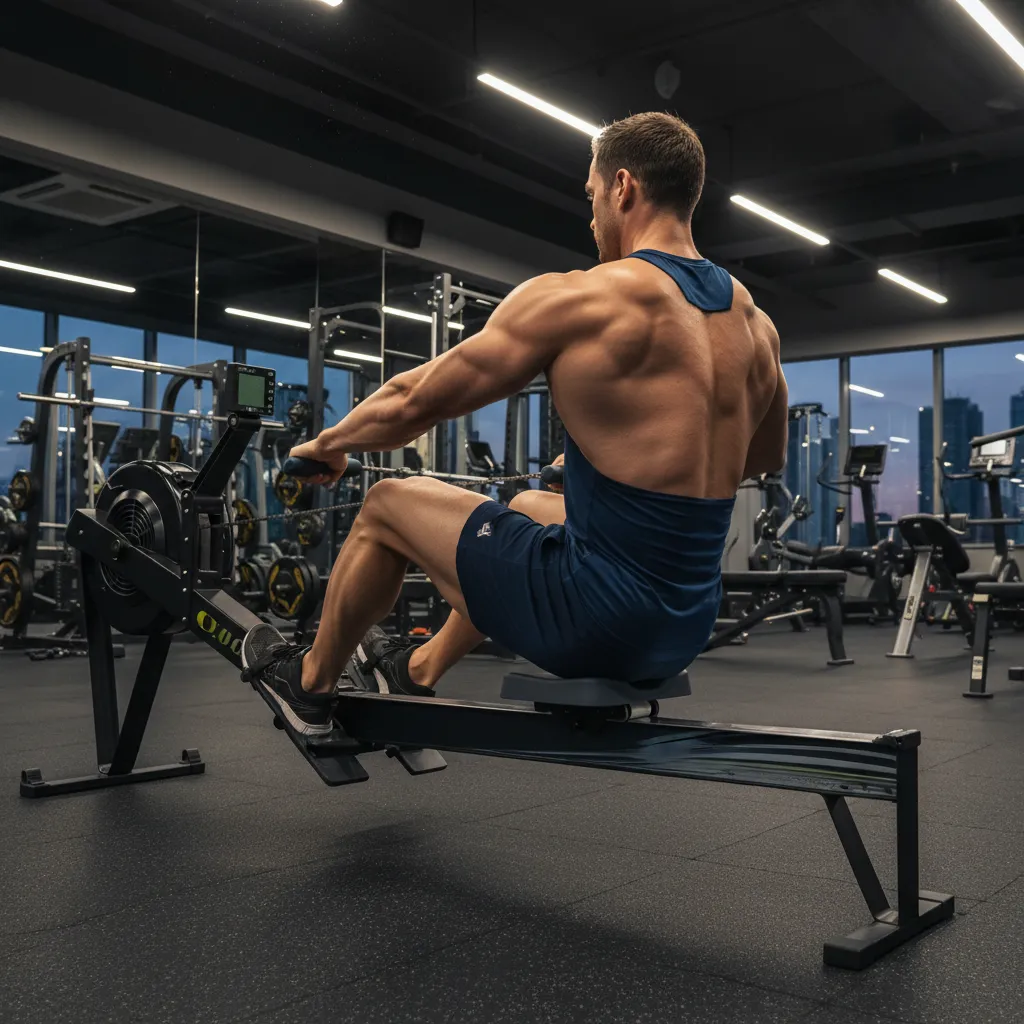
Rowing (on an ergometer) is low-impact and generally safe when performed with decent technique. The most common injury is lower back pain, typically from poor form during the drive phase when tired rowers round their spine under load. Rib stress fractures are a known issue among competitive rowers who train at high volume. Wrist strain and knee tendinitis also appear in regular rowers.
Recreational boxing (without sparring) is also low-risk. The main concerns are minor wrist and hand strains, largely preventable with proper hand wrapping and coaching. At Honour and Glory, beginners spend weeks learning technique and correct wrapping before any progression. Sparring is always optional.
The difference is variety. Rowing is a single, repetitive movement pattern. Every stroke is identical. This repetition creates overuse risk in the lower back, wrists, and knees over months and years. Boxing involves constantly varied movements: footwork, head movement, different punches, defensive slips, conditioning circuits. This variety distributes load across multiple joints and muscle groups, reducing the risk of any single area being overloaded.

The Social Factor: Where Boxing Pulls Away
Rowing (on a machine) is solitary. You sit alone, pull, and watch the numbers tick over. It can be meditative, but it can also be deeply boring. Even in a class setting, you are essentially doing your own thing beside other people. There is no interaction, no partner work, no shared challenge beyond being in the same room.
Boxing is inherently social. Pad work requires a partner. You learn to read another person, anticipate their movement, and communicate non-verbally. Group conditioning builds camaraderie through shared suffering. The gym culture at a good boxing club is strong, and relationships form naturally through repeated hard work together.
This matters more than people admit. Consistency is the single biggest factor in fitness results, and you are far more likely to be consistent with something that provides social connection and accountability. A rowing machine in your garage is excellent in theory. In practice, it often becomes an expensive clothes hanger within six months.
Cost in London
London prices as of 2026. Concept2 pricing from official UK distributor.
A home rower is a significant upfront investment. The Concept2 RowErg, the industry standard, costs around £1,000 new. It is built to last decades, which amortises the cost well, but it is still a substantial outlay. Boutique rowing studios in London charge £15-£25 per class.
Community boxing clubs are usually cheaper on a per-session basis. At £5-£10 with no contracts, no equipment requirements beyond wraps and gloves, and no £1,000 entry price, boxing is accessible to anyone regardless of budget.

Who Each One Suits
Boxing suits you if: you want higher calorie burn, a genuine skill, and social training that keeps you accountable. If you enjoy coach-driven intensity and varied movements. If you want full-body pushing and rotational strength. If you want something that builds confidence and provides stress relief beyond just physical tiredness.
Rowing suits you if: you prefer solo, self-paced training on your own schedule. If you want outstanding back and pulling strength development. If you want a low-impact full-body option you can do at home at any hour. If you are training for a specific rowing competition or enjoy on-water rowing. If you are the kind of person who genuinely uses home equipment consistently.
The Crossover: Push and Pull
Boxing and rowing are one of the most biomechanically balanced exercise pairings you can choose. Boxing is a pushing and rotational sport. Rowing is a pulling and linear sport. Together, they work every major muscle group and movement pattern in the human body.
For boxers, rowing on rest days is excellent active recovery. The pulling motion counteracts the forward-dominant posture that boxing creates, opening up the chest and strengthening the posterior chain. The cardiovascular base-building from steady-state rowing directly improves boxing endurance during later rounds.
Box for skill, social motivation, and explosive fitness. Row on rest days for back strength, active recovery, and cardiovascular base-building. Two or three boxing sessions with one or two rowing sessions per week creates a genuinely complete training programme. If you own a rower and live near a boxing club, you have everything you need.
Was this page helpful?
It takes one tap, and it genuinely helps.
Which Should You Choose?
Choose boxing if:
- • You want higher calorie burn per session
- • You want to learn a genuine, transferable skill
- • You value social training and accountability
- • You want full-body pushing and rotational power
- • Budget matters (£5-£10/session, no equipment)
- • You want varied, non-repetitive movement
Choose rowing if:
- • You prefer solo, self-scheduled training
- • Back and pulling strength are priorities
- • You want a home exercise option
- • You enjoy data-driven, metric-based training
- • You are training for on-water rowing
- • You want low-impact cardiovascular base-building
Our honest take: Boxing is the more complete workout. More calories, more skill, more social connection, lower barrier to entry. Rowing is an excellent complement to boxing but struggles as a standalone activity because most people find the repetition hard to sustain long-term.
If you are choosing one, boxing gives you more. If you can do both, the combination is outstanding. Come try a session at Honour and Glory and see why boxing keeps people coming back in a way that a rowing machine rarely does. Want to see for yourself? Book a free session and find out.
See also: Boxing vs Swimming | Boxing vs CrossFit | How Many Calories Does Boxing Burn? | Boxing vs Squash | Boxing vs Climbing | Boxing vs Basketball Training
The best way to decide? Come and try it.
Your first session is free. No contract, no commitment.
Book Your Free Boxing Session
Your first session is free. No contract, no joining fee, no catches.
📍 122 Broad Walk, SE3 8ND · Pay as you go from £5